











































Quick-Start: Pre-Departure Battery Checklist
Before loading high-capacity batteries into your vehicle, use this 6-point checklist to ensure a safe transit. This list is based on our service center’s standard intake protocols:
- [ ] State of Charge (SoC): Verified between 30% and 50%.
- [ ] Moisture Check: Minimum 48 hours of drying time (72 hours if used in pools/wet environments).
- [ ] Terminal Protection: Original caps installed and secured with non-conductive electrical tape.
- [ ] Cushioning: Placed in a sturdy crate with closed-cell foam or heavy moving blankets.
- [ ] Loading Position: Secured in the "Center-Load" position (geographic center of the cargo area).
- [ ] Post-Arrival: Plan for a 2-hour "rest period" before charging or use to allow for thermal acclimation.
The Criticality of Safe Battery Transit for Seasonal Equipment
When the seasons shift, the maintenance of high-capacity outdoor appliances—such as pressure washers, pool cleaners, and landscaping tools—becomes a priority for homeowners. Often, this involves transporting high-capacity lithium-ion batteries to specialized service centers for cell balancing, firmware updates, or off-season storage prep. While these batteries are engineered for durability in the field, the transition from a stable outdoor environment to the interior of a moving vehicle introduces a unique set of mechanical and thermal stresses.
At our service centers, we have observed that many battery failures reported after transport are not caused by catastrophic impacts, but by the cumulative effect of improper preparation and "hidden" stressors like vibration fatigue and latent moisture. Transporting a high-capacity lithium battery is a safety-critical task. This guide outlines the professional protocols we use—based on common patterns from customer support and repair data—to ensure that your equipment arrives safely.
As noted in The 2026 Modern Essential Gear Industry Report: Engineering Trust in a Cordless World, maintaining cordless technology requires visible compliance and a commitment to safety margins that exceed the minimum regulatory requirements.
Pre-Transport Preparation: Moisture and Energy Management
The most common mistakes occur before the battery even touches the vehicle. For tools used in wet environments, the presence of water—even in trace amounts—is a primary hazard.
The 48-Hour Drying Heuristic
We recommend a 48-hour drying period in a low-humidity environment before transporting any battery used near water. Moisture can become trapped in the microscopic gaps of the battery's seals or terminal housings. During transport, temperature fluctuations inside a vehicle can cause this latent moisture to condense, which can lead to internal short circuits or corrosion of the control board.
Note on Observations: This drying window is a practical heuristic derived from service center intake patterns. In high-humidity or winter conditions, we suggest extending this period to 72 hours, as evaporation rates typically decrease in cold, damp air.
Optimizing State of Charge (SoC)
Managing the battery's energy level is a critical safety barrier. We advise transporting high-capacity lithium batteries at a 30-50% State of Charge (SoC).
Why this specific range?
- Thermal Stability: At a lower SoC, the chemical energy available to fuel a potential thermal event is significantly reduced.
- Degradation Prevention: Storing or transporting a battery at 100% SoC increases internal stress on the cells, particularly if exposed to the heat of a vehicle interior.
- Regulatory Alignment: This practice aligns with the IATA Lithium Battery Guidance, which mandates a 30% SoC limit for air transport. While ground transport for private individuals is less restricted, adopting this "belt-and-suspenders" approach is a professional best practice.
Terminal Protection and Physical Insulation
Preventing an accidental short circuit is the primary objective. High-capacity terminals can discharge immense amounts of energy if bridged by a conductive object, such as a loose tool or the vehicle's metal frame.
The "Double-Layer" Insulation Method
Individual terminal caps are essential, but they can become dislodged during transit. We suggest a secondary layer of protection:
- Terminal Caps: Ensure the original manufacturer caps are securely seated.
- Non-Conductive Tape: Apply a layer of high-quality electrical tape over the caps. This prevents the caps from vibrating loose and provides an additional barrier against accidental contact.
Cushioning for Vibration Mitigation
Impact protection is obvious, but vibration mitigation is often overlooked. Based on workshop observations, high-frequency vibration during road travel can lead to "fretting" of internal cell connections over time.
We recommend using closed-cell foam blocks for cushioning. Unlike open-cell foam (like a kitchen sponge), closed-cell foam does not compress fully under the weight of a heavy battery and provides superior vibration dampening. Avoid using materials like bubble wrap alone, as the bubbles can pop under the weight of high-capacity packs, leaving the battery unprotected.
Strategic Vehicle Placement: The "Center-Load" Principle
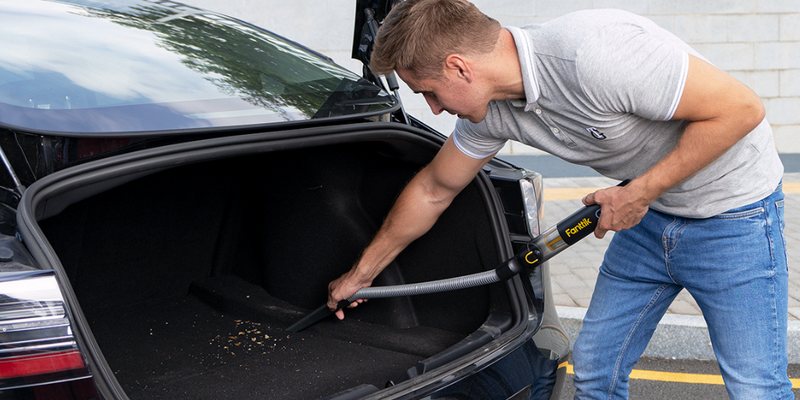
Where you place the battery in your vehicle matters as much as how you wrap it. Many users instinctively push heavy items against the walls of the trunk or cargo area. However, the walls of a vehicle are often where vibration is most intense, as they are directly connected to the chassis and wheel wells.
Reducing Fatigue Stress
We recommend securing the battery in the geographic center of the cargo area.
- Vibration Nodes: The center of the floor pan typically experiences lower vibration amplitudes than the edges near the suspension mounting points.
- Thermal Buffering: Placing the battery away from the vehicle's exterior walls provides a buffer against external temperature spikes (from the sun) or drops (from cold wind).
To prevent the battery from sliding, use a sturdy plastic crate. This meets the performance spirit of "proper packaging" described in safety frameworks like the EU General Product Safety Regulation (EU) 2023/988, which emphasizes the obligation to mitigate foreseeable risks.
Seasonal Challenges: Transporting in Cold Climates
For users in northern regions, winter transport introduces the risk of material brittleness. Cold temperatures fundamentally alter the physical properties of the plastics used in battery casings.
The Impact of Temperature on Material Integrity
Based on material science heuristics for high-impact polymers (like ABS or polycarbonate blends used in battery housings), impact resistance can decrease significantly in extreme cold. In our modeling of northern transit scenarios, we estimate that impact resistance can drop by 30-50% when temperatures fall below 20°F (-7°C). A bump that the battery would easily survive in the summer could cause a hairline fracture in the winter.
Modeling Assumptions (Illustrative Scenario): This model assumes standard polymer behavior under thermal stress and is intended for risk-assessment, not as a universal physical constant.
Parameter Value Unit Rationale Ambient Temperature -10 °F Typical northern winter condition Est. Impact Resistance Loss ~40% % Based on polymer glass transition curves Recommended SoC 30-50 % Safety buffer for chemical stability Vehicle Cabin Temp 65 °F Heated interior during transit Thermal Shock Delta 75 °F Difference between indoor/outdoor temps
Managing Thermal Shock
Moving a battery from a 70°F garage to a -10°F vehicle creates a significant temperature differential. This "thermal shock" can lead to internal condensation. To mitigate this, consider using an insulated cooler (without ice) to transport the battery. The insulation slows the rate of temperature change, allowing the internal components to acclimate more gradually.
Compliance and Regulatory Awareness
While private individuals transporting their own equipment are often exempt from the strictest hazardous materials (Hazmat) regulations, it is vital to understand the "commerce" boundary.
Private vs. Commercial Carriage
According to PHMSA (Pipeline and Hazardous Materials Safety Administration), the definition of "transportation in commerce" can be broader than many realize.
- Private Carriage: Transporting your personal pool cleaner battery from your home to a repair shop. This is generally exempt from formal Hazmat shipping papers.
- In Commerce: If you are a professional landscaper, a property manager for rental units, or a "handyman" transporting these batteries as part of a for-profit service, you are likely operating "in commerce."
Commercial transporters may be subject to stricter requirements, including specific Class 9 labeling, UN-rated packaging, and "Materials of Trade" (MOT) exceptions. If you are transporting batteries for business purposes, we strongly recommend consulting the current PHMSA Lithium Battery Guide or a certified Hazmat consultant.
Post-Transport Verification Checklist
Once you arrive at your destination, do not immediately plug the battery in. Follow this verification sequence:
- Visual Inspection: Check the casing for any new hairline cracks or stress marks, especially near the corners.
- Thermal Acclimation: Allow the battery to sit at room temperature for at least two hours. This ensures that any internal condensation has evaporated and the internal chemistry has stabilized before current is applied.
- Terminal Check: Ensure that the terminal caps and tape are still intact. If a cap has slipped, inspect the terminal for any signs of arcing or debris.
- SoC Verification: Check the battery's built-in fuel gauge. If the SoC has dropped significantly during a short trip, it may indicate a cell health issue that needs professional diagnosis.
Disclaimer: This article is for informational purposes only and does not constitute professional legal, safety, or engineering advice. Lithium-ion batteries are high-energy devices that carry inherent risks of fire or injury if mishandled. Always refer to your specific equipment's user manual and consult with a certified technician. If a battery shows signs of swelling, leaking, or extreme heat, do not transport it; contact a local hazardous waste disposal professional immediately.
References
Continue reading
 Troubleshooting Rapid Voltage Drops in Aged Outdoor Tool Cells
Covers SEI layer growth, internal resistance, cold temperature derating, and compliance with IATA/EU GPSR standards for safe battery...
Troubleshooting Rapid Voltage Drops in Aged Outdoor Tool Cells
Covers SEI layer growth, internal resistance, cold temperature derating, and compliance with IATA/EU GPSR standards for safe battery...
 Evaluating the ROI of Seasonal Battery Reconditioning Services
A guide evaluating the ROI of battery reconditioning for pressure washers and trimmers, including the 60% Rule, safety...
Evaluating the ROI of Seasonal Battery Reconditioning Services
A guide evaluating the ROI of battery reconditioning for pressure washers and trimmers, including the 60% Rule, safety...



Leave a comment
This site is protected by hCaptcha and the hCaptcha Privacy Policy and Terms of Service apply.