





























The Precision Pivot: Moving Beyond Manual Drivers
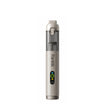
As hobby projects grow in complexity, manual tools often become a bottleneck that compromises both quality and efficiency. For serious DIYers engaged in home electronics repair and delicate assembly, the transition from a standard manual screwdriver to a cordless precision power system is a significant milestone. It marks the shift from "making it work" to "engineering a result."
In our experience on the repair bench, we have observed that the most common point of failure in gadget repair isn't a lack of knowledge, but a failure of the tool-to-fastener interface. Manual drivers, while offering tactile feedback, often lead to fatigue during high-volume work. This fatigue results in inconsistent pressure, leading to "cam-out"—the phenomenon where a bit slips out of the screw head, often stripping the soft aluminum or plastic threads common in modern consumer electronics.
This article provides a methodical framework for understanding when to upgrade, the technical mechanisms that make power drivers superior for high-volume work, and the safety protocols required to protect sensitive components.
The "Project Threshold": When to Upgrade
Determining the right time to invest in a precision power driver involves more than just a desire for new gear. We utilize a specific heuristic known as the "Project Threshold" to help practitioners evaluate the return on investment (ROI) for their workshop.
If you find yourself disassembling more than two devices per month, or if a single project involves more than 50 fasteners, the physical and cognitive load of manual driving typically justifies an upgrade. Beyond simple time savings, the reduction in hand fatigue is quantifiable. According to ergonomic assessments of tool weight and repetitive strain, using a dedicated precision driver—typically weighing between 0.5 and 1 lb—can reduce perceived exertion by over 40% compared to using heavier, general-purpose cordless drills for the same tasks (RxTooler).
Productivity Modeling: Manual vs. Power
To demonstrate the impact of this transition, we modeled a typical high-volume hobbyist scenario: the assembly of a complex model or a multi-component PCB housing.
| Parameter | Manual Driver Value | Precision Power Driver Value | Rationale |
|---|---|---|---|
| Screws per session | 50 | 50 | Standard high-volume project |
| Time per screw | ~30 seconds | ~10 seconds | Includes positioning and driving |
| Total driving time | 25 minutes | ~8 minutes | Calculated baseline |
| Error rate (Stripping) | ~5-8% | <1% | Based on consistent clutch control |
| Fatigue level | High (Wrist/Forearm) | Low (Finger-actuated) | Ergonomic observation |
Methodology Note: This scenario modeling is a deterministic analysis based on common industry heuristics for light assembly. It assumes a standard workspace setup and familiar fasteners (e.g., M1.5 to M3.0 Phillips or Torx). Results may vary based on material hardness and user experience.

The Mechanics of Control: Why "Shut-Off" Matters
A common misconception among hobbyists is that any cordless screwdriver will suffice for delicate work. However, the reality of high-volume electronics work requires a level of torque calibration that standard household power tools cannot provide.
The most critical feature to look for is a programmable or adjustable shut-off clutch. Most general-purpose drivers use a "slip clutch," which continues to vibrate or "click" once a torque limit is reached. In delicate electronics, this vibration can still damage soft threads or sensitive internal components. A shut-off clutch, by contrast, ceases all rotation the instant the target torque is achieved.
Torque Benchmarks for Electronics
For practitioners, developing a "torque rhythm" is essential:
- Removal Mode (High Torque): Stubborn or factory-sealed screws often require 8-10 in-lbs (inch-pounds) to break the initial friction without stripping the head.
- Assembly Mode (Low Torque): For reassembling laptop housings or delicate PCB mounts, we recommend a clutch setting of 2-3 in-lbs. This prevents the bit from camming out and protects the soft aluminum threads often found in high-end gadgets.
This precision is what differentiates a professional-grade tool from a consumer toy. As noted in The 2026 Modern Essential Gear Industry Report, trust in modern tools is built on "credibility math"—the ability of a tool to provide measurable, repeatable performance that reduces buyer anxiety during high-consequence repairs.
Technical Specifications and Specifications Management
When transitioning to a power system, the quality of the bits and the bit-holding mechanism becomes paramount. A common frustration in high-volume work is losing a 1.5mm hex bit or a tiny T5 Torx screw inside a chassis.
The Magnetic Advantage
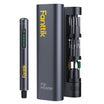
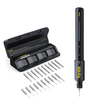
A high-quality magnetic bit holder is not a luxury; it is a core productivity requirement. In our workshop observations, the time wasted retrieving a dropped screw from the interior of a gaming console or a desktop PC can extend a project by 15-20 minutes. Modern precision systems often integrate magnetized cases and tips that ensure the fastener remains attached to the tool from the moment it is removed until it is safely placed in a magnetic parts tray.
Precision vs. Accuracy in Tooling
It is important to distinguish between precision and accuracy in your gear.
- Precision refers to the repeatability of the tool—does it deliver the same torque every time?
- Accuracy refers to how close that torque is to the intended setting.
For electronics work, precision (repeatability) is often more important. If you know your tool consistently shuts off at a specific threshold, you can calibrate your workflow around it. For those interested in the formal definitions used in measurement science, the NIST Handbook 44 provides the foundational standards for tolerances and weighing/measuring devices used in commerce.
ESD Safety: Protecting the "Heart" of the Device
One of the most frequent mistakes made by hobbyists transitioning to power tools is neglecting Electrostatic Discharge (ESD) safety. Manual plastic drivers are naturally non-conductive, but many power drivers have metal housings or internal motors that can generate static.
When working on Printed Circuit Boards (PCBs), a single static spark—often too small for a human to feel—can permanently destroy a microprocessor. According to IEC Standards regarding electrical safety and component protection, maintaining a grounded environment is non-negotiable for professional-level repair.
The Professional Setup Ritual
Before starting any high-volume session, we recommend the following ritual:
- Grounding: Always touch a grounded metal surface before handling components.
- Anti-Static Mats: Use a dedicated ESD mat as your primary work surface.
- Tool Check: Ensure your power driver is designed with materials that minimize static buildup or use an anti-static wrist strap connected to your workstation.
Workflow Optimization: The High-Volume Rhythm
Practitioners who handle 50+ screws per session develop a specific rhythm that maximizes the benefits of a power system. This "two-stage" approach minimizes errors and saves time.
- The "Teardown" Stage: Set the driver to a higher torque or manual-assist mode to break the factory seal on fasteners. Use a magnetic tray to organize screws by length and type.
- The "Build" Stage: Switch the driver to a low-clutch setting (2-3 in-lbs). This ensures that every screw is driven to the exact same depth without the risk of over-tightening.
This methodical approach is supported by industry insights which suggest that for high-volume, repetitive hobby work, a programmable electric precision screwdriver can reduce screwdriving time by 50-70% compared to manual tools while virtually eliminating stripping errors (Ehimax Tools).
Advanced Considerations: Battery and Bit Longevity
Transitioning to a cordless system introduces the need for battery management. For indoor precision tools, the lithium-ion batteries used are generally stable, but they require proper care to maintain their lifespan. We recommend storing tools in a climate-controlled environment to prevent bit corrosion and battery degradation.
Furthermore, ensure your tool kit complies with modern safety standards. The EU General Product Safety Regulation (EU) 2023/988 outlines the obligations for product safety and traceability, which is a key indicator of a brand's commitment to quality. When selecting a system, look for clear documentation and safety certifications that align with these international standards.
Summary of Transition Benefits
| Benefit Category | Manual Driver | Precision Power Driver | Impact on Hobbyist |
|---|---|---|---|
| Speed | Slow (Manual Rotation) | Fast (200+ RPM) | Completes projects 3x faster |
| Consistency | Subjective (Hand feel) | Objective (Clutch setting) | Prevents stripped threads |
| Ergonomics | High Wrist Strain | Low Finger Actuation | Enables longer work sessions |
| Precision | Variable | High (Repeatable) | Professional-grade assembly |
Establishing a Professional Workshop
Upgrading to a power driver is about more than just speed; it is about establishing a professional standard for your hobby. By reducing the physical friction of assembly, you free up mental energy to focus on the more complex aspects of electronics repair, such as soldering, diagnostic testing, and circuit design.
As you expand your toolkit, remember that the most "precise" tool is only as good as the technician using it. Combine your high-performance gear with a methodical workspace, proper ESD protocols, and a commitment to technical accuracy.
Disclaimer: This article is for informational purposes only. Electronics repair involves risks, including electric shock and damage to sensitive components. Always ensure devices are powered down and capacitors are discharged before beginning work. If you are unsure about a repair, consult a qualified professional.
References & Sources
- The 2026 Modern Essential Gear Industry Report: Engineering Trust in a Cordless World
- RxTooler - Top Ergonomic Power Drills for Reduced Fatigue
- EU General Product Safety Regulation (EU) 2023/988
- NIST Handbook 44 - Weights and Measures Standards
- IEC Standards Webstore - Electrical Safety
- Manual vs. Electric Torque Screwdrivers - Productivity Analysis
- Delta Regis - Differences in Electric Torque Clutch Mechanisms
Continue reading
 Preventing Plastic Thread Stripping in Delicate Toy Repairs
A definitive guide to repairing modern toys without stripping plastic threads. Learn the Goldilocks RPM zone and reverse-turn...
Preventing Plastic Thread Stripping in Delicate Toy Repairs
A definitive guide to repairing modern toys without stripping plastic threads. Learn the Goldilocks RPM zone and reverse-turn...
 Evaluating Grip and Balance for Intricate Drone Assembly
A guide to tool ergonomics for drone assembly, focusing on wrist fatigue prevention and torque precision for carbon...
Evaluating Grip and Balance for Intricate Drone Assembly
A guide to tool ergonomics for drone assembly, focusing on wrist fatigue prevention and torque precision for carbon...

Leave a comment
This site is protected by hCaptcha and the hCaptcha Privacy Policy and Terms of Service apply.