



































Solving Common Roadside Inflation Errors Under Pressure
We have all been there: a dark shoulder on a busy highway, the rhythmic thumping of a low tire, and the sudden realization that the next service station is miles away. In these high-stress moments, even the most seasoned drivers can find their hands shaking. It is exactly during these times that operational mistakes happen—not because of a lack of knowledge, but because stress narrows our focus and speeds up our movements.
At our service center, we frequently hear from families who felt a surge of anxiety when their portable inflator didn't seem to work as expected during an emergency. Most of the time, the device isn't the problem; it is a series of common, easily fixable human errors caused by the pressure of the situation. By understanding the mechanical "why" behind these errors, we can transform a frantic roadside stop into a calm, controlled maintenance task.
The "Hissing" Mystery: Mastering the Valve Connection
The most common frustration we see—based on patterns from our customer support logs and field technician observations—is a failure to achieve a proper seal on the tire valve. You connect the hose, hear a loud hiss, and assume the inflator is leaking or the valve is broken. In reality, the rush to get back on the road often leads to a "shallow seat."
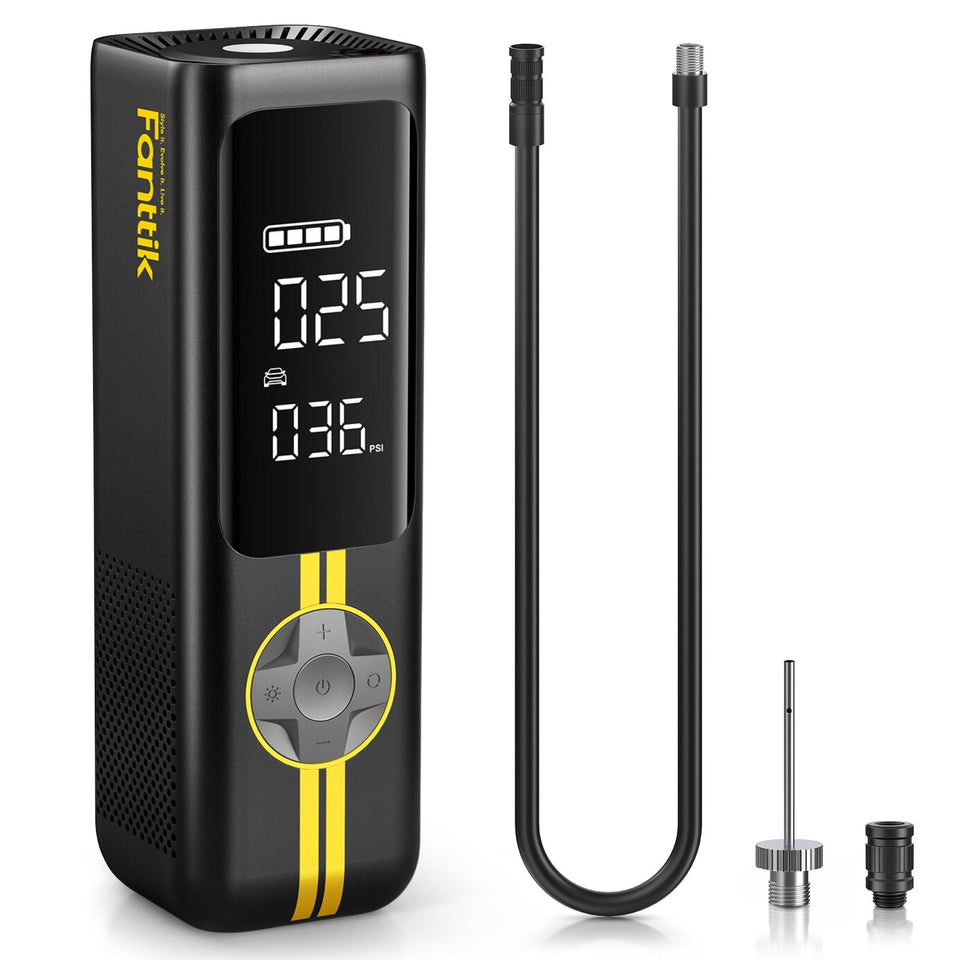
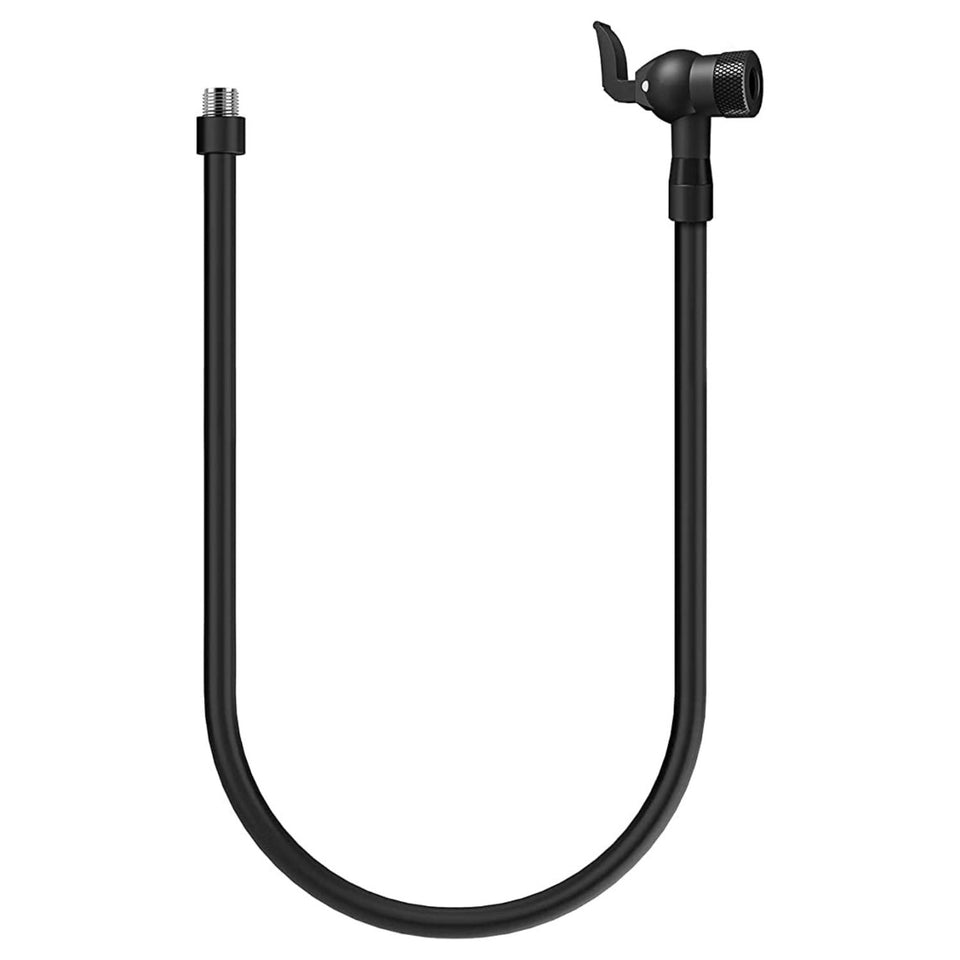
Most car tires use a Schrader valve, which requires a pin in the inflator's chuck to depress the spring-loaded core of the valve stem. If this connection is slightly off-center or not deep enough, air escapes around the edges rather than flowing into the tire.
To solve this, we recommend a deliberate "Push-Twist-Lock" motion:
- Push: Press the chuck firmly and squarely onto the valve stem. Do not be afraid to use a little force; you need to overcome the internal spring tension.
- Twist: If you are using a threaded connector, give it a full quarter-turn to engage the threads before tightening further.
- Lock: If using a lever-style chuck, flip the lever only after you have felt the chuck "bottom out" on the stem.
The goal is to listen for the hiss to stop completely before you ever hit the power button. If it is still hissing, you are losing more air than you are adding.
Logic Summary: This recommendation is based on mechanical interface standards for ISO-compliant Schrader valves. A secure seal is a prerequisite for accurate pressure sensing and prevents the "false failure" reports common in high-stress scenarios.

Overcoming "Gauge Chase" and Digital Fluctuations
Modern portable inflators have revolutionized roadside safety with digital displays and auto-shutoff features. However, these same features can cause confusion if you don't know how they "think." Many users experience "gauge chase"—stopping and starting the device repeatedly because the pressure reading seems to jump around.
When an inflator is running, the sensor is measuring the pressure of the air inside the hose and the tire. Because air is moving rapidly, there is a certain amount of turbulence and "backpressure." If you stop the unit immediately after seeing your target number, the reading will often drop by 1 or 2 PSI as the air settles.
Our field observation suggests that you should let the device run for a continuous 15 to 20 seconds before making any judgments about the reading. This allows the sensor's internal algorithm to average the pressure and provide a stable, accurate baseline. According to Car and Driver's testing of portable inflators, digital displays with auto-shutoff are specifically designed to mitigate this psychological stress by taking the guesswork out of the final number.
The 10 PSI Rule: Managing Heat and Runtime
One of the most critical technical limits of compact, cordless tools is thermal management. Unlike the massive air compressors at a mechanic's shop, portable units rely on small, high-speed motors that generate significant heat.
We often see users try to inflate four completely flat tires in a row without a break. This can lead to the unit's internal thermal protection kicking in, which a stressed user might mistake for a dead battery or a broken motor.
To keep your equipment healthy and your family safe, we suggest the "10 PSI Heuristic":
- The Rule: Limit continuous runtime to the time it takes to add 10 PSI to a standard car tire.
- The Cool-Down: If you need to add more than 10 PSI, or if you are moving to a second tire, give the unit a 2-to-3-minute rest.
This is especially important in the summer. As we discussed in our guide on avoiding over-inflation on hot pavement, heat affects both the tire's internal pressure and the tool's efficiency. Managing this thermal load ensures that the device remains accurate and prevents long-term damage to the lithium-ion battery cells.
Modeling Roadside Inflation Scenarios
To help you visualize these limits, we have modeled a typical emergency scenario based on standard thermal dissipation rates for compact DC motors.
| Parameter | Value / Range | Unit | Rationale |
|---|---|---|---|
| Ambient Temperature | 25 - 35 | °C | Typical summer roadside conditions |
| Starting Pressure | 22 | PSI | Common "low tire" warning threshold |
| Target Pressure | 32 | PSI | Standard passenger vehicle spec |
| Estimated Runtime | 2 - 4 | Min | Varies by motor cylinder size |
| Max Continuous Use | 10 | Min | Aligned with industry safety baselines |
Method & Assumptions: This is a scenario model, not a controlled lab study. It assumes a standard 15-inch or 16-inch tire volume (~35 liters) and a fully charged lithium-ion power source. Performance may decrease as battery voltage drops or in extreme temperatures exceeding 40°C.
The "Hot Tire" Trap: Why Your Readings Might Lie
In an emergency, you are almost always dealing with "hot" tires—tires that have been in motion and have built up internal heat through friction. This is where conventional wisdom can be dangerously misleading.
According to research from EngineerFix, a tire requires at least three hours of inactivity to reach a true "cold" state. When a tire is hot, the pressure can be 3 to 5 PSI higher than its cold baseline. If you bleed air out of a hot tire to reach the number on your door jamb, you will likely be dangerously under-inflated once the tire cools down.
The Solution for Self-Reliance: If you must adjust pressure while the tires are hot, aim for 3-4 PSI above the manufacturer's recommended cold pressure. Then, perform a pre-trip calibration the following morning when the tires are cold to ensure total accuracy. This approach balances immediate safety with long-term tire health.
Post-Inflation Verification: The Final 2%
You’ve reached your target pressure, the auto-shutoff has clicked, and you’ve disconnected the hose. You’re done, right? Not quite. There is one final "gotcha" that experienced technicians always check for: the valve core reset.
Sometimes, the act of depressing the valve core with an inflator chuck can cause the tiny internal spring to stick or become unseated, especially if there is a bit of grit or road salt in the stem. This leads to a slow leak that can flatten your tire again within hours.
The Pro Trick: After disconnecting your inflator, use a key, a pen, or your fingernail to quickly and firmly tap the center pin of the tire valve. You want to hear a tiny, split-second pfft of air. This "manual reset" ensures the valve core has snapped back into its sealed position. It is a small tweak that provides immense peace of mind when you are heading back onto the highway.
Engineering Trust in Your Gear
As highlighted in The 2026 Modern Essential Gear Industry Report, the transition to cordless, compact tools requires a new level of "credibility math." For us as users, that means trusting our gear but also understanding its boundaries. When a brand prioritizes compliance with standards like UL 2527, they are providing a tool designed to handle these stressors, but the human element remains the final piece of the puzzle.
By slowing down, mastering the "Push-Twist-Lock" motion, and respecting the thermal limits of your equipment, you move from a state of roadside anxiety to one of quiet confidence. You aren't just fixing a tire; you are demonstrating the self-reliance that keeps your family safe.
YMYL Disclaimer: This article is for informational purposes only and does not constitute professional automotive repair or safety advice. Always refer to your vehicle's owner's manual for specific tire pressure specifications and safety procedures. If you are in an unsafe location or unsure of your mechanical ability, contact professional roadside assistance immediately.
Sources & References
- EU General Product Safety Regulation (EU) 2023/988
- AAA - How to Check and Correct Tire Pressure
- Car and Driver - Best Portable Tire Inflators Tested
- EngineerFix - How Long to Wait for Tires to Cool
- IATA - Lithium Battery Shipping & Safety Guidance
- The 2026 Modern Essential Gear Industry Report: Engineering Trust
Continue reading
 Protecting Inflator Integrity During Summer Cross-Country Drives
Covers trunk temperature effects, EV-specific needs, and practical heuristics like the 10-second field test for ensuring inflator readiness.
Protecting Inflator Integrity During Summer Cross-Country Drives
Covers trunk temperature effects, EV-specific needs, and practical heuristics like the 10-second field test for ensuring inflator readiness.
 How Battery Management Systems Prevent Inflator Overheating
Covers adiabatic compression risks, sensor placement, current throttling, and a buyer's checklist for reliable thermal management.
How Battery Management Systems Prevent Inflator Overheating
Covers adiabatic compression risks, sensor placement, current throttling, and a buyer's checklist for reliable thermal management.

Leave a comment
This site is protected by hCaptcha and the hCaptcha Privacy Policy and Terms of Service apply.