










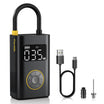
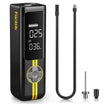


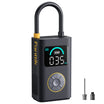
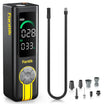
















Decoding UL 2527: What It Means for Your Portable Tire Inflator
Imagine standing on a darkened highway shoulder, the rain beginning to slick the asphalt, and your dashboard warning light glowing with the news of a low-pressure tire. In this high-stakes moment, the portable tire inflator in your trunk is no longer just a gadget; it is a critical safety tool. For the risk-averse car owner, the primary fear isn't just a flat tire—it is the fear that the emergency gear itself will fail, or worse, create a secondary hazard like an electrical fire or a battery meltdown.
Quick Summary: The UL 2527 Safety Checklist
If you are looking for a reliable portable inflator, here are the four non-negotiable safety indicators:
- The Mark: Look for a molded UL logo on the plastic housing, not just a sticker.
- The Protection: Ensure the product lists "thermal overload protection" or "auto-shutoff" to prevent motor melt-down.
- The Cord: Check for a thick-gauge, rubberized power cord (14–18 AWG) which resists cracking and oil.
- The Weight: Quality motors and heat sinks have heft; if a unit feels suspiciously light, it likely lacks the copper and metal needed for safe heat dissipation.
The Anatomy of UL 2527: More Than an Electrical Check
Technical standards like UL 2527 move from the realm of dry regulatory text into the category of essential consumer knowledge. UL 2527 is the safety standard specifically governing portable electric tools, including the air compressors and tire inflators we rely on for roadside preparedness.
When a device carries the UL Mark, it signifies that it has undergone rigorous, independent testing by Underwriters Laboratories (UL), an organization with a century-long reputation for safety [DF1, DF3]. For a portable tire inflator, UL 2527 compliance isn't a single test; it is a comprehensive evaluation of the device's entire lifecycle and failure modes.
The standard focuses on three primary pillars:
- Electrical Integrity: Ensuring the battery management system (BMS) and internal wiring can handle high current draw without overheating.
- Fire Prevention: Evaluating the flammability of the plastics and the effectiveness of thermal cutoffs.
- Mechanical Safety: Testing the housing's ability to withstand impacts and ensuring moving parts are shielded.
According to the UL Standards development procedure, these requirements involve participation from industry experts and consumer groups to address emerging risks in cordless technology [DF2].
Thermal Management: The Invisible Lifeline
In our experience observing product failures at the repair bench, the most common "gotcha" isn't a lack of power—it is a failure of thermal management. A portable tire inflator generates immense heat as it compresses air. In uncertified units, this heat can build up until it reaches a critical threshold that permanently damages the motor.
The "Abnormal Operation" Test
One of the most revealing aspects of UL 2527 is the "abnormal operation" test. This protocol simulates real-world mishaps, such as a blocked air intake or a stalled motor.
- Certified units typically utilize a quality sealed thermal switch. This acts like a reusable circuit breaker; if the motor gets too hot, the switch opens, cutting power. Once the tool cools, the switch resets.
- Budget, uncertified models often use a thermal fuse. These are "one-and-done" components. If the unit overheats once, the fuse blows permanently, leaving you with a dead tool in an emergency.
- The Worst Case: Low-end units lacking any protection can lead to permanent magnet demagnetization. When magnets inside the motor exceed their Curie temperature, they lose strength, causing a permanent drop in the inflator’s maximum pressure capability.
How We Modeled the Performance Decline
To help readers understand the engineering margins, we have developed a scenario-based model. Note: This is an illustrative heuristic based on standard engineering principles for permanent magnet DC (PMDC) motors, not a controlled laboratory study of a specific brand.
| Parameter | Estimated Range | Unit | Rationale / Source Category |
|---|---|---|---|
| Ambient Temp | 20–45 | °C | Typical summer roadside conditions. |
| Duty Cycle | 10 on / 5 off | min | Common user behavior when inflating 4 tires. |
| Wire Gauge | 14–18 | AWG | Standard for 10-15A DC tools; based on UL 2527 wiring requirements. |
| Cutoff Temp | 85–105 | °C | Standard engineering threshold for Class A/B motor insulation safety. |
| Magnet Type | N35–N52 | Grade | Industry standard for neodymium alloys in compact motors. |
Modeling Assumption: We assume a standard operating environment of 25°C (77°F). The degradation of permanent magnets is modeled based on the known Curie temperature thresholds of common neodymium alloys. If internal temperatures exceed these thresholds due to a lack of thermal cutoffs, a 15-30% loss in torque/pressure capability is common.
Stress Testing the Build: Power Cords and Housing
For many DIYers, the power cord is an afterthought—until it fails. Certified automotive tools must comply with specific requirements for wiring. Under UL 2527, units are expected to have thicker-gauge, oil-resistant wiring.
On our repair bench, we frequently see uncertified models using thin PVC insulation. Over time, exposure to summer heat or the freezing temperatures of a winter morning can cause this PVC to become brittle and crack. A cracked cord creates a hidden shock hazard and can lead to short circuits that damage your vehicle's 12V outlet.
Furthermore, UL 2527 requires robust strain relief where the cord enters the housing. This prevents the internal connections from fraying when the cord is pinched in a car door or pulled at an awkward angle—a common occurrence during pre-trip tire inspections.
Identifying Genuine Certification: Molded vs. Sticker
A significant challenge for the risk-averse buyer is the prevalence of counterfeit safety marks. Industry estimates from certification consultants like 360 Compliance suggest that upwards of 14 billion products enter the global marketplace with a UL mark annually [DF5]. Unfortunately, not all of them are legitimate.
Experienced mechanics use a simple heuristic to verify certification: Look for the molded mark.
- Genuine UL Marks: On high-quality automotive gear, the UL logo and the specific standard number (UL 2527) are typically molded directly into the plastic housing. This indicates that the safety requirements were integrated into the tool's design from day one.
- Red Flags: Be wary of units where the UL mark is only present on an adhesive sticker. Counterfeiters often apply these labels to uncertified products. If the sticker is peeling or the printing is blurry, it is a strong indicator that the product has not undergone the 8-step UL certification process, which includes quarterly unannounced factory inspections [DF6, DF7].
The Role of Global Standards (EU GPSR and Beyond)
While UL 2527 is a primary benchmark in North America, global safety is reinforced by regulations like the EU General Product Safety Regulation (EU) 2023/988. This regulation mandates that any product sold in the EU must be safe under "normal or reasonably foreseeable conditions of use."
For the consumer, a product carrying both UL and European certifications (like the CE mark) has been vetted against multiple safety frameworks. This multi-layered approach is essential for battery-powered devices, where navigating battery discharge rates and thermal stability is critical for preventing "thermal runaway"—a condition where a battery enters an uncontrollable, self-heating state.
Decision Framework: How to Choose with Confidence
If you are prioritizing reliability, use this framework to address "preparedness anxiety" when shopping:
- Verify the "Listed" Status: Ensure the product is "UL Listed" rather than just "UL Recognized." As noted by 360 Compliance, the UL Listed mark applies to finished products ready for consumer use [DF4].
- Inspect the Power Lead: Check the wire gauge. A thicker, more flexible cord with a matte, rubberized finish (indicating oil resistance) is typically a sign of a unit built to professional standards.
- Look for Thermal Cutoff Documentation: Check product specs for "Auto-Shutoff" or "Thermal Protection." This feature is vital when balancing portability and power for SUV tires, which require longer run times.
- The Weight Heuristic: While not a scientific measurement, the weight of a portable compressor often correlates with the quality of the motor. A suspiciously light unit often lacks the copper windings necessary for long-term durability.
Why "Good Enough" Isn't Enough
In the world of automotive emergency gear, the difference between a certified and an uncertified product is often invisible until the moment of failure. A UL 2527 certified inflator is a commitment to engineering transparency. It means the manufacturer has opened their doors to independent auditors and subjected their designs to "worst-case" simulations.
By choosing certified gear, you aren't just buying a tool; you are investing in a safety net. You are ensuring that when you are on that rainy highway shoulder, your equipment will perform its job without becoming part of the problem.
Disclaimer: This article is for informational purposes only and does not constitute professional automotive, mechanical, or legal advice. Always refer to your vehicle's owner's manual and the specific safety instructions provided by the tool manufacturer.
References & Sources
- EU General Product Safety Regulation (EU) 2023/988
- UL Standards & Engagement - About Standards
- 360 Compliance - UL Listed vs. UL Recognized
- American National Standards Institute (ANSI) - Standards Portal
- NormalTCI - UL Certification Process
- Fanttik Whitepaper: The 2026 Modern Essential Gear Industry Report
Continue reading
 Why IP Ratings Matter for Outdoor Emergency Jump Starting
Covers the Passenger Cabin Rule for storage, moisture's impact on battery chemistry, and why seal fatigue matters for...
Why IP Ratings Matter for Outdoor Emergency Jump Starting
Covers the Passenger Cabin Rule for storage, moisture's impact on battery chemistry, and why seal fatigue matters for...
 Selecting Tool Footprints for Efficient Apartment Storage
A guide to choosing tools for limited urban spaces, focusing on compact profiles, battery platforms, and vertical storage...
Selecting Tool Footprints for Efficient Apartment Storage
A guide to choosing tools for limited urban spaces, focusing on compact profiles, battery platforms, and vertical storage...
Leave a comment
This site is protected by hCaptcha and the hCaptcha Privacy Policy and Terms of Service apply.