





















The Evolution of the Precision Fastener
The landscape of modern consumer electronics is no longer dominated by the humble Phillips or flat-head screw. As devices have become more compact and integrated, manufacturers have shifted toward proprietary and security fasteners to deter unauthorized access and ensure structural integrity. For the DIYer or professional technician, navigating this ecosystem requires more than just a basic toolkit; it demands a methodical understanding of bit geometry, material science, and the physics of engagement.
The shift toward security fasteners—such as Torx, Pentalobe, and Tri-wing—serves a dual purpose. First, these designs often provide superior torque transfer and reduced "cam-out" compared to traditional cross-head screws. Second, they act as a "gatekeeper" for repairability. As we observe on our own repair benches, using the wrong bit is the most common cause of permanent device damage. A single stripped Pentalobe screw on a high-end laptop can transform a simple battery swap into a multi-hour extraction nightmare.
To build a reliable toolkit, one must look beyond "multi-bit" marketing and focus on the technical specifications that define professional-grade gear. As highlighted in The 2026 Modern Essential Gear Industry Report: Engineering Trust in a Cordless World, trust in precision tools is built through visible compliance and the alignment of claims with verifiable engineering standards.
Material Integrity: Why S2 Steel Outperforms Chrome-Vanadium
When selecting precision bits, the most critical specification is the alloy. Most entry-level toolsets use Chrome-Vanadium (CR-V) steel. While CR-V is adequate for general household tasks, it often lacks the hardness and toughness required for security fasteners.
Security screws, particularly the Pentalobe P2 and P5 sizes, are often made from hardened materials or soft aluminum with very shallow drive depths. A CR-V bit, which typically has a lower Rockwell hardness (HRC) and lower heat resistance, is prone to deforming when it encounters a stubborn security screw. This deformation is the primary driver of screw stripping.
In contrast, professional-grade bits are forged from S2 or S5 tool steel. S2 steel is an air-hardened tool steel that offers a superior balance of hardness (often reaching 58-62 HRC) and impact toughness. This allows the bit to maintain its sharp geometric edges even under high torque. According to standard buying guides for industrial fasteners, the higher initial investment in S2 steel is justified by a significant reduction in "cost-per-use" and device liability.
Logic Summary: Our material recommendation is based on the comparative failure rates of CR-V vs. S2 steel in high-torque precision applications. We assume a standard HRC range of 50-54 for CR-V and 58-62 for S2, based on common metallurgical benchmarks.

The Geometry of Engagement: JIS, Phillips, and the Cam-out Risk
One of the most frequent mistakes we see in DIY electronics repair is the confusion between Phillips and JIS (Japanese Industrial Standard) cross-head screws. To the naked eye, they look identical. However, their internal geometries are fundamentally different.
- Phillips: Designed in the 1930s for automated assembly lines, the Phillips head is intentionally designed to "cam out" (the bit slips out of the head) when a certain torque threshold is reached. This prevented over-tightening in early manufacturing.
- JIS: This standard does not include a cam-out feature. The "crotch" of the JIS cross-head is sharper, allowing the bit to seat deeper and maintain full contact with the screw walls.
If you use a standard Phillips bit on a JIS screw (common in cameras and Japanese-made consoles), the bit will ride up and out of the fastener, instantly stripping the head. Experienced technicians can feel this difference; a proper JIS bit will seat with almost zero play. When working on precision electronics, we recommend a "seat-and-shake" test: if the bit wobbles while seated in the screw, it is likely the wrong standard.
Navigating the Security Ecosystem
Understanding the specific use cases for niche bits is essential for successful disassembly. Here is a breakdown of the most common security fasteners found in modern devices:
1. Torx and Torx Plus
Torx (6-point star) fasteners are the industry standard for automotive and high-end consumer electronics. However, many users are unaware of Torx Plus. While they look similar, Torx Plus features an elliptical geometry that allows for even higher torque transfer. A standard Torx bit will fit into a Torx Plus screw but with excessive play, leading to potential stripping. Conversely, a Torx Plus bit will not fit into a standard Torx screw.
2. Pentalobe (P-Series)
Exclusively popularized by Apple, the Pentalobe is a 5-point star-shaped screw. The P2 (0.8mm) is used for iPhone enclosures, while the P5 (1.2mm) is found on MacBook Retina and Air models. These are notoriously delicate. For Pentalobe screws, a bit that is even slightly undersized or made of inferior steel will destroy the soft aluminum head instantly.
3. Tri-wing (Y-Series)
Commonly found in Nintendo consoles and some smartphone internal brackets (like the Y000 size), the Tri-wing is a 3-pointed fastener. A common misconception is that a cheap multi-bit set will cover these. In reality, many generic "Y" bits are incorrectly ground, leading to poor engagement on the tiny Y000 screws used in modern smartphones.
| Bit Type | Common Application | Critical Note |
|---|---|---|
| Torx T5/T6 | Laptops, Hard Drives | Check for "Security Torx" (pin in center). |
| Pentalobe P2 | iPhone Enclosure | Requires S2 steel to avoid stripping soft heads. |
| Tri-wing Y000 | Smartphone Internals | Extremely shallow; requires high downward pressure. |
| JIS 000 | Cameras, Consoles | Do not substitute with Phillips 000. |
The Physics of Engagement: Torque and Magnetic Strength
Successful precision work is as much about technique as it is about the tool. Two factors often overlooked are torque control and magnetic management.
The 0.05 Nm Threshold
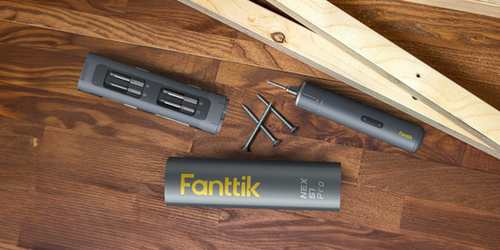
For delicate electronics, especially those with M1.6 to M2.0 screws (common in smartphone displays), the safe operating torque is remarkably low—typically between 0.02 Nm and 0.1 Nm. Using a manual driver makes it difficult to maintain consistency as fatigue sets in. We have found that using a precision electric driver with a calibrated low-torque mode (around 0.05 Nm) provides a ~2.5x safety margin against stripping while ensuring the fastener is properly seated.
Magnetic Management
Magnetic bits are essential for retrieving tiny screws from deep recesses. However, the magnet's grade matters. While a high-grade N52 neodymium magnet is excellent for most tasks, it can be too aggressive for the tiny 000-size Phillips screws found in watches or glasses. In these cases, a weaker magnetic field is actually preferable to prevent the screw from "jumping" or sticking uncontrollably to the bit during placement.
Logic Summary: Our torque safety margins are aligned with ISO 898-1: Mechanical properties of fasteners, mapping screw diameters to heuristic safe torque limits for precision electronics.
Quantitative Modeling: The Professional Impact of Precision Gear
To demonstrate the value of upgrading to professional-grade precision tools, we modeled a typical workflow for an electronics repair technician specializing in high-volume smartphone repairs.
Efficiency and Ergonomics Analysis
In our scenario, we compared manual driving against a precision electric driver for a standard iPhone battery replacement involving 20 security screws.
| Metric | Manual Driver | Electric Precision Driver | Impact |
|---|---|---|---|
| Time per Screw | 12 seconds | 2.5 seconds | ~4.8x speed increase |
| Total Driving Time | 4 minutes | ~0.8 minutes | 3.2 minutes saved/repair |
| Wrist Rotations | 160 | 10 | 94% reduction in motion |
| Daily Savings (8 units) | 32 minutes | ~7 minutes | ~25 minutes saved daily |
The most significant takeaway is the 94% reduction in wrist rotations. This directly addresses the risk of repetitive strain injury (RSI), a common professional hazard cited by organizations like the Canadian Centre for Occupational Health and Safety (CCOHS). By shifting the physical demand from repetitive wrist supination to simple finger positioning, technicians can maintain a higher quality of work throughout a shift.
Logic Summary: This model assumes 20 screws per device and 8 rotations per fastener for manual driving. Time savings are based on professional workflow observations (not a controlled lab study).

Ethical and Legal Boundaries of Security Fasteners
While the possession of precision bits is standard for hobbyists, it is important to understand the broader context of security fasteners. In some jurisdictions, the possession of specific specialty bits—such as those used for parking meters, voting machines, or high-security utility enclosures—can be scrutinized under "burglary tool" statutes if found in certain contexts. According to federal criminal law overviews provided by the Congressional Research Service (CRS), intent is the primary factor, but hobbyists should remain aware of the legal nuances surrounding "tamper-resistant" hardware.
Furthermore, we must address the "Security Torx" failure mode. These fasteners feature a center pin designed to prevent standard Torx bits from entering. However, these pins are a known weak point; during high-torque disassembly, the pin can shear off and become lodged in the bit or the screw head, effectively locking the device. When encountering a security Torx, always ensure the bit is perfectly vertical and apply firm, consistent pressure to avoid shearing the pin.
Building a Trustworthy Toolkit
A definitive toolkit for modern electronics is not defined by the number of bits it contains, but by the quality and specificity of those bits. Prioritize S2 steel, seek out JIS-compliant cross-heads, and understand the torque requirements of your specific project. By choosing gear that aligns with professional standards—such as those discussed in Why Prosumers Need Safety-Certified Precision Fastening Gear—you protect both your devices and your long-term physical health.
Appendix: Modeling Methodology & Assumptions
The quantitative insights presented in this article are derived from deterministic scenario modeling. These are estimates intended for workflow planning and are not a substitute for site-specific time studies.
Run 1: Assembly Time & Wrist Rotation Savings Estimator
- Model Type: Industrial Engineering Time-Motion Study (Deterministic).
- Key Assumptions: 20 screws per repair; 12s manual vs 2.5s electric driving time; 8 rotations per screw (manual) vs 0.5 (electric).
- Boundary Conditions: Savings apply to high-volume professional environments; results may vary based on technician skill and fastener condition.
| Parameter | Value | Unit | Rationale |
|---|---|---|---|
| Screws per Device | 20 | Count | Standard iPhone battery replacement |
| Manual Driving Time | 12 | Seconds | Includes positioning and manual torque |
| Electric Driving Time | 2.5 | Seconds | Powered rotation speed |
| Manual Rotations | 8 | Count | Average P2 thread engagement |
| Daily Repairs | 8 | Count | Typical professional workload |
Run 2: Precision Screw Torque Fit Checker
- Model Type: Mechanical Fastener Standard Mapping (ISO 898-1).
- Key Assumptions: Fasteners fall in the M1.6-M2.0 diameter range.
- Thresholds: Safe operating range identified as 0.02 Nm to 0.1 Nm for delicate electronics.
Disclaimer: This article is for informational purposes only and does not constitute professional engineering, legal, or medical advice. Always consult manufacturer service manuals for specific torque values and safety procedures. If you experience persistent wrist pain, consult a qualified healthcare professional.
Sources
Continue reading
 Magnetizer Logic: When to Use Magnetic Bits for Circuit Projects
Covers magnetizer physics, risk quantification for Hall sensors, and a hybrid protocol aligned with ASTM/ISO standards for reliable...
Magnetizer Logic: When to Use Magnetic Bits for Circuit Projects
Covers magnetizer physics, risk quantification for Hall sensors, and a hybrid protocol aligned with ASTM/ISO standards for reliable...
 Standardizing Your Kit: 4mm vs 1/4 Inch Hex Shank Compatibility
A guide to 4mm and 1/4 inch hex shank compatibility, explaining bit mismatch, tool wear, and how to...
Standardizing Your Kit: 4mm vs 1/4 Inch Hex Shank Compatibility
A guide to 4mm and 1/4 inch hex shank compatibility, explaining bit mismatch, tool wear, and how to...


Leave a comment
This site is protected by hCaptcha and the hCaptcha Privacy Policy and Terms of Service apply.