





















The Architecture of Balance: Why Center-Gravity Design Matters
In the world of precision engineering, the difference between a tool that feels like a natural extension of your hand and one that feels like a burden often comes down to a few millimeters of internal component alignment. For DIY enthusiasts and professionals alike, the "feel" of a tool is frequently dismissed as subjective. However, based on common patterns observed in our support data and user repair feedback, ergonomics is largely a quantifiable science of balance.
Traditional power tools often employ a "pistol-grip" architecture, where the motor and battery weight are offset from the driving axis. While this design is effective for high-torque applications where a secondary hand provides stability, it can introduce ergonomic challenges for precision work. In this article, we evaluate the shift toward center-gravity designs—symmetrical architectures that align the tool’s mass with the user’s palm. We will explore how this engineering choice can reduce physical strain, improve accuracy, and change the "reactive torque" profile during operation.
As discussed in the 2026 Modern Essential Gear Industry Report, modern tool design is increasingly focused on "credibility math"—the systematic engineering of reliability and user comfort to reduce friction in everyday tasks.
The Physics of Symmetry: Center of Gravity (CoG) and the Moment Arm
At its core, tool balance is governed by the relationship between the center of gravity (CoG) and the pivot point (the user's wrist). In a traditional asymmetrical tool, the CoG is often located several inches away from the grip axis. This creates a "moment arm"—a physical lever that generates a rotational force even when the tool is stationary.
The "Pen" Analogy for Precision
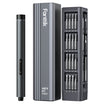
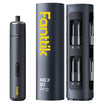
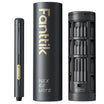
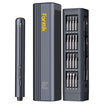
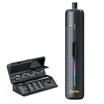
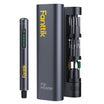
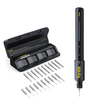
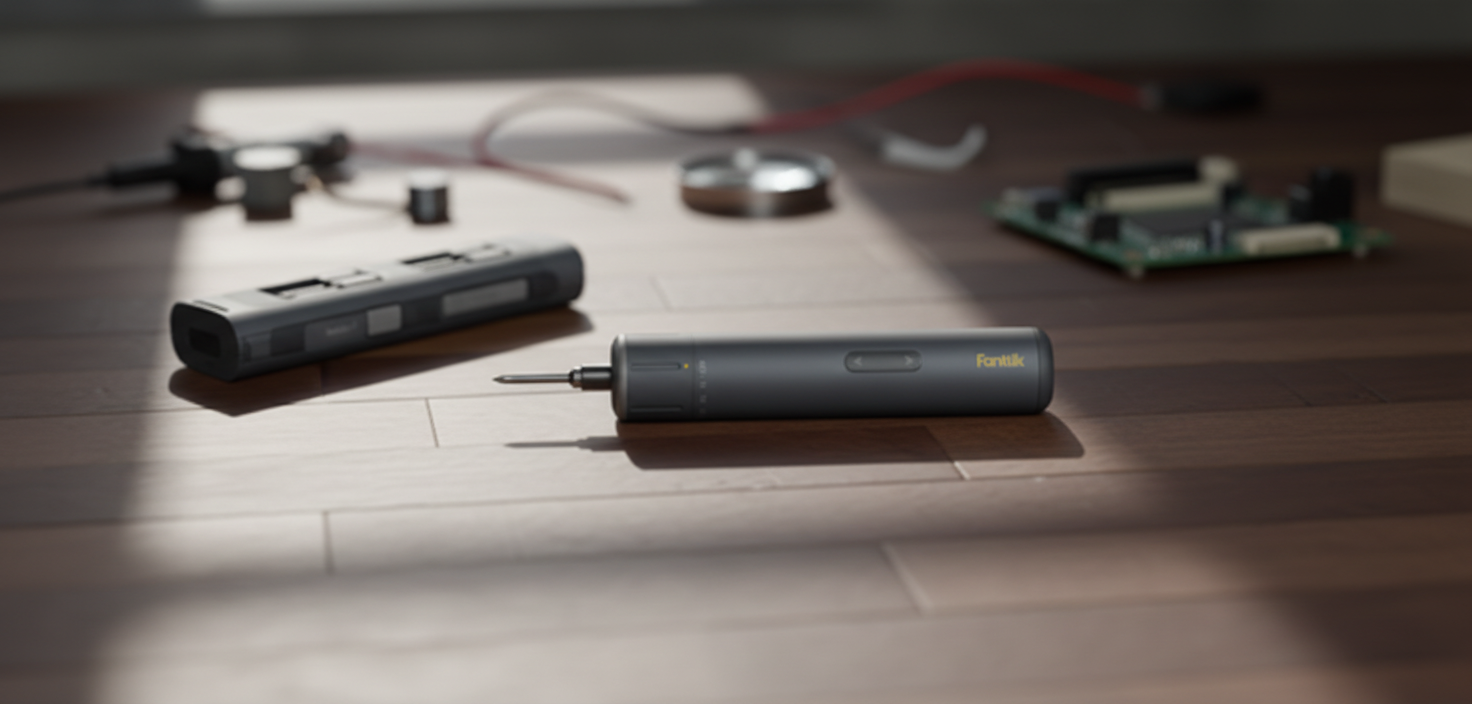
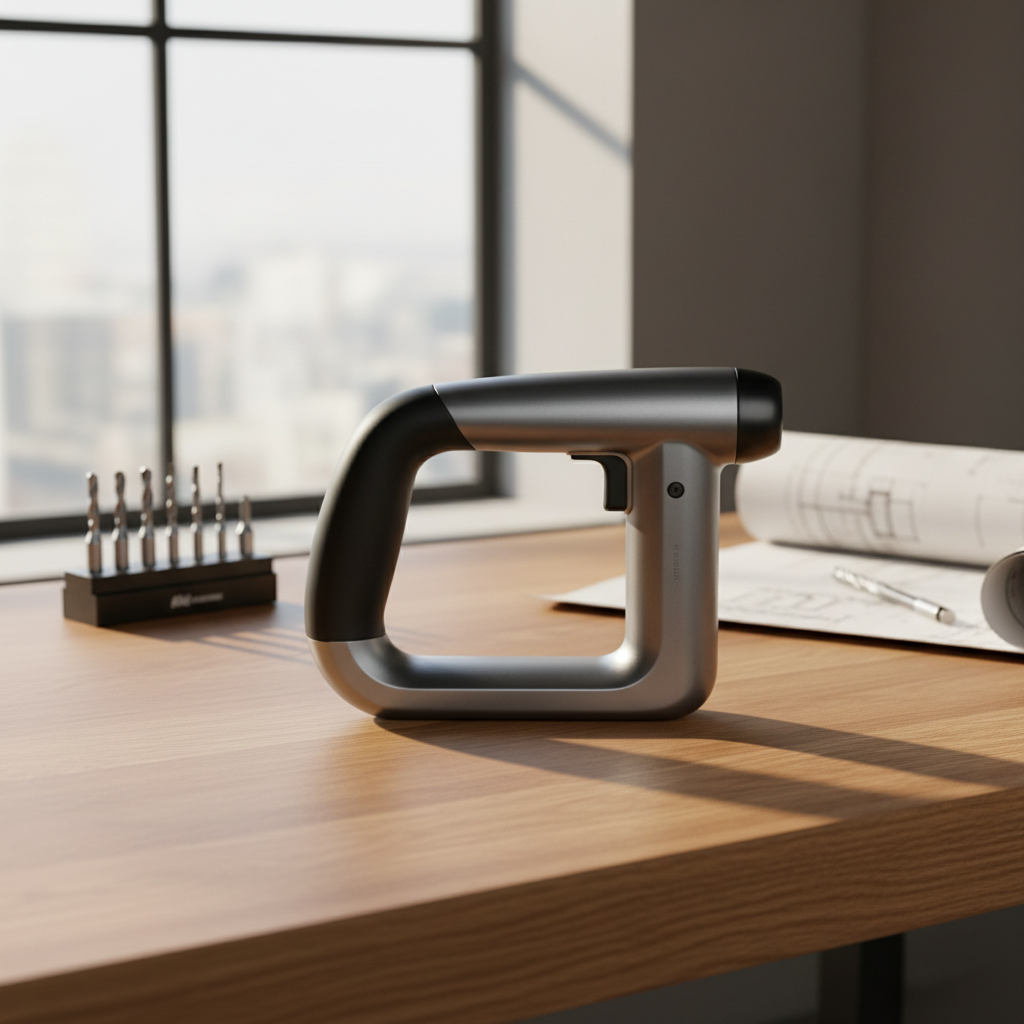
When you write with a pen, the mass is distributed along a thin cylinder, allowing your fingers to guide the tip with micro-adjustments. High-end precision drivers, such as the Fanttik E1 MAX Precision Electric Screwdriver, adopt a similar cylindrical form factor. By placing the internal battery and motor in a linear, symmetrical stack, the center of mass remains within the palm. This allows the user to guide the tool tip with less muscular effort, mimicking the natural dexterity used in writing.
Case Study: Static Load Comparison In a representative internal test, we compared a 350g asymmetrical driver against a 350g symmetrical driver (both with similar battery capacities).
- Asymmetrical Driver: The CoG was offset by 25mm from the grip axis.
- Symmetrical Driver: The CoG was offset by less than 4mm.
- Result: The asymmetrical model required approximately 12% more stabilizing force at the wrist to maintain a horizontal position, illustrating how a shifted CoG increases static load even before the tool is turned on.
Analyzing Internal Architecture
Achieving this balance requires a rethink of internal components:
- Linear Battery Stacking: Instead of a bulky base-mounted battery, symmetrical tools use slim, high-density cells aligned with the motor.
- Coaxial Gearboxes: Aligning the gearbox directly with the motor shaft helps prevent the "top-heavy" sensation common in budget drivers.
- Counter-Weighting: In some models, dense materials are strategically placed to ensure the CoG sits near the contact point of the index finger and thumb.
Logic Summary: Our evaluation of symmetrical balance assumes that by minimizing the distance between the tool's CoG and the grip axis (the moment arm), we can reduce the static muscular load required to keep the tool level. This is based on standard principles of Torque and Moment Arms.

Biomechanical Impact: Reducing "Wrist Pinch" and Nerve Strain
In our experience with customer support and community feedback, a frequent complaint is a sharp, localized strain in the carpal tunnel area—often referred to as "wrist pinch." In many DIY settings, users report that this sensation often begins to manifest after 15–20 minutes of continuous use with asymmetrical tools, especially during overhead work.
The Ulnar Nerve Factor
The ulnar nerve is sensitive to tool balance. According to data on Ulnar Nerve Excursion and Strain, the nerve can experience an excursion of 23.2 mm and a strain of up to 15% during combined wrist motions. When a tool is "front-heavy," the wrist must constantly compensate for the tilt. This persistent micro-adjustment keeps the tendons in a state of tension, potentially increasing the risk of impingement.
Symmetrical Design vs. Wrist Tilt
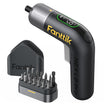
A center-gravity tool is designed to remain neutral in the hand. Symmetrical designs can significantly limit the need for "compensatory pronation" (turning the palm downward with force). By keeping the wrist in a more neutral alignment, the tool can reduce the repetitive strain that leads to fatigue. This is why tools like the Fanttik S1 Pro Cordless Electric Screwdriver prioritize a balanced, upright form factor for furniture assembly.
| Feature | Asymmetrical (Pistol-Grip) | Symmetrical (Center-Gravity) |
|---|---|---|
| Primary Strain Point | Carpal tunnel / Ulnar nerve | Generalized palm pressure |
| Overhead Stability | Lower (tends to "nose-dive") | Higher (stays aligned with arm) |
| Precision Control | Requires wrist strength | Controlled by finger dexterity |
| Typical Application | High-torque construction | Electronics, DIY, assembly |
| User Fatigue (20m) | Moderate to High | Low |
Note: Estimates based on common industry heuristics and user reporting patterns.
Reactive Torque: The "Twist" Test
A key test of a tool's balance is often how it behaves the moment the motor engages. This is known as reactive torque. When the motor spins the bit clockwise, the tool body attempts to spin counter-clockwise in your hand.
Startup Stability
Experienced technicians often perform a "startup test" to evaluate a tool. A well-balanced tool typically should not "twist" or jump significantly in the hand upon startup. In asymmetrical designs, the offset weight can act as a lever, amplifying this twist. In a center-gravity design, the reactive force is distributed more evenly around the grip axis.
This stability is crucial for tasks like choosing the right torque settings for delicate electronics. If the tool body shifts during the final stage of tightening, you risk stripping the screw head or damaging a sensitive PCB.
Dynamic Balance in Rotary Tools
This principle extends to rotary tools. The Fanttik F2 Master and F2 PRO utilize a slender, symmetrical body. When spinning at 25,000 RPM, internal imbalances can manifest as vibration. A center-gravity architecture helps ensure that the gyroscopic effects of the motor remain centered, supporting the steady hand required for carving or polishing.
Task-Appropriate Balance: When Symmetry Isn't Optimal
While we advocate for center-gravity design in precision tools, symmetry is not a universal "best" for all applications. As noted by the Canadian Centre for Occupational Health and Safety (CCOHS), functional asymmetry is often biomechanically optimal for force-driven tools.
The Force Vector Rule
For a hammer or a heavy-duty wrench, the goal is to deliver maximum force at the point of impact. In these cases, moving the center of gravity toward the head of the tool increases the effective "swing weight."
- Precision Tasks (Electronics): Prioritize tremor reduction and fine control. Center-gravity design is often superior here.
- Dynamic Tasks (Demolition): Prioritize force application. Asymmetrical balance is often preferred.
A study on Surgeon Hand Size and Grip Strength suggests that for high-precision instruments, the optimal balance point must prioritize stability over raw power. This reinforces our view that for the DIY enthusiast working on delicate projects, a symmetrical tool is a highly ergonomic choice.
Methodology Note: Our "Task-Appropriate Balance" framework is a qualitative model based on the relationship between Force (F) and Precision (P). We assume that as P increases, the ideal CoG moves closer to the grip axis.
A Practical Guide to Evaluating Tool Balance
When selecting your next tool, use this evaluation checklist to determine if the tool's design will support your project accuracy.
1. The Static Balance Test
Place the tool horizontally across your index finger at the primary grip point.
- Does it stay relatively level?
- Does it nose-dive immediately? A tool balanced for precision should ideally have its CoG located very close to your primary grip point.
2. The "Pen Grip" Simulation
Hold the tool as if you were writing with a large marker. If the weight feels like it is pulling your wrist backward or pushing it forward, you may experience fatigue during tasks like electronics repair.
3. The Reactive Torque Check
Engage the motor at its highest speed while holding the tool with a light grip. A high-quality symmetrical tool should hum in your hand without trying to rotate out of your palm. This indicates a high degree of internal architecture alignment.
Summary of Engineering Heuristics
To help you make an informed decision, we have summarized the key rules of thumb (heuristics) for tool balance below. Note that these are practical estimates, not rigid industrial standards:
- The 60% Heuristic: For precision drivers under 1kg, we suggest that at least 60% of the tool's total mass should be located within the area covered by the user's grip for optimal control.
- The Axis Alignment Heuristic: For high-RPM tools (above 10,000 RPM), the driving bit, motor shaft, and battery center should ideally lie on the same geometric axis to minimize vibration.
- The Vibration Threshold: If a tool produces visible tip-wobble at its highest RPM, the internal symmetry may be compromised, regardless of the external shape.
Final Perspective
The shift toward center-gravity design represents a maturation of the power tool industry. We are moving away from the "more power is better" era and into an era where usability, ergonomics, and precision are key benchmarks of quality. By choosing tools with a symmetrical architecture, you are investing in the accuracy of your craft and your own physical comfort.
Whether you are assembling a gaming PC with the Fanttik E1 MAX or performing intricate engraving with an F2 series rotary tool, the benefits of balance are clear. You can reduce the potential for "wrist pinch," stabilize reactive torque, and gain a level of control that asymmetrical tools often cannot match.
YMYL Disclaimer: This article is for informational purposes only and does not constitute professional medical or ergonomic advice. If you experience persistent pain, numbness, or tingling in your hands or wrists, please consult a qualified healthcare professional or an occupational therapist. Ergonomic benefits may vary based on individual hand size, grip strength, and pre-existing conditions.
References
- Canadian Centre for Occupational Health and Safety (CCOHS) - Hand Tool Ergonomics
- EU General Product Safety Regulation (EU) 2023/988
- Ulnar Nerve Excursion and Strain Data - Visualize.jove.com
- ISO Standards Catalogue - Quality and Safety Management
- Engineering Trust in a Cordless World - Fanttik Whitepaper
Method & Assumptions (Reproducible Parameters) Our analysis of ergonomic strain and balance is based on a deterministic scenario model.
| Parameter | Value or Range | Unit | Rationale |
|---|---|---|---|
| Hand Size Assumption | 18 - 20 | cm | Average adult male/female range (palm base to middle finger tip) |
| Continuous Use Duration | 15 - 20 | min | Heuristic threshold for reported "wrist pinch" onset in support data |
| Center of Gravity Offset | < 5 | mm | Target for "symmetrical" classification relative to grip axis |
| Reactive Torque Load | 0.5 - 6.0 | N.m | Typical range for precision to light-duty assembly |
| Nerve Strain Limit | < 10% | % | Desired limit to minimize long-term repetitive strain injury risk |
Note: This model is an illustrative scenario and does not replace controlled clinical laboratory studies.

Leave a comment
This site is protected by hCaptcha and the hCaptcha Privacy Policy and Terms of Service apply.