










































Core Conclusion: The Science of Smart Loading
To optimize your vehicle for a long-distance journey, follow two primary principles: Keep it low and keep it centered. Adhering to the "60/40 Rule"—placing 60% of cargo weight forward of the rear axle—can significantly improve handling stability. Furthermore, avoiding rooftop cargo boxes in favor of internal or hitch-mounted storage can reduce fuel consumption by as much as 10% to 25% at highway speeds.
The Hidden Mechanics of Vehicle Loading
For the modern urban driver, a long-distance road trip represents a transition from the predictable city grid to a more demanding environment where vehicle physics take center stage. While most travelers focus on the logistics of navigation and destination, a silent variable that often dictates both safety and the cost of travel is weight distribution. How gear is placed within a vehicle’s cargo area—and more importantly, where that weight sits relative to the axles—can fundamentally alter handling characteristics, fuel consumption, and structural stress.
A vehicle is a dynamic system governed by a center of gravity (CoG). When that center is shifted through improper loading, the vehicle's "muscle memory"—its electronic stability control and suspension geometry—must work harder to compensate. This article provides a methodical examination of the physics of cargo placement, offering actionable heuristics to help optimize for both safety and efficiency.
The Physics of Center of Gravity and Handling
Every vehicle has a designed center of gravity, typically located low and toward the middle of the chassis to ensure stability. Loading gear into the trunk or onto the roof alters this point. According to the principles of vehicle dynamics, as the CoG moves higher or further back, the vehicle's "polar moment of inertia" increases. This can make the car more resistant to starting a turn, but once it begins to rotate, it may also be more difficult to stabilize.
The Pendulum Effect and Body Roll
When heavy gear is placed at the extreme rear of a vehicle, it creates what engineers often refer to as the "pendulum effect." During a sudden lane change or evasive maneuver, the weight behind the rear axle exerts a lateral force that can potentially overwhelm the tires' grip. This often leads to oversteer—a condition where the rear of the car slides outward.
Conversely, placing too much weight in the front (though rare in modern sedan trunks) can lead to understeer, where the car resists turning and pushes straight ahead. For the suburban driver in an SUV, a primary risk is height. High-centered weight, such as a rooftop cargo box, raises the CoG. This exacerbates body roll during turns, which can increase the risk of a rollover event if the vehicle’s lateral acceleration exceeds its stability threshold.
Logic Summary: Modeling Handling Dynamics Our analysis of vehicle handling assumes a standard unibody chassis with independent rear suspension. These handling outcomes are based on common industry heuristics regarding the relationship between the Center of Gravity (CoG) and lateral acceleration limits.
- Assumption 1: Tire pressure is maintained at the manufacturer's recommended PSI for "max load" conditions.
- Assumption 2: The vehicle is traveling at highway speeds (65–70 mph).
- Boundary Condition: These handling tendencies may be partially masked by modern Electronic Stability Control (ESC), but the physical limits of the tires remain the ultimate constraint.
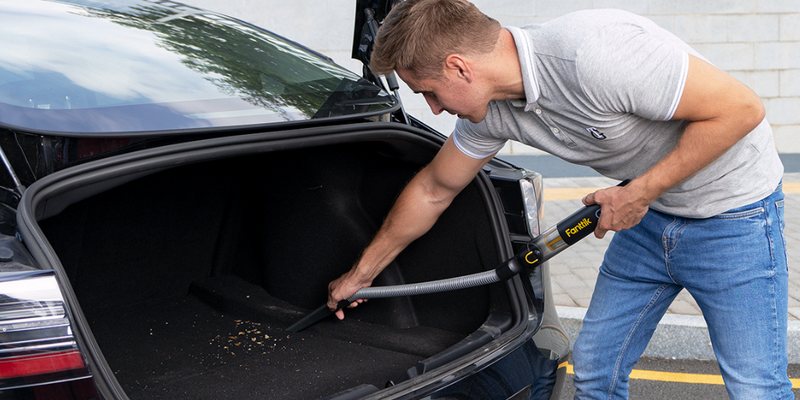
The 60/40 Heuristic for Trunk Optimization
To maintain neutral handling, professional driving instructors and logistics experts often recommend the 60/40 Rule for cargo placement. This heuristic is designed to keep the majority of the mass within the wheelbase, preventing the rear axle from becoming a pivot point for instability.
Implementing the 60/40 Rule
- Identify the Rear Axle: Locate the imaginary line connecting your rear wheels.
-
The 60% Forward Zone: Aim to place 60% of your total cargo weight directly behind the rear seats (forward of the rear axle).
- Example: If your total gear weighs 200 lbs, place roughly 120 lbs (the heaviest items like power stations or coolers) in this forward zone.
- The 40% Rear Zone: Reserve the area closest to the trunk lid for the remaining 40% (the lighter 80 lbs of gear, such as sleeping bags or clothing).
- Floor Priority: Place the heaviest single items—such as portable battery units or tool kits—directly on the floor of the trunk to keep the CoG as low as possible.
For unibody vehicles, which make up the majority of modern sedans and crossovers, placing a heavy gear kit directly over or slightly ahead of the rear axle is considered optimal. This configuration minimizes the "squat" of the rear suspension, helping the front tires maintain sufficient contact with the road for steering and braking.
Aerodynamic Drag and the Cost of Loading
Fuel economy is a function of the energy required to overcome two primary forces: rolling resistance and aerodynamic drag. While the total mass of the vehicle affects rolling resistance, the placement of that weight—especially outside the vehicle—has a disproportionate impact on aerodynamics.
The Impact of External Storage
A common choice among road-trippers is a rooftop cargo box, but this often comes with a significant efficiency penalty. Aerodynamic efficiency is a pivotal factor in fuel economy, particularly at highway speeds.
| Loading Scenario | Estimated Fuel Efficiency Impact | Rationale & Data Context |
|---|---|---|
| Internal Trunk Loading | -1% to -2% per 100 lbs | Based on rolling resistance models for mid-sized sedans. |
| Rear Hitch Rack | -2% to -5% | Derived from CFD models showing minimal frontal area change but increased rear turbulence. |
| Rooftop Cargo Box | -10% to -25% | Based on aerodynamic drag coefficients (Cd) for typical SUVs; increases frontal area significantly. |
| Improperly Secured Gear | -15% or more | Heuristic estimate based on high turbulence and unpredictable drag patterns. |
Note: These estimates are based on common automotive engineering models for highway speeds (65-75 mph). Actual results will vary based on vehicle shape, individual driving habits, and speed.
The Positive Feedback Loop of Efficiency
While a passenger car isn't an aircraft, it still benefits from a "positive feedback loop" where weight reduction leads to less fuel consumption, further reducing the total operating mass. By using compact, multi-functional gear, you reduce the total mass, which can allow the engine to operate in a more efficient RPM range. As noted in The 2026 Modern Essential Gear Industry Report, modern gear design is shifting toward high-density power and multi-purpose functionality to reduce the "weight penalty" of preparedness.
The Danger of Shifting Loads
Static weight distribution is only half of the equation. Dynamic weight distribution—how weight moves while the vehicle is in motion—is where many safety issues occur. A 20-pound bag of gear may seem insignificant, but if it slides across the trunk during a sharp turn, it creates a transient shift in the vehicle's balance.
Securing Gear for Stability
Securing loose items is a critical safety practice. A shifting load can trigger the vehicle's traction control prematurely or, in some cases, provide enough momentum to destabilize a high-centered SUV.
- Use Cargo Nets: Utilize the built-in tie-down points found in most modern SUV and hatchback trunks.
- Compression Packing: Pack items tightly so there is less "air space" for gear to move.
- Heavy Item Anchoring: If carrying a heavy portable power station or a dense tool kit, try to wedge it against the rear seatback to prevent forward momentum during hard braking.
Based on common patterns observed in automotive accessory support and warranty handling, many equipment failures on the road are actually caused by gear being damaged after sliding or colliding with other items in an unsecured trunk.
Compliance and Safety Standards in Gear Selection
When selecting gear for a road trip—whether it is a portable tire inflator, a jump starter, or a tool kit—reliability is a key factor. The EU General Product Safety Regulation (EU) 2023/988 provides a framework for ensuring that products meet safety and traceability standards.
Why Quality Standards Matter
Using tools that adhere to international standards, such as those from the ISO Standards Catalogue, helps ensure the gear itself does not become a hazard.
- Thermal Safety: High-quality lithium-battery tools must meet specific thermal management standards to reduce the risk of overheating in a hot trunk.
- Measurement Accuracy: For tire inflators, accuracy is critical. Even a small error in tire pressure can affect fuel economy. Referencing NIST Handbook 44 for measurement device requirements highlights the importance of using calibrated instruments for vehicle maintenance.
Strategic Integration: The Modernist Approach to Storage
The modern urban driver often faces the challenge of limited storage space. This has led to a trend in "Trunk Space Optimization," where gear is selected not just for its power, but for its footprint. Compact, design-forward tools allow for a cleaner vehicle interior and more efficient weight distribution.
Case Study: The Suburban Commuter vs. The Weekend Explorer
- Scenario A: The Daily Commuter. The goal is minimal weight to maximize MPG. A single, multi-functional emergency kit (jump starter + inflator) placed in the spare tire well provides preparedness without taking up cargo room.
- Scenario B: The Weekend Explorer. The vehicle is at near-maximum capacity. Here, the 60/40 rule and low CoG are critical. Every item is secured, and the heaviest gear is placed forward of the rear axle to help ensure the vehicle handles predictably on winding roads.
Methodology and Planning
To achieve the best results, vehicle loading should be treated as a methodical process.
Pre-Trip Loading Checklist
- Identify Heaviest Items: Know which items are your "heavy hitters" before you start packing.
- Floor First: Lay out the trunk with the heaviest items against the back of the rear seats.
- Check Tire Pressure: Adjust PSI to the "fully loaded" specification found on the driver’s side door jamb. Proper inflation is essential for handling added weight.
- Test Drive: Take a short drive to feel for any unusual body roll or shifting sounds before hitting the highway.
Method & Assumptions: Fuel Savings Model Our estimates for fuel savings are derived from a deterministic parameterized model using the following baseline: | Parameter | Value/Range | Unit | Rationale | | :--- | :--- | :--- | :--- | | Vehicle Speed | 65 - 75 | mph | Standard US highway speed range. | | Weight Reduction | 50 - 150 | lbs | Average weight of non-essential gear removed. | | Drag Coefficient Change | 0.05 - 0.15 | Cd | Estimated impact of removing a rooftop box. | | Tire Pressure Variance | +/- 3 | PSI | Common variance found in unmaintained vehicles. | | Road Grade | 0 | % | Flat highway assumption for baseline modeling. | Boundary Conditions: This model is illustrative and does not account for extreme weather (headwinds > 20 mph) or mountainous terrain, which can significantly increase the fuel penalty of weight and drag.
Engineering Trust Through Preparedness
The goal of balanced loading and gear selection is to foster a sense of competence and reliability. When you know your vehicle is packed safely and your tools are compliant with international standards, you can significantly reduce the stress associated with long-distance travel.
By treating weight distribution as a science, you not only protect your vehicle and its occupants but also contribute to a more efficient way of traveling. Whether it is through the 60/40 rule, the selection of compact gear, or the commitment to securing every item, these small adjustments can make a meaningful impact on the safety and enjoyment of the journey.
Disclaimer: This article is for informational purposes only and does not constitute professional automotive engineering, legal, or safety advice. Always refer to your vehicle's owner's manual for specific weight limits and loading instructions. If you have concerns about your vehicle's handling or suspension, consult a certified mechanic.
References
- EU General Product Safety Regulation (EU) 2023/988 (EUR-Lex)
- Reducing Aerodynamic Drag and Rolling Resistance from Heavy-Duty Vehicles (ICCT)
- NIST Handbook 44: Specifications, Tolerances, and Other Technical Requirements for Weighing and Measuring Devices
- The 2026 Modern Essential Gear Industry Report: Engineering Trust in a Cordless World
- ISO Standards Catalogue - Quality and Safety Management
Continue reading
 Sub-Trunk Secrets: Maximizing Hidden Storage for Tools
Covers space measurement, the 40-60% lithium battery rule, tool degradation prevention, and safety implications of DIY modifications.
Sub-Trunk Secrets: Maximizing Hidden Storage for Tools
Covers space measurement, the 40-60% lithium battery rule, tool degradation prevention, and safety implications of DIY modifications.
 Protecting Device LCD Displays from Dust Scratches in Bags
Covers the sandpaper mistake, three-step cleaning, and advanced storage with IP/IK ratings to ensure display clarity in harsh...
Protecting Device LCD Displays from Dust Scratches in Bags
Covers the sandpaper mistake, three-step cleaning, and advanced storage with IP/IK ratings to ensure display clarity in harsh...


Leave a comment
This site is protected by hCaptcha and the hCaptcha Privacy Policy and Terms of Service apply.