









































A battery-powered pressure washer is worth it when your main obstacle is an outlet or a garden hose cord, and your jobs are short and light, like rinsing a bike or hosing mud off tires. It's a weaker choice for a full patio cleaning session, where a corded electric model can outwork it without a recharge break. Before you decide, remember that a battery model's maximum PSI rating tells you almost nothing about how well it will actually clean.
Are Battery-Powered Pressure Washers Worth It for These Jobs?
Cordless pressure washers earn their keep through access and portability, not raw power. According to Consumer Reports' electric washer tests, battery-powered models can clean effectively but often take longer, making them best when avoiding a cord or outlet matters most.
For bike rinsing and knocking loose mud off tires, that portability usually outweighs the power gap, since both tasks are short and don't need sustained high output. Light patio spot-cleaning can also work with a cordless unit if the area is small and the soil isn't baked in.
The calculation flips once the job gets bigger. A wide patio, a driveway full of grime, or any task that needs steady, uninterrupted output favors a corded electric washer plugged in near the work. In that case, the battery's charge limit becomes the bottleneck, not the tool's capability.
How Cordless and Corded Pressure Washers Compare in Real Use
The two formats trade mobility for endurance. Cordless units skip the power cord but usually top out at lower pressure ratings, while corded electric washers need an outlet and hose length but can run as long as power and water hold out.
| Decision factor | Cordless implication | Corded implication |
|---|---|---|
| Power source | No outlet needed; battery limits total runtime | Needs an outlet; runtime is not battery-limited |
| Reach | Limited by carrying the unit and its water supply | Limited by cord and hose length |
| Sustained output | Best for short sessions | Better for longer, continuous jobs |
| Maximum pressure | Many models stay under roughly 600 PSI | Often higher rated pressure available |
| Maintenance | Water system plus battery care | Water system care only |
Choosing between the two comes down to where you're cleaning and how long the job takes, not which one has the bigger spec sheet.
What Maximum PSI Does—and Does Not—Tell You
Maximum PSI is a headline number, not a promise of cleaning performance. It's the pressure the pump can produce under ideal conditions, not the pressure you'll get with a wide fan nozzle at a safe working distance.

Water flow, nozzle choice, spray pattern, distance from the surface, and how stubborn the soil is all affect the result just as much as the pressure rating. According to Consumer Reports' pressure washer buying guide, many battery-powered models remain underpowered, often maxing out around 600 PSI, while corded electric units are typically positioned for smaller jobs like decks, patios, and outdoor furniture within reach of their cord and hose. Neither number, on its own, tells you how fast a specific job will get done.
When Cordless Runtime Matters More Than Pressure
A short bike or tire rinse fits comfortably inside a single battery charge, so runtime rarely becomes an issue. Extended patio work is a different story.
On a larger job, a battery may not sustain full power the whole way through, and you could need to recharge or swap in another battery partway through, according to Consumer Reports testing of electric and battery pressure washers. A corded electric washer avoids that interruption entirely, since it keeps running as long as the outlet and water supply are available.
Is a Cordless Pressure Washer Enough for Bikes, Tires, and Patios?
The honest answer depends on which of the three jobs you're doing. Bike rinsing tends to fit cordless washers well, tire mud is a conditional yes, and patio cleaning depends heavily on area and soil.
Bike Rinsing: Usually the Strongest Cordless Use Case
A quick rinse to clear trail dust, pollen, or light mud is the scenario where cordless portability pays off most. You can work anywhere you park the bike, without hunting for an outlet.
That said, a lower pressure rating doesn't automatically make the spray safe for bearings, seals, decals, or paint. Stick to the spray settings your model's documentation actually permits, and stop if you notice any sign of damage to a component or finish.
Muddy Tires: Useful for Rinsing, Not Every Kind of Soil
Rinsing loose mud off a tire surface at a trailhead or driveway is a reasonable cordless job, since it's quick and doesn't require sustained output. It's worth being clear that this is surface rinsing, not tire pressure service or deep cleaning of packed-in grime.
Baked-on mud or repeated passes over the same tread area are more demanding tasks. If loose rinsing isn't cutting through the buildup, a corded electric unit with steadier output, or a brush and hose, will likely do a more thorough job.
Light Patio Cleaning: Area and Soil Decide the Result
A small, lightly soiled patio spot is a defensible job for a cordless washer. It's the kind of task that fits inside one battery session and doesn't demand continuous high-volume spraying.
A larger patio, or one with embedded staining, changes the math. That kind of job takes longer and can easily outlast a single charge. As detailed in surface pressure-washing advice from Consumer Reports, spray from any pressure washer can damage paint, nick or etch wood, and the organization recommends against using a zero-degree nozzle at all, regardless of the tool's power source. If your patio, deck, or furniture surface isn't covered by the model's documented guidance, start with a wider fan pattern and greater distance, or skip pressure washing that surface entirely.
What Runtime, Water Supply, and Maintenance Actually Require
Cordless convenience comes with two extra planning steps: matching the battery session to the job, and making sure you actually have a way to feed the unit water. Skipping either one is where cordless ownership gets frustrating.

Plan the Battery Session Before You Start
- Check the model's stated runtime and treat it as a planning figure, not a guarantee, since output can vary by mode and battery age.
- Estimate whether your job will realistically finish in that window; a quick bike rinse almost always will, a big patio might not.
- Confirm whether your model supports a spare battery or a documented recharge process for longer jobs; don't assume it does without checking.
Treat Water Supply as Part of the Tool
- Confirm how the unit is meant to draw water: a tank, a container, or a hose connection, since this varies by model.
- Match your water supply to the job length; a small tank runs out faster than a bike rinse might suggest.
- Don't assume detergent, siphon, or refill features carry over from one model to another; check the specific unit's documentation.
Keep the Water System and Battery Ready for Storage
- Flush and drain the water path after each use if your model's guidance calls for it, to prevent residue buildup.
- Remove or store the battery according to the manufacturer's instructions rather than leaving it in the unit indefinitely.
- Protect the washer from freezing temperatures and keep hose connections, screens, and nozzles clear before putting it away for the season. If you want a deeper look at keeping a cordless unit's battery in good shape between uses, our battery maintenance guide walks through storage habits for swappable batteries.
When a Battery-Powered Pressure Washer Is Not a Fit
Skip the cordless option for larger areas, embedded soil, or any job that can't pause for a recharge. If your patio, driveway, or cleanup task realistically needs continuous output for an extended stretch, a corded electric washer or a different tool will serve you better.
The same logic applies to surfaces and setups the exact model doesn't document. If the manufacturer's guidance doesn't cover your intended surface, spray setting, or water source, don't proceed on the assumption that a lower maximum PSI makes it automatically safe. A high PSI number alone also isn't a reason to buy: match the tool to the whole job, not one spec on the box.
FAQs
What should I plan for if the battery runs out during cleaning?
Match your planned job to the model's stated runtime before you start, and build in time for a recharge if the job runs long. Don't assume the unit can run while charging or that it supports a spare battery unless the manufacturer's documentation says so; treat that as a separate check for your specific model.
Does a higher PSI automatically make a cordless pressure washer better?
No. Maximum PSI is a rating, not a guarantee of cleaning performance or working pressure. Spray pattern, nozzle choice, water flow, distance, and the surface you're cleaning all shape the actual result, so compare those factors alongside the PSI number rather than relying on it alone.
How should I maintain and store a battery-powered pressure washer?
Flush and drain the water system after use if your model calls for it, remove or store the battery as the manufacturer directs, and keep the unit away from freezing temperatures. These steps protect both the pump and the battery between cleaning sessions, especially if the washer sits unused over winter.
Can a cordless pressure washer damage my bike or patio surface?
It can, if the spray setting or distance isn't appropriate for that surface. Lower pressure doesn't remove the risk; Consumer Reports notes that pressure washer spray can damage paint and etch wood regardless of the unit's power source, so stick to wider spray patterns and the model's documented guidance for sensitive surfaces.
Continue reading
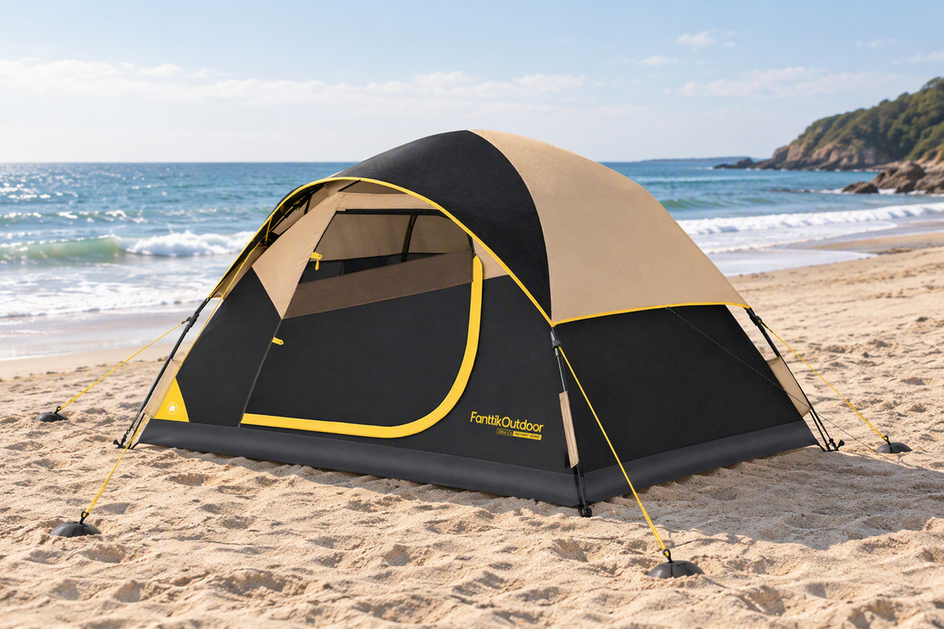 How to Anchor a Tent in Loose Beach Sand
A practical guide to keeping tent guy lines secure in loose, shifting beach sand, covering sand stakes, deadman...
How to Choose a Waterproof Camping Tent
A practical guide to reading tent spec sheets: what hydrostatic head means, why seams and floors need separate...
How to Anchor a Tent in Loose Beach Sand
A practical guide to keeping tent guy lines secure in loose, shifting beach sand, covering sand stakes, deadman...
How to Choose a Waterproof Camping Tent
A practical guide to reading tent spec sheets: what hydrostatic head means, why seams and floors need separate...
Leave a comment
This site is protected by hCaptcha and the hCaptcha Privacy Policy and Terms of Service apply.