









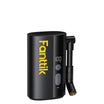
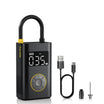
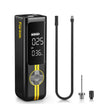


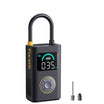











Neither a fiberglass pop-up tent nor an inflatable camping tent with air beams is automatically better in wind. The winner depends on the exact model's construction, how well you anchor it, and whether you follow its documented wind guidance. Setup speed follows the same rule: a fast pump or a quick pop-up frame only tells part of the story.
Which Tent Is Better in Wind?
For readers asking whether inflatable air beam tents are better than pop-up tents in wind, the honest answer is conditional. REI's 2026 field tests give two bounded examples that show why frame type alone can't predict the outcome.
| Comparison point | Fiberglass pop-up (Gazelle T4 Hub) | Inflatable air beam (Zempire Aerospeed 6) |
|---|---|---|
| Complete setup boundary | Pops up almost instantly, then stake corners | Pump inflates beams in under two minutes, then stake and finish |
| Wind observation | Reported sturdy in 20 mph winds | Reported prone to sagging or toppling in blustery conditions |
| Anchoring | Corner stakes plus guylines at guyout points | Same principle applies; beams also need structural guyline points |
| Packability | Compact fiberglass poles, moderate pack size | Bulkier inflated beams; packing down described as challenging |
| Puncture/maintenance evidence | Pole and hub durability; no reported puncture issue | Beam material and valve condition matter; no cross-model resilience data |
These are two named models, not a ruling on every pop-up or every air-beam tent. If you're weighing a specific instant-setup design, such as the six-person instant tent, confirm that model's own wind and setup documentation before assuming it behaves like either example above. Before camping in forecast high winds, check the exact tent's documented wind guidance and stake it fully according to its instructions.
How Fast Is Each Tent to Pitch in Real Use?
There's no single, fair setup time number for every model. You have to time the same finished result for both tents, from unpacking to a shelter you can actually use.
Defining Complete Setup Time
Setup time should cover everything between opening the packed tent and having a shelter that is fully staked and ready to sleep in. That means active inflation or pop-up deployment counts, but so do positioning, staking, and any required guylines. Comparing an air tent's pump time against a pop-up's unfold time, without including those finishing steps for both, isn't a fair comparison.
Why the Fastest First Step May Not Be the Fastest Pitch
A quick pump cycle or an instant frame pop doesn't guarantee the quickest finished pitch. In the documented setup observations REI recorded, the Gazelle T4 Hub popped up almost instantly once unrolled, then just needed staking. The Zempire Aerospeed 6 inflated in under two minutes with its included pump, but that number describes the pump phase, not the complete pitch. If you're timing an instant-pop frame against an air-beam design, check the finishing steps listed for a model like the Zeta Series tents before assuming the headline time is the whole job.

How Do Fiberglass Frames and Air Beams Behave in Wind?
Wind behavior depends on anchoring, geometry, and the exact model's construction, not simply whether the frame is rigid poles or an inflated beam. Anchoring guidance from REI's setup resource applies to both designs.
What Anchoring Changes in Wind
Stake the corners early, before wind can catch the fabric like a kite, and attach structural windward guylines at the tent's designated anchor points. This is a setup action available to either design; it isn't proof that one frame type is inherently stronger than the other.
How to Read Deformation and Recovery
Use only model-specific evidence when judging how a tent sags, bends, or recovers in gusts. REI's field notes describe the Gazelle T4 Hub as sturdy at 20 mph, while the Zempire Aerospeed 6 was described as vulnerable to sagging or toppling in blustery weather. Those are two named observations, not a rule for every fiberglass tent or every air-beam tent. Keep pressure retention and puncture concerns out of this comparison; they're separate questions covered next. If you're browsing options in this style, the instant tent lineup lists each model's own construction details worth checking against your specific campsite exposure.
What Should You Compare When Punctures or Pressure Loss Happen?
A soft air beam doesn't automatically mean a puncture, and pole flex doesn't mean tent failure. Each has its own separate causes and its own documented fix.
Puncture Is Not the Same as Pressure Loss
A beam that feels soft in the morning could mean a valve that wasn't fully closed, a temperature drop overnight, a slow seam seep, or an actual puncture. Don't assume the worst case from softness alone. Use the exact model's diagnostic steps and repair kit to narrow down the cause before treating it as a wind-resistance problem.
What the Frame Repair System Looks Like
Fiberglass tents have their own repair path: pole sleeves, hub replacement, and fabric patches. Air-beam tents rely on a different system: beam patches, valve checks, and seam sealant. Neither system is inherently more convenient or more puncture-resistant based on the evidence available; compare the documented repair materials and process for the specific tent you're considering, and keep that decision separate from how it performed in wind.
How Do You Set Up an Air Beam Tent With a Battery Pump?
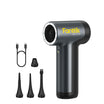
Before you inflate, confirm the pump's outlet matches the tent's valve exactly, then follow that tent's documented inflation order. A generic battery-powered pump with the wrong nozzle won't seal properly even if it looks compatible.
Verify the Connection Before You Inflate
Match the pump's outlet to the tent's valve using the tent's own documentation, not assumptions based on a similar-looking nozzle or the fact that both are battery-powered. Some combinations need a specific adapter; treat that requirement as model-specific rather than universal.
Follow the Tent's Inflation Sequence
Inflate valves, beams, and any supporting structure in the order the manufacturer specifies. Airflow, inflation speed, and beam pressure are related but distinct: airflow is how much air the pump moves, inflation speed depends on that airflow relative to the beam's volume, and beam pressure is the target level that keeps the structure rigid once full. Keep active inflation time separate from the finished, staked pitch time, and don't borrow a pressure value, auto-stop assumption, or operating limit from a different tent or pump model.
Which Tent Packs Smaller for Car Camping?
There's no category-wide packed-size winner. Compare the exact packed length, width, and weight of the models you're considering against the space in your vehicle and at home.

Package volume, packaged weight, and carrying convenience are three different things worth checking separately. A tent that collapses into a small-looking bundle can still be heavy or awkward to carry, and packed tent dimensions should be judged against your actual vehicle and home storage limits. Larger shelters, whether pop-up or air-beam, generally take more room in the trunk and more closet or garage space at home, so measure your own vehicle before assuming either design will fit.
Which Tent Fits Your Camping Scenario?
Match the tent to the trip, not the category label. Five common situations point in different directions.
- Short car-camping trip: prioritize complete usable setup time and easy anchoring; a model with a fast first step but more finishing work can still lose to a simpler overall pitch.
- Wind-exposed campsite: prioritize the exact model's documented field behavior and full anchoring, not frame type; verify the tent's own wind guidance before committing to a site.
- Longer or repeated stays: prioritize the documented repair and pressure-maintenance path over raw setup speed, since hardware issues are more likely to surface over multiple trips.
- Limited vehicle or home storage: prioritize exact packed dimensions and weight over collapsed appearance; measure your actual trunk, closet, or garage space first.
- Battery-pump dependent setup: only choose an air-beam design when the pump's connector and pressure guidance are documented for that exact combination; otherwise the setup can end up slower or less predictable than expected.
FAQs
Is air-beam inflation time the same as complete tent setup time?
No. Active pump inflation only covers filling the beams with air; a fair comparison requires timing both tents to the finished, staked, and usable state. Field testing reported by REI demonstrated that while pump inflation can take under two minutes, completing corner stakes and guyouts adds necessary time just as it does for a pop-up frame.
Does a soft air beam in cold weather indicate a puncture?
Not necessarily. Air pressure naturally drops when ambient temperatures fall overnight, which can soften inflatable beams without any physical puncture. Before applying adhesive patches or assuming damage, check whether the valve is tightly seated and re-inflate to the manufacturer's specified pressure once temperatures normalize.
Can any battery-powered inflator pump up an air beam tent?
No. Inflatable tents rely on model-specific valve ports and require high-volume airflow at low pressure rather than high-pressure vehicle tire inflation. Always verify that the pump includes the exact matching valve adapter and operating guidance documented by the tent manufacturer to avoid improper sealing or beam damage.
Continue reading
 How to Inflate Sports Balls (Basketball, Soccer, Football) to Exact Regulation PSI
A step-by-step guide explaining official pressure rules for basketballs, soccer balls, and footballs, plus needle care and precise...
How to Inflate Sports Balls (Basketball, Soccer, Football) to Exact Regulation PSI
A step-by-step guide explaining official pressure rules for basketballs, soccer balls, and footballs, plus needle care and precise...
 How to Clean and Store Inflatable Camping Tents to Prevent Mildew and Delamination
A practical guide to cleaning inflatable tent fabric, drying hidden pockets and valves, and packing air beams safely...
How to Clean and Store Inflatable Camping Tents to Prevent Mildew and Delamination
A practical guide to cleaning inflatable tent fabric, drying hidden pockets and valves, and packing air beams safely...
Leave a comment
This site is protected by hCaptcha and the hCaptcha Privacy Policy and Terms of Service apply.