









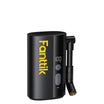
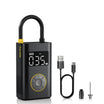
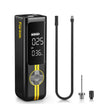


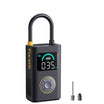










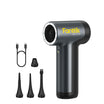

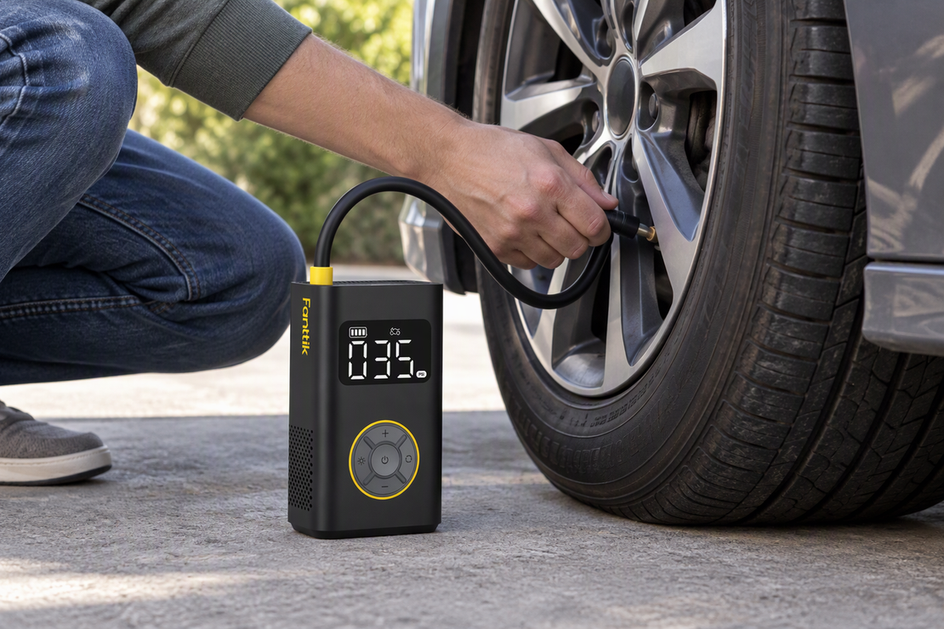
Airflow delivered at the tire's working pressure predicts inflation speed on a truck tire far better than a pump's maximum PSI rating does. Maximum PSI only tells you the highest pressure the pump can reach or safely hold. If two pumps are worth comparing for speed, compare their documented airflow under load or a matched fill-time test, not their PSI headline.
That distinction matters most on large-volume tires. A pickup or SUV tire holds more air than a compact-car tire, so it needs more delivered volume to reach the same target pressure. The rest of this guide breaks down what each specification actually measures, why a high PSI number can hide a slow pump, and what to check before trusting an inflator with repeated truck-tire work.
What Determines Truck-Tire Inflation Speed?
The pump that fills a truck tire fastest is the one that delivers more air per minute while working against the tire's actual pressure, not the one with the higher maximum PSI number. Maximum PSI is a ceiling: it tells you the highest pressure the pump can produce or withstand under its stated test conditions. It says nothing about how quickly air arrives.
Picture two pumps: one advertises 150 PSI max but publishes no loaded-airflow figure, and another lists a documented flow rate at 30 PSI along with a comparable fill-time result on a similar tire. The second pump gives you real speed evidence; the first gives you only a pressure limit. Until a supplier documents airflow at a stated pressure or runs a matched fill test, a maximum-PSI claim cannot settle a speed comparison.
PSI vs CFM: What Each Specification Tells You
Each specification answers a different question, and mixing them up is the most common shopping mistake with portable inflators. The table below separates what each number measures from what it can and cannot prove.
| Specification | What it measures | What it cannot prove |
|---|---|---|
| Maximum PSI | The highest pressure the pump can reach or withstand | Inflation speed or the vehicle's correct tire pressure |
| Recommended tire pressure | The vehicle-specific target pressure, set by the automaker | How fast any pump reaches that target |
| CFM or L/min (airflow) | A volumetric flow rate: the volume of air moved per minute | Real-world speed, unless the test conditions are stated |
| Credible speed evidence | Airflow at a stated working pressure, or a matched tire fill-time test | N/A — this is the evidence you should look for |
CFM stands for cubic feet per minute, a volumetric airflow rate rather than a pressure measurement. Industry glossary definitions distinguish free-air, inlet, actual, and rated capacity figures, and those figures are not automatically interchangeable. L/min describes the same kind of flow rate in metric units. Neither number tells you anything about pressure capability, and neither one is comparable to another pump's figure unless both were measured under the same conditions.

How Tire Volume Changes Inflation Time
A pickup or truck tire takes longer to inflate than a compact-car tire mainly because it holds more air at the same pressure. Filling that larger internal volume from a given starting pressure up to the same target PSI simply requires more delivered air, regardless of which pump you use.
The size of the pressure rise matters just as much as the tire's volume. Topping off a tire that's a few PSI low is a light, short job. Bringing a large truck tire back from a substantially underinflated state to its full target pressure is a much bigger workload, because the pump has to deliver far more total air and typically keeps working longer as it does. Ambient temperature, the power source, and the pump's duty cycle can all shift the result further, which is why no single inflation-time number applies across every truck tire and every starting condition.
Why Advertised Airflow Can Mislead
An airflow number is only useful for predicting speed when you know the conditions it was measured under. A free-air or inlet CFM figure describes flow with no resistance, while a tire pump has to keep delivering air as the tire's internal pressure climbs and pushes back against it.
That distinction is well documented in compressor engineering: delivered flow can decrease as discharge pressure rises, which is exactly why choosing a maximum operating pressure carefully matters more than chasing a single headline airflow number. A performance curve or a rated-capacity figure tied to a specific pressure gives a far more honest picture than one unqualified spec.
Before trusting a speed claim, look for the airflow basis (free-air, inlet, or loaded), the pressure it was measured at, the tire size used in any fill-time test, the starting and target pressures, the power source, and whether the test covered one tire or several back-to-back cycles. If a supplier discloses none of that, treat the speed claim as unverified rather than assuming the bigger number wins.
How to Choose a Portable Inflator for a Pickup or SUV
Match the evidence you require to the actual job. A pump that's perfectly fine for a quick top-off isn't automatically proven for repeated large-tire work, and the reverse is also true.
For Roadside Top-Offs
A small pressure top-off mainly rewards portability and accurate target-pressure control, plus a fill test covering a modest pressure increase similar to your own situation. That kind of test doesn't tell you anything about recovering a tire that's badly underinflated, so don't extend the conclusion further than the evidence goes.
For Deeply Underinflated Tires
This job needs documented loaded airflow, or a fill-time test run on a tire size close to yours, starting from a comparably low pressure. Because the pump works longer as pressure climbs, also check its stated operating limits and power source before relying on it for a large recovery job.
For Repeated Multi-Tire Work
Repeated use calls for a documented duty cycle, evidence of multi-cycle or continuous testing, and clear information about power and recharge time. Without those specifics, treat a compact portable pump as unproven for sustained truck-tire service rather than assuming a high PSI rating covers it. Once you've confirmed the right pump for your workload, using a portable tire inflator correctly, from connecting the hose to setting the target pressure, is the same basic sequence across scenarios.
Pressure, Compatibility, and Duty-Cycle Limits
Inflate to your vehicle's recommended cold tire pressure, not the pump's maximum PSI rating. That number comes from the Tire and Loading Information label on the driver's-side door edge or post, or from your owner's manual, and it applies when the tire is cold.

Before using any portable pump on a large tire, confirm its documented operating pressure, its airflow evidence, its stated tire-size or volume compatibility, its power source, and its duty cycle for the workload you actually have. Stop using the setup if the tire, valve, hose, or pump looks damaged or the pump is heating abnormally; don't keep forcing an inflation attempt on a setup that isn't behaving normally.
When choosing your setup, verify documented loaded airflow and duty cycle against your tire size first, check the door-jamb cold pressure, and keep unverified maximum-PSI claims from dictating your purchasing decision.
FAQs
What should I compare first when choosing an inflator for a truck tire?
Compare documented airflow at a stated working pressure, or a matched tire fill-time test, before anything else. Treat maximum PSI only as a check that the pump can reach the pressure you need; it doesn't tell you how fast it gets there.
Does a 150 PSI portable inflator automatically work well on a truck tire?
No. A high maximum PSI number confirms pressure capability, not airflow, tire-size compatibility, or duty cycle. Without documented airflow and duty-cycle evidence for your tire and workload, suitability for repeated truck-tire use remains unproven.
Should I inflate a tire to the pump's maximum PSI?
No. Use your vehicle manufacturer's recommended cold tire pressure, found on the driver's-side door label or in the owner's manual, as the target. Check the pressure when the tire is cold, since the pump's maximum PSI has nothing to do with your vehicle's correct operating pressure.
Continue reading
 How to Pressure Wash Mountain Bikes and Dirt Bikes Without Blowing Out Sealed Bearings
A step-by-step wash routine that keeps mud removal effective while steering water away from bike bearings, pivots, hubs,...
Wheel Rim Bead Corrosion Leaks: Why Aluminum Wheels Lose 3 PSI Every Week
A practical guide to spotting aluminum wheel bead corrosion, checking for leaks at home, and knowing when a...
How to Pressure Wash Mountain Bikes and Dirt Bikes Without Blowing Out Sealed Bearings
A step-by-step wash routine that keeps mud removal effective while steering water away from bike bearings, pivots, hubs,...
Wheel Rim Bead Corrosion Leaks: Why Aluminum Wheels Lose 3 PSI Every Week
A practical guide to spotting aluminum wheel bead corrosion, checking for leaks at home, and knowing when a...


Leave a comment
This site is protected by hCaptcha and the hCaptcha Privacy Policy and Terms of Service apply.