












































Yes, but only when three things line up. Your exact washer has to be documented for drawing from an external container, your water has to fit that model's intake and filter limits, and the campground has to allow the washing you plan.

If any one of those is unknown, treat the setup as not approved yet. Being cordless or portable doesn't settle any of these questions.
Can You Use a Portable Pressure Washer at a Campsite Without a Hose?
Think of a campsite pressure washer setup as three separate gates. Passing one gate tells you nothing about the others, because container capability, water cleanliness, and site permission are entirely distinct checks.
For example, a washer that pulls from a bucket cannot make muddy creek water suitable. Likewise, a campground with water spigots has not necessarily given you permission to wash a vehicle.
The first gate is the machine. Some cordless washers only feed from a built-in tank. Others are documented to draw from an open container through an inlet hose and filter. You need the documentation for your exact model, not for a similar-looking one.
The second gate is the water. Even when a model supports container intake, the water you plan to use has to meet that model's stated source and filter instructions. Grit and debris can cause trouble.
The third gate is the site. Rules differ from one campground to the next. Gulf Islands National Seashore prohibits vehicle rinsing and greywater in the park, so a washer that works perfectly from a bucket still can't be used there to rinse a car. At Inyo National Forest, campground rules are posted at each entrance, and campers are told to carry water to their site for washing. That instruction doesn't mean vehicle washing is allowed there.
Here's the decision in short:
| Condition | Proceed if | Stop if |
|---|---|---|
| Washer intake | Exact-model docs describe external-container intake and setup | Docs mention only a built-in tank, or you can't find docs |
| Water source | Water matches the model's source and filter instructions | Limits are unclear or the water carries visible grit |
| Campsite | Current rules or a host confirm the washing, water use and runoff handling | Rules prohibit it or you haven't checked |
Check the Washer's Exact Water-Intake Setup
Start with the manual or official support page for your exact model. Before you fill a bucket, look for these four things:
- External intake vs. built-in tank. A built-in tank is not the same as container intake. A model may only work by filling its attached tank. Look for wording that names an external source, such as a bucket or barrel.
- The named intake method. The docs should describe how water reaches the pump from the container. This usually means an inlet hose with a filter on the end.
- Required parts. Check which inlet hose, filter or adapter the setup needs and whether those parts come in the box.
- Priming and setup steps. If a model supports self-priming or line purging, its documentation will specify whether and how to clear air from the intake hose.
Here's one model-specific example of what complete documentation looks like. Our NB8 Ultra setup guide and support documentation list a bucket, barrel, tap, lake or tank as water sources for the NB8 Ultra. The steps are to submerge the weighted inlet filter fully in the water, connect the high-pressure hose and spray gun, then squeeze the trigger to prime. The spray sputters at first and then settles into a steady stream. If the filter floats above the surface, the pump draws air instead of water.
These instructions apply to the NB8 Ultra only. The NB8 Ultra manual separately describes filling the unit's attached tank, so one model can document both methods in different places. Read everything available for your model. Don't assume another cordless washer, including a different model in the same product line, takes container water the same way.
If you are using the NB8 Ultra and it won't build pressure from a container, check that its weighted inlet filter is completely submerged and that you followed the priming steps. For any other model, consult its specific troubleshooting instructions rather than assuming the same setup. If the docs never describe container intake at all, don't improvise one. Contact the manufacturer for that exact model. Still deciding whether a cordless unit fits your trips? Our guide on whether battery-powered pressure washers are worth it covers what jobs they handle well.
Match the Water to the Washer's Intake Limits
Whether the washer can draw from a container is one question. Whether your container water is suitable is a different one. Compare the water you actually have with what your model's documents say about water sources and the inlet filter.
Debris is the main concern at camp. Lake water, rain barrels and refilled jugs can all carry sand, silt or plant matter. The NB8 Ultra support guide says grit on the inlet-filter screen reduces flow and can starve the pump, and it recommends rinsing the screen clean and letting it dry. That guide doesn't set an allowable debris level, so there's no number you can test against.
What that means in practice:
Don't judge water by how clear it looks. Fine grit can still collect on a screen. Having a filter doesn't make any source acceptable either, because a filter only protects as far as the manufacturer says it does. If your model's documentation doesn't address the kind of water you have, pause and ask the manufacturer before you run the pump on it. Using cleaner water you brought from home is often the simplest fix.
Keep an eye on flow while you work. If the spray weakens on an NB8 Ultra, its support guide advises stopping to inspect and rinse the filter screen. For other washers, follow the manufacturer's specific screen-maintenance and intake-clearing instructions.
Check Campsite Rules, Water Access, and Discharge
Have water available and have permission to wash are two separate checks. Official campground pages show the difference clearly.
At Sleeping Bear Dunes, the National Park Service lists potable water and spigots throughout Platte River Campground. The same park's Sleeping Bear Dunes campground rules prohibit washing vehicles at the dump station, and also prohibit washing dishes, hands or hair at outdoor faucets. So water is easy to reach there, but where and what you can wash is restricted.
Other parks go further. As covered above, Gulf Islands bans vehicle rinsing and greywater outright. Inyo National Forest expects you to haul water to your site for washing and posts each campground's rules at its entrance. None of these examples is a nationwide rule. They show why you have to check the specific place you're staying.
Before you wash anything, confirm these with the campground's current official page, posted rules or the host:
- Is the item you plan to wash (vehicle, gear, boat, bike) allowed to be washed there, and where?
- Where can you collect water, and may that water be used for this kind of washing?
- How must rinse water be handled? Some sites ban greywater on the ground.
If you can't get a clear yes, wash at home or at a commercial wash station after the trip.
FAQs
Can any cordless pressure washer pull water from a bucket?
No. Some models feed only from a built-in tank. Use a bucket only if your exact model's manual or official support page describes external-container intake and the parts it needs.
Is it legal to wash my car at a campground?
It depends on the site, and some places ban it. Gulf Islands National Seashore prohibits vehicle rinsing in the park. Check your campground's posted rules or ask the host before you start.
Can I fill my container from the campground spigot?
Not without checking first. Having a spigot doesn't mean you can use that water for pressure washing. Inyo National Forest, for example, tells campers to carry water to the campsite for washing and prohibits using faucets or restrooms for washing dishes, cleaning fish, or bathing. That guidance does not settle whether filling a container for a pressure washer is permitted, and specific campground rules are posted at each entrance.
Is lake or river water OK to use?
Only if your model's documentation lists that source, and only if the water isn't carrying grit. Even for a model that lists lake water, debris on the inlet screen can reduce flow and starve the pump. Site rules about drawing water and runoff still apply.
Who can I ask about my Fanttik washer's intake setup?
If your Fanttik manual doesn't make container use clear, contact our support team with your exact model name before your trip.
Continue reading
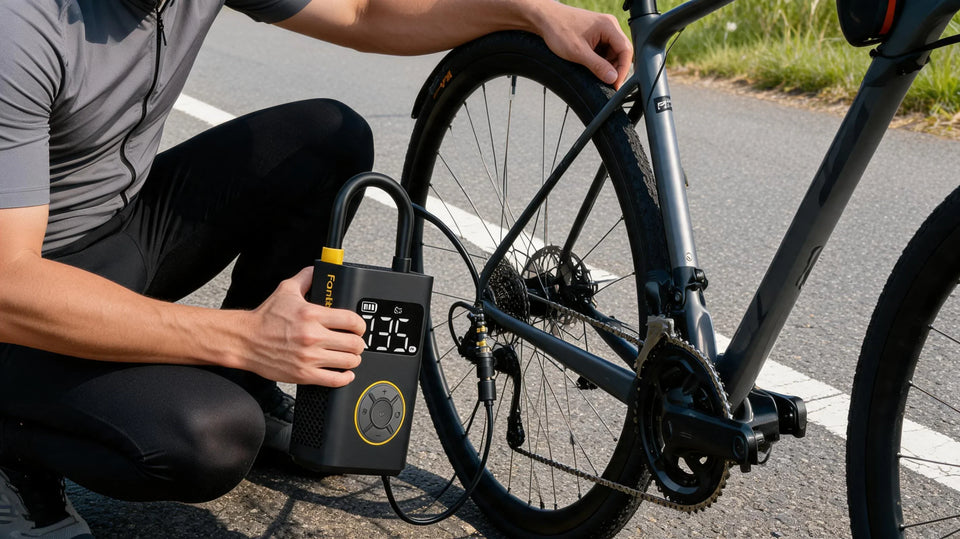 Using a Presta Adapter for a Bike-Tire Repair on the Road
This roadside guide covers how to check valve and pump fit, prepare a Presta valve, connect gently, inflate...
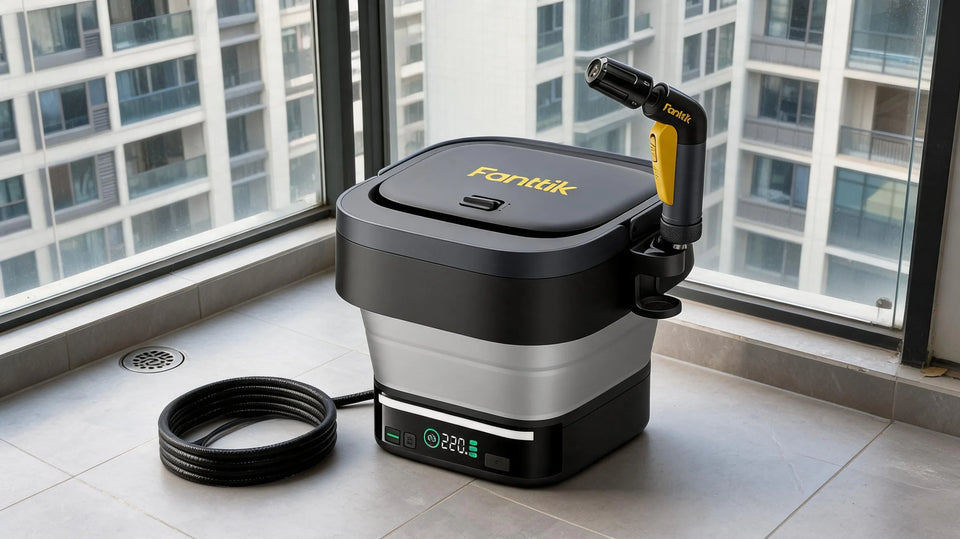 Can You Use a Cordless Pressure Washer on an Apartment Balcony?
Without a garden hose, balcony washing depends on three separate checks: your exact model's water feed, your building's...
Leave a comment
This site is protected by hCaptcha and the hCaptcha Privacy Policy and Terms of Service apply.