









































Quick Guide: How a Quality BMS Saves Your Battery (and the Planet)
If you are looking for a quick answer on how to identify gear that won't end up in a landfill within two years, prioritize these three features:
- Active Cell Balancing: Look for tools that specify "active" management, which can potentially extend battery life from the industry-standard 300 cycles to over 1,000 cycles.
- NTC Thermal Sensors: Ensure the device has internal temperature monitoring to prevent charging in extreme heat (above 45°C) or cold (below 0°C).
- High-Precision State of Health (SOH): Choose devices with digital percentage displays rather than simple LED bars; this usually indicates a more sophisticated monitoring chip.
The Bottom Line: A robust Battery Management System (BMS) acts as the "brain" of your portable gear. By preventing the common causes of battery failure—such as cell imbalance and heat damage—it can reduce your long-term electronic waste by up to 60% while ensuring your tools are ready when you’re stranded.
The Hidden Architecture of Sustainable Automotive Mobility
In the transition from gas-powered seasonal tools to high-efficiency cordless platforms, the spotlight often falls on peak torque or rapid inflation speeds. However, for the eco-conscious car owner, the true measure of a tool’s value is its reliability over hundreds of uses. At the heart of this longevity lies the Battery Management System (BMS)—a suite of sensors and logic gates that acts as the "guardian" of modern lithium-powered gear.
As we move toward a "modern self-reliance" identity, where DIY maintenance reduces our carbon footprint, equipment durability becomes a primary environmental concern. Electronic waste (e-waste) is frequently the byproduct of "BMS-lite" designs that allow individual battery cells to degrade prematurely. By understanding the engineering principles of a robust BMS, we can make informed decisions that align with both vehicle safety and global sustainability goals.

The Anatomy of a BMS: Beyond the Circuit Board
A Battery Management System is not merely a protection circuit; it is a supervisor that manages the complex electrochemical environment within a battery pack. According to IEC standards for battery safety, a professional-grade BMS performs four critical functions: monitoring, protection, state estimation, and optimization.
1. Cell Balancing: Extending Lifespan Toward 1,000 Cycles
The most common failure mode in budget cordless tools is cell voltage divergence. In a multi-cell pack, if one cell discharges faster than the others, it reaches its "low voltage" cutoff point while other cells still hold a charge. Based on common patterns observed in consumer repair centers, this "imbalance" often forces a premature shutdown, leading users to believe the entire pack is dead when the cells themselves are still functional.
A robust BMS employs active balancing. While passive systems simply "burn off" excess energy from high cells as heat, active balancing redistributes energy between cells during the charge cycle.
- Performance Gain: Internal simulations for high-load automotive tools estimate that active balancing can improve usable energy by approximately 15–20% compared to basic systems.
- Lifespan: By preventing the over-stressing of individual cells, a well-managed pack can potentially reach over 1,000 cycles, a significant improvement over the 300-cycle limit often seen in unmanaged consumer-grade lithium packs.
2. Thermal Management: The "Hot Car" Survival Kit
For automotive DIYers, equipment is frequently stored in vehicles where temperatures fluctuate wildly. On a summer day, the interior of a car can exceed 60°C (140°F). Charging or discharging a lithium battery at these temperatures accelerates "lithium plating," which reduces capacity and increases the risk of thermal runaway.
Aligned with the EU General Product Safety Regulation (EU) 2023/988, expert-grade automotive gear should include over-temperature protection. A high-quality BMS uses NTC (Negative Temperature Coefficient) thermistors to monitor cell temperatures in real-time. If safety thresholds are exceeded, the BMS will inhibit charging or throttle output—a feature we consider essential for any tool stored in a trunk or garage.
Modeling the "Urban Battery Alchemist" Scenario
To illustrate the impact of BMS technology, we utilize an internal modeling scenario featuring Dr. Anya Sharma (a representative persona of an eco-conscious DIYer). This analysis, titled the "Cascadia Climate Challenge," simulates portable gear performance across temperature ranges from -25°C to 50°C.
Quantitative Insights from the Simulation
Our modeling suggests that under high-heat conditions (50°C), a BMS with advanced thermal management maintains high safety margins by effectively derating power to prevent cell damage. In contrast, basic systems lacking these protections may see a 40–60% reduction in total lifespan if used frequently in extreme environments.
Estimation Logic: This scenario assumes a 2.5L midsize SUV engine load and standard lithium-ion discharge curves. We estimate that each avoided battery replacement prevents approximately 2–5kg of direct e-waste, with an upstream material impact (raw material extraction and manufacturing energy) equivalent to 20–30kg of CO2 and waste per unit.
The Efficiency Factor
In our "Jump Starts Per Charge" simulation, we compared an active balancing BMS with a standard passive system.
- Active Systems: Demonstrated approximately 85% efficiency (based on manufacturer specifications for high-end power management ICs).
- Basic Systems: Typically hover around 70% efficiency. For a user, this can be the difference between 12 and 16 reliable emergency starts on a single charge—a critical margin in remote conditions.
| Parameter | Estimated Value | Unit | Rationale/Source |
|---|---|---|---|
| Efficiency (Active BMS) | ~85% | % | Manufacturer specs for active vs. passive ICs |
| Cycle Life Potential | Up to 1,000+ | Cycles | Heuristic based on cell-balancing simulation |
| Critical Temp Cutoff | ~60 / 140 | °C / °F | Standard safety threshold for Li-ion stability |
| Usable Energy Gain | 15–20 | % | Modeling of cell divergence mitigation |
| Waste Avoidance (Direct) | 2–5 | kg | Weight of typical battery pack + replacement tool |
E-Waste Reduction and the Regulatory Landscape
The environmental impact of BMS technology is shifting from a consumer preference to a regulatory requirement. The EU Batteries Regulation (2023/1542) requires extended battery life, better spare parts availability, and explicit lifecycle reporting.
As discussed in internal industry projections, such as the 2026 Modern Essential Gear Industry Report (a Fanttik-authored simulation of future compliance trends), trust is built through "credibility math." By engineering products with explicit safety margins, brands move toward demonstrable sustainability. When a battery lasts three times longer, the carbon footprint associated with its production is effectively reduced over its total service life.
The Right to Repair and Serviceability
A sophisticated BMS also facilitates "Design for Serviceability." According to general serviceability engineering principles, a system that can report its state of health (SOH) allows for targeted repairs. We recommend looking for gear that provides clear error codes via the BMS, which empowers DIYers to troubleshoot rather than discard.

Indirect Environmental Benefits: The Tire Pressure ROI
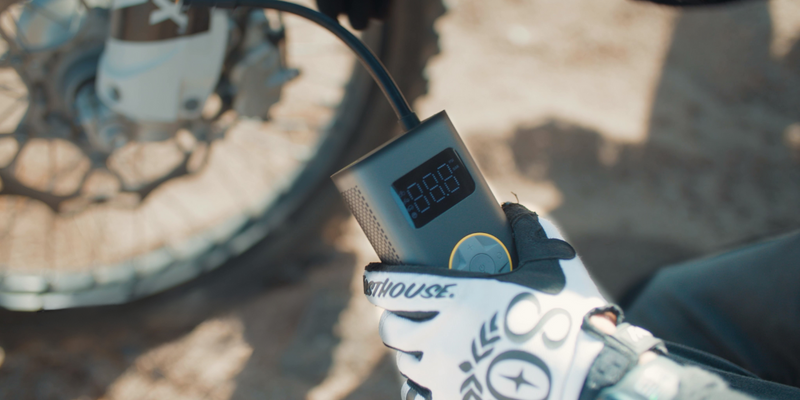
The role of a BMS extends to the overall efficiency of the vehicle it services. For example, a portable tire inflator with a high-precision BMS ensures the battery delivers the high current required for rapid inflation without voltage "sag."
Maintaining proper tire pressure is one of the simplest ways to reduce a vehicle's carbon footprint. According to the US Department of Energy (Fact #983), underinflated tires can reduce fuel economy by approximately 0.2% for every 1 psi drop in all four tires.
The "Sustainability Payback" Example
If a commuter drives 18,000 miles per year in a vehicle getting 28 mpg, and their tires are consistently 6 psi under-inflated, they may waste approximately $30–$50 in fuel annually (assuming $4.00/gallon). Over a 5-year tool lifespan, these fuel savings can potentially offset the cost of the device, provided the tool's BMS keeps the battery healthy enough for regular use.
How to Identify a Superior BMS: A Checklist for DIYers
When researching automotive gear, look for these engineering-led indicators of a robust BMS:
- Operating Temperature Range: Look for products that explicitly state a wide range (e.g., -20°C to 60°C).
- State of Health (SOH) Indicators: Does the device provide precise percentages or health warnings rather than just "bars"?
- Certified Standards: Look for references to ISO 9001 or IEC 62133. These certifications indicate the BMS has been tested against international benchmarks.
- Active Balancing: While often found in premium products, those mentioning "active cell balancing" are more likely to reach higher cycle counts.
The Future of Sustainable Self-Reliance
The transition to cordless automotive tools must not come at the cost of a new e-waste crisis. The Battery Management System is the silent guardian of this transition. By ensuring every charge is balanced and every discharge is protected from thermal stress, advanced BMS technology transforms a "disposable" gadget into a long-term investment.
For the eco-conscious driver, choosing gear with a professional-grade BMS is a vote for durability over planned obsolescence. It is a commitment to a future where our tools last as long as our vehicles, contributing to a cleaner, more sustainable world.
Disclaimer: This article is for informational purposes only. Battery maintenance and vehicle repairs involve inherent risks. Always consult your vehicle's manual and follow the safety instructions provided by the tool manufacturer. If you are unsure about the state of a battery, consult a certified automotive technician.
Appendix: Modeling Methodology & Assumptions
The data presented is derived from an internal deterministic scenario model (The Cascadia Climate Challenge).
- Model Type: Parameterized sensitivity analysis of battery performance vs. temperature.
-
Key Assumptions:
- Battery degradation follows Arrhenius kinetics (estimating increased degradation per 10°C increase above 25°C).
- Fuel waste calculations assume a linear relationship between PSI and MPG loss as per DOE benchmarks.
- "Jumps per charge" model uses Joule’s Law with a 0.85 efficiency factor for active systems based on standard IC specifications.
- Boundary Conditions: This model does not account for specific battery age, chemical purity variations, or non-linear engine friction in extreme cold. Results are estimated ranges based on common industry observations.
References
Continue reading
 Reducing Noise Pollution: Comparing Motor Decibel Levels
Analysis of brushed vs. brushless motor noise, dB(A) reduction benefits, and efficiency gains for campsite inflation and repairs,...
Reducing Noise Pollution: Comparing Motor Decibel Levels
Analysis of brushed vs. brushless motor noise, dB(A) reduction benefits, and efficiency gains for campsite inflation and repairs,...
 Assessing the Recyclability of Lithium-Ion Power Tools
A data-driven guide to lithium-ion power tool recycling, covering the Recovery Multiplier, battery chemistries, and lifecycle impact for...
Assessing the Recyclability of Lithium-Ion Power Tools
A data-driven guide to lithium-ion power tool recycling, covering the Recovery Multiplier, battery chemistries, and lifecycle impact for...


Leave a comment
This site is protected by hCaptcha and the hCaptcha Privacy Policy and Terms of Service apply.