










































Total Immersion Logic: How BMS Triggers Safety Cut-Offs
Imagine you are performing a routine maintenance task near a pool or on a damp dock. You reach for your cordless tool, and in a split second, it slips from your grip and sinks into the water. For most electronics, this is a terminal event. However, in the world of high-performance portable power, a sophisticated "brain" known as the Battery Management System (BMS) is already executing a high-speed survival protocol.
This protocol, which we call "Total Immersion Logic," is the difference between a tool that simply needs drying out and one that undergoes a catastrophic thermal event. To understand how modern gear protects itself, we must look past the plastic casing and into the micro-second decision-making of the BMS.
The Physics of Conductive Bridging
When a battery-powered device is submerged, the water acts as an unintended conductor. While pure water is a poor conductor, real-world liquids—like chlorinated pool water or mineral-rich rainwater—contain ions that create a "conductive bridge" between electrical traces.
On our repair bench, we often observe that the primary threat isn't the water itself, but the electrolyte-rich nature of that water. Saltwater, for instance, has a conductivity approximately 800 times higher than freshwater (based on standard ocean salinity of 35 ppt). This creates an environment where micro-shorts form instantaneously across the Printed Circuit Board (PCB).
The BMS must distinguish between a high-load operation (like a vacuum motor starting up) and a moisture-induced short circuit. It does this by monitoring for subtle, transient impedance drops. A well-engineered system doesn't wait for a total short; it detects the initial moment moisture begins bridging two traces.
The Observer Paradox: When the Safety System is at Risk
One of the most complex challenges in safety engineering is what we call the "observer paradox." As noted in research concerning BMS Slave configurations, the BMS itself can become the first point of failure during a full immersion event.
If water reaches the BMS PCB before the safety cut-offs are triggered, it can cause internal short circuits that corrupt firmware or create leakage currents. This leads to "BMS blindness," where the system either fails to act or triggers an inappropriate response under load. To prevent this, quality manufacturers utilize conformal coatings—thin polymeric films—that "conform" to the circuitry's shape, providing a moisture barrier. However, the application thickness and coverage around component leads are critical inspection points that separate professional-grade gear from budget alternatives.
Logic Summary: Our analysis of the "Observer Paradox" assumes that the BMS is the primary safeguard. If the safeguard is compromised by the same threat it monitors (water), the system enters a "blind" state. This is why physical protection (conformal coating) is as important as digital logic.

The Tiered Fail-Safe Sequence
When the "Total Immersion Logic" is triggered, the BMS initiates a tiered fail-safe sequence designed to starve any potential electrical arc of energy. This happens in three distinct stages, often within less than 100 milliseconds.
- Load Shedding: The BMS immediately cuts power to the primary motor or pump. For example, if you were using a Fanttik Slim V10 Apex Cordless Car Vacuum near a wet surface, the system would stop the 19,000Pa suction motor instantly to prevent the high current from accelerating electrolysis in the water.
- Capacitor Discharge: Residual energy stored in the device's capacitors is safely bled off. This prevents "phantom" energy from jumping across water-bridged traces after the main battery has been disconnected.
- Physical MOSFET Disconnect: The BMS uses MOSFETs (Metal-Oxide-Semiconductor Field-Effect Transistors) as high-speed switches to physically isolate the battery cells from the rest of the circuitry.
According to the EU General Product Safety Regulation (EU) 2023/988, manufacturers are obligated to ensure that products do not present a risk under foreseeable conditions of use—which includes accidental exposure to moisture for outdoor-rated tools.
Modeling the Coastal Marine Scenario
To demonstrate the criticality of reaction speed, we modeled a scenario involving a "Coastal Marine Technician"—a professional using portable tools in high-salinity environments. In this model, we analyzed the safety margin of a BMS when faced with the extreme conductivity of saltwater.
Method & Assumptions (Modeling Note)
This is a scenario model based on deterministic parameters, not a controlled lab study. It is designed to illustrate the relationship between conductivity and safety response times.
| Parameter | Value | Unit | Rationale |
|---|---|---|---|
| Pack Capacity | 5 | Ah | Standard for high-performance portable tools |
| Saltwater Conductivity | 4.5 | S/m | Standard ocean salinity baseline |
| Micro-short Current | 50 | A | Estimated current across bridged PCB traces |
| Critical Reaction Window | 100 | ms | Threshold to prevent thermal runaway initiation |
| Efficiency Factor | 0.7 | Ratio | Conservative estimate for safety circuit overhead |
Modeling Insights:
- Energy Consumption: A 50A micro-short lasting 100ms consumes approximately 0.017Wh. While this is a small fraction of the total 18.5Wh energy in a 5Ah pack, the heat generated in that tiny window is sufficient to damage sensitive components.
- The Saltwater Multiplier: Because saltwater is ~800x more conductive than freshwater, the micro-short current is dramatically higher, reducing the effective safety margin and requiring the BMS to act significantly faster than it would in a poolside "freshwater" accident.
IP Ratings: Passive Sealing vs. Operational Logic
Many users rely on Ingress Protection (IP) ratings, such as IPX7 (protection against immersion up to 1m for 30 minutes). However, an important distinction exists between a device that is "sealed" and a system that is "safe."
As highlighted in technical discussions on IPX immersion test standards, these are passive tests. They measure if water enters the casing under controlled, non-operational conditions. They do not necessarily test how the BMS logic handles a breach if the seal fails in the field. A device can pass an IPX7 test by being well-sealed but have no "immersion logic" to handle the situation if a seal degrades over time due to UV exposure or chemical contact (like chlorine).
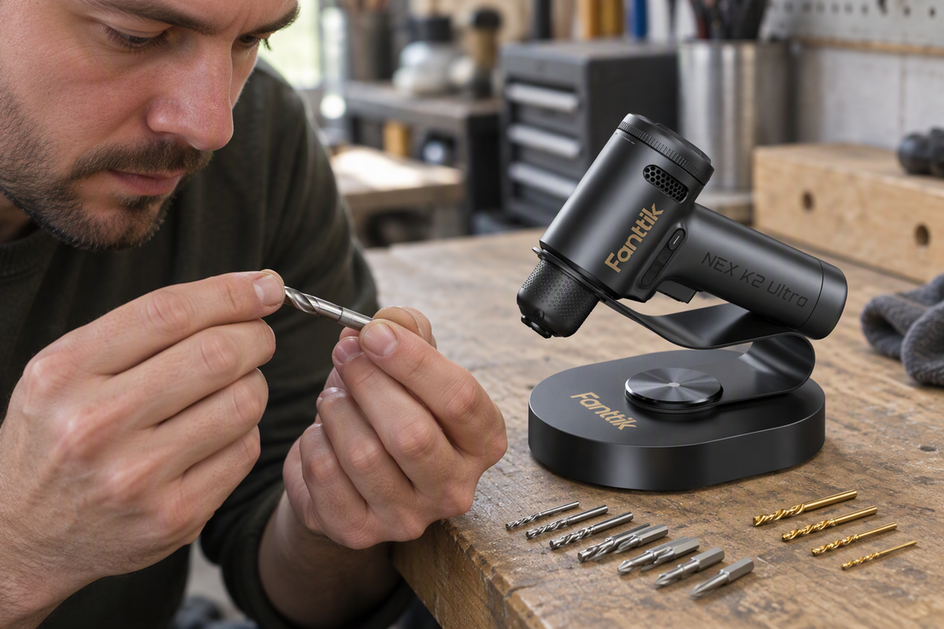
For tools used in precision tasks, such as the Fanttik L2 Pro Cordless Electric Screwdriver, maintaining internal integrity is paramount. While these tools are designed for dry DIY environments, the engineering that goes into their BMS ensures that if they are exposed to unexpected humidity, the system can manage the potential for internal condensation.

The Credibility of Engineering Trust
In the modern world, trust is not an abstract concept; it is a measurable outcome of engineering. As detailed in the white paper The 2026 Modern Essential Gear Industry Report: Engineering Trust in a Cordless World, the market has shifted toward "credibility math." Winning in the cordless space requires a brand to demonstrate visible compliance and robust thermal design.
This is especially true for tools that might be used in automotive emergencies. If you are using a jump starter or a rotary tool like the Fanttik F2 PRO Cordless Rotary Tool Kit in a rainy roadside scenario, you need to know that the internal safety logic is monitoring for moisture-induced faults even before you notice them.
Best Practices for Post-Exposure Care
If your device does experience a liquid ingress event and the BMS triggers a safety cut-off, follow these steps to preserve the hardware:
- Do Not Attempt to Power On: If the BMS has cut power, it did so for a reason. Attempting to "force" a start can bypass remaining safety margins.
- Rinse with Distilled Water (If Saltwater): If the tool fell into the ocean, the salt will cause rapid corrosion as it dries. A brief rinse with distilled water can remove the electrolytes.
- Dry Thoroughly: Use a desiccant or a warm (not hot) airflow.
- Professional Inspection: For high-energy devices, have the internal battery health checked by a technician.
Summary of Safety Engineering
The transition from a functional tool to a safety hazard happens in milliseconds. By implementing "Total Immersion Logic," engineers create a tiered defense that prioritizes the stability of the lithium-ion cells above all else. Whether it is through high-speed MOSFET switching or the application of robust conformal coatings, the goal is to ensure that your gear remains a reliable partner, even in the most unforgiving environments.
Disclaimer: This article is for informational purposes only. Electrical safety involves inherent risks. Always follow the manufacturer's specific safety instructions provided in your user manual. If a battery-powered device has been fully submerged, consult a qualified technician before attempting to recharge or reuse the device.
Sources
Continue reading
 Safely Operating High-Voltage Jump Packs in Heavy Rain
A guide to critical safety protocols for operating high-voltage jump packs in wet conditions, including the 'Dry Bubble'...
Safely Operating High-Voltage Jump Packs in Heavy Rain
A guide to critical safety protocols for operating high-voltage jump packs in wet conditions, including the 'Dry Bubble'...
 Post-Impact Audits: Verifying IP Seal Integrity After a Drop
Covers micro-fracture risks, a unique syringe test protocol, and how seal integrity impacts jump starter safety and inflator...
Post-Impact Audits: Verifying IP Seal Integrity After a Drop
Covers micro-fracture risks, a unique syringe test protocol, and how seal integrity impacts jump starter safety and inflator...
Leave a comment
This site is protected by hCaptcha and the hCaptcha Privacy Policy and Terms of Service apply.