





















Port Hygiene: The Invisible Frontier of Tool Longevity
We have all been there: you plug in your portable tire inflator or smartphone after a long day on the job, only to find the charging indicator flickering or refusing to activate. Often, the immediate instinct is to blame the battery or a "cheap" cable. However, on our repair bench, we have discovered that a significant percentage of these "failures" are not electrical at all—they are mechanical.
Charging ports, particularly the miniaturized USB-C and standard DC barrel inputs found on modern essential gear, are literal magnets for environmental contaminants. Whether it is pocket lint, sawdust from a workshop, or concrete grit from a construction site, these tiny openings accumulate debris that creates a physical barrier between connectors.
In this guide, we will share our methodical approach to port hygiene. We will move beyond generic advice to explore the physics of contact failure, the economic impact of maintenance neglect, and the precise techniques required to restore reliable power without compromising the integrity of your gear.
The Anatomy of a Failed Connection
To understand why cleaning is necessary, we must first understand the tight tolerances of modern inputs. A standard USB-C port contains 24 microscopic pins arranged on a central "tongue." These pins are often plated with a thin layer of gold to ensure high conductivity and resistance to oxidation.
When dust or lint enters the port, every insertion of a cable acts like a piston, compacting that debris into the back of the socket. Over time, this creates a "felt-like" cushion that prevents the cable from seating fully. Based on our observations of hundreds of returned devices, the most reliable indicator of a truly clean port is a consistent, snug fit of the cable without any wobble. If your cable feels "mushy" when inserted, debris is likely preventing the mechanical lock from engaging.
The Problem with "Conventional Wisdom"
Many DIY users reach for the nearest sharp object—often a metal SIM tool or a paperclip—to dig out the grime. We strongly advise against this. Metal tools are harder than the gold or tin plating on the contacts. Using them can:
- Scratch the plating: This increases electrical resistance and exposes the underlying base metal to rapid oxidation.
- Cause short circuits: Even if the device is "off," internal capacitors may still hold a charge. A metal tool can bridge pins and cause permanent board damage.
- Bend the central tongue: In USB-C ports, the central plastic or ceramic tongue is fragile. One wrong move with a rigid metal tool can snap it, rendering the device e-waste.
The Economics of Neglect: A High-Dust Scenario
Maintenance is often viewed as a chore, but for professionals, it is a financial strategy. To demonstrate this, we modeled the impact of port hygiene for a specific high-risk persona: a construction worker operating in high-dust environments.
In these settings, concrete dust and sawdust accumulate 3-5x faster than in a home environment. If a charging port fails on a critical piece of gear—like a portable jump starter or a communication tablet—the costs escalate quickly.
Modeling Note: The Construction Worker ROI
Methodology: This deterministic scenario model uses parameterized inputs based on industry data sources, including North American labor rates and commercial vehicle usage patterns. It is a decision-making aid, not a controlled lab study.
| Parameter | Value | Unit | Rationale |
|---|---|---|---|
| Cleaning Frequency | 7–14 | Days | Based on high-dust ingress rates |
| Potential Downtime | 2–4 | Hours | Time lost to troubleshooting/replacement |
| Labor Rate | $40–$60 | USD/hr | Standard construction industry average |
| Replacement Cost | $200–$800 | USD | Average cost for mid-to-high-tier portable gear |
| Annual Savings | $266–$304 | USD | Estimated value of prevented failures/inefficiency |
Under these assumptions, a worker who spends 5 minutes every two weeks on preventive port hygiene can avoid over $1,000 in potential incident costs (downtime + replacement). This aligns with the core thesis of The 2026 Modern Essential Gear Industry Report: Engineering Trust in a Cordless World, which argues that "credibility math"—the systematic engineering of reliability—is the primary competitive advantage in the cordless world.
The Professional Cleaning Protocol
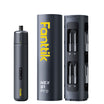
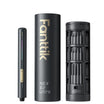
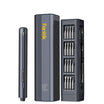
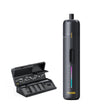
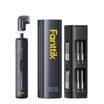
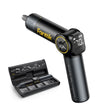
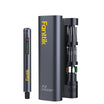
To clean your ports safely, you need tools that are softer than the gold contacts but rigid enough to dislodge compacted lint.
1. The Tool Kit
We recommend the following non-conductive tools:
- Wooden toothpicks: These can be shaved down with a hobby knife to create an even thinner profile.
- Plastic dental picks: Excellent for reaching the sides of the port.
- Soft, anti-static brushes: To sweep away loose particulates.
- 99% Isopropyl Alcohol (IPA): Reserved only for removing corrosion, not for general dust.
2. The Technique: "Lift, Don't Poke"
The goal is to get behind the debris and pull it out, rather than pushing it further in.
- Power Down: Ensure the device is completely off.
- Initial Inspection: Use a bright flashlight (or a phone's macro camera) to see where the debris is located.
- The Extraction: Gently insert the wooden or plastic pick along the side walls of the port. Use a "hooking" motion to lift the lint toward the opening.
- The Sweep: Once the major clumps are removed, use an anti-static brush to clear the remaining fine dust.
- The "Wobble Test": Insert a known-good cable. If it clicks into place and does not wiggle, the port is likely clear.
3. A Warning on Compressed Air
While it is tempting to use a "can of air," we often see this backfire. In high-dust environments, compressed air can force fine particulates deeper into the device's chassis or into adjacent sensors. If you must use air, use short, angled bursts only after you have mechanically removed the bulk of the debris.
Advanced Diagnostics: Corrosion and DC Ports
For automotive tools, like tire inflators that use DC barrel connectors, the challenges are different. These ports are often exposed to moisture, leading to oxidation or "green crust" (copper carbonate).
Identifying Corrosion
If a port looks "clear" but the connection is still intermittent, check the color of the metal contacts.
- Dull Grey/Black: Indicates heavy oxidation on tin or silver contacts.
- Green/White: Indicates galvanic corrosion from moisture exposure.
In these cases, a dry pick is not enough. You may need to apply a tiny amount of 99% IPA to a precision cotton swab. This should only be done on de-energized contacts. The alcohol acts as a solvent to break down the oxidation without leaving a conductive residue.
The Cable Factor
Sometimes, the problem isn't the port—it is the cable. We have found that debris can also pack into the female end of a charging cable or the tips of a USB-C plug. If cleaning the port doesn't fix the issue, inspect the cable plug under a light. A worn or bent contact on the cable can mimic a port failure.
Building a Culture of Maintenance
As devices become more compact, they also become more fragile. The push for USB-C miniaturization inherently conflicts with "design-for-cleanability." Manufacturers often offload the complexity of maintenance onto the consumer. By adopting a "hygiene-first" mindset, you are essentially fighting back against planned obsolescence.
For those who value their gear—whether it is an Off-Season Battery Care routine or a weekly check of your Tire Inflator Battery Storage—port cleaning is the simplest high-impact task you can perform.
Summary Checklist for Port Hygiene
- Frequency: Every 1–2 weeks for high-dust environments; every 3 months for office/home use.
- Tools: Wood or plastic only. Never use metal.
- Indicator: A "snug fit" is the gold standard for a clean port.
- Safety: Always de-energize before using liquids like IPA.
By treating your charging inputs with the same respect as your vehicle’s engine or your home’s electrical panel, you ensure that your gear is ready to perform exactly when you need it most. Reliable power starts with a clean connection.
Disclaimer: This article is for informational purposes only. Cleaning electronic ports carries a risk of damaging sensitive components. If you are unsure of your ability to perform these tasks safely, consult a professional repair technician. Always refer to your device manufacturer's specific maintenance guidelines.
Sources & References
- EU General Product Safety Regulation (EU) 2023/988 - Guidelines on product durability and safety.
- The 2026 Modern Essential Gear Industry Report: Engineering Trust in a Cordless World - Analysis of reliability as a competitive advantage.
- IEC 60529 - Degrees of Protection Provided by Enclosures (IP Code) - The standard for dust and water ingress protection.
- NIST Handbook 44 - Reference for measurement device requirements and accuracy.
- Boston Mobile Phone Repairs - Safe Cleaning Practices - Expert quote on wooden toothpicks vs. metal tools.
Continue reading
 Drop Recovery: Verifying Internal Integrity After a Fall
A guide to checking your portable tire inflator's internal integrity after a drop, covering sensor drift, motor alignment,...
Drop Recovery: Verifying Internal Integrity After a Fall
A guide to checking your portable tire inflator's internal integrity after a drop, covering sensor drift, motor alignment,...
 Intake Debris: Preventing Motor Clogs in Dusty Garages
Covers workshop dust particle analysis, clog diagnosis via motor pitch, and the Low-Pressure Angled Blow cleaning technique to...
Intake Debris: Preventing Motor Clogs in Dusty Garages
Covers workshop dust particle analysis, clog diagnosis via motor pitch, and the Low-Pressure Angled Blow cleaning technique to...
Leave a comment
This site is protected by hCaptcha and the hCaptcha Privacy Policy and Terms of Service apply.