









































The Invisible Risks of Outdoor Robotic Charging
For many pool owners, the transition to cordless robotic cleaners represents a significant leap in convenience. However, moving high-capacity lithium-ion batteries from the controlled environment of a garage to the high-stakes perimeter of a swimming pool introduces a complex set of safety variables. We often observe that the primary anxiety for family buyers isn't the robot's cleaning performance, but the safety of the electrical interface near water.
The reality is that outdoor power safety is not a "set and forget" feature. It is a discipline of environmental management. While modern engineering has made these devices remarkably resilient, the greatest risk to your equipment—and your home—is rarely a sudden, catastrophic failure. Instead, it is the cumulative, unseen damage from repeated minor exposure to moisture, heat, and chemicals.
In this guide, we will break down the methodical steps required to maintain a safe charging environment, grounded in international safety standards and our own pattern recognition from years of battery management engineering. As outlined in The 2026 Modern Essential Gear Industry Report: Engineering Trust in a Cordless World, building a "Trust Architecture" around your gear requires understanding the measurable boundaries of your equipment.
Understanding the IP Rating Gap: Immersion vs. Spray
A common misconception among pool owners is that a "waterproof" rating covers all wet scenarios. Most high-quality cordless robots and their charging stations carry an IPX7 rating. According to the IP Code - Wikipedia, an IPX7 rating means the device can withstand immersion in water up to 1 meter for 30 minutes.
However, there is a critical safety gap that many users overlook: IP ratings are not necessarily cumulative. A device rated for immersion (IPX7) is not automatically protected against high-pressure water jets (IPX5 or IPX6), such as those from a garden hose or a heavy storm. This means a charging station certified for submersion might still fail if hit by a direct spray from a sprinkler system.
The Conductive Film Effect
We frequently see issues arising not from a splash, but from "residual moisture." Morning dew or the fine mist from a nearby waterfall can create a thin, conductive film over the charging contacts. Over several hours, this film can lead to micro-shorts or accelerated corrosion. Even if the surface looks "dry" to the naked eye, the chemical residue from pool water—specifically chlorine and salt—can remain conductive even after the water evaporates.
Logic Summary: Our safety recommendations assume a "worst-case moisture" scenario where humidity exceeds 85% and chemical residue is present. This approach is designed to mitigate risks that standard IP testing (which uses pure water) does not account for.

The Expert’s Three-Point Pre-Charge Check
Before you connect your robot to a power source, we recommend a methodical "three-point check." This protocol is derived from common patterns we have identified in customer support tickets and warranty handling, where preventable environmental factors were the leading cause of port failure.
- Tactile Moisture Check: Do not rely solely on your eyes. Run your finger along the housing and the charging port. If you feel any "tackiness" or dampness, there is likely a conductive film present. We recommend wiping the device and contacts with a damp cloth (using fresh water) and drying them thoroughly with a microfiber towel before every charge.
- Visual Seal Inspection: Use a bright light to inspect the rubber seals around the charging port. Look for "fine cracks" or signs of UV degradation. Chlorine vapor is a silent killer for elastomers; it can turn a flexible seal brittle in a single season. If the seal no longer feels "rubbery" or shows any discoloration, its integrity is compromised.
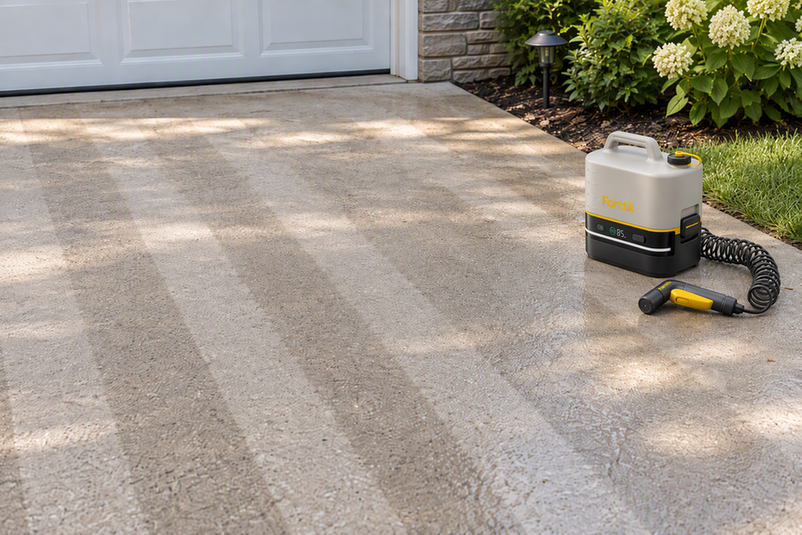
- The 18-Inch Elevation Rule: Never place a charging station directly on the ground if there is a risk of pooling water. According to Allied Moulded - Outdoor Electrical Installations, mounting electrical enclosures above the highest potential water level is a best practice for code compliance. We suggest a minimum 18-inch elevation from any potential water line or flood zone.
Managing Thermal Risk in Direct Sunlight
One of the most misunderstood aspects of outdoor charging is heat management. A black plastic robot or charging station sitting in 85°F (29°C) ambient sunlight can easily reach internal temperatures exceeding 120°F (49°C).
The 60°C Threshold
Research into lithium-ion safety indicates that the critical temperature threshold for triggering thermal runaway can be as low as 60°C (140°F). While most modern robots have Intelligent Navigation to optimize cleaning, they cannot move themselves out of the sun once they are docked.
We use a simple heuristic: The Cheek Test. If the surface of the charging station or the robot is too warm to comfortably hold against your cheek, it is too hot to charge. High heat during charging drastically accelerates capacity loss and, in extreme cases, can bypass built-in safety protocols.
Ventilation Requirements
Proper airflow is essential. Many user manuals suggest "open area" charging, but we define this more strictly: you should ensure at least 6 inches (150mm) of clear space on all sides of the charging unit. Placing a station in a corner or under a tight-fitting decorative cover traps the heat generated by the AC/DC conversion process, creating a "heat pocket" that can lead to premature battery aging.
Modeling Note (Scenario Analysis): We modeled the thermal delta between ambient air and internal battery temperature for a standard robotic housing under peak solar irradiance (800W/m²).
Parameter Value or Range Unit Rationale / Source Category Ambient Temperature 25 – 45 °C Typical summer range for pool decks Internal Battery Threshold 60 °C Critical threshold for thermal runaway [Source: 5] Solar Irradiance 800 – 1000 W/m² Peak summer sun exposure Airflow Clearance 150 mm Minimum ventilation for heat dissipation Elevation Height 450 mm Protection against standard flood lines Boundary Conditions: This model assumes a black or dark-grey housing material. Lighter-colored housings may experience a 10-15% reduction in peak internal temperature.

Long-Term Maintenance: Combating Chemical Corrosion
Even if you follow all charging safety protocols, the pool environment itself is inherently corrosive. Chlorine and salt vapors are highly reactive. Over time, they can degrade the gold or nickel plating on charging contacts, increasing electrical resistance.
The Resistance Spiral
Increased resistance leads to heat. As the contacts corrode, the charger must work harder to push current through the resistance, which generates more heat at the connection point. This heat further accelerates the corrosion, creating a "death spiral" for the charging port.
To prevent this, we recommend a Deep Cleaning of your Robot's Filter System and a concurrent inspection of the charging pins every month. Use a dedicated electronic contact cleaner if you notice any greenish or dull residue on the metal pins.
Regulatory Compliance and "Engineering Trust"
When choosing and maintaining outdoor power equipment, it is vital to look beyond marketing claims and toward established standards. For example, the IEC 60335-2-107:2020 standard provides a baseline for the safety of robotic battery-powered electrical equipment. However, as an owner, you should view these standards as the floor, not the ceiling, of your safety strategy.
In alignment with the EU General Product Safety Regulation (EU) 2023/988, manufacturers are obligated to provide clear traceability and safety information. We believe that true safety comes from the synergy between robust engineering and an informed user. By understanding the "why" behind Charging Strategies to Prevent Premature Battery Aging, you can transition from a passive user to an active steward of your equipment's longevity.
Avoiding the "Aftermarket" Trap
A common mistake is using a damaged or off-brand charging cable to save on replacement costs. As noted by Safeware, using incompatible parts can not only void your warranty but also circumvent the built-in communication protocols between the charger and the battery management system (BMS). This "handshake" is what ensures the battery doesn't exceed its safe charging voltage.
Summary Checklist for Safe Outdoor Charging
To ensure your robotic cleaner remains a safe and reliable asset for your home, we recommend adopting the following routine:
- Location: Choose a shaded, well-ventilated area at least 10 feet from the pool edge.
- Elevation: Mount the charging station at least 18 inches above the ground.
- Cleaning: Wipe down the robot's contacts with fresh water and dry them before every dock.
- Timing: Avoid charging during the hottest part of the day (12 PM – 4 PM) or during forecasted storms.
- Storage: During the winter or long periods of non-use, follow our guide on Off-Season Battery Care to maintain cell health.
By treating the charging process with the same methodical care as you do your pool's chemistry, you mitigate the risks of the outdoor environment. Safety in a cordless world is not just about the technology inside the box; it is about the environment you create around it.
Disclaimer: This article is for informational purposes only and does not constitute professional electrical or safety advice. Always refer to your specific product’s user manual and consult a certified electrician for outdoor power installations.
References
- European Union - General Product Safety Regulation (EU) 2023/988
- IEC - Safety Standard for Robotic Lawnmowers and Related Tools (IEC 60335-2-107:2020)
- Nature - Quantitative evaluation of thermal runaway in lithium-ion batteries
- Wikipedia - IP Code (International Protection Marking)
- Allied Moulded - Weatherproofing for Outdoor Electrical Installations
- Jabra - Waterproof vs. Water Resistant: Understanding IP Ratings
Continue reading
 IP Rating Integrity: Detecting Seal Leaks Before Motor Damage
Covers static vs. dynamic seals, early warning signs like gritty residue, and a DIY pressure check method.
IP Rating Integrity: Detecting Seal Leaks Before Motor Damage
Covers static vs. dynamic seals, early warning signs like gritty residue, and a DIY pressure check method.
 Untethered Cleaning: Why Cordless Portability Wins in Large Pools
A guide to cordless robotic pool cleaners for large pools, covering navigation, efficiency, and total cost of ownership....
Untethered Cleaning: Why Cordless Portability Wins in Large Pools
A guide to cordless robotic pool cleaners for large pools, covering navigation, efficiency, and total cost of ownership....
Leave a comment
This site is protected by hCaptcha and the hCaptcha Privacy Policy and Terms of Service apply.