






























The Spring Pollen Challenge: Beyond the Surface Shine
Spring brings a sense of renewal, but for car owners, it also brings a fine, yellow veil that blankets everything from the hood to the deepest recesses of the dashboard. While a quick trip through the car wash handles the exterior, the pollen that migrates into your air vents presents a more complex challenge. This isn't just an aesthetic issue; for the millions of drivers sensitive to seasonal allergens, those vents can become a localized source of irritation every time the climate control kicks on.
We have spent years observing the patterns of vehicle interior degradation, and we’ve seen how a lack of seasonal maintenance can lead to persistent "old car" smells and a decline in cabin air quality. In our experience, many owners feel a sense of anxiety when approaching their dashboard vents—they are delicate, filled with intricate louvers, and often house sensitive electronics. The fear of snapping a plastic vane or pushing dust deeper into the HVAC system is real.
In this guide, we will share a professional-grade protocol for extracting pollen and dust from your vents safely. We believe in a self-reliance mindset where you have the tools and knowledge to maintain your vehicle’s health without relying on expensive detailing services for every seasonal change. By following a structured, gentle approach, you can preserve both your health and your vehicle's resale value.
The Hierarchy of Cabin Air Quality
Before we pick up a brush or a vacuum, we must understand how air flows through a modern vehicle. A common misconception is that deep-cleaning the vents is the only way to stop sneezing in your car. However, professional standards suggest a different hierarchy of care.
The ISO 11155-1 Standard and Your Filter
The primary defense against pollen isn't the vent louver; it’s the cabin air filter. According to research on advanced air filtration in modern vehicles, a high-quality filter meeting ISO 11155-1 standards can capture over 90% of pollen particles before they ever reach your dashboard.
If your filter is clogged or past its service life (typically 12,000 to 15,000 miles), no amount of vent cleaning will solve your allergy woes. In fact, industry data suggests that pollen accumulation primarily risks clogging the filter first, which strains the blower motor and reduces airflow.
Logic Summary: Our maintenance hierarchy assumes that a functional filtration system is the baseline. We categorize vent cleaning as "secondary decontamination" for particles that settled while windows were down or that bypassed aging seals. This is a heuristic for comprehensive air quality management, not a replacement for mechanical filter service.

Preparing Your Vehicle for Decontamination
Expert detailers always emphasize that the environment in which you clean is as important as the cleaning itself. To avoid simply redistributing allergens into the cabin, we recommend the following preparation steps:
- HVAC System Off: Ensure the car is off and the climate control is fully disengaged. Cleaning while the fan is running is a recipe for blowing loosened dust directly into your eyes and lungs.
- Well-Ventilated Area: Work in a garage with the door open or outdoors on a calm day. You want any airborne particles to have a path out of the vehicle.
- The 80% Rule (Starting from the Floor): Based on common patterns observed in professional detailing, roughly 80% of cabin dust originates from the footwells. If you clean the vents first and then vacuum the carpets, the agitation of the floor mats will send a fresh cloud of dust back onto your clean dashboard.
Pro Tip: Always vacuum from the roof down. Start with the headliner (very gently), move to the dash and vents, and finish with the floors. This ensures gravity works with you, not against you.
The Gentle Extraction Protocol
When it comes to the vents themselves, the "brute force" approach is a mistake we see far too often. Using high-suction industrial vacuums or high-pressure air at close range can damage modern vent assemblies. These components often feature integrated motors, multi-row vanes, and even smart sensors that are not designed for extreme mechanical force.
Step 1: The Tapping Method
Instead of sticking a nozzle directly against the vent, we use the "Tapping Method." Use a soft-bristled detailing brush to gently tap the louvers. This mechanical vibration loosens the electrostatic bond between the pollen and the plastic.
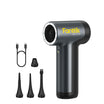
As you tap, hold a compact vacuum nozzle about an inch away from the vent to catch the "floaters." This prevents the dust from settling elsewhere on the dashboard.
Step 2: Strategic Vacuuming
When vacuuming the vents, we recommend using a brush attachment. A common pitfall is using a crevice tool with high suction directly on the louvers. This can pull small, loose plastic parts or adjustment tabs right off their tracks.
Methodology Note: Our recommendation for low-suction, brush-assisted vacuuming is based on risk-aversion modeling for interior components.
Parameter Value/Range Unit Rationale Suction Limit ~12-16 kPa Prevents mechanical displacement of louvers Brush Stiffness Soft/Natural N/A Avoids micro-scratching of piano black or matte finishes Working Distance 0-25 mm Optimizes particle capture vs. airflow turbulence Ambient Humidity 40-60 % Reduces electrostatic cling of pollen particles Airflow Direction Pull (Vacuum) N/A Primary method to remove mass; "Push" is for detail only
Step 3: Controlled Air Displacement
If you have stubborn material packed deep in the corners, a burst of compressed air can be effective—but only if used correctly. If you can access the backside of the vent (sometimes possible by removing a side panel or glove box), blowing air outward is the most effective technique.
If you must blow air inward, use short, controlled bursts from at least 6 inches away. The goal is to dislodge, not to blast. As the dust flies out, have your vacuum ready to intercept it.
Disinfecting Without Damage
Pollen often carries moisture, which can lead to mold or mildew growth inside the dark, cool environment of a vent. Periodically disinfecting the surfaces is a hallmark of Seasonal Interior Preservation.
We recommend a 1:10 dilution of isopropyl alcohol and water. Why this specific ratio? Pure alcohol can be too aggressive for certain "soft-touch" plastics or coatings used in modern interiors, potentially causing them to become sticky or discolored over time. A 1:10 ratio provides sufficient antimicrobial properties while remaining safe for most surfaces.
The "Flat Tool" Technique: To apply the solution, do not spray it directly into the vent. Overspray can seep into the dashboard electronics or the stereo unit. Instead, wrap a clean microfiber cloth around a flat tool (like a plastic putty knife or even a tongue depressor) and dampen the cloth with the solution. Slide the tool between the louvers to wipe the surfaces clean. This gives you precision and prevents liquid from pooling where it shouldn't.
Long-Term Interior Preservation
Maintaining your vehicle's interior is a proactive discipline. According to The 2026 Modern Essential Gear Industry Report, the longevity of modern consumer gear—including vehicle interiors—is increasingly dependent on the user's ability to perform "paper-thin" maintenance: small, frequent actions that prevent the need for major overhauls.
For car owners, this means:
- Checking seals: Ensure the weatherstripping around your doors and windows is intact. Pollen often enters through degraded seals when the car is parked.
- Storage: If possible, park in a garage during peak pollen season.
- Consistent Cleaning: A 5-minute "dust-off" once a week during spring is significantly more effective than a 2-hour deep clean once a year.
By treating your dashboard with the same care you would a piece of high-end electronics, you preserve the tactile quality of the materials. This attention to detail is what separates a "used" car from a "well-maintained" one when it comes time for resale. Market research from SEMA consistently shows that vehicles with pristine interiors command a higher premium, as they signal to the buyer that the mechanical systems were likely treated with equal care.
Summary of Best Practices
| Action | Professional Recommendation | Why It Matters |
|---|---|---|
| Initial Step | Replace Cabin Air Filter (ISO 11155-1) | Stops 90%+ of pollen at the source |
| Vacuum Order | Top to Bottom (Roof to Floor) | Prevents recontamination from footwell dust |
| Vent Agitation | Soft Tapping with Brush | Breaks electrostatic bond without breaking plastic |
| Suction Level | Low to Medium (~12-16 kPa) | Protects delicate louver motors and sensors |
| Disinfection | 1:10 Isopropyl Alcohol | Kills mold/mildew without damaging plastic finishes |
| Tool Usage | Microfiber on a Flat Tool | Prevents liquid overspray into electronics |
Building a Habit of Care
We understand that car maintenance can sometimes feel like a chore, especially when life gets busy. However, we've found that having a dedicated "interior kit"—a small vacuum, a few detailing brushes, and a pre-mixed bottle of 1:10 alcohol—makes the process almost effortless.
When you take the time to clear that spring dust, you aren't just cleaning a car; you're creating a sanctuary. Your commute should be a time of focus and comfort, not a struggle against sneezing fits and stale odors. By mastering these gentle extraction techniques, you take control of your environment, ensuring that every mile driven is a breath of fresh air.
YMYL Disclaimer: This article is for informational purposes only. Cleaning procedures involve handling delicate automotive components and chemical solutions. Always refer to your vehicle's owner manual for specific material care instructions. If you have severe respiratory conditions or allergies, consult a medical professional before performing deep-cleaning tasks that may agitate allergens. We recommend wearing a high-quality mask (e.g., N95) during the cleaning process to minimize exposure.
References
Continue reading
 Material Testing: Evaluating Cleaners for Modern Vegan Leather
A material science guide to testing cleaners for modern vegan leather car interiors. Learn the pH paradox, prevent...
Material Testing: Evaluating Cleaners for Modern Vegan Leather
A material science guide to testing cleaners for modern vegan leather car interiors. Learn the pH paradox, prevent...
 Touchscreen Hygiene: Safe Cleaning for Sensitive Car Electronics
A guide to cleaning automotive touchscreens without damaging anti-glare coatings. Learn a four-stage professional protocol to preserve clarity...
Touchscreen Hygiene: Safe Cleaning for Sensitive Car Electronics
A guide to cleaning automotive touchscreens without damaging anti-glare coatings. Learn a four-stage professional protocol to preserve clarity...
Leave a comment
This site is protected by hCaptcha and the hCaptcha Privacy Policy and Terms of Service apply.