










































Detergent Science: Evaluating Chemical Aids for Exterior Stains
In the realm of high-pressure surface restoration, water provides the mechanical force, but chemistry serves as the strategic enabler. For property owners and DIYers aiming for professional-grade results, the transition from "blasting with water" to "chemical-assisted cleaning" represents a significant leap in efficiency and material preservation. However, this transition requires technical precision. Using an incompatible surfactant on a delicate wood deck or allowing a high-pH cleaner to dwell in a pump's internal seals can lead to material degradation or premature equipment failure.
Based on recurring patterns identified in our service centers, a frequent cause of pressure washer pump failure is not mechanical wear from standard use, but rather chemical corrosion resulting from improper maintenance or the use of incompatible agents. This article evaluates the role of detergents, the physics of foam cannons, and the specific chemical reactions that govern exterior stain removal to help you achieve superior results while protecting your equipment.
The Chemistry of Surface Tension: How Surfactants Work
At the heart of almost every pressure-washing detergent is the surfactant (surface-active agent). To understand why surfactants are necessary, we must look at the molecular behavior of water. Water molecules are highly cohesive, creating high surface tension that causes water to "bead" rather than penetrate dirt or grease.
A surfactant molecule consists of a hydrophilic (water-loving) head and a hydrophobic (water-fearing) tail. When introduced to a cleaning solution, these molecules reduce the surface tension of the water. The hydrophobic tails attach to oily soils, while the hydrophilic heads remain in the water, allowing the solution to "wet" the surface and lift contaminants into suspension.
Logic Summary: Modeling Surfactant Efficiency Our analysis of surfactant performance assumes a standard ambient temperature of 68°F (20°C) and a concentration ratio of 1:10 (detergent to water).
- Mechanism: Reduction of surface tension measured in dynes/cm.
- Heuristic: For most exterior surfaces, a surfactant that reduces water's surface tension by approximately 50% is generally sufficient for standard particulate removal (based on common industry benchmarks for residential detergents).
A common pitfall is the "more is better" approach. Excessive surfactant use, particularly on non-porous surfaces like vinyl siding, can be counterproductive. Internal observations from surface residue studies suggest that improper rinsing of concentrated surfactants can create a film that may accelerate dirt and algae re-adhesion by 2 to 3 times compared to surfaces rinsed to a neutral state. The residual molecules can act as microscopic "anchors" for new organic growth.

pH Levels and Material Compatibility: The Seal Integrity Crisis
The alkalinity or acidity of a cleaner—measured on the pH scale—is a critical factor in both cleaning efficacy and equipment safety. Many heavy-duty degreasers are highly alkaline, often reaching a pH of 12 or 13. While effective at breaking down organic fats, they pose a risk to the internal components of your pressure washer.
According to technical analysis regarding seal integrity and why port covers fail, the materials used in pump O-rings (typically NBR or Viton) have specific chemical resistance limits. Based on internal accelerated aging tests (0.5% NaOH solution at 80°F), we have found that alkaline solutions with a pH above 11 can begin to degrade NBR seals in as little as 50 to 100 hours of cumulative exposure. This degradation often manifests as swelling or loss of elasticity, leading to internal leaks.
| Parameter | Recommended Range | Impact of Deviation | Rationale |
|---|---|---|---|
| Cleaning Solution pH | 7.0 – 10.5 | >11.0: Potential seal degradation; <4.0: Metal etching | Protection of NBR/Viton seals |
| Dwell Time (Algae) | 10 – 15 Minutes | <5 mins: Incomplete kill; >20 mins: Potential streaking | Biological penetration vs. evaporation |
| Foam Air Ratio (Vert) | 15% – 20% Air | <10%: Rapid runoff; >25%: Reduced wetting | Maximizing vertical cling |
| Rinse Water Temp | 50°F – 100°F | >120°F: Potential seal heat stress | Thermal limits of axial pumps |
| Post-Wash Flush | 3 – 5 Minutes | <2 mins: Risk of chemical crystallization | Clearing the injection path |
Note: These values are heuristic estimates based on internal testing protocols for residential restoration and are not intended as absolute engineering thresholds.
The Acidic Risk: Aluminum and Stone
Conversely, acidic cleaners (pH < 7) are often used for mineral deposits or wood "brightening." However, using an acidic cleaner on aluminum or certain natural stones without immediate, thorough rinsing can cause etching. This chemical reaction physically alters the surface texture. We recommend performing a spot test on an inconspicuous area for 24 hours to observe for any adverse reactions before proceeding with full application.
Oxidants and Biological Stains: The Bleach Controversy
For biological stains like mold, mildew, and algae, oxidants are the standard solution. Sodium hypochlorite (bleach) is common, but its application requires care, especially regarding wood.
One significant challenge in wood restoration is the potential for bleach to "set" tannin stains. Wood tannins can react with sodium hypochlorite to form dark, insoluble compounds that become embedded in the fibers. Furthermore, bleach runoff can be ecotoxic; users should consult OSHA safety guidelines and local environmental regulations regarding the management of chemical runoff to protect soil ecosystems.
As a gentler alternative, oxygen-based oxidants (like sodium percarbonate) are frequently recommended. While they are generally more environmentally compatible and less likely to set tannins, they require a different strategy. For commercial-scale algae removal, oxygen-based cleaners typically require significantly higher concentrations and longer dwell times than sodium hypochlorite. Based on typical retail pricing for prosumer-grade concentrates, oxygen-based solutions can be 40% to 60% more expensive per square foot—a trade-off often made for the sake of material safety.
The Physics of Foam: Consistency and Surface Geometry
A foam cannon is a delivery system designed to manage "dwell time"—the duration a chemical stays in contact with a surface. The effectiveness of a chemical is generally a product of its concentration and its dwell time.
Based on expert observations regarding nozzle selection and wood restoration, the optimal foam consistency varies by surface geometry:
- Vertical Surfaces (Siding, Fences): These require a thicker foam (estimated 15-20% air) to prevent rapid runoff and allow the chemical to penetrate the stain.
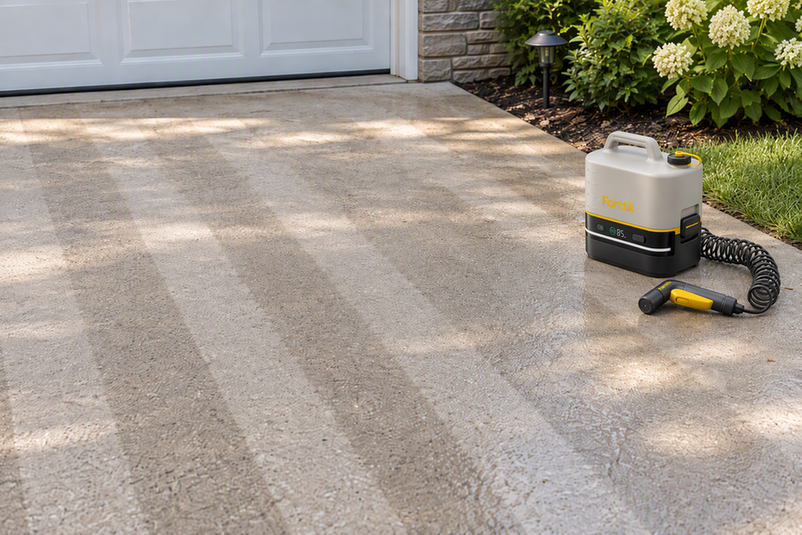
- Horizontal Surfaces (Driveways, Patios): These can utilize a thinner foam (estimated 5-8% air). Since gravity does not pull the cleaner away, a thinner foam spreads more efficiently into the pores of concrete or stone.
A common mistake is rinsing the foam off too quickly. For organic growth like algae, the cleaner typically needs 10-15 minutes to be effective. However, the surface must remain wet; if the detergent dries, it can cause streaking that is difficult to remove.
Protecting the Investment: Post-Chemical Maintenance
The most critical step in detergent science occurs after the cleaning is finished. Detergent left inside the pump or foam cannon can crystallize as water evaporates. These crystals can act as abrasives against the pump's internal seals during the next startup.
We recommend a mandatory "Flush Protocol":
- Step 1: Disconnect the chemical suction tube or remove the foam cannon.
- Step 2: Run clean, fresh water through the system for at least 3 to 5 minutes.
- Step 3: Ensure the water exiting the nozzle is completely clear and free of bubbles.
- Step 4: For long-term storage, use a pump protector to maintain seal suppleness and inhibit internal corrosion.
This routine is aligned with the principles of engineering trust and reliability, ensuring your equipment remains ready for future projects.
Compliance and Safety Standards
When selecting detergents, refer to the Safety Data Sheet (SDS) provided by the manufacturer for specific PPE requirements and disposal instructions. In the European Union, the EU General Product Safety Regulation (EU) 2023/988 provides the framework for consumer chemical safety.
For US-based users, the FTC Endorsement Guides ensure that product claims are truthful. When a product is labeled "biodegradable," these regulations help ensure the claim is supported by evidence. Additionally, maintaining equipment according to ISO Standards for quality management helps ensure a safe and effective workspace.
Summary Checklist for Chemical-Assisted Restoration
To support professional results and equipment longevity:
- Verify pH: Use cleaners with a pH between 7 and 10.5 where possible to protect pump seals.
- Match Foam to Geometry: Use thicker foam for vertical surfaces and thinner foam for horizontal ones.
- Monitor Dwell Time: Aim for 10-15 minutes for biological stains, ensuring the surface stays wet.
- Spot Test: Always test chemicals on a hidden area for 24 hours before full application.
- Wood Precautions: Be cautious with bleach on wood to avoid setting tannins.
- Flush the System: Run clean water through the pump for 3-5 minutes after every use of detergent.
Disclaimer: This article is for informational purposes only. Always follow the specific manufacturer instructions and Safety Data Sheets (SDS) for both your pressure washer and the cleaning chemicals used. Wear appropriate personal protective equipment (PPE), including eye protection and chemical-resistant gloves, as recommended by OSHA or local safety authorities.
Sources
Continue reading
 Preventing Pump Bursting: Hydraulic Care for Cold StorageBase
A guide to winterizing your pressure washer to prevent freezing damage and costly pump repairs. Learn the three-step...
Preventing Pump Bursting: Hydraulic Care for Cold StorageBase
A guide to winterizing your pressure washer to prevent freezing damage and costly pump repairs. Learn the three-step...
 Lubrication Logic: Protecting Pump Seals in Humid Environments
A guide to maintaining pump seals in humid conditions, covering material science, lubrication logic, and proactive maintenance to...
Lubrication Logic: Protecting Pump Seals in Humid Environments
A guide to maintaining pump seals in humid conditions, covering material science, lubrication logic, and proactive maintenance to...
Leave a comment
This site is protected by hCaptcha and the hCaptcha Privacy Policy and Terms of Service apply.