










































The Frunk Challenge: Mastering Your EV’s Front Storage
When we first transitioned to electric vehicles, the "frunk"—that mysterious void where an internal combustion engine used to live—felt like a secret clubhouse. It was a symbol of the EV revolution, a bonus space that promised to solve our storage woes. However, as we’ve lived with these vehicles through cross-country road trips and daily commutes, we’ve discovered that the frunk is one of the most misunderstood environments in modern automotive design.
Packing a frunk isn't as simple as tossing gear into a traditional trunk. It is a space defined by irregular geometry, extreme temperature swings, and unique safety considerations. If you’ve ever had a frunk latch refuse to close or found a piece of plastic gear warped after a summer drive, you know the frustration. In this guide, we’ll share our expertise on how to select and organize gear for this specific "clean-tech" environment, ensuring your vehicle remains as efficient and safe as the day it left the showroom.
Understanding the Frunk Environment: Heat and Geometry
The most common mistake we see is treating the frunk like a standard cabin-temperature storage area. It is not. Unlike the rear trunk, which often shares some airflow or insulation with the cabin, the frunk is often a sealed plastic or metal tub nestled between the front motors and the exterior skin of the car.
The 140°F Reality
In our observations of real-world usage patterns, we’ve found that the temperature in a sealed frunk can be significantly more extreme than the cabin. On a typical 90°F summer day, solar gain and proximity to the front drive unit can push internal frunk temperatures to exceed 140°F (60°C). This is a critical threshold for many consumer electronics.
If you are storing gear with internal batteries—such as portable inflators or jump starters—it is vital to ensure they feature robust Battery Management Systems (BMS). High heat accelerates the chemical degradation of lithium-ion cells. We recommend only selecting gear that is explicitly rated for high-temperature automotive storage.
Logic Summary: This thermal estimate is a scenario model based on the greenhouse effect in uninsulated vehicle compartments and common thermal dynamics of dark-colored EV hoods. It is an illustrative model, not a controlled laboratory study.
The Shallow Depth Constraint
Standard tool cases and rigid "emergency kits" are often the enemy of frunk efficiency. Most frunks are surprisingly shallow at the edges—often only 4 to 6 inches deep. This irregular, tapering shape means that a "one size fits all" hard case will likely waste 30-40% of the available volume.
Based on our experience with various EV architectures, the most effective organizers are soft, segmented bags. These conform to the "tub" shape of the frunk, allowing you to utilize every cubic inch without putting pressure on the hood.

Engineering Safety: Crumple Zones and Projectiles
As design-conscious owners, we often focus on aesthetics, but the frunk is a high-stakes area for vehicle safety. We must balance convenience with the structural integrity of the car.
The Collision Risk
There is a persistent debate in the EV community about whether storing heavy gear in the frunk compromises the front crumple zone. According to research discussions on the GM Volt Forum, while manufacturers have re-engineered frontal structures to maintain 5-star safety ratings (like those from the NHTSA), the physics of a collision cannot be ignored.
In a frontal impact, anything in the frunk becomes a high-velocity object. If your gear is not absolutely secured, it can shift or even penetrate the firewall in extreme cases. We consider it mandatory to use the cargo net hooks or a high-friction non-slip mat. This isn't just about keeping things quiet; it’s about ensuring your emergency inflator doesn't become a projectile during a hard stop.
The "One-Inch Rule" for Sensors
Modern EVs are packed with sensors, and the frunk latch is no exception. We’ve seen many instances where over-packing leads to a "Frunk Open" warning on the dashboard mid-drive, even if the hood looks closed. This happens because the gear stack is slightly compressing the latch mechanism, preventing the electronic sensor from registering a "secure" state.
Practical Heuristic: Always leave at least a one-inch gap between the top of your gear and the underside of the frunk lid. This "air gap" ensures that the latch can engage fully without mechanical interference, protecting the delicate alignment of the hood.
Selecting Gear: The Modernist Criteria
To maintain the tech-forward, minimalist aesthetic of your EV, your gear should match the vehicle's design language. We prioritize gear that is compact, multi-functional, and cordless.
1. Flat-Profile Tools
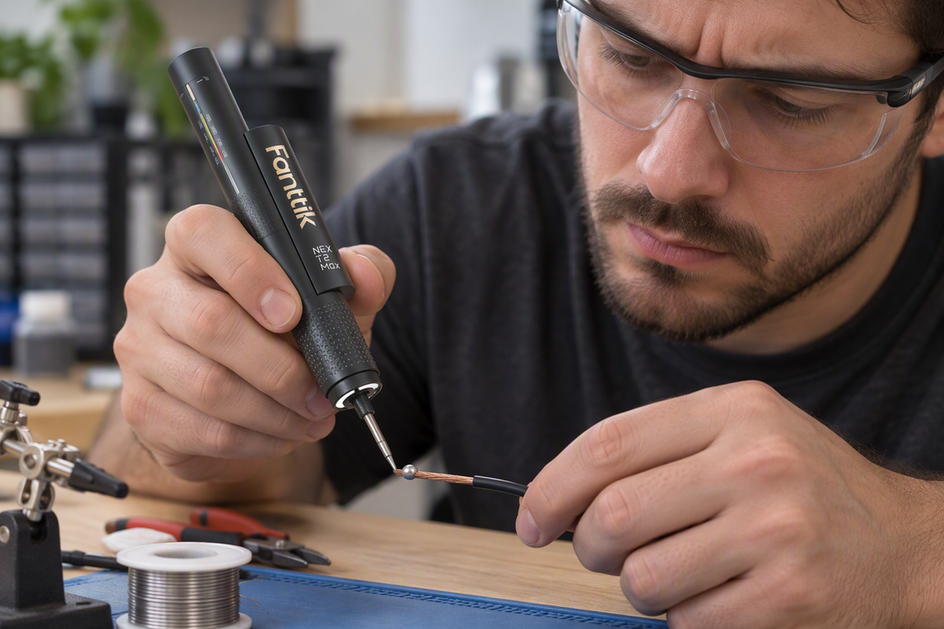
When selecting tools for the frunk—whether it's a precision screwdriver set for minor trim adjustments or a rotary tool for DIY maintenance—look for "flat-pack" or cylindrical designs. Avoid the bulky, "clamshell" plastic cases common in big-box hardware stores. A cylindrical air duster or a slim precision tool kit will slide into the narrow side-channels of the frunk, leaving the deep center area free for larger items like charging cables or grocery bags.
2. Cordless Efficiency
The "clean" EV lifestyle is about reducing friction. Fiddling with 12V cigarette lighter cords across the paint of your car is a recipe for scratches. We recommend high-performance cordless tools that can be recharged via the USB-C ports in your cabin. This allows you to keep the frunk "cord-free" and organized.
3. Material Integrity
Given the heat concerns mentioned earlier, look for gear made from high-grade ABS or aluminum rather than cheap, thin plastics. High-quality materials are less likely to off-gas or warp when the frunk hits that 140°F mark. This is a key part of what we call "Trust Architecture"—selecting gear that is engineered with explicit safety margins.
Strategic Packing: Two Scenarios for EV Owners
To help you visualize how to optimize your space, let’s look at two common packing scenarios we’ve modeled based on user feedback.
Scenario A: The Urban Commuter
- Primary Goal: Maximum convenience for daily errands.
- Setup: The center of the frunk is kept entirely empty for groceries or a gym bag.
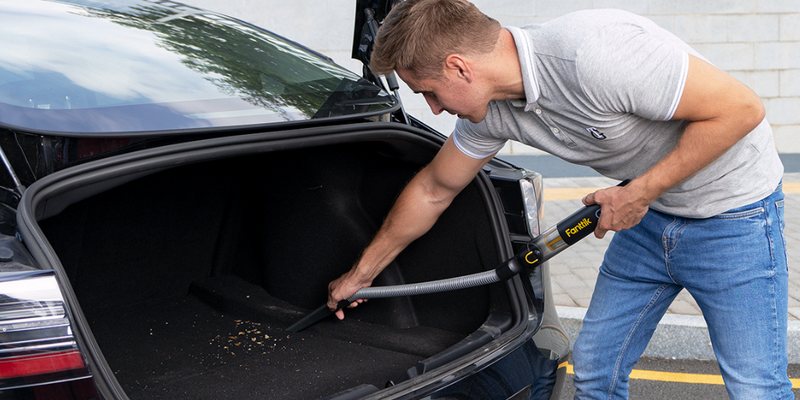
- Gear Placement: A small, soft-sided organizer is tucked into the far corner, containing only the essentials: a compact cordless car vacuum for quick spills and a precision screwdriver set.
- Benefit: Keeps the cabin clutter-free while ensuring tools are available for "just in case" moments without sacrificing cargo utility.
Scenario B: The Cross-Country Road-Tripper
- Primary Goal: Self-reliance in remote areas.
- Setup: The frunk is utilized for "Set and Forget" emergency gear.
- Gear Placement: A heavy-duty jump starter (with high-heat rated BMS) and a portable tire inflator are secured at the very bottom using a non-slip mat. Charging adapters and a first-aid kit are layered on top.
- Heuristic Check: The "One-Inch Rule" is strictly followed to ensure the power-frunk motor (if equipped) doesn't burn out against an overstuffed load.
- Logic Summary: For long-distance travel, we recommend splitting gear. Keep immediate-use items (like a first-aid kit) in the cabin, and store bulky, less-immediate supplies in the frunk to optimize weight distribution.
| Parameter | Value/Range | Unit | Rationale |
|---|---|---|---|
| Max Frunk Temp | 140 - 150 | °F | Estimated solar gain in sealed compartments |
| Latch Clearance | 1.0 | Inch | Heuristic to prevent sensor/latch interference |
| Side-Wall Depth | 4 - 6 | Inch | Common taper in Tesla/Lucid/Rivian frunks |
| Gear Weight Limit | 25 - 50 | Lbs | Common manufacturer-rated structural limit |
| Battery Type | LiFePO4 / High-BMS Li-ion | - | Stability in high-thermal environments |
Compliance and the "Trust Architecture"
In the world of cordless gear, not all products are created equal. When you are buying tools to live in your $60,000+ electric vehicle, you should demand evidence of engineering trust.
Safety Standards
According to the EU General Product Safety Regulation (EU) 2023/988, products must meet rigorous safety and traceability standards. This is especially true for battery-powered devices. When we evaluate gear, we look for compliance with ISO Standards and IEC Standards for electrical safety.
A brand that provides transparent documentation is a brand you can trust. As noted in The 2026 Modern Essential Gear Industry Report, trust is a function of "credibility math." This means looking for visible compliance, such as UN 38.3 certification for battery transport safety, which ensures the device can handle the vibrations and temperature changes of life on the road.
The IATA Perspective
If you ever plan to take your portable gear on a flight (perhaps for a fly-and-drive rental), you must be aware of IATA Lithium Battery Guidance. Most high-capacity jump starters are restricted from checked luggage. Storing them in your frunk is fine, but knowing the Watt-hour (Wh) rating of your gear is essential for legal compliance across different modes of transport.
Final Thoughts on Frunk Mastery
The frunk is more than just a storage bin; it’s an extension of your EV’s engineering. By selecting gear that respects the thermal and spatial constraints of this unique space, you protect both your investment and your safety.
Remember to prioritize soft-sided organizers, respect the "One-Inch Rule," and always secure your items against the physics of a sudden stop. When your gear is as well-designed as your car, the "Frunk Challenge" becomes a seamless part of the modern driving experience.
For more tips on organizing your vehicle, you might find our guide on maximizing cargo room for portable jump gear or our deep dive into sub-trunk storage secrets helpful.
Disclaimer: This article is for informational purposes only. Always refer to your vehicle's owner manual for specific weight limits and safety warnings regarding front storage compartments. Storing certain chemicals or highly flammable materials in a sealed frunk is not recommended due to heat accumulation.
Sources
Continue reading
 Small Apartment Storage: Keeping Car Gear Ready but Hidden
Covers the Sub-10L Rule, economic ROI of tire care, space-efficient shelving, and safety protocols for lithium-ion battery storage...
Small Apartment Storage: Keeping Car Gear Ready but Hidden
Covers the Sub-10L Rule, economic ROI of tire care, space-efficient shelving, and safety protocols for lithium-ion battery storage...
 Cable Management: Prevent Tangles in Your Road Trip Tech Bin
A guide to organizing tech cables in your car, using the 80/20 rule and proper folding to save...
Cable Management: Prevent Tangles in Your Road Trip Tech Bin
A guide to organizing tech cables in your car, using the 80/20 rule and proper folding to save...
Leave a comment
This site is protected by hCaptcha and the hCaptcha Privacy Policy and Terms of Service apply.