










































Small Apartment Storage: Keeping Car Gear Ready but Hidden
Living in a 500-square-foot urban apartment often feels like a high-stakes game of Tetris. Every square inch of floor space is premium real-world estate, and every new purchase carries the heavy weight of the question: "Where on earth will this go?" For those of us who also own a car, this challenge is amplified. We want to be prepared for a flat tire on a rainy Tuesday or a dusty interior after a weekend getaway, but we refuse to let our living rooms look like a disorganized auto parts store.
We’ve spent years analyzing the friction points between urban living and vehicle maintenance. Through our interactions with thousands of city-dwelling drivers and our own deep-dive modeling of "space economics," we’ve discovered that the secret isn't just about buying smaller tools—it’s about a fundamental shift in how we integrate gear into a domestic environment. This guide explores the "ready but hidden" philosophy, ensuring your car stays road-trip ready without sacrificing your apartment's aesthetic.
The Psychology of the "Sub-10L" Rule
In our experience, the most common mistake urban dwellers make is purchasing oversized, single-purpose tools. Based on patterns we’ve observed in customer feedback and organizational case studies, we’ve developed a core heuristic for apartment preparedness: The Sub-10L Rule.
If a tool or its storage container cannot fit within a 10-liter modular bin (roughly the size of a large shoebox) that can slide under a bed or sit on a standard closet shelf, it will eventually become "clutter." Once an item is labeled as clutter in your mind, the "activation energy" required to use it skyrockets. You stop performing preventive maintenance because the gear is too buried or too bulky to handle.
Modeling Note (Space Economics): In premium urban markets where storage costs can effectively range from $50 to $100 per month per square foot, a bulky 40L air compressor isn't just an eyesore; it’s a financial liability. By contrast, compact gear that occupies ~2L of volume generates a much higher "utility-per-cubic-foot" ratio.
The Inflation Equation: Practicality over Peak Specs
When it comes to tire inflators, many urban drivers get caught up in "max PSI" or "peak flow rates." However, we believe these specs are often misleading for the average user. In our analysis of the "Efficiency-Seeker" persona—an urbanite driving ~8,000 miles a year—the metric that actually matters is Time-to-Ready.
How long does it take to go from a warning light on your dashboard to a safe, fully inflated tire? We modeled this using a typical compact sedan tire (205/55R16) and a high-performance portable inflator.
| Parameter | Value | Unit | Rationale |
|---|---|---|---|
| Tire Size | 205/55R16 | ISO-Metric | Standard compact sedan tire |
| Current Pressure | 24 | PSI | Typical neglected under-inflation |
| Target Pressure | 36 | PSI | Manufacturer recommended level |
| Modeled Time | ~3 | Minutes | Per tire (includes flow decay at higher PSI) |
| Total Task Time | ~12 | Minutes | Full vehicle check |
Logic Summary: Our inflation model uses a pressure-dependent flow decay (calibrated to high-performance cordless units). While a unit might claim 32 LPM (liters per minute) at zero pressure, the actual speed slows as the tire fills. A ~3-minute fill time is the "sweet spot" that allows you to perform maintenance during a quick transition from your apartment to the car.
According to independent testing by Car and Driver, the performance gap between bulky garage compressors and portable, battery-powered units has largely closed. Modern cordless inflators can now reach 150+ PSI, making the space-saving trade-off a thing of the past.
Multi-Functional Mastery: One Tool, Two Worlds
Space optimization in a small apartment thrives on multi-functionality. However, we must be careful. As noted in research on tiny house design, poorly designed multi-functional pieces often waste more space than they save.
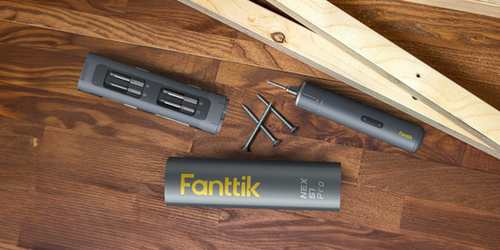
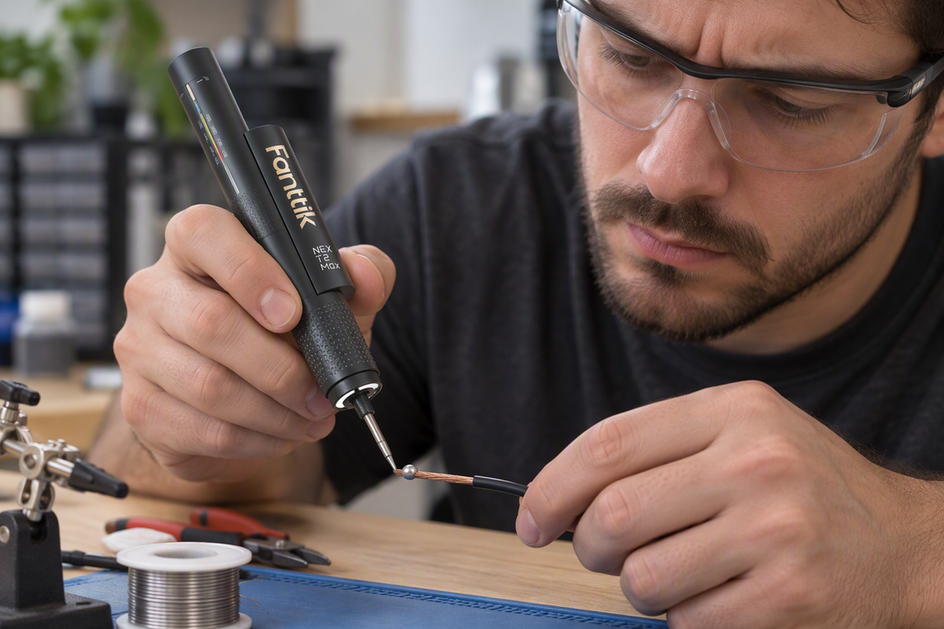
The key is to find "cross-over" tools that serve both your car and your home office. A prime example is the precision electric screwdriver. While you might use it to tighten a loose hinge on a kitchen cabinet, its true value in the automotive world lies in interior trim and electronics.
The Torque Fit Heuristic: For delicate tasks like repairing a key fob, adjusting a dashboard mount, or fixing a pair of sunglasses, you need specific torque control. We’ve found that a 0.05 Nm setting is the ideal baseline.
- Min Required (0.02 Nm): Prevents stripping tiny M1.2 screws in electronics.
- Max Safe (0.1 Nm): The upper limit before risking damage to plastic bosses in car interior components.
Using a powered precision tool isn't just about luxury; it’s about ergonomic health. For a task involving 25 screws (like a deep interior cleaning or a tech repair), an electric driver reduces manual wrist rotations from ~250 to near zero. We estimate this saves about 5 minutes of "fiddling" time per task, significantly reducing the mental barrier to starting a repair.
The Architecture of Hidden Storage
Where you put your gear matters as much as what you buy. We often hear from users who worry that under-bed storage makes emergency gear inaccessible. However, data on emergency readiness suggests that retrieval time is dominated by organization, not location depth.
Shelving vs. Convertible Furniture
A common myth is that buying a "storage ottoman" is the best way to hide car gear. In reality, dedicated, vertical shelving systems in a closet typically use 30% less floor space per item than convertible furniture. By using clear, modular bins with labels like "Auto Emergency" and "Interior Clean," you can reduce your retrieval time to under 10 seconds.
The "Trunk-to-Closet" Seamless Transition
We recommend a "modular bin" strategy. Instead of loose tools rolling around your trunk (which is both noisy and damaging to the tools), keep your gear in a sub-10L bin. When you return from a trip, the entire bin moves from the car's sub-trunk to your apartment shelf in one motion. This prevents the "seasonal migration" headache where gear gets lost in the transition between vehicle and home. For more on this, see our guide on The Seasonal Migration: When to Move Car Hardware to the Garage.
The Quarterly "Gear Check" Ritual
Maintaining a "living-space acceptable" appearance for your tools requires a bit of maintenance. We suggest scheduling a quarterly check (perhaps aligned with the change of seasons) to ensure your gear is ready for high-consequence moments.
- Lithium-Ion Health: Store batteries at 50-60% charge. Storing them at 100% or 0% for long periods in a warm apartment can accelerate capacity loss. This aligns with IATA guidance for the safe transport and handling of lithium cells.
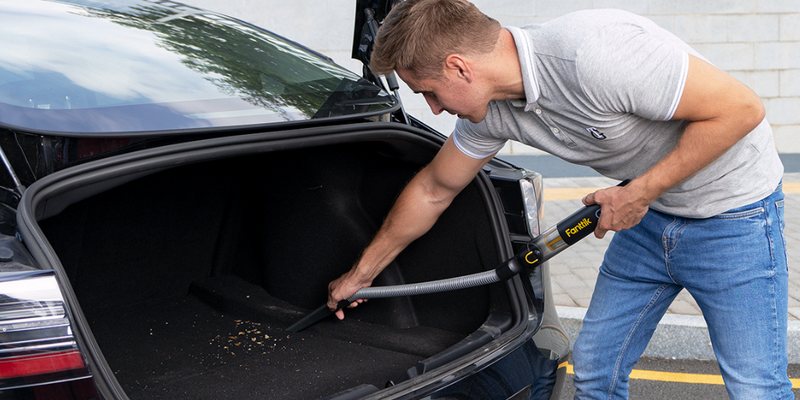
- Seal Inspection: In humid apartment environments, check the seals on your portable vacuum filters. A quick wipe-down prevents mold growth and keeps the tool smelling fresh—essential if you're storing it in a bedroom closet.
- The "Aesthetic Wipe": Use a microfiber cloth to remove road salt or dust. If the tool looks clean, you'll be more comfortable storing it near your clothes or linens.
Economic Impact: The "Invisible" ROI
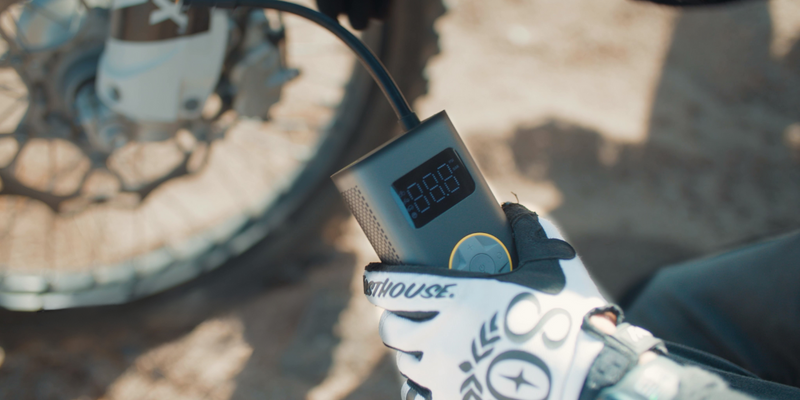
Preparedness is often viewed as an insurance cost, but for the urban driver, it’s actually a high-yield investment. We calculated the potential annual savings for an "Efficiency-Seeker" who uses a portable inflator to maintain proper tire pressure.
- Fuel Savings: Correcting an 8 PSI under-inflation (common for drivers who only check tires twice a year) can save approximately $21-$31 annually in fuel costs, based on US Department of Energy loss coefficients.
- Tire Longevity: Proper inflation prevents uneven tread wear, potentially saving another $40 per year in deferred replacement costs.
- Total ROI: ~ $61-$71 per year.
With a high-quality portable inflator costing around $110, the "payback period" is roughly 1.5 to 1.8 years. In the context of a 5-year tool lifespan, the device essentially pays for its own storage footprint and then some.
Safety and Compliance in the Apartment
Storing lithium-ion powered tools in a residential building requires adherence to safety standards. While you don't need a professional fire locker, you should follow the core principles outlined in the EU General Product Safety Regulation (EU) 2023/988.
- Ventilation: Store your "Auto Emergency" bin in a cool, dry place. Avoid placing it near heaters or in direct sunlight behind a window.
- Containment: Experts at Charge and Go suggest that storing batteries in a metal container (like a small toolbox) within your modular bin adds an extra layer of safety without requiring bulky industrial hardware.
Building Modern Self-Reliance
Ultimately, the goal of urban preparedness is to foster a sense of "modern self-reliance." As discussed in The 2026 Modern Essential Gear Industry Report: Engineering Trust in a Cordless World, the transition to a cordless world is built on trust. We trust our tools to work in an emergency, and we trust them to be safe in our homes.
By choosing compact, high-performance gear and organizing it with a "hidden but ready" mindset, you transform your apartment from a cramped space into a functional base of operations. You aren't just storing tools; you're engineering a lifestyle that values both the journey on the road and the peace of mind at home.
Disclaimer: This article is for informational purposes only. Always refer to your vehicle’s owner manual and the tool manufacturer’s safety instructions before performing maintenance. For lithium-ion battery storage, consult your local building fire codes and safety regulations.
Sources
- US Dept of Energy: Proper Tire Pressure Saves Fuel
- Car and Driver: Best Portable Tire Inflators Tested
- IATA: Lithium Battery Guidance
- EU General Product Safety Regulation (EU) 2023/988
- TinyHouse.com: Inside Tiny Houses - Stunning Designs and Clever Spaces
- Charge and Go: Lithium-Ion Battery Storage Rules in Apartment Buildings (2025)
- Elmridge Protection: Emergency Readiness and Proper Storage
Continue reading
 All-in-One vs. Modular: Comparing Kit Sizes for Small Sedans
Covers the Functional Packing Density metric, Glove Box Test, and 70/30 storage strategy for compact car owners.
All-in-One vs. Modular: Comparing Kit Sizes for Small Sedans
Covers the Functional Packing Density metric, Glove Box Test, and 70/30 storage strategy for compact car owners.
 The EV Frunk Challenge: Selecting Gear for Front Storage
Covers temperature challenges, the One-Inch Rule for latch sensors, soft organizer use, and safety considerations for both daily...
The EV Frunk Challenge: Selecting Gear for Front Storage
Covers temperature challenges, the One-Inch Rule for latch sensors, soft organizer use, and safety considerations for both daily...
Leave a comment
This site is protected by hCaptcha and the hCaptcha Privacy Policy and Terms of Service apply.