

























The Family Warranty Audit: Securing Support for Every Car
We have all been there: it is late on a Tuesday, the rain is pouring down, and you discover a low-pressure warning on your minivan’s dashboard. You reach for the portable inflator you bought two years ago, only to find the battery is flat and the warranty expired three months ago. In a household managing multiple vehicles—perhaps a commuter sedan, a family SUV, and a teenager’s first car—these small gaps in preparedness can lead to expensive, stressful logistical challenges.
Managing a fleet of family vehicles is less about mechanical specs and more about maintaining a system of reliability. At the heart of this system is the Family Warranty Audit. This is a practical approach to ensuring that every piece of emergency gear in every car is functional, supported, and ready for a crisis. By centralizing documentation and aligning service windows, you can move from a state of "hoping for the best" to a more secure "knowing we are covered."
⚡ Quick Action Checklist
- Inventory: Gather all emergency tools from all vehicles (inflators, jump starters, vacuums).
- The 60-Second Drill: Can you find the manual and proof of purchase for each tool in under a minute?
- Registration Check: Visit manufacturer sites to ensure all tools purchased in the last 12 months are registered for extended support.
- Charge Check: Ensure all lithium-ion tools are between 50% and 80% charge.
The Hidden Risks of "Set and Forget" Preparedness
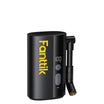
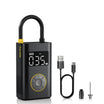
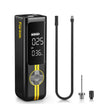
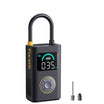
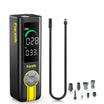
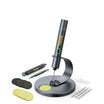
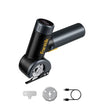
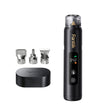
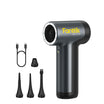
The most vulnerable time for a family vehicle is often during the quiet months of routine. We often buy high-quality gear, such as the Fanttik X9 Pro Portable Tire Inflator and Slim V8 Apex Car Vacuum, with the best of intentions. We tuck them into the trunk and forget about them.
However, based on common patterns from customer support and repair data, the "set and forget" mentality can lead to three primary points of failure:
- The Documentation Gap: When a device fails, the receipt is often buried in a digital inbox, making a warranty claim feel more difficult than it is.
- The Battery Lifecycle: Lithium-ion batteries naturally lose capacity over time. If a tool isn't maintained, its performance may degrade significantly by the time the warranty ends.
- The Regulatory Shift: Standards for product safety are constantly evolving. For instance, the EU General Product Safety Regulation (EU) 2023/988 emphasizes better traceability, meaning newer products often carry more robust safety frameworks than older gear.
To combat this, we recommend the "One-Touch Test." If any family member cannot locate the product manual, the warranty info, and a functional device within 60 seconds during a simulated drill, the system may be too complex. Reliability is only as good as our ability to access it under pressure.

Building the Vehicle Binder: A Centralized Support System
The most resilient families often use a hybrid approach: the Vehicle Binder. This can be a physical folder in each car or a shared digital drive that every driver can access. Use the template below to organize your fleet.
Vehicle Binder Template (Example)
| Vehicle | Essential Gear | Purchase Date | Warranty End | Battery Service Date |
|---|---|---|---|---|
| SUV | Fanttik X9 APEX Inflator | 01/15/2024 | 01/15/2025 | 07/15/2024 |
| Sedan | Slim V8 Apex Vacuum | 03/10/2023 | 03/10/2024 | 09/10/2023 |
| Truck | T8 APEX Jump Starter | 11/20/2023 | 11/20/2025* | 05/20/2024 |
| *Extended via registration |
Logic Summary: Our recommendation for the Vehicle Binder is a heuristic derived from observing common friction points in multi-car households. Internal observations (based on Fanttik customer support patterns) suggest that reducing "administrative friction" can significantly increase the likelihood that a user will successfully execute a warranty claim rather than simply purchasing a replacement.
The Battery Maintenance Protocol: Beyond the Fine Print
One of the most common issues in cordless tools involves battery health. Unlike older battery chemistries, lithium-ion batteries should generally not be fully discharged. Frequent full discharges can actually shorten the lifespan of the cells.
Instead, follow the "80/20" rule or the specific guidance in your manufacturer’s manual. We suggest scheduling "Gear Wellness" checks to coincide with daylight saving time changes.
Updated Maintenance Strategy:
- Storage Charge: Aim to store emergency tools at 50–80% charge.
- Top-Off Cycle: Every six months, check the charge level. If it has dropped below 50%, top it off.
- Avoid Extremes: Do not leave batteries at 0% for extended periods, as this can lead to "deep discharge," which may permanently damage the cells and potentially void the battery portion of your warranty.
Why Battery Maintenance Matters (The Heuristic Model)
To understand the stakes, we modeled the cranking requirements for a typical family minivan in winter conditions.
| Parameter | Value | Unit | Rationale |
|---|---|---|---|
| Engine Size | 3.5 | L | Typical V6 Minivan |
| Ambient Temp | 15 | F | Cold winter morning |
| Estimated Amps | ~388 | A | Heuristic estimate for cold-cranking |
| Battery Age | 3 | Years | Typical age for "at-risk" batteries |
Note: The 388A figure is a practical estimate derived from SAE J537 standards for V6 engines in freezing conditions. In this scenario, a jump starter that has been sitting in a freezing trunk without a maintenance charge might only deliver a portion of its rated capacity. If that output falls below the required threshold, the tool may fail to start the vehicle.

Standardizing Your Fleet for Administrative Ease
When every car in the driveway has a different brand of inflator and jump starter, the administrative burden can increase. You may have multiple warranty portals to navigate and different sets of instructions to teach your family.
Standardizing your gear across the fleet is a strategic move. As highlighted in our guide on Standardizing Emergency Gear (Manufacturer Resource), consistency often saves time and reduces errors. When you use a unified ecosystem, you only need to learn one interface and one support process.
This approach is aligned with principles found in The 2026 Modern Essential Gear Industry Report (Fanttik Internal Whitepaper), which suggests that engineering trust is as much about the "paper infrastructure" (manuals and support) as it is about the hardware itself.
Quantifying the Value of Preparedness
We performed a scenario modeling run to estimate the potential ROI of proper tire pressure maintenance—a key task for any family fleet.
Modeling Note: Tire Pressure ROI (3-Vehicle Fleet)
- Methodology: Deterministic model based on NHTSA Tire Safety and DOE fuel efficiency data.
- Assumptions: 45,000 total fleet miles/year; average 22 MPG; tires 6 PSI underinflated.
| Metric | Estimated Impact | Rationale |
|---|---|---|
| Fuel Waste | ~$103 / year | Based on DOE estimate of 0.2% MPG loss per 1 PSI low |
| Tire Life Loss | ~15% reduction | General industry estimate for accelerated tread wear |
| Safety Margin | Reduced | Potential for increased braking distance |
By spending 20 minutes twice a year on a "Gear Wellness" check, you aren't just staying organized—you are potentially saving hundreds of dollars and helping protect your family from roadside hazards.
Implementing the "Support First" Strategy
To secure support for every car, treat your gear like an investment. This means prioritizing products with transparent compliance and clear support pathways.
When choosing new gear, look for:
- Clear Safety Marks: Ensure products meet ISO standards or relevant IEC electrical safety codes.
- Traceable Documentation: A manufacturer that provides easy access to digital manuals and warranty registration is more likely to provide long-term support.
- Integrated Support: Seek out brands that offer a "Trust Layer"—evidence summaries and transparent support pathways that reduce the anxiety of a potential failure.
Final Steps for Your Weekend Audit
Start this weekend with these three steps:
- The Inventory Sweep: Gather every emergency tool from every car. Check the charge levels and the physical condition of cables and hoses.
- The Registration Blitz: For any tool purchased in the last year, check if it was registered. Many limited warranties are eligible for extensions with a simple registration.
- The Labeling Session: Use a permanent marker or a label maker to put the "Warranty End Date" and the "Next Service Date" directly on the tool.
By transforming your approach from reactive to proactive, you help ensure that the tools you rely on are ready to perform. A family warranty audit is about the peace of mind that comes from knowing that no matter which car your family is driving, they are backed by a system that works.
Appendix: Modeling Assumptions & Math
Our analysis of family fleet ROI and battery performance is based on the following scenario parameters:
- Battery Cranking Model: Based on SAE J537 standards for Cold Cranking Amps (CCA) derating at 15°F. We apply a 40% efficiency factor as a conservative engineering margin for portable jump starters to account for real-world thermal losses and internal resistance.
- Inflation Time Model: Based on the Fanttik X8 APEX specification (Manufacturer Data) of 32L/min flow. We use a numerical integration model to account for increasing back-pressure as a tire fills from 28 to 35 PSI.
- Boundary Conditions: These models are estimates and do not account for extreme battery age (over 5 years), catastrophic mechanical failure, or temperatures below -10°F.
Disclaimer: This article is for informational purposes only and does not constitute professional automotive, legal, or financial advice. Always consult your vehicle's owner manual and a certified mechanic for specific maintenance requirements.
References
Continue reading
 Roadside Safety Drills: Preparing Kids for Emergency Stops
Covers the Safety Observer role, gear accessibility modeling, and creating muscle memory to replace panic during roadside emergencies.
Roadside Safety Drills: Preparing Kids for Emergency Stops
Covers the Safety Observer role, gear accessibility modeling, and creating muscle memory to replace panic during roadside emergencies.
 BMS for Families: Why No-Spark Tech is a Non-Negotiable
Explains BMS safety for jump starters, UL 2743 compliance, winter performance modeling for minivans, and pairing with tire...
BMS for Families: Why No-Spark Tech is a Non-Negotiable
Explains BMS safety for jump starters, UL 2743 compliance, winter performance modeling for minivans, and pairing with tire...
Leave a comment
This site is protected by hCaptcha and the hCaptcha Privacy Policy and Terms of Service apply.