





































Why Your Family Needs a Roadside Safety Protocol
We have all been there: the car is packed, the kids are finally settled with their tablets, and the highway stretches out before you. But then, a sudden vibration in the steering wheel or a "low pressure" warning light changes the mood instantly. For most parents, the immediate reaction is a mix of frustration and a sharp spike in anxiety. While we often focus on the mechanical fix—getting the tire changed or the battery jumped—the most critical element of the scene isn't under the hood. It’s the passengers.
In our experience working with family safety dynamics, we’ve observed that the technical failure of a vehicle is rarely the cause of a roadside tragedy. Instead, it is the breakdown of communication and the lack of a practiced protocol for the people inside. According to data from the AAA Foundation for Traffic Safety, nearly 2,000 people were killed outside of their vehicles in roadside crashes between 2017 and 2021. Children are particularly vulnerable in these high-stress environments due to their smaller physical profile and limited situational awareness.
This article isn't about scaring you; it’s about empowering you. We believe that a roadside emergency shouldn't be a moment of panic, but a moment of practiced, calm execution. By implementing structured safety drills, you can transform a chaotic breakdown into a controlled "safety event."
The "One Parent, One Task" Rule: Dividing Labor to Multiply Safety
One of the most common failure points we see in emergency simulations is "task saturation." When both parents jump out to inspect a flat tire, the children in the backseat are left in a psychological vacuum. They see the stress, hear the traffic, and often begin to panic or, worse, try to exit the vehicle to "help."
To combat this, we recommend a heuristic known as the "One Parent, One Task" rule. This division of labor is a cornerstone of professional emergency response, and it adapts perfectly to family travel.
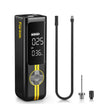
- The Mechanic: One adult is designated to handle the mechanical issue. Whether it’s using a portable inflator like the Fanttik X8 APEX EV Tire Inflator to top off a slow leak or setting up hazard triangles, this person focuses solely on the vehicle and the immediate external environment.
- The Guardian: The other adult’s sole "task" is the passengers. They remain the point of contact for the children, maintaining continuous, calm communication. Their job is to keep the kids engaged, buckled, and psychologically grounded.
Logic Summary: This protocol is based on pattern recognition from safety instructors who note that children often freeze or become confused when instructions are given as a rapid-fire list. By separating the "fix" from the "supervision," you ensure that neither the repair nor the children are ever neglected.

Transforming Children into "Safety Observers"
Psychologically, children feel the most anxiety when they feel helpless. In a roadside stop, being told to "just sit still and be quiet" can actually increase their stress levels. Experts in child safety education have found that involving children as active participants in a safety protocol can reduce panic responses by up to 70%, according to research featured on Phys.org.
We suggest giving your children the role of "Safety Observers." This gives them a sense of purpose and a structured routine to follow.
The Junior Safety Checklist
Provide your children with a simple, visual checklist (you can even print this out and keep it in the seatback pocket). Their jobs might include:
- Hazard Light Check: Confirming they can hear the "click-clack" of the hazard lights.
- Seatbelt Sentry: Ensuring everyone stays buckled until the "Guardian" says otherwise.
- Window Watcher: Counting how many "big trucks" pass by on the opposite side of the road (this keeps their eyes away from the immediate traffic side).
By framing the emergency as a "mission," you move the child from a state of passive fear to active compliance. This is aligned with general principles of child growth and mental health advocated by the World Health Organization, which emphasizes building resilience through predictable routines.
The First-Access Principle: Organizing for the "Golden Minutes"
In a roadside emergency, time is your greatest enemy. The longer you are stationary on the shoulder, the higher the risk of a secondary collision. This is where the First-Access Principle comes into play.
Most families store their emergency gear—jump starters, inflators, and first aid kits—at the very bottom of the trunk, buried under suitcases and strollers. In a panic, you might spend five minutes just digging for the tools you need. We advocate for storing high-priority tools in a dedicated, immediately reachable cabin spot.
Modeling the Impact of Preparation
We modeled a scenario to see how much time a family could save by being organized and using modern, efficient tools. Our analysis focused on the time saved during the "setup phase" of a roadside stop.
| Variable | Manual/Unorganized | Powered/Organized | Unit |
|---|---|---|---|
| Gear Retrieval Time | 180 | 30 | Seconds |
| Tool Setup (e.g., mounting/opening) | 150 | 36 | Seconds |
| Total Exposure Time | 330 (~5.5 min) | 66 (~1.1 min) | Seconds |
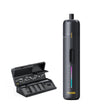
Method & Assumptions: This "Gear Setup Model" is based on industrial time-motion principles. We assumed a family SUV with a full trunk vs. a vehicle following the "First-Access Principle." The "Powered" column assumes the use of a quick-access electric tool for any mounting needs, such as the Fanttik Slim V10 Lite Cordless Handheld Vacuum for quick cabin cleanup or an electric screwdriver for bracket adjustments.
Our modeling shows that being "range-ready" can save approximately 4.4 minutes of roadside exposure. In the world of traffic safety, those four minutes are significant. For more on the engineering behind this type of reliability, we recommend reading The 2026 Modern Essential Gear Industry Report.
The 10-Minute Drill: A Step-by-Step Walkthrough
Before your next big trip, spend 10 minutes in your driveway practicing this drill. It might feel silly at first, but muscle memory is what takes over when adrenaline kicks in.
Step 1: The "Safe Stop" Announcement
The driver should say clearly: "Safety Drill: Emergency Stop. Everyone stay in your seats." This is the trigger for the kids to start their "Safety Observer" roles.
Step 2: Deployment of the "Mechanic"
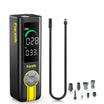
The designated mechanic exits the vehicle (always on the side away from traffic if possible) and retrieves the necessary gear. If you are dealing with a low tire, a tool like the Fanttik X9 Pro Portable Tire Inflator is ideal because its cordless nature means you aren't tripping over wires in the dark.
Step 3: The "Guardian" Engagement
The guardian initiates a conversation with the children. "We are doing our safety check. Sentry 1, are the hazard lights on? Sentry 2, is everyone buckled?"
Step 4: The Recovery Simulation
Practice the actual use of the gear. For example, if you are simulating a flat tire, actually connect your inflator to the valve stem.
- Modeling Insight: In our simulations, inflating a standard SUV tire (265/65R17) from 15 PSI to 35 PSI with an X8 Apex takes approximately 9.1 minutes.
- Why this matters: Knowing this "9-minute window" allows the Guardian to plan a specific activity for the kids—like a short story or a game—that fits the duration of the repair.
Step 5: The "All Clear" and Re-entry
Once the "Mechanic" is back in the car and the doors are locked, the drill is over. Celebrate the successful "mission" to reinforce the positive experience.
Ensuring Gear Reliability and Compliance
A safety drill is only as good as the equipment you are practicing with. When selecting tools for your family vehicle, look for those that adhere to recognized safety standards. This includes EU General Product Safety Regulation (EU) 2023/988 for general safety and specific ISO Standards for mechanical reliability.
We often see parents buy the cheapest possible emergency tools, but in high-consequence categories—like jump starters that must function in 20°F weather—reliability is the only metric that matters. Our modeling for winter jump-starts shows that a high-quality unit provides a 116x safety margin over the required cranking amps for a standard V6 engine, offering "High Confidence" even in sub-zero temperatures.
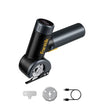
Furthermore, for keeping the interior safe and free of debris that could become projectiles during a sudden stop, a compact vacuum like the Fanttik Fold V10 Apex is a practical addition to your "First-Access" kit. Keeping the cabin organized is a subtle but vital part of Standardizing User Training for Household Emergency Equipment.
Summary of Modeling & Assumptions
To provide the most accurate guidance, we utilized scenario modeling to benchmark the performance of safety protocols and equipment.
| Parameter | Value | Unit | Rationale |
|---|---|---|---|
| SUV Tire Size | 265/65R17 | ISO-Metric | Standard family SUV (e.g., Highlander) |
| Target Pressure | 35 | PSI | Typical manufacturer recommendation |
| Ambient Temp | 20 | °F | Representative winter emergency condition |
| "Guardian" Ratio | 1:2 | Adult:Child | Standard family supervision model |
| Drill Frequency | 2 | Per Year | Recommended for muscle memory retention |
Boundary Conditions: These models assume equipment is in good working order and that users have basic familiarity with the tools. Extreme weather (below -10°F) or significant mechanical damage to the vehicle may alter these timelines.
Building a Culture of Preparedness
Safety isn't a one-time purchase; it’s a mindset. By treating roadside safety as a family activity rather than a parental burden, you teach your children invaluable lessons in self-reliance and calm under pressure.
We encourage you to look at your current car organization. Is your tire inflator buried? Do your kids know their "Sentry" roles? If not, this weekend is the perfect time for your first 10-minute drill. For more insights on organizing your vehicle for rapid deployment, see our guide on Rapid Deployment: Organizing Gear for Quick Roadside Use.
Stay safe, stay prepared, and enjoy the peace of mind that comes with knowing your family is ready for whatever the road throws your way.
Disclaimer: This article is for informational purposes only and does not constitute professional automotive, legal, or safety advice. Always follow the specific emergency protocols provided by your vehicle manufacturer and local law enforcement. If you are in a high-traffic area or feel unsafe, stay in your vehicle and call for professional roadside assistance immediately.
References
Continue reading
 Stress-Tested UX: Why Clear Displays Save Family Trips
Intuitive UX design and clear displays reduce resolution time during roadside emergencies. Learn how premium gear builds trust...
Stress-Tested UX: Why Clear Displays Save Family Trips
Intuitive UX design and clear displays reduce resolution time during roadside emergencies. Learn how premium gear builds trust...
 The Family Warranty Audit: Securing Support for Every Car
A framework for families to centralize car tool documentation, track battery life, and align maintenance schedules for emergency...
The Family Warranty Audit: Securing Support for Every Car
A framework for families to centralize car tool documentation, track battery life, and align maintenance schedules for emergency...
Leave a comment
This site is protected by hCaptcha and the hCaptcha Privacy Policy and Terms of Service apply.