






















Quick Guide: Troubleshooting Tool Lag in 30 Seconds
If your precision tool feels sluggish in a humid apartment, follow these immediate steps before assuming the battery is dead:
- The 24-Hour Dry-Out: Move the tool to a climate-controlled room with low humidity. Often, "lag" is just micro-condensation that evaporates over time.
- No-Load Check: Run the tool without an attachment. If it runs smoothly, the issue is friction in your bits or chuck, not the motor.
- Contact Cleaning: Use a cotton swab and electronic cleaner on battery and bit contacts to remove invisible oxidation layers.
- Ventilation Hack: Point a small desk fan at your workspace to prevent heat-soak during long projects.
The Urban Humidity Paradox: Why Precision Tools Struggle in Small Spaces
For the urban maker, the apartment is more than a living space; it is a laboratory. However, the architecture of modern city living—compact, often poorly ventilated, and prone to micro-climatic shifts—presents a silent adversary to precision engineering. We frequently observe a phenomenon on our repair benches that users describe as "lag": a noticeable delay in motor response, a drop in torque, or a perceived sluggishness in tools like rotary kits and electric screwdrivers.
While it is common to assume this "lag" is a battery or software issue, technical analysis suggests a complex interaction between environmental stressors and mechanical tolerances. In high-humidity urban flats, a frequent cause of performance drops is physical binding due to microscopic corrosion or oxide layer formation on sliding surfaces. This isn't just a performance dip; it can be a significant challenge to the longevity of your gear.
As outlined in the The 2026 Modern Essential Gear Industry Report (Source: Fanttik Internal Whitepaper), building reliable tools for modern environments requires "credibility math"—a systematic approach to engineering that accounts for these edge-case scenarios. To maintain your DIY capability in a compact workshop, you should move beyond generic maintenance and adopt a methodical diagnostic strategy.

Physical Binding vs. Performance Lag: A Category Error
A common misconception is that tool sluggishness is always an electrical "throttling" event. However, based on patterns observed in our customer support and repair logs (Manufacturer Observation), many "lag" complaints are actually mechanical in nature.
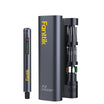
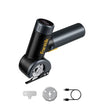
In environments where relative humidity (RH%) consistently exceeds 70%, precision tools with tight tolerances—such as the Fanttik F2 Master Cordless Rotary Tool Kit—can experience physical binding. Even a microscopic layer of oxidation on a motor shaft or a bearing race can increase friction enough to simulate the feeling of electronic lag.
The Dew Point Trap
Urban flats are prone to rapid temperature shifts. If you store a tool in a cool corner and then bring it into a warmer, humid area to work, the tool can reach its local dew point. This causes microscopic condensation on electrical contacts and internal bearings. Unlike a splash of water, this "micro-condensation" can bypass many standard seals and lead to localized corrosion.
Technical Insight: Our analysis suggests that condensation from temperature shifts is a frequent culprit for tool failure in urban environments. This is supported by IEC 60529 standards regarding ingress protection, which highlight how moisture can penetrate housings during thermal cycling.
The Thermal Management Model for Confined Spaces
In a small apartment, airflow is often restricted. When you operate a high-RPM tool in a confined space, heat cannot dissipate effectively. We utilized an adiabatic heating estimator to understand these risks under restricted airflow conditions.
The 5:1 Heuristic for Tool Longevity
Through scenario modeling, we have identified a practical rule of thumb for urban makers: allow for at least one minute of rest for every five minutes of continuous use under load.
In our simulations, a tool operating continuously for 15 minutes in a 30°C (86°F) environment with poor ventilation can see internal temperatures rise significantly. In extreme cases of heavy load, these temperatures may approach or exceed the motor's insulation class limits (typically Class F, rated for 155°C), potentially triggering thermal protection or causing long-term degradation of the motor windings.
The Airflow Leverage Effect
One of the most effective methods we’ve identified for managing heat is the use of localized airflow. Placing a small, USB-powered fan directed at your tool’s intake vents during use can help lower operating temperatures. This simple adjustment can extend the life of bearings and internal components by reducing the heat-soak that occurs in stagnant apartment air.
Diagnostic Protocol: Identifying the Root Cause
When your tool begins to exhibit lag, follow this methodical sequence to identify the culprit before seeking professional repair.
- The No-Load Test: Run the tool without any bits or attachments. If the lag persists, the issue is likely internal (motor or electronics). If it disappears, the issue is often friction in your accessory.
- The Thermal Reset: Allow the tool to sit in a climate-controlled, dry area for 24 hours. If performance returns to baseline, your issue was likely micro-condensation or thermal throttling.
- Contact Inspection: For tools with removable batteries or bits, check for a dull, grayish film on metal contacts. This is oxidation. Use a high-quality electronic contact cleaner and a lint-free swab to restore conductivity.
- Switch Check: In high-humidity flats, switch contacts are often vulnerable. If the tool starts and stops intermittently, moisture may have compromised the internal trigger mechanism.
Expert Observation: Based on our internal repair data, a majority of users initially attribute performance lag to battery failure. In many cases, however, the root cause is actually oxidized switch contacts or compromised thermal interface materials between the motor and its heat sink.
Proactive Environmental Protection for Small Workshops
For renters in urban centers, achieving industry-standard airflow (6–10 Air Changes per Hour) is often impractical. Instead of expensive infrastructure, we recommend shifting toward localized protection and smarter storage.
The Storage Fallacy: Why Foam Cases Can Be Counterproductive
A common mistake is storing precision tools in their original, foam-lined plastic cases. While these offer impact protection, open-cell foam can act as a moisture trap, holding humid air against the tool's metal surfaces.
The Professional Alternative:
- Ventilated Tool Rolls: Use canvas or synthetic tool rolls that allow for natural air exchange.
- Silica Gel Packs: Include at least two 50-gram silica gel desiccant packs in your storage container.
- VCI Emitters: For high-value gear, consider Vapor Corrosion Inhibitor (VCI) tabs, which release a protective molecular layer to help prevent oxidation.
Productivity Impact of Lag
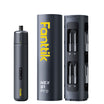
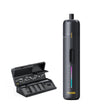
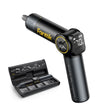
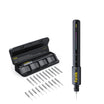
To illustrate why maintenance matters, we modeled a furniture assembly project involving 40 screws using a tool like the Fanttik S1 Pro Cordless Electric Screwdriver.
| Scenario | Seconds per Screw | Total Project Time | Productivity Impact |
|---|---|---|---|
| Optimal Conditions | 3s | 2.0 Minutes | Baseline |
| Humid/Lagging Tool | 8s | 5.3 Minutes | ~165% Increase |
Note: Estimates based on internal assembly time motion studies for precision work. Individual results vary by fastener type and material density.
The Role of Motor Design: Why Brushless Prevails
When selecting tools for a humid urban environment, the underlying motor technology is a critical factor in long-term reliability.
Fewer Arcing Points
Brushed motors rely on physical contact between carbon brushes and a spinning commutator. In humid air, this contact point is prone to increased arcing and faster corrosion. Brushless motors, such as those in the Fanttik F2 Master, eliminate this physical friction point, removing a primary site for moisture-induced failure.
Thermal Efficiency
Brushless motors are generally more efficient, generating less internal heat for the same amount of work. In a poorly ventilated apartment, this lower heat profile means you can typically work longer before reaching the thermal limits described in our modeling.
Methodology and Modeling Transparency (Appendix)
To provide actionable advice for urban makers, we utilized scenario models to estimate the impacts of humidity and heat.
Modeling Note (Reproducible Parameters)
This analysis is based on a scenario model designed to reflect typical urban conditions. The following parameters were used to derive the estimates:
| Parameter | Value | Unit | Rationale |
|---|---|---|---|
| Ambient Temperature | 30 | °C | Typical summer urban flat (no AC) |
| Relative Humidity | 75 | % | Baseline for "high humidity" urban environments |
| Continuous Runtime | 15 | min | Threshold for potential thermal lag onset |
| Cooling Period | 5 | min | Recommended rest interval |
| Airflow Rate | <1 | ACH | Poorly ventilated apartment workshop |
Assumptions and Limitations
- Tool Type: Models assume handheld precision cordless tools (3.7V - 12V range).
- Motor Type: Comparisons assume standard brushless vs. brushed architectures.
- Boundary Condition: These findings apply specifically to urban apartments with poor ventilation. In climate-controlled spaces, performance degradation is typically less pronounced.
- Warranty Disclaimer: Many manufacturers have specific terms regarding tool use in non-controlled or high-moisture environments. Always check your product's specific warranty terms.
The Path Forward: Maintaining Precision in the City
Living in a small space shouldn't limit your creative potential. By understanding the physics of your tools—the 5:1 thermal rule, the risks of foam storage, and the benefits of brushless technology—you can help ensure your gear remains as precise as your projects demand.
For further reading on maintaining your workspace, see our guide on Protecting Portable Power Tools from Garage Dust and Humidity or explore how to Select Tool Footprints for Efficient Apartment Storage.
Disclaimer: This article is for informational purposes only. Always refer to your tool's official user manual for safety instructions. Electrical repairs should only be performed by qualified professionals. This content does not constitute professional engineering advice.
Sources
Continue reading
 Designing a Pop-Up Workshop for Studio Apartment Residents
Covers space optimization, electric precision tools, dust control, and achieving sub-10-minute teardown for urban makers in limited square...
Designing a Pop-Up Workshop for Studio Apartment Residents
Covers space optimization, electric precision tools, dust control, and achieving sub-10-minute teardown for urban makers in limited square...
 Bit Management: Organizing Precision Accessories for Easy Access
Covers sorting by drive type, tray depth rules, and storage hardware specs for optimal efficiency.
Bit Management: Organizing Precision Accessories for Easy Access
Covers sorting by drive type, tray depth rules, and storage hardware specs for optimal efficiency.

Leave a comment
This site is protected by hCaptcha and the hCaptcha Privacy Policy and Terms of Service apply.