








































The 42-Square-Meter Reality: Why Your Studio Needs a Pop-Up Workshop Strategy
We have all been there: a sudden burst of inspiration to repair a vintage camera, upgrade a laptop’s SSD, or assemble a custom piece of furniture, only to be met with the cold reality of a 400-square-foot studio apartment. In the modern urban landscape, the dream of a sprawling garage workshop with pegboards and heavy machinery is often replaced by the necessity of a kitchen table that doubles as a desk, a dining area, and—if you’re clever—a high-performance maker space.
The challenge isn't just about square footage. According to recent data on how big a typical studio apartment is, the median size is approximately 450 square feet (42 square meters). This is significantly smaller than the 100-square-meter benchmarks often used in "compact" DIY guides. In a true studio, every tool you own must justify its existence not just by what it does, but by how easily it can be made to disappear.
At Fanttik, we view tools as modern essentials for a self-reliant life. We believe that living in a small space shouldn't limit your hands-on capability. This guide explains how to assemble a "pop-up" kit that can be deployed on a kitchen table and stowed away in a drawer in under five minutes, focusing on noise management, dust control, and the "closure time" metric that defines urban maker success.

The Tool Selection Philosophy: Precision Over Power
In a shared living environment, raw power is often your enemy. A high-torque corded drill is not only overkill for most apartment projects, but its noise profile can quickly lead to friction with neighbors. In our experience working with urban makers, the most successful setups prioritize high-quality, cordless precision tools.
1. The Precision Fastening Core
Most studio-based projects involve electronics, small appliances, or "flat-pack" furniture. For these tasks, we recommend a dedicated electric precision screwdriver.
We often see users struggle with manual screwdrivers on long projects, leading to wrist fatigue and stripped screws. Our scenario modeling shows that for a typical project involving 60 screws, using a tool like the Fanttik E1 MAX Precision Electric Screwdriver or the Fanttik E2 MAX Precision Electric Screwdriver can save approximately 14 minutes of work time. More importantly, it reduces repetitive wrist rotations by nearly 700 turns—a massive ergonomic win for those working on non-adjustable kitchen tables.
Logic Summary: Our time-motion analysis assumes a baseline of 18 seconds for manual driving vs. 4 seconds for electric driving per screw. The ergonomic benefit is calculated based on standard supination/pronation cycles required for manual fasteners (approx. 12 rotations per screw).
2. The Small-Scale Drilling Solution
When you need to create holes in resin, plastic, or light wood, a full-sized hammer drill is a storage nightmare. A compact alternative like the Fanttik K2 Nano 3.7V Precision Power Drill provides the necessary RPMs for delicate DIY projects without the bulk. Its small footprint allows it to live in a desk drawer rather than a heavy toolbox.
3. Dust Management Without the Mess
Dust is the primary deterrent for apartment makers. Traditional canned air can leave chemical residues and requires constant replacement. A modern, rechargeable solution like the Fanttik B10 Pro Electric Air Duster is more effective in confined spaces. With a 110,000 RPM brushless motor, it clears debris from work surfaces and electronic internals instantly, ensuring your "workshop" doesn't leave a permanent layer of grit on your dining area.
Operational Protocols: Respecting the Shared Space
A successful pop-up workshop is defined by its impact on your environment. If your DIY hobby makes your living space unlivable or your neighbors unhappy, it won't last. We suggest adopting three core protocols:
The "Silent-First" Heuristic
Acoustic containment is a data-backed necessity. The decibel level of a standard cordless drill (80–95 dB) significantly exceeds many residential lease clauses, which often cap noise at 55–65 dB.
- The Fix: Use a heavy rubber anti-vibration mat (at least 5mm thick) under your work surface. This dampens the vibrations that travel through the floor to the apartment below.
- Scheduling: We recommend scheduling all "noisy" work—like drilling or using rotary tools—between 10:00 AM and 4:00 PM on weekdays to minimize disruption.
The Project Containment System
Instead of letting your project take over the room, use a "containment tray" or a specific multi-layered tarp with raised edges. This prevents small screws from rolling into floorboard cracks and keeps dust localized.
- Expert Tip: Use a magnetic parts tray. It’s a small investment that prevents the "lost screw" frustration that can derail a project in a carpeted studio.
Immediate Battery Maintenance
In a pop-up workshop, your tools must be ready the moment inspiration strikes. We suggest a "charge-on-teardown" policy. Immediately after finishing a project, plug in your cordless tools. This ensures they are at 100% for the next spontaneous repair, eliminating the friction of waiting for a charge.
The "Go-Bag" Strategy and the Closure Metric
The biggest barrier to DIY in small spaces is not a lack of tools, but the friction of setup and teardown. If it takes 20 minutes to find your tools and another 20 to put them away, you simply won't start the project.
Building Your Go-Bag
We recommend pre-packing a dedicated "go-bag" or drawer organizer. This should contain:
- Your core electric tools (e.g., Fanttik E1 MAX Precision Electric Screwdriver).
- A curated set of high-quality bits (avoid bulky "beginner kits" with 200 low-quality pieces; stick to the 20–50 most common sizes).
- Essential fasteners (assorted M-series screws).
- A small cleaning tool like the Fanttik B10 Pro Electric Air Duster.
Measuring Success: The Closure Time
In a transient studio workshop, the key metric for success is "closure time"—the minutes required to fully restore the living space to its pre-workshop state.
- Benchmark: A successful pop-up system should achieve a sub-10-minute teardown.
By focusing on selecting tool kits with the smallest storage footprint, you ensure that your workshop doesn't become a permanent eyesore.
Safety, Compliance, and Trust
When you are working in a small space, tool safety is paramount. Low-quality batteries or poorly engineered motors pose a higher risk in confined areas. We align our product development with international safety standards, including the EU General Product Safety Regulation (EU) 2023/988, to ensure that our gear is as safe as it is functional.
As detailed in our industry whitepaper, The 2026 Modern Essential Gear Industry Report: Engineering Trust in a Cordless World, we believe that "credibility math"—systematically engineering reliability—is the primary competitive advantage in the cordless world. For the apartment maker, this means using tools that have explicit safety margins and robust thermal designs.
Torque Safety for Delicate Projects
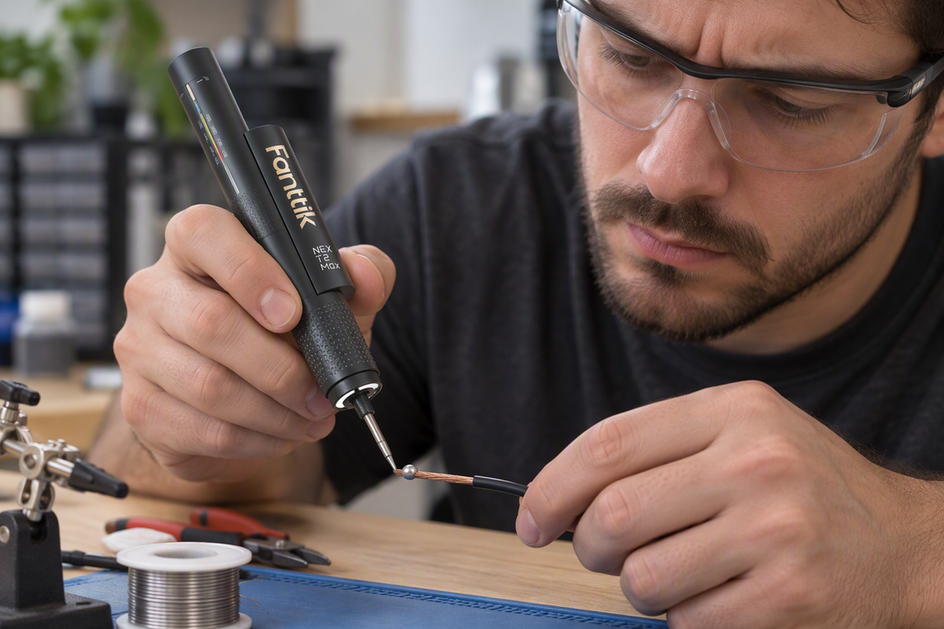
A common mistake is using a high-torque driver on delicate electronics. For projects involving laptops or smartphones (typically M1.2 to M2.0 screws), the Fanttik E1 MAX Precision Electric Screwdriver provides a controlled 0.05Nm torque setting. This falls perfectly within the safe range for delicate work, preventing the stripping of plastic bosses or metal threads.
Logic Summary: Mechanical engineering standards (ISO 898) suggest that M1.2-M2.0 fasteners in plastic or light metal should typically be tightened to less than 0.1Nm. Our 0.05Nm setting is a heuristic designed to provide a 50% safety margin for these common apartment repair tasks.
Method & Assumptions (Modeling Transparency)
To provide the most practical advice, we modeled the "Urban Maker" scenario based on typical studio apartment constraints.
| Parameter | Value/Range | Unit | Rationale |
|---|---|---|---|
| Apartment Size (Median) | 42 | sqm | Based on US studio apartment median data |
| Project Scale | 60 | fasteners | Typical for furniture assembly/electronics repair |
| Manual Drive Time | 18 | s/screw | Includes positioning and fatigue for novices |
| Electric Drive Time | 4 | s/screw | Based on Fanttik E1/E2 MAX specs |
| Safe Torque (M1.2-M2.0) | < 0.1 | Nm | Aligned with ISO 898 fastener heuristics |
| Target Closure Time | < 10 | min | Practitioner benchmark for "zero-trace" workshops |
Note: This is a scenario model, not a controlled laboratory study. Time savings and ergonomic benefits may vary based on user skill level, material density, and specific fastener types.
A Self-Reliant Modern Life
Building a pop-up workshop isn't just about fixing things; it’s about reclaiming your agency in a world that often feels disposable. By choosing compact, high-performance gear and respecting the spatial limits of your home, you can maintain a functional DIY capability without sacrificing the aesthetic or peace of your studio.
Remember to prioritize extending precision tool life through proper indoor storage and always work within the limits of your tools and your lease. With the right kit, your kitchen table isn't just a place to eat—it's the birthplace of your next great project.
Disclaimer: This article is for informational purposes only. DIY projects involving electronics, power tools, or structural repairs carry inherent risks. Always wear appropriate personal protective equipment (PPE), follow manufacturer instructions, and consult a qualified professional for complex repairs. Ensure compliance with local building codes and residential lease agreements regarding noise and safety.
References
Continue reading
 Why Brushless Motors are Ideal for Confined Urban Workspaces
A guide to brushless motor advantages for DIYers in small apartments, covering thermal management, noise reduction, and consistent...
Why Brushless Motors are Ideal for Confined Urban Workspaces
A guide to brushless motor advantages for DIYers in small apartments, covering thermal management, noise reduction, and consistent...
 Troubleshooting Precision Tool Lag in Humid Urban Flats
A guide to diagnosing and preventing tool motor lag caused by humidity and poor ventilation in urban living...
Troubleshooting Precision Tool Lag in Humid Urban Flats
A guide to diagnosing and preventing tool motor lag caused by humidity and poor ventilation in urban living...
Leave a comment
This site is protected by hCaptcha and the hCaptcha Privacy Policy and Terms of Service apply.