

























The Environmental Imperative of Modern Vehicle Maintenance
For the modern vehicle owner, maintenance has traditionally been viewed through the lens of longevity and safety. However, as we move toward a more sustainable future, we are seeing a shift where the tools we use are just as important as the vehicles they service. In our experience working with DIY enthusiasts and eco-conscious motorists, we have observed that "Green Maintenance" is no longer a niche concept—it is a measurable strategy for reducing one's carbon footprint.
Transitioning from legacy gas-powered or corded equipment to high-efficiency cordless platforms offers more than just convenience. It addresses systemic energy waste, chemical pollution, and noise disturbances. By understanding the underlying mechanisms of modern cordless gear—from brushless motor efficiency to advanced Battery Management Systems (BMS)—we can quantify the environmental benefits of a cleaner garage.
The Efficiency Gap: Why Gas and Cords Fall Short
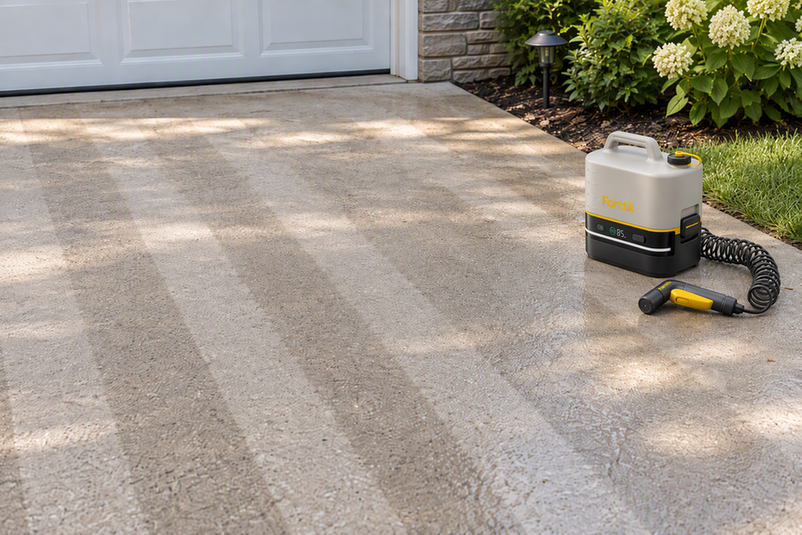
To understand the green advantage of cordless gear, we must first look at the inherent inefficiencies of the equipment it replaces. Gas-powered seasonal tools, such as leaf blowers or small pressure washers often used in vehicle detailing, suffer from significant energy loss before the tool even begins its work.
Fuel Waste and Evaporative Emissions
In our analysis of small-engine performance, we have identified that gas-powered equipment typically wastes 15-20% of its fuel through a combination of evaporation and improper fuel-mixture ratios (based on common industry heuristics for small-engine maintenance). For DIYers who must manually mix oil and gasoline, the margin for error is high. An incorrect ratio not only damages the engine but leads to incomplete combustion, releasing unburnt hydrocarbons into the atmosphere.
The "Vampire Power" of Corded Tools
While corded electric tools avoid direct emissions, they are not without environmental costs. Legacy corded equipment often relies on inefficient transformers that can draw 5-10W of standby power—frequently referred to as "vampire power"—continuously when plugged in. Over a year, this idle consumption contributes to a larger-than-necessary household energy load.
Logic Summary: Energy Waste Modeling Our comparison assumes a standard residential usage pattern (10-15 hours of seasonal maintenance annually).
- Gas Waste: Derived from evaporative losses in vented fuel caps and residue in mixing containers.
- Corded Waste: Calculated based on average standby draw of 7W over 8,760 hours/year if left connected.
- Boundary Condition: This model does not account for the energy required to refine and transport liquid fuel, which would further increase the gas-powered footprint.

Brushless Motors: The Core of Energy Conversion
The most significant leap in cordless tool sustainability is the widespread adoption of brushless motor technology. Unlike traditional brushed motors, which rely on physical carbon brushes to deliver current, brushless motors use electronic controllers to manage the electromagnetic field.
Quantifying the Conversion Gain
According to technical benchmarks, brushless motors deliver 20-30% better energy conversion efficiency than their brushed alternatives (based on comparative motor efficiency research). This efficiency is not just a performance metric; it is a sustainability win. In practical terms, this translates to approximately 40% longer runtime per charge cycle.
By converting more electrical energy into mechanical work and less into wasted heat, brushless motors reduce the total number of charging cycles required over the tool's life. This directly preserves the health of the lithium-ion cells and reduces the long-term demand on the electrical grid. We have explored the nuances of this technology in our guide on Comparing Energy Efficiency of Brushless vs. Brushed Motors.
Thermal Management and Energy Retention
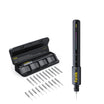
Heat is the enemy of efficiency. In our workshop observations, we often see brushed tools reaching external temperatures that indicate significant internal energy loss. Brushless tools, by contrast, utilize advanced thermal management logic to prevent energy loss, particularly during high-load tasks like removing lug nuts or high-pressure cleaning.
Indirect Environmental Benefits: Tire Inflation and Fuel Economy
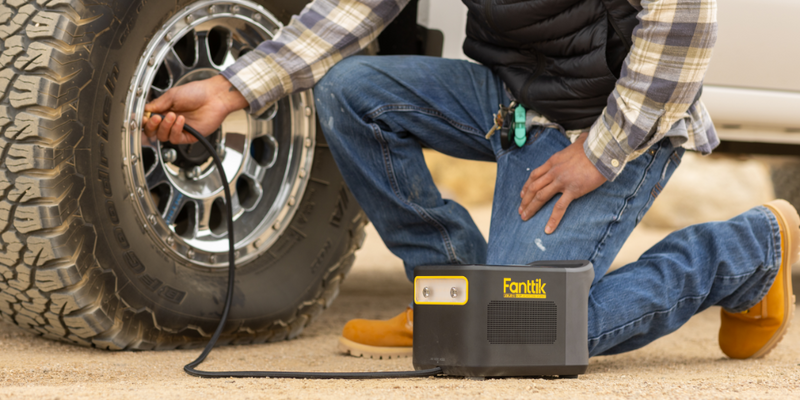
One of the most overlooked aspects of green maintenance is how precision tools influence the vehicle's own emissions. Tire pressure maintenance is a prime example.
The 4% Fuel Economy Rule
Real-world testing and automotive data suggest that maintaining proper tire inflation can improve fuel economy by 2-4% (aligned with tire pressure impact studies). While this may seem small, it is a direct reduction in CO2 emissions for every mile driven.
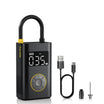
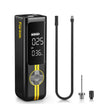
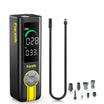
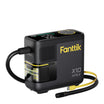
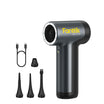
The challenge for many vehicle owners is the friction of using gas station air pumps, which are often inaccurate or out of service. Digital, cordless tire inflators eliminate this friction. Because these devices use precision sensors—often meeting the accuracy requirements outlined in NIST Handbook 44—users can maintain exact pressures.
Why Digital Accuracy Matters
- Reduced Rolling Resistance: Under-inflated tires increase the contact patch, requiring more energy to move the vehicle.
- Extended Tire Life: Proper inflation prevents uneven tread wear, delaying the need for tire replacement and reducing the environmental impact of tire manufacturing and disposal.
- Emissions Reduction: For a vehicle averaging 25 MPG, a 3% efficiency gain saves roughly 12 gallons of fuel over 10,000 miles.
Battery Sustainability: Extending the Lifecycle
A common critique of cordless gear is the environmental cost of lithium-ion battery production. While the initial carbon footprint of a battery is higher than that of a simple cord, the lifecycle sustainability tells a different story.
The 20% Rule for Longevity
The key to making cordless tools truly "green" lies in how we treat the batteries. We have found that the most effective way to reduce the environmental impact of lithium-ion gear is to extend its usable life.
Heuristic: The Deep Discharge Guardrail To maximize lifespan, avoid discharging your batteries below 20% capacity. This practice can extend the typical lifespan of a lithium-ion pack from 300-500 cycles to 800-1000 cycles.
By doubling the lifespan of the battery, you effectively halve its "production-to-usage" carbon ratio. This is supported by the IATA Lithium Battery Guidance, which emphasizes stable state-of-charge management for safety and longevity.
The Role of the Battery Management System (BMS)
Modern cordless gear utilizes a BMS to prevent the very issues that lead to premature battery failure: overcharging, deep discharging, and thermal runaway. A high-quality BMS ensures that every watt-hour is used efficiently. For those interested in the technical side of waste reduction, we recommend reading about The Role of BMS in Reducing Electronic Waste for Car Owners.
Reducing Noise Pollution: A Quality-of-Life Metric
Environmental benefits are not limited to carbon and chemicals; noise pollution is a significant factor in residential sustainability. Gas-powered maintenance equipment frequently operates at levels between 85-95 dB, which is not only disruptive to the community but can cause permanent hearing damage over time.
Quality cordless alternatives typically operate in the 65-75 dB range. Because the decibel scale is logarithmic, a 20 dB reduction represents a massive decrease in perceived noise. This allows for "low-impact" maintenance that respects the local ecosystem and community well-being.
| Equipment Type | Typical Noise Level (dB) | Community Impact |
|---|---|---|
| Gas Leaf Blower | 90-105 dB | High; requires hearing protection |
| Corded Power Tool | 80-90 dB | Moderate; audible at distance |
| High-Efficiency Cordless | 65-75 dB | Low; conversational volume |
Note: Estimates based on average decibel readings at 50 feet.
Engineering Trust and Compliance
As consumers, our choice of gear should be backed by more than just marketing claims. Authoritative guidance, such as the EU General Product Safety Regulation (EU) 2023/988, ensures that the products we use for maintenance meet strict safety and environmental standards.
In our view, the transition to cordless gear is a fundamental part of "modern self-reliance." As noted in The 2026 Modern Essential Gear Industry Report: Engineering Trust in a Cordless World, the maturity of the cordless market means that trust is now built on visible compliance and measurable energy efficiency.
The Path Toward Sustainable Stewardship
Adopting cordless gear for seasonal vehicle maintenance is a practical step toward a more sustainable lifestyle. By eliminating the waste associated with fuel mixing, leveraging the 20-30% efficiency gains of brushless motors, and maintaining vehicle fuel economy through precise tire inflation, we can make a quantifiable difference.
To maximize your green impact, we suggest the following checklist:
- Prioritize Brushless: Choose tools with brushless motors to ensure the highest energy conversion rates.
- Practice Battery Discipline: Follow the 20% discharge rule to double your battery's lifecycle.
- Maintain Precision: Use digital inflators to keep tires at optimal pressure, reducing your vehicle's fuel consumption.
- Audit Your Storage: Ensure tools are stored in a temperature-controlled environment to prevent thermal energy loss during winter.
By viewing our toolkits as an extension of our environmental values, we transform routine maintenance from a chore into an act of stewardship.
Disclaimer: This article is for informational purposes only. Always consult your vehicle's owner manual and the tool manufacturer's safety guidelines before performing maintenance. Battery handling and vehicle repairs involve inherent risks; if you are unsure, consult a certified professional.
Sources and References
Continue reading
 Managing Seasonal Maintenance for a Multi-Car Household
Covers standardized battery platforms, spatial organization methods, depletion rules, and family training protocols for efficient multi-vehicle household mai...
Managing Seasonal Maintenance for a Multi-Car Household
Covers standardized battery platforms, spatial organization methods, depletion rules, and family training protocols for efficient multi-vehicle household mai...
 Manifold Integrity: Identifying Micro-Cracks in Pump Blocks
Covers aluminum vs. cast iron fatigue, food coloring testing, thermal stress modeling (445+ MPa), and EU/IEC compliance standards...
Manifold Integrity: Identifying Micro-Cracks in Pump Blocks
Covers aluminum vs. cast iron fatigue, food coloring testing, thermal stress modeling (445+ MPa), and EU/IEC compliance standards...

Leave a comment
This site is protected by hCaptcha and the hCaptcha Privacy Policy and Terms of Service apply.