























The Hidden Mechanics of Hardware Longevity: Hard-Shell vs. Soft-Sided Storage
For the modern homeowner, the end of a season usually signals a transition from active maintenance to equipment decommissioning. Whether it is a high-performance lawn mower or a sophisticated robotic device, the way we store our gear during the "off-months" determines its operational readiness when spring returns. We often see a recurring pattern on our repair benches: equipment that performed flawlessly in October fails to power on in April.
The culprit is rarely a manufacturing defect. Instead, it is almost always an environmental or procedural failure during storage. Choosing between a hard-shell case and a soft-sided bag is more than an aesthetic choice; it is a technical decision that impacts moisture management, battery chemistry, and structural integrity. In this guide, we will evaluate storage solutions through the lens of material science and technical reliability to help you protect your investments.
The Physics of Protection: Beyond the Impact Myth
A common misconception among DIY enthusiasts is that hard-shell cases are inherently superior because they offer "impact resistance." While a rigid exterior is vital for transit—protecting against the baggage handler or a bumpy truck bed—the requirements for long-term storage are different.
In a garage or attic, the primary mechanical stress isn't a sudden drop; it is static compression. When we stack heavy bins on top of each other for six months, the material at the bottom of the stack undergoes continuous stress.
The Rigid Container Paradox
Research into the ASTM D4991 standard for leak testing of rigid containers suggests that hard shells can develop micro-cracks under sustained pressure differentials or static loads. In fluctuating garage temperatures, materials like Polycarbonate or ABS plastic can lose plasticizers. This makes them brittle over time. A hard shell that survives a fall today might crack under the weight of a second bin three years from now due to environmental stress cracking.
The Soft-Sided Vulnerability
Conversely, soft-sided storage often relies on internal frames or padding. While these don't "crack," they are susceptible to permanent deformation. If a soft bag is compressed improperly, the internal frame can warp, and zipper tracks can become misaligned. According to industry observations on zipperless vs. zippered storage, zipper failure is one of the most frequent "death sentences" for soft-sided gear kept in long-term storage.
Logic Summary: The Static Load Model Our analysis of storage failure assumes a "Static Load" environment where the primary risk is constant pressure (stacking) rather than kinetic impact (dropping).
- Hard Shell Risk: Brittle fracture due to thermal cycling and plasticizer loss.
- Soft Sided Risk: Permanent deformation of zippers and frames.
The Environmental Barrier: Moisture and Mold
The single biggest mistake we observe is storing equipment with residual moisture. Even a seemingly dry tool can harbor humidity in its internal cavities, leading to corrosion on electrical contacts within months.
Understanding MVTR (Moisture Vapor Transmission Rate)
When selecting a storage medium, you must consider the Moisture Vapor Transmission Rate (MVTR). This is the measure of how much water vapor passes through a material over time.
- Hard Shells (Plastic Bins): High-density polyethylene (HDPE) or similar plastics have an extremely low MVTR. When sealed, they provide a near-complete barrier against external humidity.
- Soft-Sided (Fabric): Even "weather-resistant" fabrics have a measurable MVTR. They allow for humidity exchange between the inside of the bag and the garage air. In humid climates, this exchange can promote mold growth on soft parts and electronic boards.

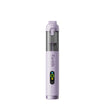
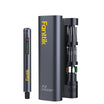
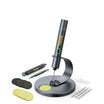
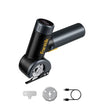
For high-value automated equipment, such as the Fanttik Aero X Cordless Robotic Pool Cleaner, moisture management is critical. Because these devices operate in water, users often overlook the tiny droplets trapped in the filter mesh or near the charging port. Storing such a device in a soft-sided bag in a damp garage is a recipe for internal oxidation. We recommend a rigid, sealable plastic bin for these types of assets to create a physical barrier against dust and rodents.
The 25% Volume Heuristic
To prevent internal condensation, we use a simple shop rule: The 25% Rule. Always select a storage container that is at least 25% larger than the product's footprint ($V_{storage} \geq 1.25 \times V_{product}$). This extra volume allows for air circulation and provides space for desiccant packs (silica gel). In humid environments, these packs are crucial for absorbing any residual moisture that was trapped inside the device during the "cleaning" phase of decommissioning.
Battery Stewardship: The 40-60% Rule
Modern cordless tools rely on Lithium-ion (Li-ion) chemistry, which is notoriously sensitive to storage conditions. Storing a battery incorrectly can lead to permanent capacity loss or, in extreme cases, "bricking" where the battery refuses to charge again.
The State of Charge (SoC) sweet spot
Technicians generally agree that storing a battery at 100% charge accelerates chemical degradation because the cells are under high voltage stress. Conversely, storing a battery at 0% is dangerous; all batteries have a "self-discharge" rate, and if the voltage drops below a critical threshold, the Battery Management System (BMS) may permanently disable the pack for safety.
Aligned with IATA Lithium Battery Guidance, we recommend a 40-60% State of Charge for long-term dormancy. This provides enough "buffer" to account for self-discharge while minimizing chemical stress.
| Parameter | Recommended Value | Unit | Rationale |
|---|---|---|---|
| Storage State of Charge | 40–60 | % | Balance between voltage stress and self-discharge buffer. |
| Storage Temperature | 10–20 | °C | Minimizes chemical reaction speed and degradation. |
| Check Interval | 90 | Days | Period to verify voltage hasn't dropped below 20%. |
| Humidity Limit | < 50 | % RH | Prevents terminal corrosion and PCB oxidation. |
| Air Gap | 2–5 | cm | Required distance between battery and container walls. |
Methodology Note: These parameters are based on standard Li-ion battery maintenance protocols and common patterns observed in warranty return handling for cordless tools (not a controlled lab study).
For more detailed insights on maintaining power cells, see our guide on Managing Tool Battery Health in Unheated Winter Garages.
Infrastructure Selection: Plastic Bins vs. Original Packaging
Many homeowners keep the original manufacturer's cardboard box, thinking it is the "perfect fit." While the fit is precise, cardboard is one of the worst materials for garage storage.
- Pest Intrusion: Cardboard is an "invitation" to rodents. It is soft enough to chew through and provides excellent nesting material. Rigid plastic bins are a much more effective deterrent.
- Hygroscopic Nature: Cardboard absorbs moisture from the air. A damp box held against a metal tool will act like a wet sponge, accelerating rust.
- Dust and Filtration: Automated gear often has sensitive intake filters. Soft bags and cardboard boxes tend to shed fibers and "dust" over time, which can clog the very equipment you are trying to protect.
The Case for Heavy-Duty Plastic
If you are serious about Protecting Portable Power Tools from Garage Dust and Humidity, heavy-duty plastic bins with integrated gaskets are the gold standard. They align with the principles we discuss in The 2026 Modern Essential Gear Industry Report: Engineering Trust in a Cordless World, where reliability is engineered through systematic protection.
A Step-by-Step Decommissioning Checklist
To ensure your gear survives the winter, follow this methodical approach:
- Deep Clean and Dry: Use a vacuum or compressed air to remove debris. Wipe down all surfaces. If the device was used in a pool (like the Fanttik Aero X Cordless Robotic Pool Cleaner), rinse with fresh water to remove chlorine and let it air-dry in a conditioned space for 24 hours.
- Calibrate the Charge: Discharge or charge the battery until it reaches approximately 50%.
- Inspect for Damage: Look for frayed wires or worn brushes. It is easier to order replacement parts in the off-season than to wait for the spring rush.
- Desiccant Placement: Place at least two 50g silica gel packs inside the storage container.
- Seal and Label: Use a rigid bin. Label it clearly with the date of storage and the battery's charge level.
- Elevate: Store the bin on a shelf rather than the concrete floor. Concrete can "wick" cold and moisture, creating a temperature differential that promotes internal condensation.
Engineering Trust Through Maintenance
Modern self-reliance isn't just about owning the right tools; it is about the thoughtful management of those tools over their entire lifecycle. As we explore in our article on Dormancy Defense: Protecting Cordless Tools Between Projects, the "off-season" is when the most damage occurs.
By choosing rigid, low-MVTR storage solutions and adhering to the 40-60% SoC rule, you transition from a reactive "hope it works" mindset to a proactive "engineered reliability" model. This methodical approach ensures that your equipment remains a dependable asset rather than a spring-time frustration.
Disclaimer: This article is for informational purposes only. Always refer to your specific product's user manual for manufacturer-mandated storage requirements. Improper battery handling can pose a fire risk; if a battery appears swollen or damaged, do not store it—consult a local hazardous waste disposal center.
Sources
Continue reading
 Seal Audits: Detecting Micro-Cracks Before Winter Storage
Covers EPDM/Silicone degradation, step-by-step audit protocol, scenario modeling, and actionable tips like the distilled water rinse for hardware...
Seal Audits: Detecting Micro-Cracks Before Winter Storage
Covers EPDM/Silicone degradation, step-by-step audit protocol, scenario modeling, and actionable tips like the distilled water rinse for hardware...
 Garage vs. Climate-Control: Deciding Where to Store Pool Tech
A guide to storing pool technology like inflators to protect battery life and prevent damage from extreme temperatures....
Garage vs. Climate-Control: Deciding Where to Store Pool Tech
A guide to storing pool technology like inflators to protect battery life and prevent damage from extreme temperatures....
Leave a comment
This site is protected by hCaptcha and the hCaptcha Privacy Policy and Terms of Service apply.