









































The Engineering of Trunk Space: Balancing Rigidity and Flexibility
Quick answer: For gear with built-in batteries, screens, or precision sensors, a fitted hard shell usually offers safer impact and crush protection. For robust hand tools and accessories where space is tight, soft bags make better use of every corner and naturally damp road vibration.
Quick Decision Checklist:
- Choose a Hard Shell if: You are storing Lithium-ion devices (jump starters, inflators), have fragile LCDs, or plan to stack heavy camping gear on top.
- Choose a Soft Bag if: You are storing manual tools (wrenches, hammers), need to fit gear into irregular sub-trunk gaps, or want to minimize vehicle weight.
- The Pro Move: Use a Hybrid System—one hard case for the "must-work" electronics and soft pouches for everything else.
In our experience managing technical gear at Fanttik, we have observed a fundamental shift in how people view their vehicle's storage. It is no longer just about "having a trunk"; it is about optimizing a high-value, limited-volume environment.
When you invest in modern cordless tools—precision tire inflators, high-torque screwdrivers, or portable power stations—the storage container is the first line of defense for the sensitive electronics and Lithium-ion cells that power your preparedness.

The Physics of Protection: Impact vs. Vibration
To choose the right shell, it helps to understand the two primary threats to your gear in a vehicle: Impact (sudden, high-energy events) and Vibration (constant, lower-energy input over time).
Hard Shells: The Shield Against Crushing
Hard cases, typically made from injection-molded polypropylene or thermoformed EVA (Ethylene-vinyl acetate), are designed to resist deformation. According to the ISO Standards Catalogue, material testing for impact resistance focuses on energy absorption before structural failure.
In a car trunk, the "crush risk" is high. If you stack heavy gear on top of a tool, a hard shell distributes the force across the case's perimeter.
- Best for: Devices with precision pressure sensors or liquid crystal displays (LCD).
- Trade-off: Rigid exteriors can occasionally act as resonators for specific road frequencies if the tool isn't snugly fitted inside.
Soft Bags: The Damping Advantage
A common misconception is that "harder is always better." However, rigid containers can transmit road vibrations more directly to internal components.
Soft bags, usually constructed from high-denier ballistic nylon (e.g., 600D or 1680D), provide natural damping. The fabric and internal foam padding act like a "low-pass filter," absorbing much of the high-frequency road noise.
- Best for: Tools with heavy internal motors or moving parts that might be nudged out of alignment by constant shaking.
- Trade-off: Minimal protection against "point-pressure" (like a heavy jack handle pressing into the bag).
The Battery Factor: Protecting the BMS
The most sensitive component in modern gear is the Lithium-ion battery and its Battery Management System (BMS). Lithium-ion batteries are chemically dense and physically sensitive.
Safety Note: Based on internal field patterns from Fanttik customer support, the BMS circuit board is often the first component to fail after a significant drop. These boards use surface-mount components that can be stressed by high G-forces.
- Hard Shell Heuristic: For tools with a non-replaceable battery pack, a hard shell acts as a sacrificial layer.
- Soft Bag Limitation: While they prevent scratches, they offer limited protection against strong "G-shock" if the bag is dropped onto a concrete garage floor.
Note: For transport via air, always follow IATA Lithium Battery Guidance regarding secure packaging to prevent short circuits.

Space Optimization: The "Tetris" of Trunk Logistics
For urban car owners, trunk space is a finite resource. The choice of storage affects how much "room for life" remains after the gear is packed.
Volumetric Efficiency
Hard cases have fixed external dimensions—they do not "give." Soft bags are "volumetrically adaptive" and can be compressed to fit into irregular sub-trunk cubbies.
In our internal organization experiments (documented in the Sub-Trunk Storage Secrets brand resource), soft-sided organizers were 15-20% more effective at filling the gaps around spare tires.
Storage Comparison Matrix
The table below summarizes a scenario model of a standard 450-liter sedan trunk packed with modern cordless gear.
| Parameter | Hard Case Setup | Soft Bag Setup | Rationale |
|---|---|---|---|
| Stackability | High (Vertical) | Low (Slumping) | Hard shells support external weight |
| Space Utilization | ~75% | ~90–92% | Soft bags conform to irregular voids |
| Vibration Transfer (Peak) | Higher (~15–20 G) | Lower (~5–7 G) | Damping properties of nylon vs. rigid walls |
| Weight Penalty | +15–20% | +5–10% | Material density of plastics vs. fabric |
Measurement Methodology: Figures are derived from Fanttik internal simulations. Space Utilization assumes a mixed-use 450L trunk; Vibration is based on a simulated 30mph curb-strike impact test using a standard 3-axis accelerometer; Weight Penalty compares the storage container weight against the tool weight it houses.
Environmental Sealing: Dust and Moisture
According to the IEC 60529 standard, a sealed hard shell is generally the only way to achieve high dust-tightness (IP6X). Soft bags, even those with "water-resistant" coatings, have stitched seams and zippers that allow fine particulates to migrate inside over time.
If you frequently drive on unpaved roads, fine dust can penetrate the cooling vents of power tools. In these cases, a hard shell with a gasket seal is the more robust option.
The Hybrid System: A 3-Step Decision Flow
Based on the Fanttik 2026 Modern Essential Gear Industry Report, the most effective strategy is a hybrid approach.
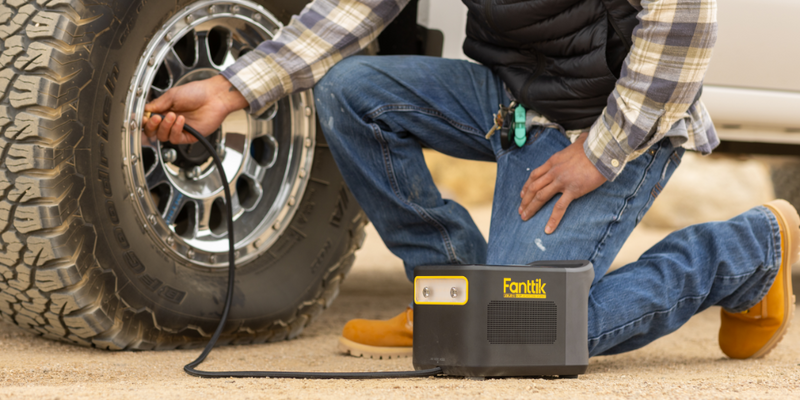
- Identify the "Core": Place your most critical, high-consequence tool (e.g., a precision tire inflator or jump starter) in a custom-fit Hard Shell.
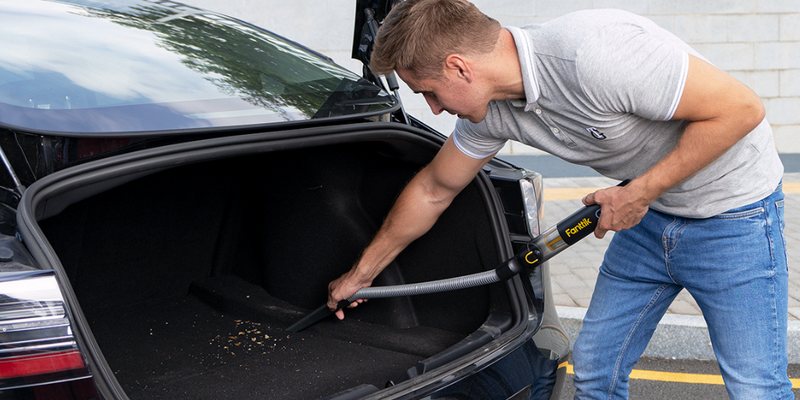
- Identify the "Satellites": Put supporting tools like screwdrivers, pliers, and cleaning kits in Soft Pouches.
- Integrate: Stack the hard case at the bottom and tuck the soft pouches into the remaining crevices.
This follows the principles in our guide on Vertical Stacking vs. Horizontal Layout, maximizing both protection and accessible space.
Maintaining Your Storage Gear
Maintenance is key to long-term protection:
- For Hard Shells: Periodically check latches and hinges for stress fractures.
- For Soft Bags: Use a dry lubricant (like PTFE spray) on zippers once a year to prevent "seizing" in humid vehicle environments.
- Safety Check: Ensure your storage choices align with the EU General Product Safety Regulation (GPSR) regarding clear labeling and traceability.
Disclaimer: This article is for informational purposes only. Always refer to your specific tool's manufacturer manual for storage requirements.
Battery Safety Reminder: Lithium-ion batteries should be stored in a cool, dry place. General manufacturer guidelines recommend avoiding extended storage in vehicles during extreme temperature fluctuations (above 120°F or below -10°F). If you have questions about a specific battery, consult the manufacturer's Safety Data Sheet (SDS).
Sources
Continue reading
 Preventing Trunk Rattles: Securing Gear on Rough Road Trips
A professional guide to eliminating cargo noise and damage on road trips. Learn physics-based securing strategies and a...
Preventing Trunk Rattles: Securing Gear on Rough Road Trips
A professional guide to eliminating cargo noise and damage on road trips. Learn physics-based securing strategies and a...
 Visibility vs. Volume: Packing Gear Without Blocking Views
Covers FMVSS 111 compliance, the Push Test, cargo physics, and scenario modeling for safe packing with modern essential...
Visibility vs. Volume: Packing Gear Without Blocking Views
Covers FMVSS 111 compliance, the Push Test, cargo physics, and scenario modeling for safe packing with modern essential...

Leave a comment
This site is protected by hCaptcha and the hCaptcha Privacy Policy and Terms of Service apply.