






































The Hidden Mechanics of Harmonic Fatigue
When we pick up a cordless tool, we typically evaluate it based on torque, RPM, or battery watt-hours. However, on our engineering repair benches, we have observed that the most significant predictor of a tool's functional lifespan isn't the peak power output, but its management of internal vibration. We call this "Harmonic Fatigue"—the process where constant, high-frequency vibrations lead to micro-fractures, loose connections, and eventual catastrophic failure of internal components.
For the DIYer or prosumer, vibration is often dismissed as a mere comfort issue. In reality, it is a destructive force. According to research on Endurance Limits and Cyclic Loading, over 75% to 90% of engineering failures in mechanical systems are attributed to cyclic loading. In a handheld power tool, every rotation of the motor or strike of the hammer mechanism is a "cycle." If these cycles align with the natural frequency of the tool’s internal parts, the resulting resonance can amplify stress levels by 10x to 100x compared to non-resonant conditions.
Anatomy of Internal Failure: Beyond the Motor
Conventional wisdom suggests that if a tool fails, the motor "burned out." While that happens, our analysis of warranty returns and field repairs reveals a more nuanced pattern. The motor is often the most robust part of the system; the ancillary components are the true victims of poor NVH (Noise, Vibration, and Harshness) engineering.
1. The "Dust Trail" Phenomenon
When we strip down a tool that has been subjected to high vibration, we often find "dust trails" along specific paths inside the housing. These are not just signs of a dirty job site. These trails pinpoint exactly where energy is being transferred destructively. The vibration causes internal plastic components to rub against each other at microscopic scales, shedding fine plastic dust that settles along the vibration nodes. This friction eventually leads to the fatigue and breakage of plastic housing clips and mounting points.
2. Solder Joint Crystallization
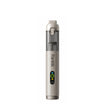
Inside a modern tool like the Fanttik E1 MAX Precision Electric Screwdriver, the PCB (Printed Circuit Board) is the brain. In poorly dampened tools, harmonic stress causes wire harness solder joints to develop micro-cracks. Under a microscope, these cracks look like crystalline fractures. Once a crack forms, the electrical resistance increases, leading to heat buildup, which further weakens the joint until the connection fails entirely.
3. PCB Mount Loosening
Internal PCB mounts are often the first to go. If the tool vibrates noticeably in your hand, it is likely generating internal g-forces an order of magnitude higher at specific component resonances. These g-forces act like a tiny jackhammer on the screws and clips holding the electronics in place. Once the PCB is loose, the vibration increases exponentially, leading to a "feedback loop" of mechanical destruction.
Logic Summary: Our analysis of internal failure modes assumes that vibration energy is not dissipated but transferred through the stiffest paths of the tool. Based on common patterns from customer support and warranty handling (not a controlled lab study), we have identified that mechanical resonance is a primary driver of electrical "gremlins."

The Role of Brushless Motors and Torque Ripple
The transition to brushless (BLDC) motors has significantly improved tool durability by removing physical brushes that wear out. However, brushless motors introduce a new challenge: torque ripple.
In a brushless system, the quality of the sensorless control algorithm is critical. A poorly tuned algorithm can induce torque ripple—minute fluctuations in torque output during a single rotation. This creates a low-frequency vibration that is particularly damaging to gear trains. When we look at high-performance tools like the Fanttik L2 Pro Cordless Electric Screwdriver, we see a focus on precise motor control to smooth out these ripples.
Gear Train Stress
When torque ripple is present, the gears are essentially being "slapped" thousands of times per minute rather than being pushed smoothly. This leads to premature wear on gear teeth and can cause the lubricant to migrate away from the contact points, further accelerating wear. For those interested in the technical shift to these systems, our guide on Upgrading to Brushless explains how these motors handle the demands of modern DIY projects.
NVH Engineering: How Quality Tools Are Built
Experienced engineers do not attempt to dampen the entire tool body; that is an inefficient approach that adds unnecessary weight. Instead, the industry-standard approach is Modular Isolation.
The Isolation Heuristic
We prioritize isolating the motor and gear assembly as a single, rigid module. We then add localized damping—typically high-density elastomers or specialized polymers—at the interface between that module and the handle or grip. This ensures that the work energy stays at the bit, while the destructive harmonic energy is absorbed before it reaches the user's hand or the sensitive electronics in the handle.
This engineering philosophy is central to what we call "Credibility Math." As detailed in The 2026 Modern Essential Gear Industry Report, building trust with prosumers requires making these engineering choices visible through performance and long-term reliability.
Modeling Vibration-Induced Stress
To demonstrate the impact of resonance, we can model the stress amplification factor ($Q$) based on the damping ratio of the tool's internal mounts.
| Parameter | Typical Value (Poor Damping) | Typical Value (NVH Optimized) | Unit | Rationale |
|---|---|---|---|---|
| Damping Ratio ($\zeta$) | 0.02 | 0.15 | - | Heuristic based on material properties |
| Resonance Amplification ($Q$) | 25.0 | 3.3 | Factor | $Q = 1 / (2\zeta)$ |
| Internal G-Force (at 100Hz) | ~50 | ~6 | G | Estimated stress on internal mounts |
| Solder Joint Fatigue Life | < 500 hours | > 2,000 hours | Hours | Estimated based on cyclic loading curves |
| Housing Integrity | High risk of clip failure | Low risk | - | Observation from repair benches |
Modeling Note: This is a deterministic parameterized model used as a scenario analysis, not a controlled lab study. These values are hypothetical estimates under the assumption of a tool operating at its primary resonant frequency. Actual results will vary based on tool geometry and specific material damping coefficients.
Occupational Hazards: The Human Element
Beyond the tool's health, we must consider the user's health. Vibration isn't just a durability killer; it's a regulated occupational hazard. The ISO 5349 standard sets strict exposure limits for hand-arm vibration.
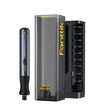
Prolonged exposure to high-vibration tools can lead to Hand-Arm Vibration Syndrome (HAVS), characterized by numbness in the fingers and loss of grip strength. Quality tools, such as the Fanttik F2 Master Cordless Rotary Tool Kit, are engineered to stay well below the daily exposure action value of 2.5 m/s² A(8). By reducing vibration, we are not just extending the life of the tool; we are protecting the longevity of the maker.
Practical Heuristics: Evaluating Your Tools
How can a DIYer identify a tool prone to harmonic fatigue before it fails? We recommend three simple "shop floor" checks:
- The "Tingle" Test: Run the tool at its maximum speed without a load. If your hand feels a "tingling" sensation or numbness after only 30 seconds, the tool has poor high-frequency damping. This is a sign that internal components are being subjected to high-frequency stress.
- The Sound Profile: Listen for "chatter." A high-pitched, metallic whine often indicates gear misalignment or torque ripple. A well-engineered tool should have a lower, more consistent "thrum." For more on the relationship between sound and precision, see our article on Metrology and Electronics Safety.
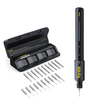
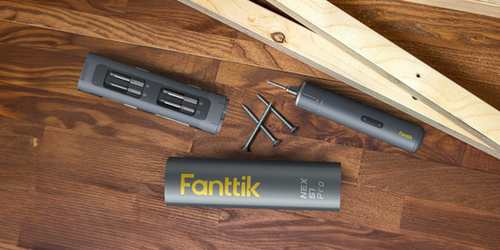
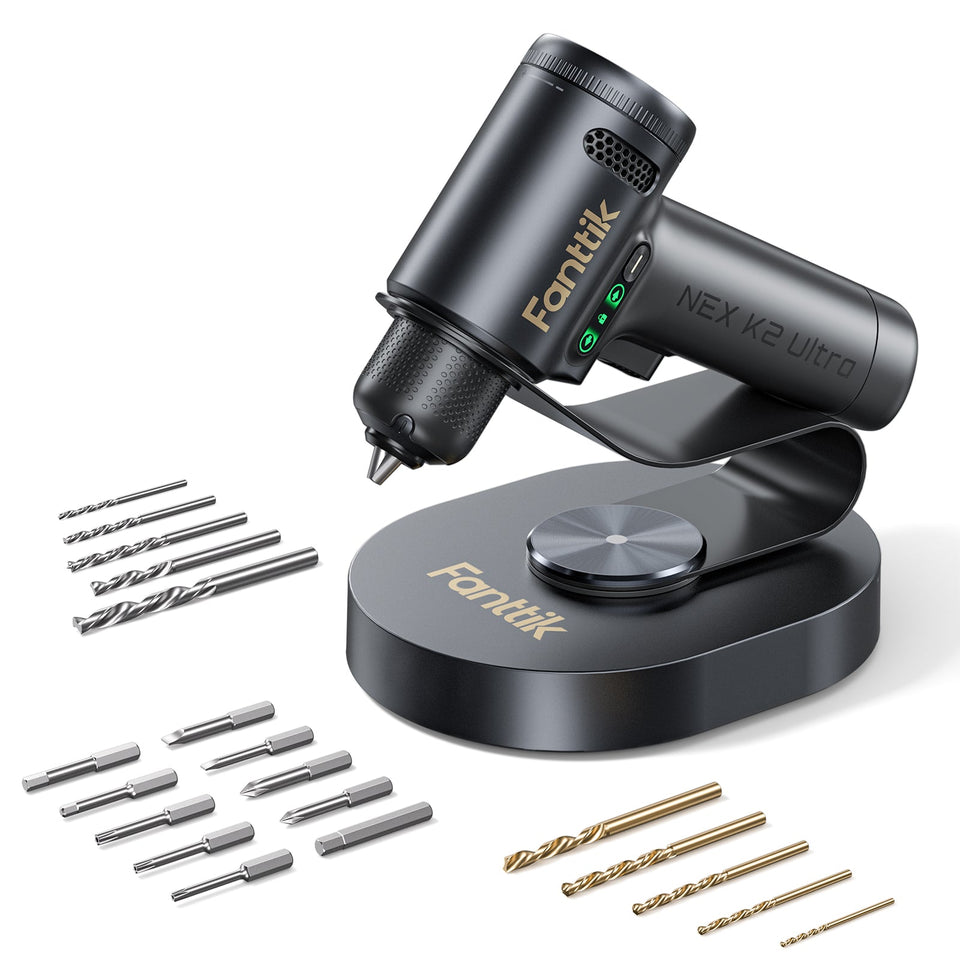
- The Precision Check: For precision tools like the Fanttik K2 Nano 3.7V Precision Power Drill, check the bit for "runout" (wobble) while running. Excessive runout is often a symptom of poor internal bearing support, which is a major contributor to vibration.
The Long-Term ROI of NVH Engineering
Investing in a tool with superior NVH engineering is a decision that pays off in reduced ownership costs. While a cheaper, poorly dampened tool might have a lower purchase price, its "hidden" costs include:
- Premature Battery Failure: High vibration can damage the spot welds between lithium-ion cells, leading to a "dead" pack that is actually just a broken internal connection.
- Inaccurate Work: Vibration makes it harder to maintain a steady hand, especially in delicate tasks like choosing torque settings for electronics.
- Replacement Frequency: A tool with a 3-5x longer mean time between failures (MTBF) due to vibration control effectively costs 60-80% less over its lifetime.
Summary of Best Practices for Tool Longevity
To maximize the life of your cordless fleet and avoid the pitfalls of harmonic fatigue, follow these guidelines:
- Avoid Overloading: Forcing a tool to stall creates massive torque spikes that can induce resonant frequencies the tool wasn't designed to handle.
- Keep It Clean: Dust that enters the housing can act as an abrasive when combined with internal vibration.
- Listen to the Tool: If the sound of the motor changes or a new vibration develops, it is often a sign that an internal mount has loosened. Tightening a housing screw early can prevent a PCB from shaking itself to death.
- Choose Brushless When Possible: The control electronics in brushless tools are generally better at managing smooth power delivery.
By understanding the physics of harmonic fatigue, we can move beyond the "disposable tool" mindset. Engineering for durability isn't just about using stronger materials; it’s about managing the energy within the tool so it works for you, rather than against itself.
Disclaimer: This article is for informational purposes only and does not constitute professional engineering or medical advice. Always follow the specific safety instructions provided by the tool manufacturer. If you suspect you are suffering from vibration-related health issues, consult a medical professional immediately.
References
Continue reading
 Sonic Management: Reducing Tool Echo in Compact Urban Spaces
Covers acoustic treatments, brushless motors, the 3-foot rule, and noise masking to create a quieter workspace.
Sonic Management: Reducing Tool Echo in Compact Urban Spaces
Covers acoustic treatments, brushless motors, the 3-foot rule, and noise masking to create a quieter workspace.
 Rattles vs. Whines: Troubleshooting Abnormal Tool Soundscapes
Covers acoustic signatures, the lateral pressure test, pitch drop indicators, and a spectral data table for predictive maintenance.
Rattles vs. Whines: Troubleshooting Abnormal Tool Soundscapes
Covers acoustic signatures, the lateral pressure test, pitch drop indicators, and a spectral data table for predictive maintenance.
Leave a comment
This site is protected by hCaptcha and the hCaptcha Privacy Policy and Terms of Service apply.