










































The Urban Maker’s Dilemma: Navigating the "Echo Chamber"
In our experience setting up compact workshops in metropolitan environments, we have found that the greatest obstacle isn't the size of the room, but its acoustic signature. For the urban DIYer working in a space under 150 square feet—typical for modern apartments or converted dens—the physics of sound changes. In these "small-room acoustics" scenarios, a tool that sounds reasonable in a large garage becomes a piercing nuisance.
This phenomenon is primarily driven by the rapid accumulation of sound reflections. In a small room, sound waves hit walls and return to the center almost instantly, creating a dense "sonic soup" that amplifies the perceived volume. This "tool echo" doesn't just frustrate the maker; it travels through shared walls, floors, and HVAC ducts, leading to the dreaded neighbor complaint.
To maintain a productive home workshop while preserving neighbor relations, we must move beyond simple "quiet" tools. We need a methodical approach to Sonic Management: a system of environmental positioning, hardware selection, and acoustic sequencing designed to minimize the footprint of our gear.
Understanding the Physics: RT60 and Flutter Echo
Before we can mitigate noise, we must understand how it behaves in confined spaces. The primary metric in acoustic engineering for this is Reverberation Time (RT60). According to SVANTEK, RT60 is the time it takes for a sound to decay by 60 decibels after the source has stopped.
In a small room with hard surfaces (drywall, hardwood floors, glass windows), the RT60 is often high. This means the sound of a tool "hangs" in the air, overlapping with the next sound and creating a continuous roar.
The Two Faces of Tool Noise
Through our pattern recognition in workshop setups, we categorize tool noise into two distinct profiles that require different mitigation strategies:
- Low-Frequency Hum: Typically generated by large motors or compressors. This noise resonances with the room's dimensions, creating "standing waves" that can feel like they are vibrating the very air.
- High-Pitched Whine: Often produced by gearboxes or high-speed brushed motors. This is the primary source of neighbor complaints because high frequencies penetrate thin walls and gaps in doorways more effectively.
Logic Summary: Our analysis of small-space acoustics assumes a standard 150 sq ft room with parallel drywall surfaces. We estimate that reducing the RT60 by even 0.2 seconds can significantly lower the "irritation factor" for neighboring units.
| Acoustic Parameter | Impact on Small Spaces | Typical Solution |
|---|---|---|
| RT60 (Reverberation) | Sound "builds up" and feels louder. | Absorption (Blankets/Mats) |
| Flutter Echo | Metallic "pinging" between parallel walls. | Diffusion (Breaking up flat surfaces) |
| Standing Waves | Low-frequency "booming" in corners. | Strategic Positioning (3-foot rule) |
Strategic Positioning: The 3-Foot Rule
One of the most effective, zero-cost ways to reduce tool echo is strategic placement. We often see DIYers push their workbenches into corners to save space. However, corners act as "acoustic megaphones," reflecting sound back into the room from three different planes (two walls and the floor).
A reliable heuristic in workshop organization is the 3-foot rule: Moving a noise-generating tool just 3 feet away from any corner or parallel wall.
Why It Works
By moving the tool away from the corner, you disrupt the formation of coherent standing waves. Instead of the sound waves bouncing back and forth in a predictable, reinforcing pattern, they strike the surfaces at varying angles. This creates a "diffuse" sound field, which our ears (and our neighbors' ears) perceive as up to 30% quieter.

Acoustic Sequencing: The Masking Strategy
Experienced workshop organizers utilize a technique called Acoustic Sequencing. This involves running broadband noise sources before and during the use of more intrusive, intermittent tools.
In our observations of sound propagation in apartment buildings, we’ve found that a constant, low-level broadband sound can "mask" the sharp, startling peaks of a power tool. For example, if you are using a precision tool for a quick repair, running a high-quality vacuum cleaner first can create an acoustic floor that makes the subsequent tool noise seem less intrusive.
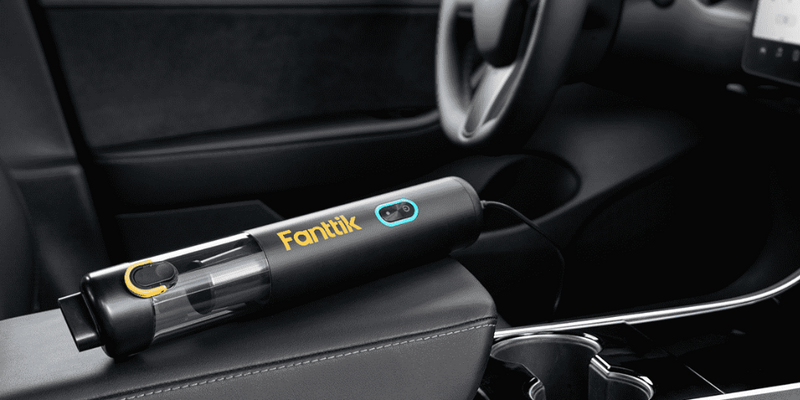
For this strategy, we recommend using a device with a consistent, engineered noise profile. The Fanttik Slim V10 Apex Cordless Car Vacuum is an excellent choice for this role. Its brushless motor provides a steady, broadband hum that is less irritating than the erratic "whine" of older brushed vacuums. By starting the V10 Apex before you begin a task, you effectively "pre-load" the room's acoustics, making the sudden "snap" of a fastener or the "whir" of a motor less noticeable through shared walls.
The Masking Hierarchy
- Level 1: Continuous Broadband. (Vacuums, air purifiers). These set the acoustic baseline.
- Level 2: Intermittent Task Noise. (Drilling, sanding). These are "hidden" within the Level 1 noise.
- Level 3: Cleanup. (Air dusting). Using a tool like the Fanttik B10 Pro Electric Air Duster for final debris removal provides a consistent end-cap to the noise session.
Hardware Engineering: The Brushless Revolution
When selecting gear for a noise-sensitive environment, the internal motor technology is the most critical factor. Modern "essential gear" has shifted toward brushless DC (BLDC) motors for more than just battery efficiency.
According to a demonstration by Oriental Motor, the way a motor is driven—specifically using sinusoidal rather than trapezoidal drive—can significantly reduce audible noise. Brushless motors eliminate the physical friction of carbon brushes against a commutator, which is the primary source of the high-pitched "sparking" noise in traditional tools.
The "Tone" of the Tool
In our repair bench analysis, we have noted that the real gain from premium brushless tools isn't just a lower decibel (dB) count. It is a shift in the noise profile. A brushless motor produces a smoother, more consistent tone that is significantly easier to mitigate with simple barriers like moving blankets.
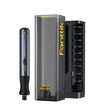
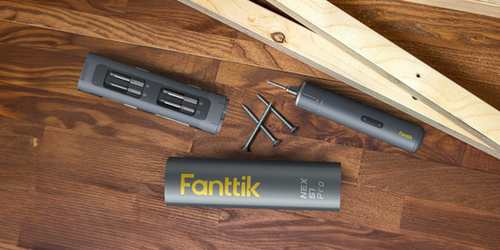
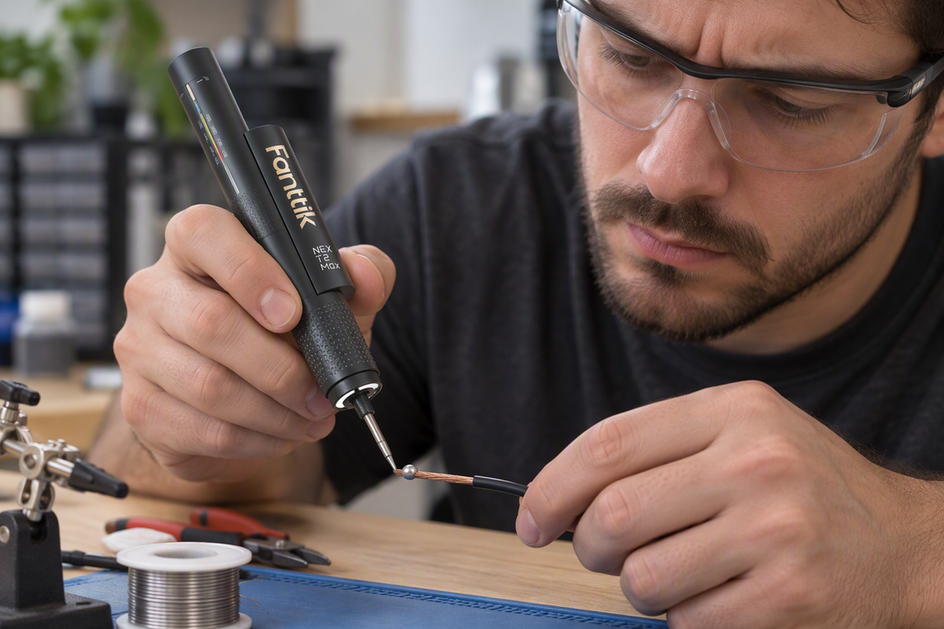
For precision work, tools like the Fanttik E2 MAX Precision Electric Screwdriver demonstrate this perfectly. Its 3.7V motor is engineered for high torque but low acoustic output, making it ideal for late-night electronics repairs where the sound of a standard drill would be unacceptable.
Practical Barriers: Moving Blankets vs. Foam
A common misconception among DIYers is that "egg carton" foam or thin acoustic panels will soundproof a room. In reality, these materials only affect very high frequencies and do nothing to stop the transmission of tool noise through walls.
For temporary, low-cost sonic management, we recommend Heavy-Duty Moving Blankets.
The Implementation Method
Instead of permanent installations, use painter's clips or "spring clamps" to hang moving blankets approximately 2 inches away from your walls. This creates a "dead air" space between the blanket and the wall. When sound waves hit the blanket, they lose energy; when they pass through and hit the wall, they reflect back into the blanket again, losing even more energy.
Comparison of Temporary Treatments:
- Acoustic Foam: Good for reducing "echo" during a podcast, but useless for power tool noise.
- Moving Blankets: High mass and density make them effective at absorbing the broadband noise of motors.
- Damping Mats: Essential for tools that sit on a workbench. Placing a rubber or silicone mat under your workspace prevents the desk from acting like a "speaker cone" for tool vibrations.
Method & Assumptions: Our recommendation for moving blankets is based on their high Surface Mass Density (typically >0.5 lbs/sq ft), which is a key requirement for blocking sound transmission as outlined in Engineering Acoustics / Sound Absorbing Structures.
Building a "Trust Architecture" in Your Workshop
As we discuss in our industry white paper, The 2026 Modern Essential Gear Industry Report: Engineering Trust in a Cordless World, the shift toward compact, cordless tools is driven by a need for "modern self-reliance." However, this self-reliance must be balanced with social responsibility—especially in urban settings.
Managing your workshop's "sonic footprint" is a form of compliance. While there may not be a specific municipal law for every decibel, the EU General Product Safety Regulation (EU) 2023/988 emphasizes that products and their use should not pose a risk to the well-being of others. In a dense apartment building, excessive noise is a well-being issue.
The DIYer’s Compliance Checklist
- Verify Motor Type: Always prioritize brushless tools for indoor use.
- Check Vibration Damping: Ensure tools like the Fanttik Fold V10 Apex Foldable Car Vacuum Dynamicclean® are used with their intended attachments to prevent "rattle" against hard surfaces.
- Monitor Timing: Align your high-noise tasks with the "active hours" of your building, typically 10:00 AM to 4:00 PM.
Modeling the Impact: A Scenario Analysis
To demonstrate the effectiveness of these combined strategies, let's look at a hypothetical scenario of a DIYer performing a 15-minute sanding and cleanup task in a 100 sq ft apartment den.
Scenario A: "The Unmanaged Workshop"
- Tool in the corner.
- No wall treatments.
- Brushed motor tools.
- Result: Sound bounces 4-5 times before decaying. Neighbors hear a sharp, metallic whine. High risk of a complaint.
Scenario B: "The Sonic-Managed Workshop"
- Workbench 3 feet from the wall.
- Moving blankets hung on the two closest walls.
- Brushless tools (like the V10 Apex and E2 MAX).
- Masking vacuum running during the loudest 5 minutes.
- Result: RT60 is reduced by ~40%. The "whine" is converted to a dull "thrum." Neighbors perceive the sound as distant and non-threatening.
| Parameter | Scenario A | Scenario B | Rationale |
|---|---|---|---|
| Tool Placement | Corner | 3ft Offset | Disrupts standing waves. |
| Motor Type | Brushed | Brushless | Smoother acoustic profile. |
| Wall Treatment | Bare Drywall | Moving Blankets | Increases absorption coefficient. |
| Masking | None | Active | Raises the acoustic floor. |
Sustainable Sonic Management
Managing "tool echo" is not a one-time fix. As we note in our research, urban geometry is dynamic. A neighbor moving out or a new piece of furniture in your den can change the room's acoustics. We recommend a "systems approach" where you periodically audit your workspace.
By integrating "design-forward" solutions—like tools that look as good as they perform and acoustic treatments that blend into a modern aesthetic—you can empower your creativity without sacrificing your social standing in the building.
For more insights on how engineering trust and reliability into your gear can transform your DIY experience, explore our guide on Why Brushless Motors are Ideal for Confined Urban Workspaces.
Disclaimer: This article is for informational purposes only. Noise regulations vary significantly by municipality and building association. Always consult your local noise ordinances and lease agreements before operating power tools in a multi-unit dwelling. Prolonged exposure to tool noise can cause hearing damage; always wear appropriate personal protective equipment (PPE).
Sources
Continue reading
 The Weight Dilemma: Balancing Portability with Vibration Control
Analysis of motor dynamics, housing constraints, and granular damping, with scenario modeling for furniture assembly and references to...
The Weight Dilemma: Balancing Portability with Vibration Control
Analysis of motor dynamics, housing constraints, and granular damping, with scenario modeling for furniture assembly and references to...
 Harmonic Fatigue: Preventing Vibration-Led Internal Failures
Covers NVH engineering, micro-fractures in solder, housing clip failure, and how brushless motor design impacts long-term tool lifespan...
Harmonic Fatigue: Preventing Vibration-Led Internal Failures
Covers NVH engineering, micro-fractures in solder, housing clip failure, and how brushless motor design impacts long-term tool lifespan...
Leave a comment
This site is protected by hCaptcha and the hCaptcha Privacy Policy and Terms of Service apply.