










































The Evolution of the Inclusive Home Workshop
In the modern home, the workshop is no longer a solitary sanctuary; it is a shared hub of creativity, maintenance, and self-reliance. Whether it is a teenager assembling a gaming PC, a parent repairing a kitchen appliance, or a hobbyist crafting custom furniture, the tools in the cabinet must serve everyone equally. However, a significant barrier often goes unnoticed until the tool is in hand: handedness bias.
For decades, tool design prioritized the "average" right-handed male user, often leaving left-handed or ambidextrous users to adapt to awkward grips and poorly placed controls. In our experience observing community workshops and analyzing customer feedback, we have found that "adapting" often translates to increased fatigue and a higher risk of repetitive strain. True inclusivity in gear selection is not just about making a tool "work" for everyone—it is about engineering symmetry so that the tool disappears into the task, regardless of which hand holds it.
This guide explores the engineering and design principles behind ambidextrous tools. We will examine how symmetrical ergonomics, neutral handle profiles, and balanced mass distribution create a more efficient and safer environment for every member of the household.
The Ergonomic Penalty: Why Handedness Matters
When we talk about tool ergonomics, we are essentially talking about the relationship between the tool’s geometry and the human musculoskeletal system. A common misconception is that any tool with a straight handle is inherently inclusive. However, the reality is more complex.
The Problem with Directional Bias
Many power tools utilize a "pistol grip" design. While comfortable for the primary hand it was designed for, it often forces a 70-80 degree wrist ulnar deviation in the non-dominant hand. According to ergonomic principles outlined by the Canadian Centre for Occupational Health and Safety (CCOHS), maintaining a neutral wrist posture (between 0 and 15 degrees of deviation) is critical for safety and sustained comfort.
Methodology Note: Our assessment of ulnar deviation is based on standard anthropometric modeling of non-dominant hand placement on asymmetrical pistol grips. This identifies a specific biomechanical hazard where grip strength can be reduced by up to 30% when the user is forced into awkward postures.
Furthermore, non-ambidextrous tools often feature safety lock-offs or speed dials positioned specifically for a right-handed thumb. For a left-handed user, these controls may require a complete grip change to operate, introducing a split second of instability that could lead to a slip. As emphasized in The 2026 Modern Essential Gear Industry Report, engineering trust in a cordless world requires visibility into these safety margins, ensuring that controls are accessible to all users without compromising the power grip.
Hand-Neutral vs. Truly Ambidextrous Design
In our design-conscious approach, we distinguish between two tiers of inclusive tools: hand-neutral and truly ambidextrous. Understanding this distinction is key to building a high-performance shared toolkit.
1. Hand-Neutral Tools
A hand-neutral tool features a cylindrical or symmetrical handle profile without pronounced ergonomic contours molded for a specific palm. These tools—like many precision screwdrivers—rely on a "neutral" geometry that does not favor one hand over the other.
- Best for: Precision work, light assembly, and tasks requiring frequent grip changes.
- Design Focus: Aesthetic integration and a "blind test" capability where the user can operate the tool without looking at the handle.
2. Truly Ambidextrous Tools
A truly ambidextrous tool goes a step further by duplicating or centering its control interfaces. This might include a T-handle design where the mass is balanced directly over the grip axis, or a tool with dual triggers. For example, some high-end rotary tools feature centrally located speed dials that prevent the dial from digging into the palm of a left-handed user.
Logic Summary: Truly ambidextrous design requires more sophisticated engineering to ensure mass distribution is balanced around the tool's central axis. If a battery pack creates a noticeable cant to one side, it negates the benefits of a symmetrical grip by causing stabilizer muscle fatigue in the non-dominant hand.

Modeling the Impact: Efficiency in a Shared Toolkit
To demonstrate the tangible benefits of choosing ambidextrous, electric-assisted tools over traditional manual gear, we modeled a common household scenario: a furniture assembly task performed by a left-handed user with smaller-than-average hand dimensions.
Scenario: The Assembly Efficiency Model
In this model, we compared the physical effort and time required to drive 50 screws using a manual screwdriver versus an ambidextrous electric precision driver.
| Parameter | Value | Unit | Rationale |
|---|---|---|---|
| Number of Screws | 50 | count | Typical furniture assembly project |
| Manual Time per Screw | 18 | s | Estimated penalty for non-dominant hand adaptation |
| Electric Time per Screw | 4 | s | Efficiency of powered drive |
| Manual Wrist Rotations | 12 | rotations | Higher turns due to smaller grip lever arm |
| Electric Wrist Rotations | 0.5 | rotations | Positioning only |
Analysis Results:
- Time Saved: Approximately 12 minutes (based on a reduction from 15 minutes to ~3 minutes).
- Physical Strain Reduction: An estimated 575 wrist rotations were eliminated.
Modeling Disclosure: This is a deterministic scenario model based on industrial engineering time-motion principles, not a controlled laboratory study. Actual results may vary based on material density and user experience. The "wrist rotation" metric is a theoretical calculation used to illustrate repetitive strain risk reduction.
For a user with smaller hands, the modeled 95% reduction in wrist rotations is significant. It represents the avoidance of "micro-fatigue"—the accumulation of strain in the forearm and wrist stabilizers that occurs when using a manual tool that doesn't fit the hand's natural power grip.
The "Blind Test" for Gear Selection
When we evaluate tools for a shared workshop, we recommend the "Blind Test." Can you—or any family member—operate the primary controls (Power, Direction, Speed) effectively with either hand without looking at the tool?
- Switch Placement: Look for rocker switches or buttons located on the central spine of the tool. Avoid side-mounted slide switches that are difficult to toggle with a non-dominant thumb.
- Handle Profile: Prioritize cylindrical handles or T-handles. If a tool has deep finger grooves, ensure they are shallow enough not to "lock" a hand of a different size or orientation into a painful position.
- Torque Control: For delicate electronics, precise torque settings are vital. We often see damage to plastic bosses when users cannot feel the resistance properly due to an awkward grip. Aligning with ISO 898 standards for fastener properties, an ambidextrous tool should allow for fine-tuned control that compensates for variations in grip strength.
Curating the Ambidextrous System
Building a cohesive, modern toolkit involves selecting gear that speaks the same language of design and accessibility. Here are the core components we recommend for an inclusive home workshop.
Precision Electronics Maintenance
For repairing smartphones, laptops, or cameras, the handle must allow for a "pencil grip" that works for everyone. The Fanttik E2 MAX Precision Electric Screwdriver is an excellent example of hand-neutral design. Its slim, cylindrical body and centrally located buttons ensure that whether you are right-handed or left-handed, the tactile feedback remains consistent. This tool effectively bridges the gap between manual precision and electric efficiency, which we've discussed as a major productivity gain for makers.
Versatile Household Assembly
When moving from electronics to furniture or cabinet hardware, you need more torque but the same commitment to symmetry. The Fanttik S1 Pro Cordless Electric Screwdriver and the Fanttik S2 Pro Cordless Electric Screwdriver feature intuitive interfaces and balanced designs. The S2 Pro, in particular, offers a range of torque settings (0.5 to 6N.m) that allow users to find a "Good Fit" for various materials, reducing the anxiety of stripping screws—a common frustration we see in support feedback.
Creative and Detail Work
For sanding, polishing, or carving, a rotary tool must be an extension of the hand. The Fanttik F2 PRO Cordless Rotary Tool Kit utilizes a balanced internal architecture that prevents the motor’s vibration from causing directional bias. Its variable speed control is easily accessible, making it a design-conscious choice for shared family hobby projects.
The Economic Logic of Universal Gear
Beyond ergonomics, there is a compelling financial case for ambidextrous gear. In a shared workshop, the alternative to universal tools is often purchasing specialized left-handed versions or adapters.
Our analysis suggests that while a truly ambidextrous tool might carry a 15-20% premium over a standard right-handed model due to more complex engineering, it offers a much higher Return on Investment (ROI).
- Reduced Inventory: You only need one high-quality tool instead of two (one for each hand type).
- Lower Training Barrier: Every family member learns the same interface, improving safety and reducing the likelihood of tool misuse.
- Higher Resale Value: Symmetrical tools appeal to a 100% broader market than specialized left-handed gear.
This aligns with the EU General Product Safety Regulation (EU) 2023/988, which emphasizes the importance of clear traceability and safety obligations for products sold in shared marketplaces. A tool that is safe and intuitive for all users inherently reduces the liability and risk associated with household accidents.
Designing for Longevity and Trust
Choosing gear for an inclusive workshop is a forward-looking decision. It is about more than just the next DIY project; it is about creating a space where everyone feels empowered to fix, build, and create. By prioritizing symmetrical ergonomics and neutral design, you ensure that your tools remain useful as your family grows and their needs evolve.
As we continue to explore the balance between digital and mechanical torque and the internal architecture of high-performance gear, one truth remains constant: the best gear is the gear that everyone can use with confidence.
Disclaimer: This article is for informational purposes only and does not constitute professional engineering or safety advice. Always read the manufacturer's manual and follow local safety regulations when operating power tools. For specific ergonomic concerns or pre-existing conditions, consult a qualified occupational therapist.
References
Continue reading
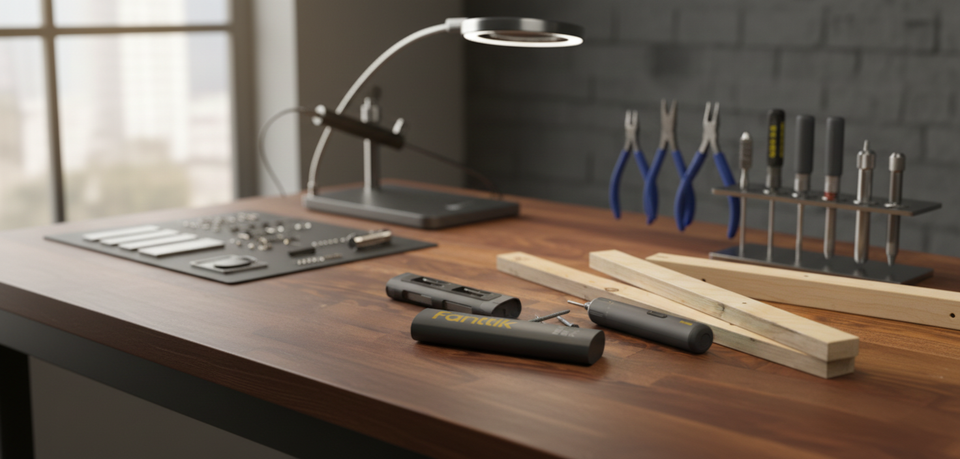 Comparing Wrist Torque in Symmetrical vs. Offset Drivers
Analysis of inline vs offset driver torque, ulnar deviation, and compliance with ISO/IEC standards for safer, faster electronics...
Comparing Wrist Torque in Symmetrical vs. Offset Drivers
Analysis of inline vs offset driver torque, ulnar deviation, and compliance with ISO/IEC standards for safer, faster electronics...
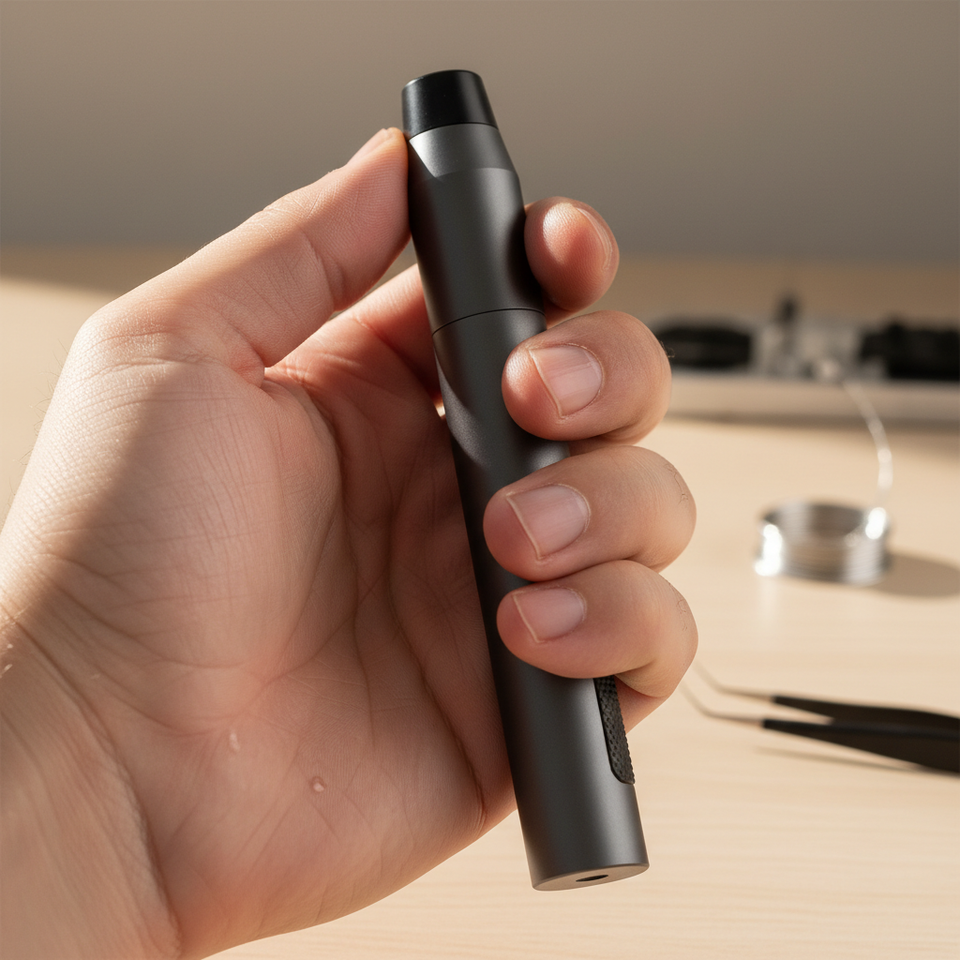 Mastering the Palm Grip on Symmetrical Electric Drivers
Covers hand biomechanics, torque stability, efficiency modeling for electronics projects, and compliance with EU safety regulations.
Mastering the Palm Grip on Symmetrical Electric Drivers
Covers hand biomechanics, torque stability, efficiency modeling for electronics projects, and compliance with EU safety regulations.
Leave a comment
This site is protected by hCaptcha and the hCaptcha Privacy Policy and Terms of Service apply.