

























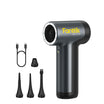

The Volume Challenge: Why 35-Inch Tires Demand Specialized Inflation
For the overlanding enthusiast, transitioning to 35-inch or larger tires is a rite of passage that fundamentally alters vehicle dynamics. While the focus usually remains on lift kits and re-gearing, the logistical reality of "airing up" after a day on the trail is often underestimated. A standard 35x12.50R17 tire contains approximately 40% more air volume than a common 31-inch stock tire. This volumetric increase means that an inflator designed for passenger cars will not just be slow—it will likely face terminal motor failure due to heat soak.
Selecting the right equipment requires moving past "vanity metrics" like maximum PSI and focusing on high-flow performance under resistance. In this guide, we analyze the technical requirements for high-volume tires, grounded in mechanical heuristics and field data, to ensure your gear matches your adventure's demands.
The CFM Metric: Prioritizing Flow Over Pressure
The most common mistake we observe in the field is selecting an inflator based solely on its maximum PSI rating. For off-road applications, where we typically operate between 15 PSI (trail pressure) and 35 PSI (highway pressure), a 150 PSI rating is largely irrelevant. The critical metric is CFM (Cubic Feet per Minute) at a specific load, typically 30 PSI.
The 1.5 CFM Rule of Thumb
Through scenario modeling and pattern recognition from high-volume tire users, a reliable heuristic has emerged: to inflate a 35-inch tire from 15 to 35 PSI in under five minutes, the inflator must provide a minimum of 1.5 CFM at 30 PSI.
Logic Summary: This "1.5 CFM Rule" is a practical baseline derived from the volumetric requirements of a 35x12.50 tire (approx. 3.5 to 4 cubic feet of compressed air needed to reach street pressure). It assumes standard ambient temperatures and a functioning seal.
| Parameter | Value/Range | Unit | Rationale |
|---|---|---|---|
| Target Tire Size | 35 | Inches | Standard prosumer off-road baseline |
| Pressure Delta | 20 (15 to 35) | PSI | Typical trail-to-highway transition |
| Required Flow | ≥ 1.5 | CFM | Necessary to keep fill time < 5 mins |
| Thermal Buffer | 25–30 | % | Allowance for ambient heat/efficiency loss |
| Electrical Draw | 25–45 | Amps | Typical for high-flow 12V motors |
Free Air vs. Tank Fill CFM
It is vital to distinguish between "Free Air CFM" (flow with zero resistance) and "Tank Fill CFM" (flow against pressure). Many entry-level units advertise high Free Air numbers that drop by 50% or more once the tire reaches 20 PSI. According to technical principles found in The 2026 Modern Essential Gear Industry Report: Engineering Trust in a Cordless World, transparent performance claims are the bedrock of user trust. Always look for "flow under load" specifications to avoid being stranded with a motor that cannot overcome the tire's internal resistance.

Thermal Management and the "Desert Buffer"
Off-roading frequently occurs in high-ambient-temperature environments like Moab or Death Valley. Heat is the primary enemy of portable air compressors. As the motor runs, friction and the physics of air compression generate significant internal heat.
The 30% Performance Buffer
Experienced practitioners apply a 25-30% performance buffer to published specifications when operating in hot conditions. Ambient heat reduces the density of the intake air and slows the cooling process of the compressor's cylinder head. If an inflator is rated to its absolute limit at 70°F, it will likely trigger its thermal cutoff switch before completing the fourth tire in 100°F weather.
Duty Cycle Realities
High-volume tires require longer run times. A "33% duty cycle" means the unit can run for 10 minutes but then requires 20 minutes of cooling. For a set of four 35-inch tires, you may need 15–20 minutes of continuous runtime. We recommend units with a 50% to 100% duty cycle at 30 PSI to ensure the job is finished in one session. This is aligned with ISO Standards regarding the continuous operation of electrical machinery, where thermal stability is a prerequisite for safety.
Hardware Essentials: Chucks, Hoses, and Seals
The connection between the inflator and the tire is a frequent point of failure. Standard "press-on" or plastic thumb-lock chucks often leak at the higher volumes required for 35-inch tires. A leak of just 0.1 CFM might seem minor, but over a 20-minute inflation cycle, it adds significant strain to the motor and extends your time in the heat.
The Professional Workaround: Brass Clip-on Chucks
We suggest using a clip-on chuck with a solid brass core. These provide a positive, mechanical seal on the Schrader valve that does not degrade with heat. Furthermore, an integrated pressure release button allows for precise "bleeding" of air if you over-inflate, without having to disconnect the unit.
Hose Integrity
High-flow inflators generate high-temperature air at the discharge port. Cheap plastic hoses can soften or even burst under these conditions. A braided, heat-resistant hose is a non-negotiable requirement for high-volume tires.
Power Source Dynamics: Lithium vs. 12V Direct
The debate between cordless lithium-powered units and traditional 12V battery-clamp units often centers on convenience versus raw power. For 35-inch tires, both have specific roles.
The 50°F Lithium Heuristic
Lithium-ion batteries are favored for their portability, but their chemistry is highly sensitive to temperature. Based on common patterns from field use and battery discharge modeling, you should expect a 40% reduction in cycle count (the number of tires you can fill) when operating in temperatures below 50°F (10°C).
Methodology Note: This estimate is based on the increased internal resistance of lithium cells at low temperatures, which forces the battery to work harder to provide the same current to the compressor motor.
The 12V Backup Mandate
Even if you prefer the convenience of a cordless unit, seasoned off-roaders always carry a backup 12V cable. This allows you to run the compressor directly from the vehicle's battery if the internal lithium cells are depleted or too cold to perform. High-volume inflation can draw significant amperage—sometimes 30 to 40 amps—which can risk depleting a vehicle's starting battery if the engine isn't running. We recommend keeping the vehicle idling during high-load inflation sessions to maintain voltage stability.
Safety and Compliance Standards
When selecting equipment that may be used in emergency roadside or remote trail conditions, compliance with international safety standards is a critical trust indicator.
- Electrical Safety: Ensure the device meets IEC 60529 standards for ingress protection (IP ratings), especially if you wheel in dusty or muddy environments.
- Pressure Accuracy: For off-road traction management, a 1-2 PSI difference can be the margin between climbing an obstacle and spinning out. Look for gauges calibrated according to NIST Handbook 44 principles for measuring device accuracy.
- General Safety: Products sold in the European Union must adhere to the EU General Product Safety Regulation (EU) 2023/988, which ensures rigorous testing for consumer electronics.
Selecting Your Inflator: A Decision Framework
To choose the right tool for your 35-inch tires, follow this methodical checklist:
- Verify Flow at Load: Does it provide at least 1.5 CFM at 30 PSI? Ignore the "150 PSI Max" marketing.
- Check Duty Cycle: Can it run for 20 minutes straight without a 40-minute break?
- Evaluate the Chuck: Is it brass? Does it clip on securely?
- Assess Thermal Protection: Does it have an automatic thermal cutoff to prevent motor meltdown?
- Confirm Power Versatility: If it's battery-powered, does it have a 12V bypass for emergency use?
By prioritizing these technical specifications over aesthetic appeal or low price points, you ensure that your traction management strategy is supported by reliable hardware. For more on managing high-load scenarios, see our guide on Troubleshooting Inflator Overheating During Multi-Car Prep.
Summary Table: High-Volume vs. Standard Inflators
| Feature | Standard Inflator | High-Flow Off-Road Inflator |
|---|---|---|
| Primary Tire Size | Up to 31" | 35" to 40"+ |
| Fill Time (15-35 PSI) | 10–15 minutes | 3–5 minutes |
| Typical CFM @ 30 PSI | 0.5 – 0.8 | 1.5 – 2.5 |
| Duty Cycle | 15% (Intermittent) | 50% – 100% (Continuous) |
| Connector Type | Plastic Thumb-Lock | Brass Clip-on or Twist-on |
| Thermal Protection | Often missing | Mandatory |
Selecting an inflator for large tires is an investment in vehicle safety and trail efficiency. By understanding the physics of air volume and the limitations of portable motors, you can avoid the frustration of equipment failure in remote locations.
Disclaimer: This article is for informational purposes only and does not constitute professional automotive or mechanical advice. Always consult your vehicle and tire manufacturer's guidelines for specific pressure recommendations. Operating high-amperage electrical equipment carries inherent risks; ensure all connections are secure and follow all safety warnings provided by the equipment manufacturer.
Sources
Continue reading
 Diagnosing Internal Valve Grit After Airing Down in Dusty Silt
Covers the backward expulsion protocol, the pin test for sensor drift, and preventative dry connect methods for field...
Diagnosing Internal Valve Grit After Airing Down in Dusty Silt
Covers the backward expulsion protocol, the pin test for sensor drift, and preventative dry connect methods for field...
 Trail Metrology: Verifying Gauge Accuracy for Low-Pressure Use
Covers gauge inaccuracy causes, NIST/ISO protocols, field tests like Zero and hysteresis checks, and environmental mitigation for rock...
Trail Metrology: Verifying Gauge Accuracy for Low-Pressure Use
Covers gauge inaccuracy causes, NIST/ISO protocols, field tests like Zero and hysteresis checks, and environmental mitigation for rock...
Leave a comment
This site is protected by hCaptcha and the hCaptcha Privacy Policy and Terms of Service apply.