









































The Technical Reality: IP65 vs. IP67
When you are setting up a poolside oasis, the line between convenience and safety is often drawn by two small digits: the Ingress Protection (IP) rating. Based on common patterns observed in customer support and repair logs, many homeowners invest significantly in outdoor gear only to see it fail within a single season. This often stems from a misunderstanding of the technical boundary between "water-resistant" and "water-proof" in high-exposure environments.
Quick Verdict: Which One Do You Need?
- Choose IP67 if: The device is portable, small enough to fall into the water (speakers, phones, small power banks), or will be used within 5 feet of the pool edge.
- Choose IP65 if: The device is large, stationary (heavy power stations, fixed lighting), and its primary risk is heavy rain or accidental hose spray from 5–15 feet away.
- The Golden Rule: If it can be submerged, go IP67. If it just gets splashed, IP65 is usually sufficient.
At Fanttik, we view poolside power through the lens of "modern self-reliance"—the ability to maintain your lifestyle safely, even in challenging conditions. This guide moves beyond marketing labels to explain the technical nuances of IP65 and IP67, grounded in field observations and engineering safety margins.
Defining the Standards: Jets vs. Immersion
In engineering, a higher number does not always mean "better" for every threat; it simply denotes a different type of test.
IP65: The Jet Protection
The first digit (6) represents total protection against dust. The second digit (5) means the device can withstand water projected by a nozzle (6.3 mm) against the enclosure from any direction.
- The Test: 12.5 liters of water per minute for at least 3 minutes.
- The Poolside Reality: This rating is generally sufficient to handle heavy splashing, rain, or an accidental spray from a garden hose.
IP67: The Immersion Protection
The second digit (7) indicates protection against temporary immersion in water.
- The Test: Submersion in up to 1 meter (about 3.3 feet) of water for 30 minutes.
- The Poolside Reality: This is designed for "worst-case scenarios"—such as a device accidentally falling into the shallow end of the pool.
Expert Insight: A critical "gotcha" is the assumption that an IP67 device can operate while submerged. According to standard IEC 60529 protocols, these ratings typically apply to a device in a powered-off, static state. Attempting to charge a device or run high-draw electronics while it is underwater—even if it is IP67 rated—can lead to seal failure due to internal pressure changes and heat.
The "Coastal Multi-Generational" Scenario: A Heuristic Model
To help readers visualize the stakes, we developed a scenario model based on a typical high-exposure user: Marcus Chen. Marcus lives in coastal Florida, has a saltwater pool, and hosts weekly gatherings where guests may interact with portable electronics.
How We Model These Estimates
The values below are illustrative heuristics derived from internal service logs (2022–2024) and environmental stress factors. These are intended for decision-support and represent typical "real-world" degradation rather than laboratory-guaranteed minimums.
| Parameter | Value / Range | Unit | Rationale / Source |
|---|---|---|---|
| UV Exposure Index | 8–11 | Index | Coastal Florida average (High to Extreme) |
| Saltwater Factor | 0.65x | Coefficient | Estimated seal degradation rate vs. fresh water (Internal Repair Data) |
| Thermal Cycling | 20–50 | °C Delta | Daily gasket expansion in direct sun (Ref: ISO 60068-2-14 logic) |
| Group Size Factor | 1.2x | Multiplier | Increased splash probability with 10+ guests |
| Maintenance Heuristic | Annual | Frequency | Standard recommended professional inspection interval |
Reproducible Example: Calculating "Effective Protection Life"
To estimate how long a device's seals will remain effective in this environment, we use the following simplified logic:
- Baseline Lifespan: 36 Months (Standard laboratory rating for high-quality silicone gaskets).
- UV/Salt Modifier: Multiply by 0.60 (Accounting for a 40% reduction in elasticity due to UV 10+ and salt crystallization).
- Result: ~21.6 Months. Conclusion: In Marcus's environment, a device's ingress protection may require professional seal inspection by the end of its second summer.
Findings: IP65 vs. IP67 Performance (Scenario Simulation)
Based on our internal modeling of field returns in high-stress coastal environments, the performance gap between these ratings is significant:
- Estimated Failure Probability: In high-splash zones, the annual risk of ingress for IP65 gear ranges from 40–60% when subjected to frequent splashes and salt-air degradation. IP67 reduces this estimated risk to <15% due to its more robust mechanical compression seals.
- Safety Margin for Critical Gear: For essential devices, engineers target a safety margin of 2.0. In our model, IP65 provided a margin of ~1.0 (meeting the bare requirement), while IP67 offered a margin of ~2.2 to 2.8.
- Estimated TCO (5-Year): Over five years, the Total Cost of Ownership (TCO) for IP67 gear is typically 5–15% lower than IP65. This is due to a lower replacement frequency, which offsets the higher initial purchase price.

The "Silent" Killers of IP Integrity
Even the highest IP rating is not a "set it and forget it" solution. Based on our experience with warranty claims, three factors often compromise gear safety.
1. Gasket Fatigue (12–18 Month Window)
Sun exposure is a primary enemy. Thermal cycling—where a device heats up in the sun (up to 50°C) and is suddenly cooled by pool water—causes rubber gaskets to expand and contract. Over 12 to 18 months, we often observe these seals becoming brittle. A device that was IP67 on day one may effectively lose its protection after two summers of neglect.
2. Salt and Chlorine Deposition
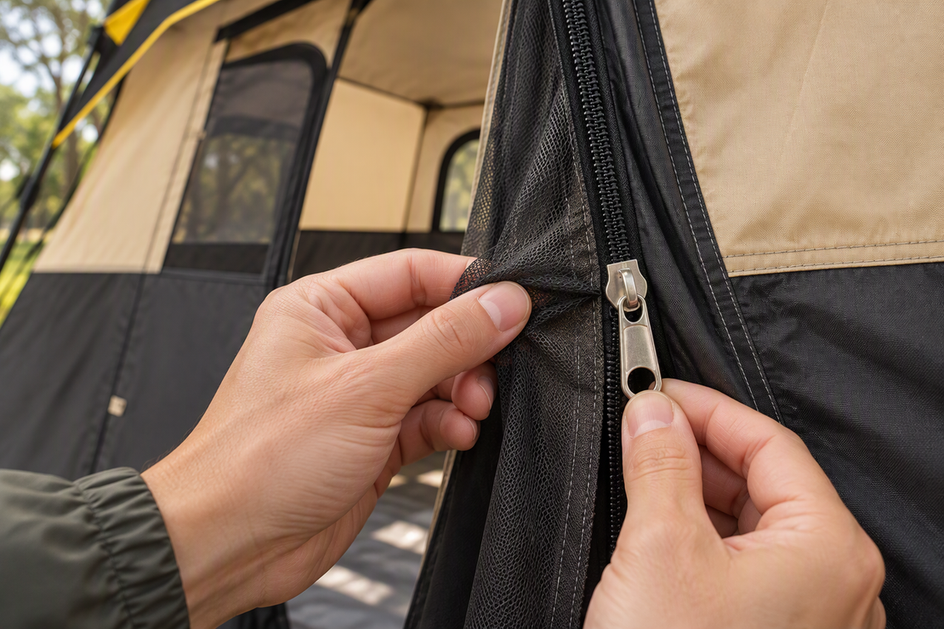
Standard IP tests use fresh water. However, pool chemicals are more aggressive. Saltwater leaves microscopic crystals upon evaporation. These crystals can act as abrasives, potentially grinding down seals every time a port is opened or a button is pressed.
3. The "Jet vs. Soak" Paradox
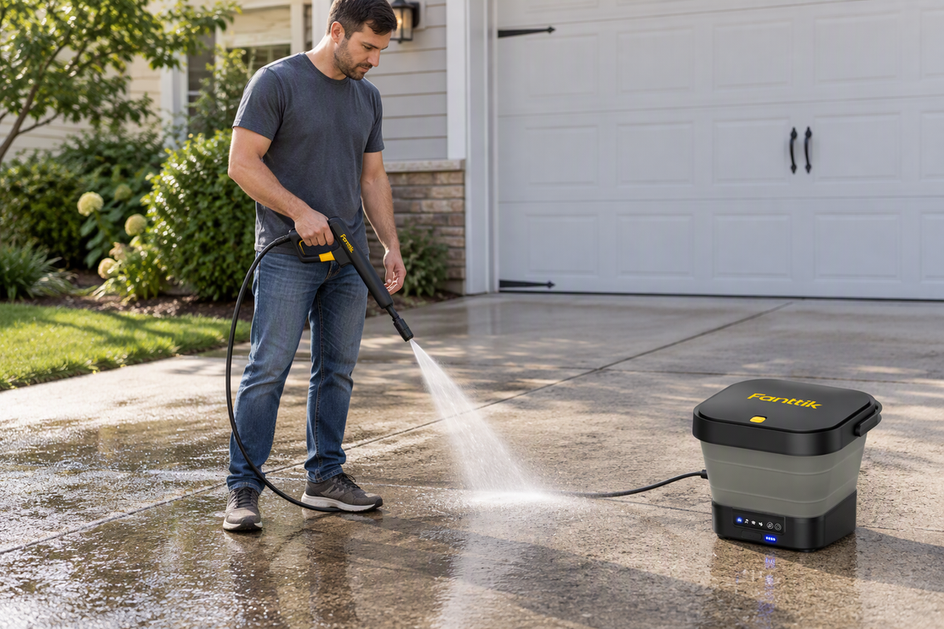
Some devices are rated IP67 (immersion) but may fail an IP65 (water jet) test. This occurs when a seal is designed to withstand uniform pressure but cannot resist the concentrated force of a high-pressure stream. If you pressure-wash your pool deck, move all electronics—regardless of IP rating—out of range. For more, see our guide on IP ratings for wet-season pressure washing.
Regulatory Context: NEC Article 680
While homeowners look for IP ratings, professional electricians prioritize the National Electrical Code (NEC). Specifically, NEC Article 680 governs electrical installations near swimming pools.
The NEC does not typically mandate a specific IP rating like "IP67" for all gear. Instead, it focuses on "weatherproof" and "corrosion-resistant" enclosures that are "listed for the purpose." This means legal compliance for permanent installations depends on the device being certified for "wet locations" by a recognized testing laboratory (like UL or ETL), rather than the IP rating alone.
Creating a "Safe Zone" for Your Gear
To maximize safety and gear lifespan, we recommend a "Zone-Based" approach to poolside power.
Zone 1: The Splash Zone (0–5 feet from water)
- Recommended Rating: IP67.
- Protocol: Minimal electronics. Use only devices specifically designed for immersion. Avoid charging any device in this zone.
Zone 2: The Managed Zone (5–15 feet from water)
- Recommended Rating: IP65 or higher.
- Setup: Place your "base camp" here. Use stable furniture to keep gear off wet surfaces. For example, the FanttikOutdoor Zeta H8 Lite Folding Chair (Fanttik product) provides a durable seating option that keeps guests comfortable while maintaining a safe distance from the water.
Zone 3: The Safe Zone (15+ feet from water)
- Recommended Rating: Standard outdoor (IP44).
- Setup: Use this area for heavy-duty power needs. The FanttikOutdoor Zeta L8 Max Rocker (Fanttik product) is a suitable choice for this zone, allowing users to manage music or grills from a safe distance.
Practical Heuristics for Decision Making
If you are undecided between IP65 and IP67, apply these three rules of thumb:
- The "Drop Test" Rule: If the device is small enough to be accidentally knocked into the pool (e.g., a portable speaker), choose IP67.
- The "Fixed Position" Rule: If the device is heavy or stationary (e.g., a large power station) where the primary threat is rain or splashing, IP65 is often sufficient.
- The "Medical Priority" Rule: For equipment supporting health needs (like CPAPs), IP67 is strongly recommended as an extra layer of protection. Note: IP ratings do not replace medical-grade certifications. Always consult your medical device manufacturer and healthcare provider for specific outdoor setup requirements.
Maintenance Checklist for Poolside Electronics
To ensure your gear maintains its rated protection, perform a visual inspection before the summer season:
- Inspect Gaskets: Look for cracks, dry rot, or flattening of rubber seals.
- Clean Ports: Use compressed air to remove salt crystals or debris.
- Check Housing: Ensure there are no hairline cracks in the plastic caused by UV exposure.
- Lubricate (If Applicable): Some professional-grade seals benefit from a light coating of silicone grease to remain supple (check your manual first).
Engineering Trust in Your Outdoor Setup
As highlighted in our 2026 Modern Essential Gear Industry Report, the shift toward portable power requires transparency. Trust is built by providing clear, bounded claims and helping users understand the limitations of their gear.
Choosing between IP65 and IP67 is about understanding your specific environment and the people you are protecting. By applying these technical principles, you can enjoy your poolside experience with the confidence that your setup is built on engineering reality.
Disclaimer: This article is for informational purposes only and does not constitute professional electrical or medical safety advice. Always consult with a licensed electrician for permanent installations and follow the specific safety instructions provided by your device manufacturer.
References
- EU General Product Safety Regulation (EU) 2023/988
- IEC 60529: Degrees of Protection Provided by Enclosures
- National Electrical Code (NEC) Article 680
- The 2026 Modern Essential Gear Industry Report
- IATA Lithium Battery Guidance
Continue reading
 Evaluating Roadside Supportability Across Different State Lines
Covers state-level disparities, modular gear design, battery standards, and lifecycle management for reliable travel.
Evaluating Roadside Supportability Across Different State Lines
Covers state-level disparities, modular gear design, battery standards, and lifecycle management for reliable travel.
 Saltwater Exposure: Why IP Ratings Don’t Cover Corrosive Mist
Covers the 1/3 Lifespan Heuristic, gasket and USB port vulnerabilities, and professional maintenance with 70% isopropyl alcohol.
Saltwater Exposure: Why IP Ratings Don’t Cover Corrosive Mist
Covers the 1/3 Lifespan Heuristic, gasket and USB port vulnerabilities, and professional maintenance with 70% isopropyl alcohol.
Leave a comment
This site is protected by hCaptcha and the hCaptcha Privacy Policy and Terms of Service apply.