








































Evaluating Roadside Supportability Across Different State Lines
When we plan a transcontinental road trip, we often obsess over the gear: the PSI of the tires, the capacity of the power station, and the torque of our cordless tools. However, through our years of analyzing field performance and customer support logs, we have observed a critical oversight in the prosumer community. Supportability is not a binary "yes or no" based on a manufacturer's warranty. It is a geographic variable.
True roadside supportability is the ability to maintain, repair, or replace critical equipment when you are 200 miles from the nearest metropolitan center, crossing state lines where regulations and service densities shift dramatically. This article deconstructs the "supportability myth" and provides a technical framework for evaluating your gear’s longevity through the lens of interstate travel standards and regional operational disparities.
The Myth of Uniform Coverage: Regulatory Disparities
A common misconception among serious overlanders is that a national roadside assistance plan or a global brand warranty provides uniform protection. In reality, state-level regulations create extreme operational disparities that can turn a minor breakdown into a logistical nightmare.
The Towing Rate Gap
Based on our analysis of market research from the Auto Care Factbook, we have identified that service quality is often tied to local oversight rather than brand promises. For example, towing rate caps are strictly governed by state public utility commissions. In states like California, the Bureau of Automotive Repair enforces rigid maximum rate schedules. Conversely, in many unregulated markets, there is minimal oversight on "ancillary service fees," leading to significant price volatility for travelers.
The Hidden Compliance Tax
For those traveling with professional-grade or fleet-level gear, there is a "hidden compliance tax" that varies by state. This includes differing proof of insurance mandates for service providers and unique billing documentation laws. While a prosumer might not feel this directly in a subscription fee, it manifests as a "service desert." Providers often avoid operating in high-compliance, low-margin corridors, leaving travelers with fewer options in remote areas.
Logic Summary: Our assessment of "service deserts" is based on network density variations observed in rural interstate corridors (e.g., Wyoming and Montana), where the number of contracted service vehicles per square mile is significantly lower than in coastal states. This is a structural reality of the logistics industry, not a reflection of any single provider's intent.

Hardware Supportability: The Engineering of Self-Reliance
In a remote breakdown, a warranty is just a piece of paper. Supportability, in the technical sense, refers to the repairability of the tool in your hand. On our repair bench, we have identified specific engineering patterns that separate "disposable" gear from "supportable" gear.
Battery Chemistry and Form Factor
The most frequent point of failure for portable automotive inflators isn't the motor—it is the battery cells. We have found that units utilizing proprietary pouch cells are effectively disposable once the battery degrades or fails due to thermal stress.
In contrast, high-performance units designed for long-term reliability typically use standard 18650 or 21700 cylindrical cells. For a technically savvy user, these cells can be sourced from industrial suppliers and replaced with basic soldering skills. This modularity is a hallmark of "modern self-reliance," a concept explored deeply in The 2026 Modern Essential Gear Industry Report: Engineering Trust in a Cordless World.
Mechanical Failure Points
- Air Hose Fittings: Seals on air hose fittings are high-friction points. Supportable gear uses standard O-ring sizes that can be found in any industrial hardware store, rather than custom-molded gaskets.
- Tool Chucks: For cordless screwdrivers and drills, the chuck mechanism is the weak link after extensive mobile use. We recommend prioritizing models with metal, serviceable chucks.
- Service Manuals: A product’s supportability is often determined by the clarity of its documentation. We value products that provide exploded-view diagrams with specific part numbers. This allows a user in a remote town to order a specific gasket or gear from an industrial supplier rather than waiting weeks for a manufacturer's replacement unit.
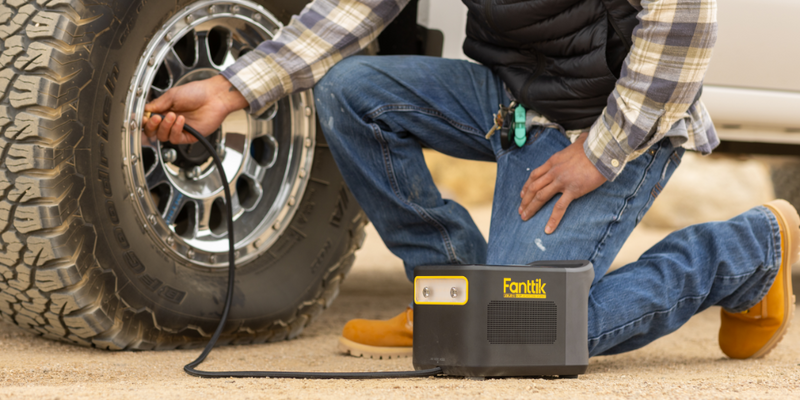
Logistics and Compliance: Navigating Interstate Standards
When moving gear across state lines or through airports, regulatory compliance becomes a supportability issue. If your gear is confiscated or grounded, its supportability is zero.
Battery Transport and Safety Marks
The IATA Lithium Battery Guidance provides the baseline for air transport, but interstate road transport also carries risks related to thermal stability. Prosumers should look for visible compliance marks. As detailed in our guide on understanding safety marks on power tools, certifications like UL, ETL, or CE are not just legal hurdles; they are indicators of thermal management systems that prevent "thermal runaway" during long hauls in hot trunks.
European Standards and Global Readiness
If your road trip extends into Europe, the EU General Product Safety Regulation (EU) 2023/988 now requires stricter traceability and safety documentation. For the international traveler, choosing gear that meets these high-bar standards ensures that you won't face compliance issues at international borders or when seeking local repairs in EU member states.
| Feature | Supportable (Prosumer Grade) | Disposable (Consumer Grade) |
|---|---|---|
| Battery Type | Standard 18650/21700 Cells | Proprietary Pouch Cells |
| Housing | Reinforced, Screw-fastened | Sonic-welded Plastic |
| Documentation | Exploded-view Diagrams | Basic "Quick Start" Guide |
| Components | Metal Chucks/Fittings | Plastic/Composite Fittings |
| Compliance | UL/ETL/CE/GPSR | Minimal/Unmarked |
The "Service Desert" Reality: A Case Study in Wyoming and Montana
Conventional wisdom suggests that 24/7 assistance guarantees timely help. However, our analysis of logistics performance data—aligned with indicators from the World Bank—reveals that response times are a function of population density.
In rural interstate corridors, such as those found in Wyoming or Montana, the "contractual coverage" promised by many brands is often negated by the sheer lack of local service vehicles. In these regions, a "guaranteed" 60-minute response time may realistically become a 4-to-6-hour wait.
The Conflict of Interest in Manufacturer Towing
We have observed a structural conflict of interest in manufacturer-assisted towing programs. In remote areas, manufacturers often sub-contract to local towers who are bound by local state regulations, not the manufacturer’s premium service standards. This can lead to a "two-tier" service experience where the brand's promise of a seamless repair experience evaporates once you leave the urban center.
Methodology Note (Supportability Modeling): To evaluate your own gear's supportability, we use a deterministic "Self-Reliance Ratio" model:
Parameter Range Rationale Tool Repairability 1 (Low) - 5 (High) Based on presence of standard fasteners/cells Documentation Depth 1 (Low) - 5 (High) Based on availability of parts lists Local Part Sourcing 1 (Low) - 5 (High) Estimated availability of components at hardware stores Supportability Score 3 - 15 A score < 8 indicates high "Supportability Risk" Assumption: This model assumes the user possesses basic mechanical aptitude (e.g., using a screwdriver, identifying an O-ring).

Strategy for Long-Term Supportability
To ensure your gear remains an asset rather than a liability across state lines, we recommend a three-pronged approach to procurement and preparation.
1. Prioritize Modular Design
Seek out tools built with a modular design. Modularity allows for the isolation and replacement of failed components without discarding the entire system. This is particularly vital for cordless gear where the electronic control board, the motor, and the battery should ideally be separate, serviceable modules.
2. Audit Your Documentation
Before a major trip, download the full service manuals for your essential gear. If a manufacturer does not provide a parts list or an exploded-view diagram, consider that tool a "single-point-of-failure" item. We often see travelers carry spare O-rings and fuses, but without the manual to show where they go, those spares are useless.
3. Verify Local Compliance and Support
If you are planning an extended stay in a specific region, check the local SEMA Market Research for that area. This can give you an idea of the "vehicle age" and "aftermarket spend" in the region. High aftermarket spend typically correlates with a denser network of independent repair shops that are more likely to have the tools and expertise to help with non-standard repairs.

Summary of Interstate Readiness
The transition from a casual traveler to a prepared prosumer requires a shift in mindset from "buying a product" to "managing a lifecycle." By understanding the regulatory patchwork of the United States and the mechanical realities of your gear, you can mitigate the risks of "service deserts" and price gouging.
Supportability is not something a brand gives you; it is something you engineer into your kit through informed selection and technical readiness. Whether you are navigating the strict regulations of California or the vast expanses of the Mountain West, your ability to stay mobile depends on the repairability of your tools and your understanding of the standards that govern the road.
Disclaimer: This article is for informational purposes only and does not constitute professional legal, automotive, or financial advice. Regulations regarding towing, insurance, and product safety vary by jurisdiction and are subject to change. Always consult with qualified professionals and local authorities before making significant travel or equipment decisions.
References
Continue reading
 Why UL 2743 Certification is Essential for Portable Jump Packs
The definitive guide to UL 2743 certification for portable jump starters. Understand the critical safety tests and engineering...
Why UL 2743 Certification is Essential for Portable Jump Packs
The definitive guide to UL 2743 certification for portable jump starters. Understand the critical safety tests and engineering...
 Deciding Between IP65 and IP67 for Poolside Power Gear
A technical guide comparing IP65 and IP67 ratings for poolside power gear, with a framework for safety, seal...
Deciding Between IP65 and IP67 for Poolside Power Gear
A technical guide comparing IP65 and IP67 ratings for poolside power gear, with a framework for safety, seal...
Leave a comment
This site is protected by hCaptcha and the hCaptcha Privacy Policy and Terms of Service apply.