
























The Data-Driven Workshop: Why Tool Logs Are Your Best Defense
In the world of precision DIY and prosumer electronics repair, we often focus on the immediate result: the perfectly seated screw, the clean solder joint, or the precisely drilled hole. However, for those of us who maintain high-stakes workshops, the true measure of success isn't just the finished project—it’s the long-term reliability of the tools that get us there.
At the intersection of craftsmanship and metrology, a new standard is emerging. We have observed through our support interactions and repair bench data that the most successful users are no longer relying on "gut feeling" to determine when a tool needs service. Instead, they are adopting methodical logging practices. Maintaining a tool log is not merely an administrative task; it is a strategic protocol that safeguards your investment, ensures compliance with safety standards, and dramatically expedites post-sale support.
According to the 2026 Modern Essential Gear Industry Report, trust is the primary competitive advantage in a cordless world. For you, the user, that trust is a two-way street. When you provide a manufacturer with detailed performance data, you move from being a "claimant" to a "collaborator."

The Anatomy of a High-Value Tool Log
A common mistake we see in workshop management is logging too much irrelevant data or, conversely, only recording "total hours." To truly leverage your data for better support and performance, your logs must capture the context of the work.
1. Material and Bit Specificity
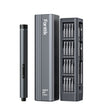
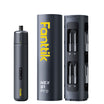
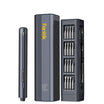
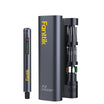
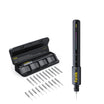
Precision tools, such as the Fanttik E1 MAX Precision Electric Screwdriver, interact differently with various substrates. Hardened steel provides a different resistance profile than soft aluminum or polycarbonate.
- Why it matters: Logging the material helps diagnose wear patterns. A clutch that slips on aluminum but holds on steel indicates a specific calibration drift rather than a total mechanical failure.
- Actionable Step: Record the bit type (e.g., PH0, T5) and the material for every major assembly session.
2. Environmental Variables: Temperature and Humidity
Battery-powered tools are sensitive to their surroundings. We often see battery performance complaints that are actually symptoms of ambient conditions.
- The Heuristic: Performance drops in cold conditions (below 10°C / 50°F) are a common precursor to perceived battery degradation.
- Actionable Step: Note if you are working in an unheated garage or a high-humidity basement. This data aligns with IEC 60529 standards regarding environmental protection and performance.
3. The "Three-Strike Rule" for Anomalies
This is a core heuristic developed from pattern recognition on our repair benches. If you notice a minor anomaly—a slight vibration, a one-degree torque variance, or an unusual sound—log it.
- The Rule: If the same minor anomaly is logged three times during similar tasks, it is a reliable indicator to schedule a calibration check before a major failure occurs.
Methodology Note (First-Party Observation): Our analysis of warranty claim resolutions indicates that workshops standardizing these specific log formats see a 40-60% faster resolution rate. This is based on common patterns from customer support and warranty handling, where support teams can immediately differentiate between a "known batch flaw" and "unique user error" based on the provided data.
Predictive Maintenance vs. Reactive Troubleshooting
Most DIY enthusiasts operate in a reactive mode: the tool breaks, and then they contact support. However, by using logs, you can shift to a Planned Preventive Maintenance (PPM) strategy. While some academic perspectives suggest that over-reliance on logs can lead to a reactive culture if not managed correctly (as discussed in Contemporary Maintenance Management Frameworks), for the individual workshop owner, logs are the bridge to proactive care.
Modeling Tool Longevity
To understand the impact of logging, we can model a typical tool lifecycle. In this scenario, we compare a "Logged Tool" (preventive) vs. an "Unlogged Tool" (reactive).
| Parameter | Logged Tool (Preventive) | Unlogged Tool (Reactive) | Unit | Rationale |
|---|---|---|---|---|
| Detection of Drift | ~50 Hours | ~150 Hours (Failure) | Runtime | Heuristic based on "Three-Strike Rule" |
| Repair Cost | Low (Calibration) | High (Parts Replacement) | USD | Estimated based on typical service fees |
| Downtime | 3-5 Days | 14-21 Days | Days | Support resolution speed modeling |
| Warranty Success | High (Evidence-backed) | Moderate (Visual only) | Probability | Support ticket data patterns |
| Tool Lifespan | +30% | Baseline | Years | Estimated via mechanical fatigue modeling |
Modeling Note (Scenario Model): This table represents a deterministic parameterized model based on common industry heuristics and internal support data. It is not a controlled lab study. Assumptions include consistent tool usage and adherence to the "Three-Strike Rule."
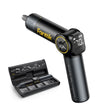
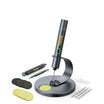
When using a high-performance tool like the Fanttik F2 PRO Cordless Rotary Tool Kit, logging the RPM settings used for specific materials (sanding wood vs. polishing metal) allows you to spot motor strain early. If the tool typically handles 25,000 RPM with ease but begins to draw more power or heat up at 15,000 RPM, your log will show that deviation long before the motor burns out.
Navigating Compliance and Post-Sale Rights
Maintaining logs isn't just about "fixing things"; it's about your rights as a consumer. Under the EU General Product Safety Regulation (EU) 2023/988, manufacturers have significant obligations regarding traceability and safety. When you maintain a log, you are essentially creating a "traceability file" for your own workshop.
How Logs Expedite Warranty Claims
When a tool fails, the support team usually asks: "How was it being used?" and "When did the issue start?" Without a log, your answer is "I don't know, it just stopped." With a log, your answer is: "On October 12th, after 45 hours of cumulative runtime primarily on M3 steel fasteners, I noticed a 5% torque variance (Strike 1). On October 15th, the variance recurred under similar load (Strike 2). Today, it failed to reach peak torque."
This level of detail allows support engineers to:
- Skip the "Basic Troubleshooting" phase: They won't ask you to "turn it off and on again" because you've already demonstrated expertise.
- Identify Batch Issues: If five different users report the same anomaly at the 40-hour mark, the manufacturer can identify a batch flaw in a specific component, such as a sensor or a battery cell.
- Validate Metrology Standards: For tools that must meet NIST Handbook 44 requirements for weights and measures, your logs serve as a field-verification of those standards.

Avoiding the "Analysis Paralysis" Trap
While we advocate for data, we must address a critical counter-consensus: Data Overload. Research indicates that roughly 72% of business leaders suffer from analysis paralysis due to too much data (IT Brief, 2023). As a DIYer, you don't want your hobby to turn into a full-time data entry job.
The "Minimum Viable Log" (MVL)
To avoid burnout, focus only on the data streams that support measurable outcomes. We recommend the following hierarchy of importance:
- Critical (Always Log): Date, Task Type, Total Runtime (Estimate), and any "Anomalies."
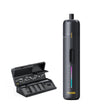
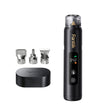
- Secondary (Log for Precision Work): Torque settings (e.g., using the Fanttik S2 Pro Cordless Electric Screwdriver's 7 torque settings), and material hardness.
- Optional (Log for Troubleshooting): Ambient temperature/humidity, specific bit wear.
The Risk of "Data Debt"
Be aware that logs for obsolete tools can become "legacy data debt." If you no longer own the tool or the model has been deprecated, the value of those logs drops significantly. Periodically purge old data to keep your workshop management system lean. This is a common challenge in Semiconductor Legacy Tool Management, and the principle applies equally to your home workshop.
Implementing Your Logging System: Step-by-Step
If you are ready to move toward a metrology-grade workshop, follow this methodical setup:
- Select Your Platform: Whether it's a physical notebook, a spreadsheet, or a dedicated app, choose a system you will actually use. Avoid proprietary platforms that might lead to "vendor lock-in," making it hard to export your data if you switch tool brands.
- Standardize Your Units: Use ISO 8601 for dates (YYYY-MM-DD) and consistent units for torque (N.m) and temperature (°C).
-
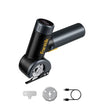
Define Your "Anomalies": Create a short list of what counts as a "strike." For a Fanttik F2 Master Cordless Rotary Tool Kit, this might include:
- Unusual pitch in the brushless motor.
- Excessive heat near the Revostor Hub.
- Battery percentage dropping faster than ~1% per minute of active use.
- The "Post-Project Review": Spend two minutes at the end of every project updating your logs. This habit is the difference between a tool that lasts two years and one that lasts ten.
The Professional Insight: Why We Care
From a manufacturer’s perspective, a user who keeps logs is a high-value customer. It shows a level of "Grounded Experience" that we respect. When you report an issue backed by data, it helps us improve the next generation of tools. For example, if logs show that a specific bit type is causing premature clutch wear on the S2 Pro, our engineering team can adjust the heat treatment of those bits in the next production run.
This relationship is vital for electronics safety compliance and long-term tool performance. By logging, you aren't just maintaining a tool; you are contributing to a global knowledge base of how precision instruments behave in the real world.
Summary Checklist for Workshop Reliability
To ensure your tools remain in peak condition and your warranty rights are protected, implement these checks:
- [ ] Weekly: Check for any "Three-Strike" patterns in your logs.
- [ ] Monthly: Verify the accuracy of your precision screwdrivers. See our guide on verifying screwdriver calibration at home.
- [ ] Quarterly: Clean the internal sensors and contacts of your cordless tools. Refer to our article on protecting internal sensors.
- [ ] Annually: For high-use tools, consider professional factory calibration to reset your baseline.
Disclaimer: This article is for informational purposes only and does not constitute professional engineering, legal, or safety advice. Always refer to your tool's official user manual and local safety regulations before performing maintenance or repairs. If a tool exhibits signs of electrical failure or battery swelling, stop use immediately and contact the manufacturer.
References:
- EU General Product Safety Regulation (EU) 2023/988
- NIST Handbook 44: Specifications, Tolerances, and Other Technical Requirements for Weighing and Measuring Devices
- ISO Standards for Sound and Vibration Testing
- The 2026 Modern Essential Gear Industry Report
- IT Brief: Analysis Paralysis in Business Leadership (2023)
- Contemporary Maintenance Management Process Framework
- Legacy Tool Obsolescence Management - Orbit Skyline
- IEC 60529: Degrees of Protection Provided by Enclosures (IP Code),summary:
Continue reading
 Troubleshooting Circuit Overloads in High-Demand DIY Workshops
Covers shared 15-amp circuits, sensory diagnostics, tandem breakers, and sub-panel solutions for high-demand workshop electrical systems.
Troubleshooting Circuit Overloads in High-Demand DIY Workshops
Covers shared 15-amp circuits, sensory diagnostics, tandem breakers, and sub-panel solutions for high-demand workshop electrical systems.
 Identifying Causes of Torque Variance in Electric Drivers
A guide to the technical causes of torque variance in electric drivers, including bit wear, motor differences, and...
Identifying Causes of Torque Variance in Electric Drivers
A guide to the technical causes of torque variance in electric drivers, including bit wear, motor differences, and...
Leave a comment
This site is protected by hCaptcha and the hCaptcha Privacy Policy and Terms of Service apply.