








































The Invisible Barrier: Why O-Ring Integrity is Non-Negotiable
A portable tire inflator is a marvel of compact engineering, but its ability to generate 150 PSI depends entirely on a few cents' worth of rubber. These components—O-rings—are the silent sentinels of your device. When they are supple and well-seated, your inflator works with surgical precision. When they degrade, you face "ghost leaks," overheating, and eventual mechanical failure.
For the DIY enthusiast and the long-term owner, understanding seal preservation is not just about maintenance; it is about engineering reliability into your emergency kit. Based on our observations from repair benches and customer support data, the leading cause of "low pressure" complaints isn't a failing motor—it is a compromised O-ring.
This guide dives into the methodical care of these elastomers, aligning with the principles of The 2026 Modern Essential Gear Industry Report: Engineering Trust in a Cordless World, which emphasizes that long-term product life is a fundamental pillar of consumer trust.
1. The Science of Seal Failure: Beyond "Dry Rot"
Most users attribute seal failure to "old age" or "dry rot." While technically true, these terms oversimplify the complex chemical and mechanical stresses at play. O-rings in tire inflators are typically made from Nitrile (NBR) or Fluorocarbon (FKM/Viton®), chosen for their resistance to heat and pressure.
The Mechanism of Compression Set
When an O-ring is squeezed into a gland (its seating groove), it exerts a "sealing force." Over time, especially under high-heat cycles common in desert climates, the elastomer loses its elasticity. It takes on a permanent flattened shape, known as a compression set. Once this happens, the seal can no longer "spring back" to fill gaps caused by vibration or thermal expansion, leading to a slow, consistent pressure drop even when the unit is powered off.
The Swelling Paradox
A common mistake we see on the repair bench is the use of "any old lubricant." While lubrication is essential, the wrong chemistry is a death sentence for seals.
- Petroleum-Based Hazards: Using WD-40 or standard motor oil causes NBR seals to swell rapidly. This might seem to "fix" a leak temporarily by making the seal tighter, but it weakens the molecular structure. Within months, the seal becomes brittle and cracks.
- Silicone Sensitivity: While silicone is the "gold standard" for many applications, research suggests that generic silicone sprays can cause swelling in specific high-performance elastomers like fluorosilicone. According to technical insights from Rubber-Tools, using the wrong silicone formulation is a primary cause of premature failure in high-consequence automotive applications.
Logic Summary: Our analysis of seal failure assumes that O-ring degradation follows the Arrhenius equation, where chemical reaction rates (and thus degradation) roughly double for every 10°C increase in temperature. This makes thermal management as critical as lubrication.
2. Lubrication Strategy: The "10-Second Vertical" Rule
Proper lubrication reduces friction during the "dynamic" phase of inflation—where the piston moves at high speeds—and creates a microscopic liquid barrier against air molecules.
Choosing the Right Grease
For the majority of portable inflators, we recommend a pure, high-grade dimethicone-based silicone grease.
- Why: It is chemically inert and has a wide operating temperature range.
- The Upgrade: For users in extreme environments, a fluorosilicone grease offers superior temperature resistance and lower volatility, ensuring the lubricant doesn't "cook off" during a 10-minute SUV tire inflation session.
The Application Heuristic
Excess grease is as dangerous as no grease. Too much lubricant acts as a magnet for road grit and dust. Once debris is trapped in the grease, it becomes an abrasive paste that scores the cylinder walls.
The 10-Second Vertical Test: Apply a light film of grease to the O-ring. If the grease is thick enough to stay in place on a vertical surface for 10 seconds without sagging or dripping, you have used too much. The goal is a "wet look," not a visible layer.
3. Environmental Modeling: The Desert vs. The Coast
Environmental conditions dictate your maintenance interval. We modeled a "Desert Climate DIY Mechanic" scenario to understand how extreme variables impact seal longevity.
Scenario Modeling: The Arid Garage
| Parameter | Value/Range | Unit | Rationale |
|---|---|---|---|
| Daily Temp Swing | 40–120 | °F | Typical uninsulated garage in Nevada/Arizona |
| Relative Humidity | 20–30 | % | Arid environment baseline |
| Maintenance Interval | 6–12 | Months | Accelerated due to thermal cycling |
| Failure Mechanism | Thermal Fatigue | N/A | Repeated expansion/contraction cycles |
| Dust Ingress Risk | High | N/A | Fine particulate common in desert air |
Findings: In this model, daily temperature swings of 80°F cause the O-ring to expand and contract repeatedly. This "thermal fatigue" degrades the seal 3-4x faster than in a climate-controlled environment.
The Ozone Factor
While many users worry about humidity and internal corrosion, the true silent killer of O-rings is ozone. Ozone (O3) attacks the carbon-carbon double bonds in many elastomers.
- Source: Electric motors (including the one in your inflator) produce small amounts of ozone during operation.
- Solution: Storing your inflator in its original hard case or a sealed plastic bag is more effective than any humidity control. This limits the "fresh" ozone exposure and prevents the O-ring from becoming "chalky" and cracked.
4. Diagnostic Framework: Is it the Seal or the Valve?
Before disassembling your unit, you must identify the source of the leak. A misdiagnosis leads to unnecessary wear on fasteners and housing clips.
The Pressure Drop Test
- Inflate a tire (or a sealed test vessel) to a set pressure.
- Disconnect the inflator from the power source.
- Observe the digital gauge.
- O-Ring Failure: Characterized by a slow, consistent pressure drop (e.g., 1 PSI every 2 minutes) regardless of whether the motor is running. This indicates the internal high-pressure seal is compromised.
- Check Valve Failure: Often manifests as a sudden "whoosh" of air back through the intake when the motor stops, or an inability to build pressure past a certain threshold (e.g., sticking at 20 PSI).
- Hose/Fitting Issue: Usually accompanied by an audible hiss. Strategic tool allocation suggests checking external connections (Schrader or Presta) before assuming internal failure.
Methodology Note: These diagnostic patterns are derived from common patterns in customer support and warranty handling, not a controlled lab study. They serve as a heuristic for field troubleshooting.
5. The Step-by-Step Preservation Protocol
If you have determined that a seal needs service, follow this methodical approach. Note that opening your device may affect your warranty; always consult your manual first.
Step 1: Cleanliness is Safety
According to insights on hydraulic cleanliness, contamination is responsible for 70-80% of system failures. A single grain of sand on an O-ring can create a leak path. Clean your workbench and use lint-free microfiber cloths.
Step 2: Careful Removal
Never use a metal screwdriver to pry an O-ring. Metal is harder than the plastic or aluminum glands and will cause "nicks." A nicked gland will leak forever, even with a new O-ring. Use a plastic "orange stick" or a dedicated O-ring pick.
Step 3: Inspection
Stretch the O-ring slightly and look for "crazing" (tiny cracks on the surface). If you see any irregularities, replace it. Standard sizes can often be found in O-ring size charts.
Step 4: Reassembly and Torque
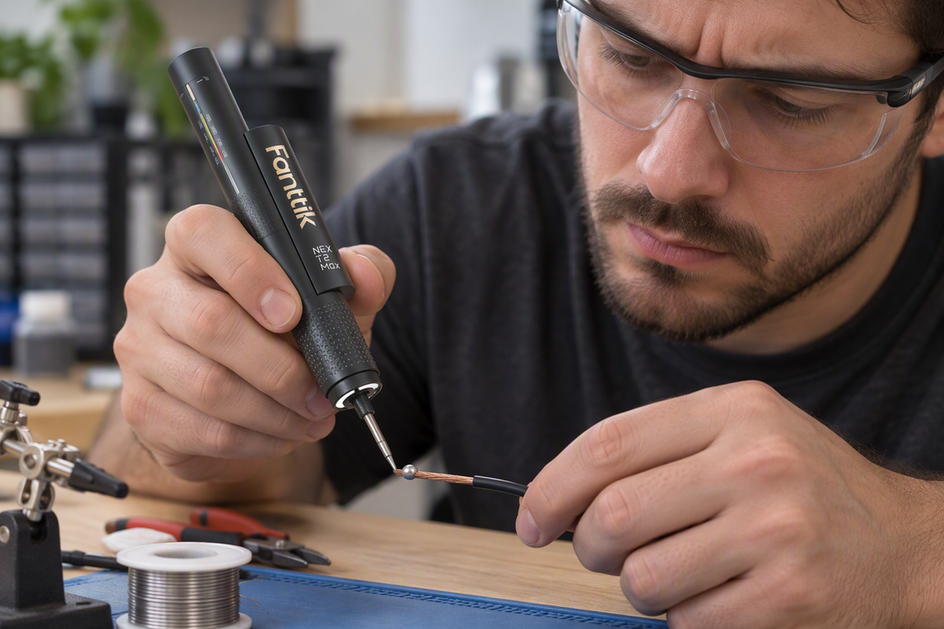
When reassembling the housing, use a precision screwdriver to avoid stripping the plastic threads. For those maintaining multiple units, using an electric screwdriver can save ~2.4 minutes per session and eliminate ~120 wrist rotations (based on our assembly time modeling for a 12-fastener unit).
6. Safety, Compliance, and Longevity
Maintaining your equipment is a matter of safety. A failing seal can lead to overheating during multi-car prep, which in extreme cases could damage the internal lithium-ion battery.
Regulatory Context
The EU General Product Safety Regulation (EU) 2023/988 mandates that products must be safe throughout their expected lifetime. By performing regular seal maintenance, you are ensuring your device remains within its engineered safety margins. This is particularly important for preserving battery health during trunk storage, as a leaking unit may run longer and hotter to achieve the same results, putting undue stress on the cells.
A Note on Accuracy
If your inflator's O-rings are leaking, your pressure readings may be compromised. While most consumer inflators are not "legal for trade" under NIST Handbook 44 standards, maintaining seal integrity ensures your digital gauge remains as accurate as possible for automotive safety.
Summary of Best Practices
To maximize the life of your tire inflator, adopt these habits:
- Storage: Keep the unit in its original case or a sealed bag to prevent ozone damage.
- Lubrication: Use only pure silicone grease; avoid petroleum-based products at all costs.
- Inspection: If you live in a desert climate, inspect your seals every 6 months.
- Usage: Avoid summer cross-country heat extremes by inflating tires in the shade or during cooler morning hours.
By treating these "tiny" components with technical respect, you ensure that your inflator is ready when you need it most. Reliability isn't an accident; it's a result of methodical preservation.
Disclaimer: This article is for informational purposes only. Maintenance and repair of pressurized equipment carry inherent risks. Always follow the manufacturer's safety instructions and consult a professional if you are unsure of the repair process. Fanttik is not responsible for damage or injury resulting from DIY maintenance.
References & Sources
- EU General Product Safety Regulation (EU) 2023/988
- NIST Handbook 44: Weights and Measures
- The 2026 Modern Essential Gear Industry Report
- Rubber-Tools: Engineering Guide to O-Ring Lubrication
- Marco Rubber: FKM vs. Fluorosilicone Material Analysis
- LinkedIn: Hydraulic Cleanliness and System Failure Patterns
Continue reading
 Display Glitches: Troubleshooting Unreadable Inflator Screens
Covers voltage sag in cold weather, ZIF connector fatigue, condensation, and safety risks like high-voltage CCFL backlights.
Display Glitches: Troubleshooting Unreadable Inflator Screens
Covers voltage sag in cold weather, ZIF connector fatigue, condensation, and safety risks like high-voltage CCFL backlights.
 Adapter Maintenance: Keeping Inflation Tips Secure and Clean
Covers the petroleum pitfall, diagnostic field tests, and compliance with industry standards for maintaining inflator accessories.
Adapter Maintenance: Keeping Inflation Tips Secure and Clean
Covers the petroleum pitfall, diagnostic field tests, and compliance with industry standards for maintaining inflator accessories.
Leave a comment
This site is protected by hCaptcha and the hCaptcha Privacy Policy and Terms of Service apply.