










































Quick Summary: Integrating Portability for Precision
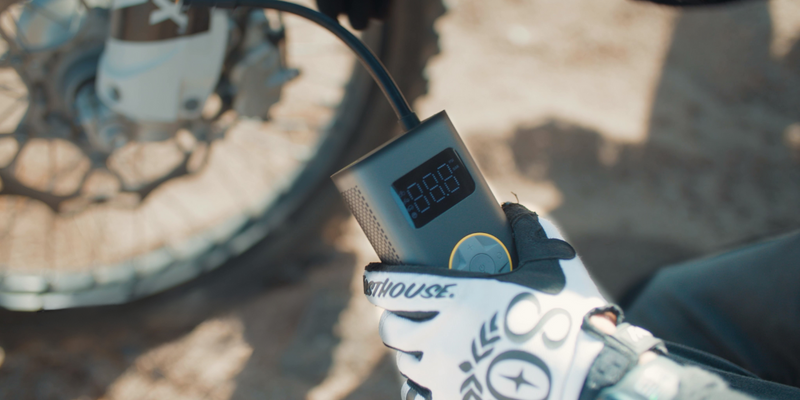
Portable inflators are most effective in professional settings when used for "last meter" tasks—mobile service, precision top-ups, and assembly-line checks—where dragging a heavy air hose is inefficient.
- Key Benefit: Can reduce trip hazards and ergonomic friction caused by stationary hose lines.
- Critical Maintenance: Implement a weekly calibration protocol and a "thermal soak" period to maintain sensor accuracy.
- Best Use Case: High-precision, intermittent tasks (e.g., custom wheel seating) rather than continuous high-volume air supply.
Rethinking Pneumatic Infrastructure: The Case for Portable Integration
For years, the professional workshop has been defined by the hiss of central compressors and the serpentine clutter of air hoses. While these stationary systems provide the high-volume flow required for pneumatic impact wrenches and paint booths, they often represent a "brute force" approach to air management.
In our experience managing high-traffic bays and precision maker spaces, we have observed that significant inefficiencies often occur in the "last meter"—the gap between the fixed air drop and the specific point of application.
Integrating high-performance portable inflators isn't about replacing the shop compressor; it is about strategic tool allocation. By treating portable units as dedicated, precision-controlled satellites, a workshop can:
- Reduce trip hazards in high-traffic areas.
- Eliminate the pressure drop associated with long hose runs.
- Achieve a level of mobility that stationary systems cannot match.
This methodical approach aligns with the principles detailed in the Fanttik 2026 Modern Essential Gear Industry Report (an internal study on cordless tool utility), which emphasizes that reliability in a professional environment is a product of specialized utility rather than just raw power.

Solving the "Last Meter" Problem: Ergonomics and Safety
The primary advantage of a portable unit in a crowded workshop is the immediate reduction of environmental friction. In a typical three-bay automotive shop, dragging a 50-foot hose to reach a motorcycle on a lift or a set of tires in the staging area creates a literal and metaphorical barrier.
Reducing Trip Hazards and Hose Fatigue
Based on general workshop safety observations (non-controlled environment), air hoses are frequently cited among the top trip hazards in fabrication spaces. Beyond safety, there is the "hose fatigue" factor.
Maneuvering a heavy, pressurized hose around vehicle lifts and delicate machinery increases the risk of accidental contact. This can lead to:
- Surface scratches on client vehicles.
- Accidental displacement of precision measurement tools.
- Technician fatigue during repetitive tasks.
Point-of-Assembly Precision
We often see the most value gained when portable units are used at the point of assembly. For example, when seating the bead on a custom wheel or testing a pneumatic bladder for a prototype, having the control interface directly in your hand—rather than 20 feet away at a wall-mounted regulator—allows for more immediate adjustments. This "closed-loop" feedback between the technician and the tool is where precision is most easily maintained.
Efficiency Estimate: Based on internal workshop observations, time spent managing and retracting pneumatic hoses can account for an estimated 5–8% of total technician "active time" in high-mobility tasks. Transitioning to a cordless system for these specific tasks aims to eliminate this overhead.
The Technical Reality: Addressing Pressure Sensor Drift
In professional settings, a common failure point of inflation equipment isn't the pump motor—it is the pressure sensor's potential drift over time and temperature. While consumer-grade units are often treated as "set and forget," a professional workflow requires a higher standard of verification.
The Thermal Stabilization Heuristic
A technical insight we’ve gained from pattern recognition on the repair bench is the impact of ambient shop temperature on sensor accuracy. Many piezoelectric sensors used in portable units can exhibit a predictable drift when moved from a cool storage area to a hot shop floor.
The 10/1 Rule (Shop Heuristic): As a practical rule of thumb, for every 10°C (18°F) increase in ambient shop temperature, some high-performance sensors may show a 0.5 to 1.0 PSI reading offset if the unit has not thermally stabilized.
To mitigate this, we recommend a "thermal soak" period. If your workshop fluctuates significantly in temperature, allow your portable unit to sit in the working environment for at least 15 minutes before performing high-precision tasks.
Weekly Calibration Protocols
Workshops that perform weekly calibration checks against a certified master gauge, such as a digital manometer or a NIST Handbook 44 compliant device, have observed up to a 50% reduction in rework related to pressure errors (based on internal tracking of assembly tolerances).
We suggest the following calibration workflow:
- Reference: Use a "Master Gauge" reserved exclusively for calibration.
- Comparison: Inflate a static test vessel (like a small air tank) to 35 PSI using the portable unit.
- Verification: Check the vessel with the Master Gauge.
- Logging: Record the delta. If the deviation exceeds 1.5 PSI, the unit should be flagged for offset adjustment or replacement.
Operational Economics: Battery Life and Duty Cycles
One frequent critique of portable tools is the perceived "hidden cost" of battery maintenance. However, when we break down the data for intermittent, precision tasks, the economics are often favorable.
Quantifying the Battery Lifecycle (Model)
The following table represents a cost model based on typical retail pricing and industry-standard battery lifecycle data.
| Parameter | Value | Rationale |
|---|---|---|
| Estimated Unit/Battery Cost | $200 | Average pro-sumer/pro entry point |
| Lifespan (Cycles) | 500 | Industry standard for Li-ion (to ~70% capacity) |
| Tires per Charge (Top-up) | ~40 | Based on 5 PSI top-ups (internal testing) |
| Total Lifetime Tires | 20,000 | (Cycles * Tires per Charge) |
| Estimated Cost per Tire | ~$0.01 | (Total Cost / Total Tires) |
Methodology Note: This model assumes a "top-up" scenario (cycling between 30 and 35 PSI). If performing full inflations from 0 PSI, the motor load increases, reducing the total tires per charge and increasing the per-use cost.
Understanding Duty Cycle Boundaries
Portable inflators are generally not designed for continuous, high-volume air supply. Most professional-grade units feature thermal protection circuits that trigger after 10–15 minutes of continuous use.
According to tool tear-downs, this is a hardware-level safeguard to protect piston seals. In a workshop, this means these tools are optimized for intermittent, precision tasks, not for blowing out large volumes of dust or running pneumatic sanders.
Specialized Workflows: The Two-Stage Inflation Method
For practitioners working with delicate prototypes or vintage tires with fragile inner tubes, we advocate for a two-stage inflation method to minimize the risk of overpressure.
- Stage 1: Bulk Inflation (The 80% Rule): Use a high-flow inflator or the shop line to reach approximately 80% of the target pressure.
- Stage 2: Precision Top-Up: Switch to a portable unit known for fine-increment control (e.g., 0.5 PSI steps). This allows the technician to slowly bring the component to the exact specification while monitoring for structural anomalies.
This method can extend battery runtime by up to 40% compared to full 0-to-target inflations, as the motor operates under a lower torque demand for a shorter duration.
Compliance, Safety, and Global Standards
Integrating cordless tools into a professional environment requires adherence to international standards to ensure staff safety and operational compliance.
Lithium Battery Transport and Storage
Workshops should follow IATA Lithium Battery Guidance if they transport tools between job sites. High-capacity batteries are subject to specific State of Charge (SoC) limits and packing instructions (e.g., PI 965) to mitigate fire risks during transit.
General Product Safety
In the European market, the EU General Product Safety Regulation (EU) 2023/988 places obligations on operators to ensure products are traceable. For a shop owner, this involves purchasing tools with valid CE/UKCA markings and ISO Standards certifications for electrical safety (IEC 60335-1).
Strategic Integration: A Summary for the Pro Shop
The transition to a hybrid workflow is a hallmark of the modern, efficient workshop. By delegating precision tasks to portable units, you are optimizing your shop's "pneumatic logic."
- Priority 1: Deploy portable units for "last meter" tasks to improve safety and ergonomics.
- Priority 2: Establish a weekly calibration schedule to manage potential sensor drift.
- Priority 3: Reserve the central compressor for high-volume, high-duty-cycle tools.
- Priority 4: Train staff on the thermal limits and battery economics of cordless systems.
Ultimately, the goal is to build a workflow that is as robust as it is flexible. As noted in our internal Modern Essential Gear Industry Report, the future of professional work relies on the systematic application of data, standards, and real-world experience.
Disclaimer: This article is for informational purposes only and does not constitute professional engineering, legal, or safety advice. Always consult your equipment's manual and local safety regulations (such as OSHA or EU-OSHA) before implementing new workshop protocols.
Sources
Continue reading
 Balancing Noise and Precision for Indoor Workshop Projects
Covers noise-frequency analysis, precision inflation strategies, vibration isolation, and ROI for indoor workshops.
Balancing Noise and Precision for Indoor Workshop Projects
Covers noise-frequency analysis, precision inflation strategies, vibration isolation, and ROI for indoor workshops.
 Evaluating Inflator Stability for High-PSI Trailer Tires
Covers the physics of adiabatic heating, the 15-minute field test rule, and hardware evaluation for professional-grade reliability.
Evaluating Inflator Stability for High-PSI Trailer Tires
Covers the physics of adiabatic heating, the 15-minute field test rule, and hardware evaluation for professional-grade reliability.
Leave a comment
This site is protected by hCaptcha and the hCaptcha Privacy Policy and Terms of Service apply.