






































The Invisible Threat: Why Summer Heat Is the Enemy of Your Interior
As vehicle owners, we often focus on the exterior—the paint, the wheels, and the glass. However, for those of us who prioritize long-term asset preservation, the most significant degradation often happens where we can’t see it: within the molecular structure of our upholstery. When a vehicle sits under the summer sun, it isn't just "getting hot." It is becoming a high-temperature chemical reactor.
In our experience monitoring vehicle interiors during peak summer months, we have observed that ambient air temperature is a poor indicator of actual material stress. While a weather app might report a manageable 85°F (29°C), the localized surface temperature of a black leather dashboard or seat bolster can exceed 160°F (71°C) within 60 minutes of direct exposure. This discrepancy creates a "thermal shock" environment that rapidly depletes the essential oils and plasticizers that keep leather and synthetic materials supple.
At this level of heat, we are no longer dealing with simple discomfort; we are dealing with accelerated material failure. This article provides a methodical breakdown of why these materials crack and how you can implement a professional-grade preservation strategy that goes beyond generic "cleaning and conditioning."
The Science of Thermal Degradation and Desiccation
To protect your interior, we must first understand the two primary physical drivers of damage: heat-induced chemical breakdown and hygroscopic desiccation (moisture loss).
1. The 60–100°C Threshold
While high-quality vegetable-tanned leather fibers can withstand extreme temperatures before total structural collapse (often cited in material science as 200–250°C), the practical threshold for cracking is much lower. According to research published in Springer's study on leather fiber degradation, the glass transition temperature of collagen—the point where it shifts from a flexible state to a brittle, "glassy" state—can occur between 60°C and 100°C (140–212°F).
When your seat surface hits 160°F, it enters this danger zone. The heat causes the fibers to contract and the internal lubricants (fatliquors) to migrate or evaporate. Once these lubricants are gone, the fibers rub against each other with high friction, leading to the microscopic tears we recognize as cracks.
2. The Humidity Paradox
A common misconception is that heat alone causes cracking. In reality, the "Relative Humidity" (RH) inside a sealed cabin is equally critical. As the air temperature inside a parked car rises, its capacity to hold moisture increases, which causes the relative humidity to plummet—often to levels below 10%.
According to insights on how dry air affects materials, low humidity causes organic materials like leather to lose their internal moisture balance. This desiccation makes the material physically shrink. When the leather shrinks while being tightly stretched over seat foam, the tension becomes too great, and the surface splits.
Logic Summary: The Desiccation Model Our analysis of interior cracking assumes that thermal load and humidity loss are synergistic.
- Assumption 1: Cabin air is sealed (no exchange).
- Assumption 2: Radiant heat is absorbed by dark surfaces (black leather).
- Result: A 40°F rise in surface temperature typically correlates with a 50–60% drop in local relative humidity at the material interface, accelerating fiber brittleness.

Leather vs. Synthetic: Different Materials, Different Risks
In the modern automotive market, "leather" is rarely a uniform material. Understanding whether you have top-grain leather, "leatherette" (vinyl/PVC), or a vegan synthetic (polyurethane) is vital for choosing the right protection.
Natural Leather (Top-Grain / Nappa)
Natural leather is porous. It "breathes," which is excellent for comfort but dangerous in the summer. In a super-heated, low-humidity cabin, breathable materials facilitate faster vapor diffusion. This means natural leather actually loses its internal moisture faster than synthetic alternatives.
Synthetic "Leatherette" and Vinyl
Many owners mistakenly apply leather conditioners to synthetic seats. However, synthetic materials are essentially plastics. Standard leather oils cannot penetrate the polyurethane or PVC top coat. Instead, they sit on the surface, becoming tacky and attracting UV rays.
The primary risk for synthetics is "plasticizer migration." Heat causes the chemicals that keep the vinyl flexible to leach out, leading to a "hardening" effect. Once hardened, the material cannot flex when you sit on it, causing it to shatter or peel. For these materials, we recommend a dedicated protectant with UV inhibitors rather than an oil-based conditioner.
| Material Feature | Natural Leather | Synthetic (Vinyl/PU) |
|---|---|---|
| Primary Failure Root | Collagen desiccation | Plasticizer migration |
| Temperature Sensitivity | High (60–100°C) | Moderate (70–90°C) |
| Moisture Response | High (Hygroscopic) | Low (Hydrophobic) |
| Recommended Care | pH-balanced oils | UV-blocking polymers |
| Summer Risk Factor | Shrinkage/Tearing | Hardening/Peeling |
The "Integrated Preservation" Protocol
Based on our observations of high-value vehicle preservation, we recommend moving away from reactive care (fixing cracks) to an integrated "Thermal and Hygroscopic Management" system. This protocol combines mechanical barriers with chemical stability.
Step 1: Reflective Radiant Barriers
The most effective tool in your arsenal is a high-quality sunshade. However, not all shades are equal. We have found that shades with a reflective metallic layer facing outward are significantly more effective than plain fabric or cardboard versions.
In our scenario modeling, a metallic reflective barrier can reduce the peak temperature of the dashboard by up to 40°F (22°C). This reduction keeps the material below the critical glass transition temperature of 140°F, preventing the initial phase of thermal degradation.
Step 2: Managing the Vapor Barrier
This is a "non-obvious" insight that contradicts conventional wisdom. Many owners use breathable fabric seat covers to "protect" the leather from the sun. However, in a dry, desert-like cabin, that breathability allows moisture to escape the leather even faster.
For extended outdoor parking (e.g., at an airport or long-term storage), we actually recommend using a non-breathable vapor-barrier cover. This "locks" the moisture into the leather, preventing the desiccation that leads to shrinkage.
Step 3: High-Temperature Stable Conditioning
When selecting a conditioner, we look for "Thermal Stability." Many consumer-grade conditioners contain silicones or low-quality oils that have a low flash point. At temperatures above 150°F, these products can break down, becoming tacky or even accelerating UV damage by acting like a "magnifying glass" for radiation.
We recommend products aligned with ISO 9001 quality management standards for chemical consistency. Look for conditioners that specify they are "non-greasy" and "UV-absorbent."
Maintenance Mechanics: The "Less is More" Rule
The most common mistake we see in our support data is the "over-application" of conditioners. Owners often think a thick layer of cream will "soak in" and provide better protection. In reality, leather can only absorb a finite amount of product.
Excess conditioner creates a greasy film. When the cabin heats up, this film becomes a magnet for fine dust and pollen. This creates a "sandpaper effect" in high-friction areas like seat bolsters. As you move in the seat, the dust trapped in the grease grinds against the leather fibers, causing premature wear.
The Professional Application Method:
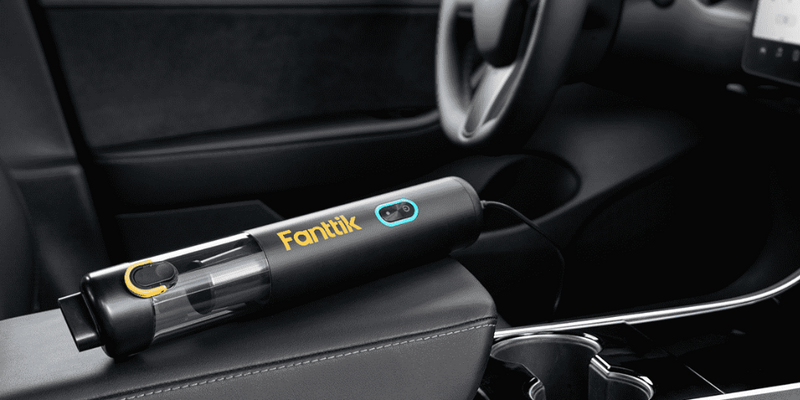
- Deep Clean First: Use a portable automotive vacuum to remove every grain of sand and dust from the seams. If you apply conditioner over dust, you are simply sealing in an abrasive.
- Small Sections: Work in 12x12 inch areas.
- Massage, Don't Coat: Use a microfiber applicator to work a dime-sized amount of product into the pores until it is no longer visible.
- Buff Dry: After 10 minutes, use a clean microfiber towel to buff the surface. If the towel comes away with residue, you used too much. The leather should feel supple and "satin," never slippery or shiny.
Advanced Hardware and Environmental Controls
For the proactive owner, technology provides additional layers of defense. Integrating portable tools and smart habits can significantly extend the life of your interior.
Portable Technology for Interior Care
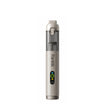
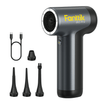
Maintaining a clean environment is a prerequisite for material health. We often see that interiors maintained with frequent, light cleanings using a cordless handheld vacuum survive summer much better than those that receive a "deep clean" only twice a year.
Removing organic debris (crumbs, skin oils, dirt) prevents these substances from "baking" into the upholstery. In the context of engineering trust, as discussed in The 2026 Modern Essential Gear Industry Report, the reliability of your maintenance gear—such as ensuring your portable vacuum has a high-efficiency filter to prevent redistributing fine dust—is a key part of the "credibility math" of vehicle care.
Window Films and UV Protection
While the World Health Organization (WHO) notes that glass blocks most UVB rays, it allows significant UVA transmission. UVA is the primary driver of "photo-aging" in leather. Installing a ceramic window tint with a high Total Solar Energy Rejection (TSER) rating can block up to 99% of UV rays, providing a permanent shield even when you forget to use a sunshade.
Modeling Note: Thermal Reduction via Ceramic Film
- Model Type: Sensitivity analysis of radiant heat transfer.
- Key Assumption: Vehicle is parked at a 90-degree angle to the sun.
- Parameter Table:
| Parameter | Standard Glass | Ceramic Tinted Glass | Unit |
|---|---|---|---|
| UV Transmission | ~25-30% | <1% | % |
| IR Rejection | ~15% | ~80-95% | % |
| Interior Surface Temp | 160 (71) | 125 (52) | °F (°C) |
| Cooling Time to 75°F | 15 | 6 | Minutes |
- Boundary Condition: Effectiveness decreases if windows are left "cracked" (open), as convective heat gain overrides radiant shielding.
Seasonal Transition: Preparing for the Heat
Interior preservation is a year-round discipline. To prepare for the summer peak, we recommend a "Deep Saturation" cycle in late spring. By applying a high-quality conditioner when ambient temperatures are moderate (60–75°F), you allow the fibers to absorb the maximum amount of lubricant before the heat-induced "sealing" of the pores occurs.
This proactive approach is much more effective than trying to "save" leather that has already reached the brittle stage in July. For those interested in broader seasonal care, we have previously explored how to protect portable tools from similar heat stressors, which follows the same principles of thermal buffering and insulated storage.
Summary Checklist for Summer Interior Protection
To ensure your vehicle's interior retains its value and structural integrity, follow this methodical checklist:
- Audit Your Materials: Identify which surfaces are natural leather vs. synthetic to select the correct chemical protectants.
- Install a Metallic Sunshade: Prioritize reflective layers over fabric to achieve the ~40°F temperature reduction.
- Vacuum Weekly: Use a portable automotive vacuum to remove abrasives from seams before they can grind into heated leather.
- Apply "Less is More": Avoid the greasy film that attracts dust; buff every surface until it is dry to the touch.
- Monitor Humidity: In extremely dry climates, consider a vapor-barrier cover for long-term outdoor parking.
- Check Thermal Stability: Ensure your conditioners are rated for high-temperature environments to avoid chemical breakdown.
By treating your vehicle's interior as a complex material system rather than just a seat, you can prevent the irreversible damage caused by summer's thermal cycles. Precision in care today is the only way to ensure the "new car" feel lasts for a decade or more.
Disclaimer: This article is for informational purposes only. Automotive material compositions vary significantly by manufacturer and model year. Always test cleaning and conditioning products on a small, inconspicuous area before full application. Consult your vehicle's owner manual for specific upholstery care requirements.
References
Continue reading
 Off-Gassing Risks: Preventing Battery Fumes in Hot Family Cars
A guide to preventing toxic battery fumes in family vehicles, covering H2S from lead-acid and overheating lithium-ion risks...
Off-Gassing Risks: Preventing Battery Fumes in Hot Family Cars
A guide to preventing toxic battery fumes in family vehicles, covering H2S from lead-acid and overheating lithium-ion risks...
 Food-Grade Standards: Identifying Safe Plastics in Family Gear
A guide to food-grade plastics for car interiors. Learn to choose materials that resist heat and prevent chemical...
Food-Grade Standards: Identifying Safe Plastics in Family Gear
A guide to food-grade plastics for car interiors. Learn to choose materials that resist heat and prevent chemical...
Leave a comment
This site is protected by hCaptcha and the hCaptcha Privacy Policy and Terms of Service apply.