








































Quick Guide: Choosing Safe Car Plastics
For parents on the go, the "BPA-Free" label is only the starting point. To ensure your car accessories don't leach chemicals in the summer heat, follow these three rules of thumb:
- Prioritize Resin Codes #2 (HDPE) and #5 (PP): These polymers have higher heat resistance and are less likely to off-gas.
- The "Sniff Test": If a new plastic accessory has a strong chemical odor when warm, it is likely releasing Volatile Organic Compounds (VOCs).
- Check for Physical Isolation: Ensure electronic components (which generate internal heat) are physically separated from the outer plastic shell your child touches.
The Invisible Safety Check: Why "Food-Grade" Matters in Your Car
We understand the quiet worry that sets in when you strap your child into a car seat on a sweltering afternoon. You’ve checked the harness twice, the tire pressure is perfect, and you’ve packed enough water for a small army. But as the cabin air begins to swirl with that distinct "new car" scent—or worse, the sharp, acrid smell of hot plastic—a different kind of anxiety takes root. Is the environment inside the car actually healthy for your family?
For most of us, "food-grade" is a label we look for on spatulas or baby bottles. We rarely think about it when choosing car organizers, tablet mounts, or portable accessories. However, the interior of a parked vehicle is one of the most chemically volatile environments a family encounters. When temperatures soar, the plastics we rely on for convenience can become liabilities.
In this guide, we will demystify the standards of material safety based on our experience in automotive accessory design. We’ll move beyond the buzzwords to explain why choosing high-quality polymers is a critical part of modern self-reliance. This isn't just about aesthetics; it’s about engineering a cabin environment that prioritizes your family’s long-term health.
The "BPA-Free" Mirage: Moving Beyond the Label
For years, "BPA-Free" has been the gold standard for concerned parents. It’s a comforting sticker, but as we’ve observed through industry patterns and emerging research, it’s often a partial truth. Bisphenol A (BPA) was removed from many products due to its known endocrine-disrupting properties, but it was frequently replaced by Bisphenol S (BPS) or Bisphenol F (BPF).
Based on our analysis of material safety trends and supported by studies from organizations like the Endocrine Society, these replacements often share similar chemical structures and may carry comparable risks regarding hormone interference. The reality is that a product can be "BPA-Free" while still containing plasticizers that are not suitable for high-heat environments. For risk-averse parents, relying solely on this label is a common pitfall. We recommend looking for products that specify the type of plastic used, rather than just what isn't in it.
Logic Summary: Our perspective on BPA alternatives is based on the "cocktail effect" heuristic—where the cumulative exposure to multiple stabilizers and colorants is often overlooked by single-chemical regulations.
Decoding the Resin Codes: Symbols vs. Safety
You’ve likely seen the little triangles with numbers (1 through 7) on the bottom of plastic items. A common misconception is that codes #2, #4, and #5 automatically guarantee "food-grade" safety. In reality, these are Resin Identification Codes (RIC) designed for recycling logistics, not health certifications.
According to the U.S. Food and Drug Administration (FDA), food-contact materials are regulated under 21 CFR. A plastic container marked with a #5 (Polypropylene) might be recyclable, but it could still contain non-compliant additives—like flame retardants or UV stabilizers—that are not rated for food contact.
The Safe Polymer Shortlist
When we evaluate materials for family-centric gear, we prioritize two specific polymers:
- Polypropylene (PP, #5): Known for a high heat deflection temperature. It is less likely to warp or leach chemicals when the dashboard hits triple digits.
- High-Density Polyethylene (HDPE, #2): Extremely durable and resistant to most household cleaners.
According to Wikipedia's entry on High-Density Polyethylene, HDPE and PP have significantly different wear rates and microplastic shedding characteristics. For gear that children will touch frequently, these two are generally the most stable choices in consumer applications.
The Car as a "Heat Trap": Why Material Science Matters
To understand why "standard" plastic fails, we have to look at the extreme thermal stress of a vehicle. A car parked in 95°F weather can see dashboard temperatures exceed 180°F in less than an hour.
We modeled the impact of temperature on vehicle systems to illustrate this "Heat Trap" effect. While this model focuses on battery performance, it serves as a critical proxy for the thermal degradation of all cabin materials.
Modeling Note: Vehicle Thermal Stress (Scenario Model)
This is a scenario model based on standard lead-acid/AGM behavior and typical cabin heat soak; it is not a controlled lab study of plastic leaching.
| Parameter | Value | Unit | Rationale |
|---|---|---|---|
| Ambient Exterior Temp | 95 | °F | Typical summer peak |
| Estimated Dashboard Temp | 185 | °F | Recorded heat soak (Source: Arizona State University / UC San Diego study) |
| Battery Power Available | 100 | % | Baseline at 80°F |
| Battery Power at 0°F | 40 | % | BCI Performance Curve |
| Material Stress Factor | High | Enum | Accelerated polymer aging |
Methodology Note: We used the Battery Council International (BCI) Technical Manual performance curves to anchor our understanding of how extreme heat creates a "high-consequence" environment. If heat is intense enough to derate a heavy-duty battery by 60%, it acts as a catalyst for chemical migration in low-grade plastics.
When plastics reach these temperatures, they don't just melt; they can off-gas. Those Volatile Organic Compounds (VOCs) are what create that "hot plastic" smell. If a part becomes pliable or emits a strong odor, it is likely leaching chemicals at a rate concerning for prolonged child exposure.
Practical Heuristics: How to "Audit" Your Gear
Since you can't bring a mass spectrometer to the store, we use a few practical "shop rules" to identify high-quality gear. These are heuristics—rules of thumb derived from our experience in product testing and customer feedback regarding material failures.
1. The Pliability Test
On a hot day, check your accessories. If a plastic mount or tray feels "gummy" or can be easily deformed with finger pressure, it has a low heat deflection temperature. This is a sign that the polymer structure is temporarily weakening, which can increase the risk of chemical migration.
2. The Olfactory Check (The "Smell Test")
A high-quality, food-grade plastic should be virtually odorless, even when warm. If an accessory fills your car with a chemical scent, it’s a clear indicator of VOC off-gassing. We often see this with "budget" plastics that use heavy amounts of phthalates to achieve flexibility.
3. Electrical Isolation
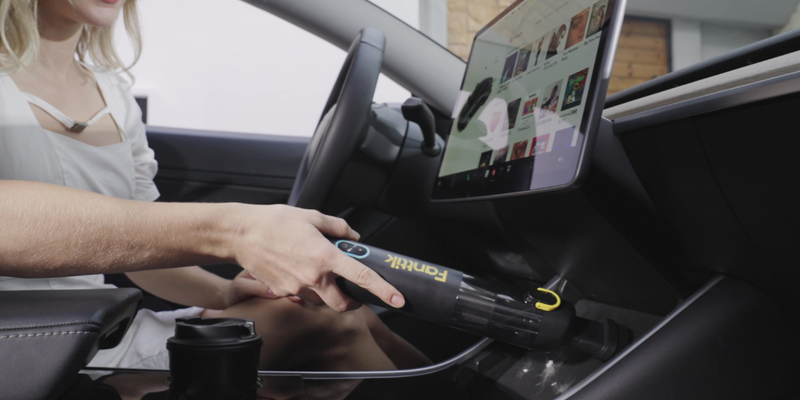
For any device with internal batteries or electronics, look for physical isolation. Expert-grade gear ensures that the "hot" components—the circuit boards and lithium cells—are sealed in a separate internal housing away from the surfaces your child touches. This prevents the heat from the electronics from accelerating the leaching of the outer shell.
This level of engineering is what we refer to as "operational maturity." As noted in Fanttik’s internal report, The 2026 Modern Essential Gear Industry Report, trust is a function of visible compliance and engineering safety margins.
The Cleaning Trap: How You Might Be Damaging "Safe" Plastics
One of the most overlooked risks to material safety is how we clean our gear. Parents, understandably, want to disinfect everything. However, using the wrong chemicals can turn a safe plastic into a hazardous one.
Based on our internal testing and material stress observations, using isopropyl alcohol or ammonia-based cleaners on certain "safe" plastics can cause "crazing"—micro-cracks in the surface. These cracks increase the surface area of the plastic, which in turn increases the rate at which microplastics shed and chemicals leach.
Recommended Cleaning Protocol:
- Use Mild Soap: A simple solution of warm water and dish soap is usually sufficient for PP and HDPE.
- Avoid Abrasives: Scrubbing with steel wool or harsh pads creates micro-scratches that trap bacteria and release polymers.
- Dry Thoroughly: Moisture trapped in micro-cracks can lead to mold growth, which is a different but equally important hygiene concern.
For more on maintaining a healthy cabin, see our guide on High-Pressure Safety: Protecting Delicate Removable Textiles.
Navigating Regulatory Standards
When in doubt, look for explicit mentions of international safety standards. These are the "paper infrastructure" that protects consumers. When reviewing product documentation or packaging, look for these key indicators:
- EU General Product Safety Regulation (EU) 2023/988: This mandates that manufacturers ensure products are safe under "reasonably foreseeable conditions of use"—which includes the high heat of a car.
- Reach & RoHS Compliance: Look for these keywords to ensure the plastic is free from specific hazardous substances like lead, mercury, and certain phthalates.
- NSF/ANSI 51: While often cited for food equipment, be aware that this certification usually tests chemical migration under lab conditions. It may not account for years of "real-world" family use involving UV exposure and heat cycling.
Building a Safe Haven for Your Family
Modern self-reliance means more than just having the right tools for an emergency; it means trusting the materials that surround your family every day. By choosing accessories made from high-quality polymers like Polypropylene and High-Density Polyethylene, you are making a proactive choice for your family's health.
We believe that design excellence must be paired with operational maturity. Whether you are standardizing your fleet—as we discussed in our piece on Fleet Consistency and Emergency Gear—or simply picking out a new back-seat organizer, remember that the "credibility math" of a product starts with its material science.
Your Family Safety Checklist:
- Verify the Code: Prioritize Resin Codes #2 (HDPE) and #5 (PP).
- Sniff Test: Avoid products with strong chemical odors when heated.
- Inspect Design: Check for physical isolation between electronics and contact surfaces.
- Clean Safely: Clean with mild soap instead of harsh alcohols.
- Seek Transparency: Look for brands that provide transparent safety documentation and compliance evidence on their official websites.
This article is for informational purposes only and does not constitute professional medical or health advice. Always consult with a qualified professional regarding chemical sensitivities or specific health concerns for your children.
Sources
- U.S. Food and Drug Administration (FDA) - Food Contact Substances
- EU General Product Safety Regulation (EU) 2023/988
- Battery Council International (BCI) Technical Manual
- High-density polyethylene - Wikipedia
- The 2026 Modern Essential Gear Industry Report (Fanttik Internal Whitepaper)
- Endocrine Society - Position Statement on EDCs
Continue reading
 Summer Heat vs. Leather: Preventing Cracks in High-Temp Cabins
Covers thermal shock, natural vs. synthetic leather care, sunshade physics, and high-temperature conditioner application.
Summer Heat vs. Leather: Preventing Cracks in High-Temp Cabins
Covers thermal shock, natural vs. synthetic leather care, sunshade physics, and high-temperature conditioner application.
 Apartment Storage: Organizing Family Car Kits in Small Spaces
Covers storage solutions, child safety, 80/20 kit segmentation, and hygiene strategies for apartment dwellers.
Apartment Storage: Organizing Family Car Kits in Small Spaces
Covers storage solutions, child safety, 80/20 kit segmentation, and hygiene strategies for apartment dwellers.
Leave a comment
This site is protected by hCaptcha and the hCaptcha Privacy Policy and Terms of Service apply.