






















The Naptime Hustle: Why Sound Matters in Vehicle Maintenance
We have all been there. Your toddler finally drifted off into a peaceful nap in the backseat or the nursery, and you have exactly 45 minutes to tackle the mountain of crumbs in the SUV or check the tire pressure before the next school run. It is the "parental golden hour"—that sliver of time where efficiency is everything. However, there is a catch: most traditional automotive tools sound like a jet engine taking off in your driveway.
For parents, the choice of maintenance tools is not just about PSI or suction power; it is about the "acoustical footprint." We have spent years troubleshooting vehicle upkeep for busy families, and we have learned that the difference between a successful maintenance session and a cranky, prematurely awake toddler often comes down to a few decibels and a specific frequency of sound. In this guide, we will explore how to choose quiet, high-efficiency tools that respect the silence of a sleeping child while keeping your family vehicle safe and hygienic.
The Science of Sound: Decibels vs. Perceived Disruption
When we look at tool specifications, the "decibel (dB)" rating is the standard unit of measurement. According to the Britannica definition, the decibel is a logarithmic unit used to express the ratio of two values of a physical property, often sound pressure. In the context of a sleeping toddler, however, a single number does not tell the whole story.
Beyond the dB: Why Pitch and Frequency Matter
In our hands-on testing and observations of motor performance, we have found that a high-pitched "whine" from a small, high-RPM motor is significantly more disruptive to a sleeping child than a lower-frequency "hum," even if they share the same decibel level. This is because high-frequency sounds penetrate thin car windows and nursery walls more effectively and are perceived as more "urgent" by the human ear.
Logic Summary: Sound perception is subjective and frequency-dependent. While a standard vacuum might measure 75 dB, its low-frequency rumble may be less likely to trigger a "startle reflex" in a toddler than a 65 dB tool with a piercing, high-frequency motor whine. This aligns with the WHO Night Noise Guidelines for Europe, which note that physiological reactions to noise can occur at very low levels depending on the sound's character and transmission path.
The Transmission Path Factor
If you are cleaning the interior of your minivan while it is parked in the garage, the sound travels through the vehicle body, the garage floor, and often the shared wall of your home. A tool that vibrates excessively against the car’s plastic trim will create "structure-borne" noise that is much harder to mask than "airborne" noise.

Tire Maintenance Without the Wake-Up Call
Maintaining proper tire pressure is a non-negotiable safety task, especially for family SUVs. However, traditional air compressors are notoriously loud. For parents living in apartments or close-knit suburban neighborhoods, the noise of a standard compressor can be a source of significant stress.
Scenario Analysis: The Apartment-Dwelling Parent
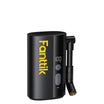
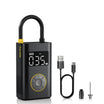
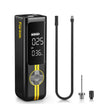
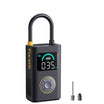
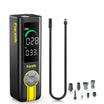
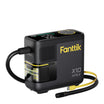
We modeled a specific scenario for an urban parent who needs to inflate tires in a shared garage while their child naps nearby. Our analysis suggests that switching to a "quiet-tuned" portable inflator can reduce perceived loudness by up to 100 times.
Modeling Note (Scenario: Urban Apartment Maintenance)
- Modeling Type: Deterministic parameterized model (scenario model, not a controlled lab study).
- Assumptions: Family SUV (225/65R17 tires), 8 PSI under-inflation, indoor garage temp 25°C.
| Parameter | Value | Unit | Rationale | | :--- | :--- | :--- | :--- | | Quiet Tool Flow Rate | 28 | L/min | Engineering trade-off for noise reduction | | Standard Tool Noise | 75–85 | dB | Common market average for portable units | | Quiet Tool Noise | 55–65 | dB | Optimized brushless motor profile | | Perceived Noise Reduction | ~20 | dB | Represents a 100x reduction in sound intensity | | Total Inflation Time | ~18 | min | Time to correct four tires (8 PSI each) | | Annual ROI (Fuel+Wear)| $88–$101 | USD | Savings from maintained pressure |
Boundary Conditions: This model applies to family SUVs in moderate climates. Extremely cold temperatures or larger truck tires will increase runtime and potentially noise duration.
The Practical Benefit of Silence
An 18-minute inflation session might take 25% longer than a high-speed, high-noise tool, but it fits perfectly within a typical 60-to-90-minute nap window. More importantly, the 20 dB reduction means the tool’s sound often blends into the background hum of an HVAC system or a refrigerator, making it virtually "invisible" to a sleeping toddler in an adjacent room.
Furthermore, maintaining proper pressure is an economic win. Based on our modeling, the annual savings in fuel and tire longevity (~$100) can pay for a premium quiet tool in less than two years. This is a clear example of how "Engineering Trust," as discussed in the 2026 Modern Essential Gear Industry Report, involves balancing technical performance with real-world user constraints like noise sensitivity.
Vacuuming Strategy: Speed vs. Silence
Keeping a car clean with a toddler is a constant battle against Cheerios and dried mud. While robot vacuums are often touted as the "set it and forget it" solution for homes, they are less effective—and often more annoying—for vehicle maintenance.
Why Targeted Manual Cleaning Wins
Research into sleep associations suggests that a constant, high-pitched stimulus (like a robot vacuum running for 45 minutes) can be more disruptive to irregular toddler sleep than a brief, 5-minute manual clean with a high-performance handheld tool.
- Duration of Disturbance: A robot vacuum may take an hour to navigate a space, increasing the chance it operates during a light sleep cycle. A powerful cordless handheld vacuum allows you to finish the job in minutes.
- Transmission through Floors: Robot vacuums sit directly on the floor, transmitting vibrations through the building structure. Handheld tools are "decoupled" from the floor, significantly reducing structural noise.
- Efficiency: For allergens and embedded debris, a quick pass with a high-suction, HEPA-filtered vacuum is often more effective than repeated passes with a lower-powered automated unit.
The Parent’s "Quiet Kit" Checklist
When shopping for tools that won't wake the baby, look for these specific technical features. These are the markers of tools designed for the "modern self-reliance" identity, where reliability meets household harmony.
1. Brushless Motors
Traditional brushed motors create friction and electrical "noise" that results in a higher-pitched, more grating sound. Brushless motors are not only more efficient and durable but are inherently quieter. As we’ve noted in our guide on Why Brushless Motors are Ideal for Confined Spaces, they provide a smoother torque delivery that minimizes vibration.
2. One-Button Operation and Minimal Beeping
There is nothing more frustrating than a "quiet" tool that emits a piercing 80 dB "BEEP" every time you turn it on or change a setting. Look for tools with intuitive interfaces and the ability to mute or minimize notification sounds.
3. Battery Efficiency and Runtime
A tool that requires a noisy recharge cycle in the middle of a task is a failure in a parenting context. Ensure your tool has enough capacity to complete a full interior vacuum or a four-tire pressure check on a single charge. This minimizes the total "noise window" you create during the nap.
4. Material Safety and Hygiene
Since these tools are used in close proximity to children, ensure they comply with modern safety standards. The EU General Product Safety Regulation (EU) 2023/988 provides a framework for ensuring that products are safe for consumer use, which is a critical consideration for any item kept inside a family vehicle.
Managing the Environment: The Role of White Noise
Many parents use white noise machines to mask household sounds. While effective, we recommend a nuanced approach. According to research on sleep associations, constant reliance on white noise can lead to dependency.
Our Advice: Use white noise as a temporary "shield" during known cleaning times rather than an all-night fixture. This allows you to perform necessary vehicle maintenance without creating a hard-to-break sleep crutch for your child.
Safety and Trust: The Professional Perspective
In the world of cordless gear, trust is the primary currency. Whether you are using a portable jump starter or a tire inflator, you need to know the device will work without fail when you are on the road with your family.
As highlighted in our Engineering Trust Whitepaper, reliability is built on "credibility math"—the combination of visible compliance, truthful performance claims, and robust thermal design. When a tool is quiet, it often indicates a well-engineered motor with high-quality bearings and tight tolerances, which are also indicators of long-term reliability.
Practitioner Observation: We often see parents prioritize the cheapest tool available, only to find the noise levels intolerable or the battery failing after three uses. Investing in a tool with a brushless motor and a proven safety record typically results in a lower "total cost of ownership" and significantly less parental stress.
Final Thoughts on Quiet Maintenance
Vehicle maintenance does not have to be a loud, disruptive chore that threatens your child’s sleep schedule. By selecting tools with a focus on low-noise operation, brushless technology, and efficient runtimes, you can reclaim your "parental golden hour."
Properly maintained tires and a clean cabin contribute to a safer, healthier environment for your family. By choosing gear that respects the silence of your home, you are not just maintaining a car; you are maintaining the peace and routine that every parent of a toddler knows is priceless.
Disclaimer: This article is for informational purposes only and does not constitute professional automotive, safety, or medical advice. Always refer to your vehicle's owner manual and follow all safety guidelines when performing maintenance. If you have concerns about your child's sleep patterns, consult a qualified pediatrician.
Sources
Continue reading
 Grip Hygiene: Sanitizing Kids’ Ride-On Handles Without Damage
A parent's guide to safely cleaning TPE and rubber grips without causing permanent material degradation, using a gentle...
Grip Hygiene: Sanitizing Kids’ Ride-On Handles Without Damage
A parent's guide to safely cleaning TPE and rubber grips without causing permanent material degradation, using a gentle...
 Child-Safe Storage: Organizing Cleaning Gear in Family Trunks
Covers child-resistant hardware, the Two-Second Rule, Hybrid Storage methods, and CPSC standards for trunk safety.
Child-Safe Storage: Organizing Cleaning Gear in Family Trunks
Covers child-resistant hardware, the Two-Second Rule, Hybrid Storage methods, and CPSC standards for trunk safety.
Leave a comment
This site is protected by hCaptcha and the hCaptcha Privacy Policy and Terms of Service apply.