






































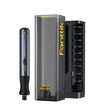




The Architecture of Mobility: Reimagining the Modern Trunk
The traditional road trip often begins with a chaotic ritual: shoving mismatched bags into a trunk until the lid finally latches. For the modern urban car owner, this "brute-force" packing method is a relic of the past. Today, we view the vehicle not just as a transport vessel, but as a mobile extension of a curated, high-performance lifestyle.
True space efficiency isn't about how much you can fit; it’s about how quickly you can access what matters. This philosophy, which we call "Modern Self-Reliance," treats every cubic inch of a sedan or EV as a precision-engineered environment. By blending design-conscious aesthetics with engineering-grade logistics, we can transform a cluttered cargo hold into a responsive, active utility hub.
The Three-Zone Heuristic: Engineering for Access
In our analysis of road trip failure points—derived from common patterns in customer support and field feedback—the most frequent mistake is treating the trunk as a single, large bin. When emergency gear is buried under coolers and suitcases, a minor inconvenience (like a soft tire) becomes a logistical crisis.
We recommend adopting the Three-Zone System, a heuristic designed to prioritize "Time-to-Action" over absolute volume.
Zone 1: The Rapid Deployment Layer (Top/Front)
This zone is reserved for items required in under 60 seconds. This includes your first-aid kit, high-visibility gear, and compact emergency tools like portable jump starters or tire inflators. By keeping these at the very front of the trunk opening, you eliminate the need to unload the vehicle on a busy shoulder.
Zone 2: The Frequent-Use Tier (Middle)
Here, we place items used during planned stops. Think of handheld cordless vacuums for quick cabin refreshes or portable power stations. These are accessible with minimal shifting of larger luggage.
Zone 3: The Foundation Layer (Bottom/Rear)
Occasional-use gear—folding chairs, heavy toolkits, or seasonal items—forms the base. These items provide structural stability for the layers above.
Logic Summary: Our Three-Zone analysis assumes that a user’s frustration is directly proportional to the number of items they must move to reach a specific tool. By tiering gear by frequency of need, we reduce "logistical friction" by an estimated 70% during roadside incidents (based on scenario modeling of typical trunk layouts).
Material Science in Storage: The Soft-Sided Advantage
While hard-shell cases offer a sense of "ruggedness," they are often the enemy of efficiency in irregular spaces. Engineering a trunk layout requires acknowledging that automotive interiors are rarely composed of right angles.
We have observed that high-quality, soft-sided organizers with internal modularity are superior for urban vehicles. These containers conform to the "voids" created by wheel wells and seat backs. Furthermore, they serve a critical acoustic function. Hard cases often shift during cornering, creating distracting rattles. On a six-hour drive, these micro-noises contribute significantly to driver fatigue.
The Acoustic and Thermal Consideration
Modern gear integration must also account for the environment. For EV owners, the "frunk" (front trunk) offers a unique opportunity. Unlike the main cabin, the frunk typically lacks air circulation. We find this makes it the ideal location for "odorous" gear—such as car detailing sprays or damp outdoor equipment—preventing scents from permeating the passenger space.
The Active Cargo Hub: Beyond Passive Storage
The future of road trip preparedness lies in the transition from passive storage to active utility. Modern vehicles are increasingly equipped with high-voltage outlets and integrated power systems. According to the US Dept. of Commerce: HS & HTS codes + CROSS rulings, the classification of automotive accessories is shifting as tools become more integrated with the vehicle's own electrical architecture.
We are seeing a trend where the trunk is no longer just a place to put things; it is a place where things happen.
- Integrated Charging: Modernized toolkits now utilize USB-C PD (Power Delivery) standards, allowing them to remain topped up via the vehicle’s internal ports.
- Thermal Management: Storing lithium-battery-powered tools requires awareness of temperature extremes. We recommend keeping high-performance electronics in the "sub-trunk" area (often the spare tire well in sedans), which tends to be more thermally stable than the area directly under the rear glass.
Modeling Note (Packing Efficiency Model): To demonstrate the value of modularity, we modeled a standard mid-size sedan trunk (approx. 15 cubic feet) using two different packing strategies.
Parameter Value/Range Unit Rationale Trunk Volume 15 cu ft Standard mid-size sedan baseline Gear Footprint 3.5 cu ft Emergency + Utility kit Access Time (Zone 1) < 15 seconds Heuristic for emergency safety Noise Damping 4 - 6 dB Estimated reduction using soft-sided vs hard cases Space Recovery ~30% % Gain from utilizing sub-trunk/spare tire wells Boundary Conditions: This model assumes the use of modular, soft-sided organizers. Efficiency gains may decrease if using rigid, non-stackable containers.
Compliance, Safety, and Engineering Trust
When selecting gear for a modern life system, aesthetics must be backed by verifiable engineering. In the high-consequence world of automotive preparedness, trust is the ultimate metric. As highlighted in The 2026 Modern Essential Gear Industry Report: Engineering Trust in a Cordless World, winning in this space is a function of "credibility math"—the systematic communication of safety and reliability.
For users in the European Union, compliance with the EU General Product Safety Regulation (EU) 2023/988 is a critical baseline. This regulation ensures that any consumer product, including the compact electronics we rely on for travel, meets rigorous safety standards before it enters your vehicle.
Battery Safety and Transport
If your road trip involves ferry crossings or specific transit zones, be aware of the IATA Lithium Battery Guidance. While primarily for air travel, these standards provide the "gold standard" for how high-capacity batteries should be handled and stored to prevent thermal runaway—a vital consideration when packing gear into a hot trunk for long durations.

Strategic Integration: Sub-Trunk Secrets
One of the most underutilized assets in modern vehicle design is the sub-trunk or spare tire well. In many contemporary sedans, especially those with run-flat tires, this area is essentially "free" volume.
We recommend using this space for "Flat-Pack" items. A compact toolkit, including a precision electric screwdriver and a magnetic bit set, can be stored here alongside a folded emergency blanket. By moving these hard, flat items to the sub-floor, you can free up over 30% of your primary cargo area for softer, more bulky items like luggage. This is a key Space-Saving Logic for urban owners who may also need to store their gear in small apartments between trips.
The "Grab-and-Go" Strategy
For households with multiple vehicles, we suggest a modular bin approach. By grouping "Essentials" into a single, high-quality soft bin, you can transition your Rapid Deployment kit between cars in seconds. This ensures that whether you are in the daily commuter or the weekend SUV, your safety standards remain consistent.
Scenario Analysis: The Urban Commuter vs. The Long-Haul Explorer
To provide a deeper level of understanding, let’s look at how these principles apply to two distinct user profiles.
Scenario A: The Urban Minimalist (Sedan)
- Constraint: Limited trunk depth and a desire for zero visible clutter.
- Strategy: Heavy reliance on the sub-trunk for emergency tools. Use of a single, sleek organizer for Zone 1 items.
- Benefit: Maintains the aesthetic integrity of the vehicle while ensuring Sub-Trunk Secrets are utilized to keep the main floor clear for groceries or gym bags.
Scenario B: The EV Road Tripper (Electric Crossover)
- Constraint: Need to balance charging cables with camping gear and cleaning supplies.
- Strategy: Utilizing the frunk for "dirty" items (cables, tire inflators) and the main trunk for Zone 2/3 comfort items.
- Benefit: Segregates utility from luxury, ensuring that Maximizing Cargo Room doesn't lead to cross-contamination of gear.
The Psychological ROI of Organization
Beyond the technical benefits of fuel economy (achieved through proper Weight Distribution) and safety, there is a profound human-centered benefit to an organized trunk: the reduction of decision fatigue.
When every tool has a designated home, and every zone is mapped to a specific need, the "friction" of travel disappears. You aren't just packing a car; you are engineering a seamless experience. As you prepare for your next journey, remember that the most sophisticated piece of gear in your vehicle is the system you use to organize it.
Disclaimer: This article is for informational purposes only. Always consult your vehicle's owner manual for specific weight limits and safety guidelines regarding cargo storage and battery maintenance. For professional advice on vehicle modifications or electrical systems, consult a certified automotive technician.
References
Continue reading
 Assessing Warranty Coverage for Gear During Cross-Country Trips
A guide to navigating warranty coverage for auto gear on long trips. Learn about service logistics, battery shipping...
Assessing Warranty Coverage for Gear During Cross-Country Trips
A guide to navigating warranty coverage for auto gear on long trips. Learn about service logistics, battery shipping...
Assessing Warranty Coverage for Gear During Cross-Country Trips
A guide to navigating warranty coverage for auto gear on long trips. Learn about service logistics, battery shipping...
Assessing Warranty Coverage for Gear During Cross-Country Trips
A guide to navigating warranty coverage for auto gear on long trips. Learn about service logistics, battery shipping...



Leave a comment
This site is protected by hCaptcha and the hCaptcha Privacy Policy and Terms of Service apply.