
























Quick Guide: Managing Gear Failure on the Road
If you are currently on a trip and a critical piece of gear has failed, follow these immediate steps before attempting a DIY fix:
- Stop and Document: Take a photo of the device’s error code (if any) and its current environment (e.g., plugged into the car, in the snow).
- Locate Your "Digital Passport": Find your digital receipt or serial number photo.
- Check for "Advance Replacement": Before visiting a local shop, call the manufacturer to see if they can ship a replacement to your next destination (hotel/campsite).
- Verify the "Authorized" Map: Use the manufacturer’s website to find the nearest authorized service center; a 50-mile detour is often better than a voided warranty.
- Secure the Battery: If shipping is required, do not pack a damaged lithium battery without specific HazMat instructions from the carrier.
The Hidden Logistics of Warranty Coverage on the Road
We have all been there: you are three states away from home, the sun is setting over a remote mountain pass, and suddenly, a piece of essential gear—perhaps your tire inflator or jump starter—decides to stop working. In that moment, the "limited lifetime warranty" printed on the box feels very far away. We often assume that a warranty is a universal safety net, a digital promise that follows us across borders and time zones. However, for those of us who value modern self-reliance, the reality of interstate warranty service is far more complex than a simple sticker.
When we are at home, a warranty claim is a minor inconvenience. On a cross-country trip, it can become a logistical nightmare. Between hazardous materials shipping restrictions and the "authorized service center" trap, getting your gear fixed while on the move requires more than just a receipt; it requires a strategy. As we discuss in our recent white paper, The 2026 Modern Essential Gear Industry Report, true reliability isn't just about how a tool is built—it’s about the transparency and predictability of the support system behind it.

The "Authorized Service Center" and Geographical Realities
One of the most common pitfalls we see in the automotive gear world is the "Authorized Service Center" clause. Most manufacturers require that warranty repairs be performed only by their specific network of technicians. According to the legal definition of Authorized, this means someone specifically empowered by the manufacturer to act on their behalf.
The "Local Repair" Trap
Taking your gear to a local, non-authorized mechanic might seem like the practical solution, but it frequently voids your remaining warranty. While regulations like the Magnuson-Moss Warranty Act in the U.S. offer some protections against "tie-in" sales, manufacturers often successfully argue that they cannot guarantee the safety or quality of a third-party repair on complex electronics.
This is especially critical for lithium-ion devices where thermal management is a safety priority. If a local shop opens the casing, the manufacturer’s liability for future fires or failures typically ends immediately.
Expert Tip: The "State X" Support Script Before you leave, we recommend contacting customer service via chat to get a written record. Use this template:
"I am traveling through [State/Region] next week. If this product fails while I am away from home, does your policy allow for 'Advance Replacement' to a temporary address, or must I visit an authorized center in person? If the latter, where is your nearest center to [Destination]?"
Documentation: Your Digital Defense System
In our experience handling warranty patterns—based on common observations from support and return handling rather than a controlled lab study—the single biggest point of failure for a traveler is the lack of accessible proof of purchase.
To maintain your rights, treat your documentation as part of your emergency kit. We suggest a "Digital Tool Passport":
- Photo of the Receipt: Paper receipts fade in hot gloveboxes. Take a high-resolution photo immediately.
- Serial Number Capture: Take a photo of the product’s serial number plate. These are often small and can be worn away during heavy use.
- Cloud Storage: Save these to a dedicated folder in a cloud drive. Tools like Files by Google allow you to access these offline if you lose cell service.
By having these ready, you eliminate the "verification delay" that can keep you stuck for days. For more on this, see our guide on Documented Tool Upkeep.
The Battery Bottleneck: Shipping Hazardous Materials
This is perhaps the most overlooked hurdle for modern travelers. Almost all high-performance road trip gear today—from cordless tire inflators to portable soldering irons—runs on lithium-ion batteries. These are classified as "Hazardous Materials" (HazMat) for transport.
If your gear fails and the manufacturer asks you to ship it back, you may find that standard mail carriers refuse the package. According to the IATA Lithium Battery Guidance, there are strict regulations (such as PI 965 and PI 967) regarding the State of Charge (SoC) and packaging.
Key Shipping Constraints:
- Cost: The cost of HazMat-certified shipping can sometimes approach the cost of the tool itself.
- Access: Small-town shipping outlets may not have the certification to accept "damaged or defective" lithium batteries.
- The Workaround: Look for manufacturers that offer "Advance Replacement" programs. In this scenario, the company sends a replacement unit to your current location (like a hotel) upon a credit card hold. You then return the faulty unit later, often using a pre-paid label that includes the necessary HazMat declarations.
Modeling the "Modern Self-Reliance" Advantage
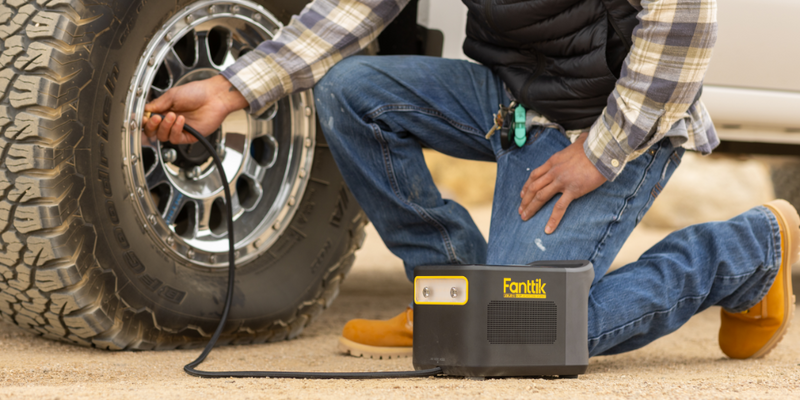
To understand why warranty portability and gear reliability matter, we modeled a specific scenario: a traveler performing an emergency repair in 15°F winter conditions.
Scenario Modeling: The Prepared Winter Traveler
Heuristic Methodology Note: The following figures are deterministic estimates intended as practical "rules of thumb" for travelers.
- Amperage (388 A): Based on the standard cold-cranking requirement for a 3.5L V6 engine at 15°F, assuming a 20% increase in oil viscosity resistance.
- Safety Margin (2.3x): Calculated as the ratio of a 900A peak-rated jump starter to the 388A requirement.
- Jump Redundancy (5-6 attempts): Based on a standard 20,000mAh (74Wh) internal battery at 60% State of Charge (SoC), accounting for thermal efficiency loss in cold weather.
| Parameter | Value/Range | Unit | Rationale |
|---|---|---|---|
| Engine Displacement | 3.5 | Liters | Common mid-size SUV/V6 |
| Ambient Temperature | 15 | °F | Typical northern winter travel |
| Battery CCA Rating | 550 | Amps | Standard OEM battery |
| Manual Repair Time | 18 | Seconds/Screw | Difficulty due to cold/gloves |
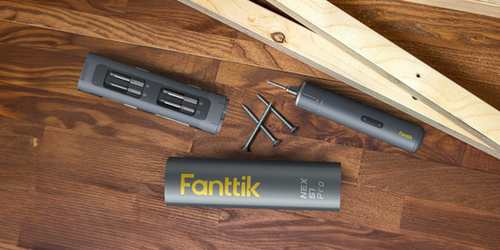
| Electric Repair Time | 4 | Seconds/Screw | High-torque electric driver |
Insight 1: Emergency Repair Efficiency For a field repair involving 60 screws (common when accessing engine covers), an electric screwdriver saves approximately 14 minutes of exposure. In extreme cold, this prevents finger numbness that can lead to dropped parts or injury.
Insight 2: The Winter Confidence Score At 15°F, our model shows a 2.3x safety margin for high-capacity jump starters. This margin is what provides the psychological security needed when you are miles from the nearest service station. If your gear's warranty doesn't cover "cold-start failure," that margin is your only real insurance.
Insight 3: Multiple Jump Redundancy Our modeling estimates 5 to 6 jump attempts in these conditions. This redundancy is critical if you have a stubborn engine or if you encounter another stranded traveler.
Weather Exclusions: The "Acts of God" Clause
A frustrating reality of many warranties is the "environmental damage" exclusion. Many contracts explicitly exclude failures caused by "extreme weather conditions."
During a cross-country trip, you might encounter a heatwave in the desert or a deep freeze in the mountains. If your tire inflator’s internal seals degrade because it was stored in a trunk reaching 140°F, the manufacturer might classify this as "misuse."
How to Protect Yourself:
- Look for Thermal Certifications: Seek gear that meets ISO or IEC thermal stress tests.
- Storage Matters: During extreme weather, keep sensitive lithium-powered gear in the climate-controlled cabin rather than the trunk.
- Check the Manual: If the manual lists an operating range (e.g., -4°F to 140°F), the manufacturer is legally obligated to honor the warranty within those bounds under the FTC Endorsement Guides.

Regulatory Standards and Your Protection
While you are traveling, you are protected by a patchwork of regulations:
- Accuracy Standards: For tire inflators, the NIST Handbook 44 provides the framework for device requirements.
- Safety Compliance: Premium brands often follow the EU General Product Safety Regulation (EU) 2023/988, which sets a high bar for manufacturer obligations globally.
The 3-Minute Pre-Trip Warranty Audit
Before you hit the road, perform this quick audit:
- Service Area Check: Is the warranty valid in all 50 states? (Beware of "gray market" items).
- Support Speed: Does the company have a 24/7 live chat? A 3-day email response time is useless in an emergency.
- The Dry Run: Test your jump starter and inflator today. Never take a tool on a trip for the first time without verifying it works.
- Confirm "Advance Replacement": Ask customer support specifically: "Do you ship replacements to hotels for travelers?"
Building Trust Through Preparedness
Ultimately, a warranty is a contract of trust. For the self-reliant traveler, that trust is built on a foundation of clear documentation, an understanding of shipping logistics, and the choice of gear backed by transparent standards. By taking these steps, you transform your warranty from a piece of paper into a functional tool for your journey.
Disclaimer: This article is for informational purposes only and does not constitute professional legal or insurance advice. Warranty terms vary significantly by manufacturer and region; always read your specific product's warranty statement in full.
Sources & References
Continue reading
 Space-Efficient Packing for Modern Road Trips
Covers the Three-Zone Heuristic, material science of organizers, EV-specific strategies, and key safety regulations for modern travel.
Space-Efficient Packing for Modern Road Trips
Covers the Three-Zone Heuristic, material science of organizers, EV-specific strategies, and key safety regulations for modern travel.
Space-Efficient Packing for Modern Road Trips
Covers the Three-Zone Heuristic, material science of organizers, EV-specific strategies, and key safety regulations for modern travel.
Space-Efficient Packing for Modern Road Trips
Covers the Three-Zone Heuristic, material science of organizers, EV-specific strategies, and key safety regulations for modern travel.


Leave a comment
This site is protected by hCaptcha and the hCaptcha Privacy Policy and Terms of Service apply.