










































Surface Metrology: Evaluating Finish Durability in Tools
In the world of modern essential gear, the boundary between professional-grade utility and consumer-focused aesthetics has blurred. For the detail-oriented DIYer, a tool is no longer just a mechanical asset; it is a reflection of a "modern self-reliance" identity. However, this shift toward premium design introduces a critical engineering challenge: ensuring that a "sleek" finish does not compromise long-term durability in harsh workshop environments.
We often observe a skepticism among prosumers regarding tools that look "too good to be used." This skepticism is well-founded. A finish that fails under the stress of brake cleaner or scratches the moment it touches a steel workbench is a failure of engineering, not just aesthetics. To address this, we must look at Surface Metrology—the science of measuring surface textures and coatings—to understand how to bridge the gap between a "modern essential" look and professional-grade resilience.
As noted in The 2026 Modern Essential Gear Industry Report: Engineering Trust in a Cordless World, trust is a function of "credibility math." In this article, we will break down the mechanics of finish durability, from the microscopic parameters of roughness to the practical impact of storage habits on tool longevity.
The Science of the Surface: Moving Beyond Roughness (Ra)
When discussing tool finishes, most manufacturers refer to "roughness," specifically the Ra (Arithmetic Average Roughness) value. While Ra is a standard industry metric, our analysis suggests it is a lagging indicator of actual functional performance for non-machining tools.
Why Ra is Insufficient
Ra measures the average height of surface peaks and valleys along a single 2D line. However, tool surfaces operate in 3D environments. According to research on Areal Topography Parameters in Surface Metrology, 3D areal parameters like Sa (Average Height), Sdq (Root Mean Square Slope), and Sdr (Developed Interfacial Area Ratio) are far more predictive of how a tool will behave in your hand.
- Sdr (Developed Interfacial Area Ratio): This parameter quantifies the additional surface area provided by the texture. In practical terms, a higher Sdr allows for better lubricant retention or grip friction, which Ra completely ignores.
- Sdq (Root Mean Square Slope): This helps predict how a surface will reflect light. A tool with a high Sdq may look "matte" but could be more susceptible to "polishing" wear over time.
Logic Summary: Our evaluation of surface durability assumes that functional performance (grip and wear resistance) is driven by 3D topography rather than 2D linear averages. We use these areal parameters to model how a finish will degrade over 1,000 use cycles.
The Cost Barrier of Precision
One reason many consumer tools stick to simple Ra measurements is economic. Advanced 3D metrology, such as White Light Interferometry, requires high-cost equipment that is often deemed overkill for the shop floor. This creates a data gap where "premium" looks are not always backed by "premium" surface engineering. At our repair bench, we find that tools engineered with a focus on 3D topography maintain their "feel" much longer than those that only meet a basic Ra spec.

Coating Durability: Anodized vs. Painted vs. PVD
Choosing the right coating is a trade-off between chemical resistance, scratch hardness, and aesthetic flexibility. For prosumer tools like the Fanttik S2 Pro Cordless Electric Screwdriver, the choice of finish directly impacts its performance in household and automotive repairs.
Matte Anodized Finishes
In practice, a matte anodized finish often shows fewer fine scratches than a glossy painted one. The anodization process creates an oxide layer that is integrated into the metal substrate, making it extremely hard.
- The "Gotcha": Anodized surfaces can be more susceptible to discoloration from prolonged exposure to certain solvents like brake cleaner or heavy-duty degreasers.
- Expert Tip: If you use your tools for automotive work involving harsh chemicals, look for "hard-coat" anodizing (Type III), which offers superior chemical resistance compared to standard decorative anodizing.
Painted and Powder-Coated Finishes
Painted finishes allow for vibrant colors and a "modern" feel, but they are often the first to fail under mechanical stress.
- Abrasion Risk: Constant friction against other tools in a bag can lead to "chipping," which exposes the underlying metal to oxidation.
- User Insight: We have seen that textured powder coatings provide better grip than smooth paint, but they are harder to clean once grease gets trapped in the "valleys" of the texture.
PVD (Physical Vapor Deposition)
PVD is often seen in high-end tool bits and precision instruments. Interestingly, PVD-coated tools often undergo a "running-in" phase. While conventional wisdom suggests that surface roughness increases with wear, for PVD coatings, the initial wear phase often smooths out microscopic asperities (rough edges), actually improving performance before a critical breach occurs.
Understanding these mechanisms is vital when Evaluating Material Durability in Design-Forward DIY Tools.
Standardized Testing: How "Toughness" is Measured
To provide objective data, we align our durability assessments with international standards. These tests simulate the "stresses" that cause a finish to fail.
1. Abrasion Resistance (ASTM D4060)
The ASTM D4060 Taber Abrasion Test is the gold standard for measuring how well a coating resists wear. A weighted abrasive wheel is rotated over the surface, and the "mass loss" is measured after a set number of cycles.
- Practical Application: This simulates the tool being pulled in and out of a holster or sliding across a workbench thousands of times.
2. Corrosion Resistance (ASTM B117)
The ASTM B117 Salt Spray Test evaluates how well a finish protects the tool from rust in humid or salty environments (like a coastal garage).
- Why it matters: Even a small scratch in a finish can become a "seed" for corrosion if the coating doesn't have good interfacial bonding.
3. Weathering and UV Resistance (ASTM G155)
ASTM G155 Xenon Arc testing uses high-intensity light to simulate years of sun exposure. This is particularly critical for the rubberized grips found on many DIY tools.
Methodology Note (Surface Degradation Model): To estimate the lifecycle of a tool finish, we use a scenario-based model that assumes "Heavy DIY Usage."
Parameter Value/Range Unit Rationale Mechanical Abrasion 500 - 1,000 Taber Cycles Simulates 3 years of tool bag storage Chemical Exposure 2 - 4 Hours (Total) Exposure to common solvents (Brake cleaner) UV Exposure 150 - 200 Hours Equivalent to outdoor storage in high-UV regions Surface Roughness (Sa) < 1.0 µm Target for "premium feel" vs. grip Coating Thickness 15 - 25 µm Standard for durable decorative coatings Note: This is a hypothetical scenario model based on industry heuristics, not a specific lab study of a single product.
Common "Friction Points" in Finish Durability
Beyond the lab, real-world usage reveals specific "gotchas" that can ruin a premium tool's finish prematurely.
The Degradation of Rubberized Grips
Many tools use textured rubberized grips for ergonomics and control. However, based on patterns from customer feedback and warranty handling, these grips can degrade and become "tacky" or sticky after years of exposure to UV light and skin oils. This is a tribochemical reaction where the polymers break down.
- The Fix: Avoid leaving tools in direct sunlight (e.g., on a dashboard). If a grip starts to feel slightly tacky, a wipe-down with isopropyl alcohol can sometimes remove the degraded surface layer, though this is a temporary fix.
Storage Abrasion: The Silent Finisher
A common mistake is storing precision tools, such as the Fanttik E2 MAX Precision Electric Screwdriver, loosely in a toolbox with metal bits. The constant vibration and abrasion against other tools can quickly wear down even a durable coating.
- Pro Tip: Use the provided magnetic storage cases or dedicated organizers. This isn't just for neatness; it’s about Protecting Device LCD Displays and surface finishes from unnecessary micro-abrasions.
Chemical Sensitivity
While metal housings are tough, the internal components and seals may not be. When using tools like the Fanttik F2 Master Cordless Rotary Tool Kit for automotive detailing or carving, be mindful of the cleaning agents used. Harsh chemicals can seep into seams and break down the protective layers of the internal electronics.

Advanced Materials: Ceramics and Composites
As tools move toward higher performance, we see the integration of advanced ceramics. However, Investigating Surface Morphology in Ceramics shows that traditional Ra-based metrics are nearly meaningless here. Ceramics fail through microfractures and subsurface damage rather than surface wear. If your DIY kit includes ceramic-coated components, the focus should be on impact protection rather than abrasion resistance.
This is a key consideration when deciding When to Upgrade Your DIY Kit for Professional Commissions.
Practical Maintenance for Finish Longevity
Preserving a tool’s finish is more about consistency than "deep cleaning." For prosumer gear, a simple maintenance routine can extend the life of the finish by years.
- The Post-Use Wipe: A simple wipe-down with a dry, lint-free cloth after use is the most effective way to remove dust and hand oils. These oils can be mildly acidic and, over time, will break down protective coatings.
- Avoid Harsh Chemicals: Using heavy degreasers for "routine" cleaning is a mistake. These chemicals can strip the protective waxes or oils used in factory finishes. Stick to mild soap and water only when absolutely necessary.
- Temperature Control: Rapid temperature swings (e.g., moving a tool from a cold garage to a warm house) can cause condensation. This moisture can get trapped under "soft-touch" coatings, leading to peeling.
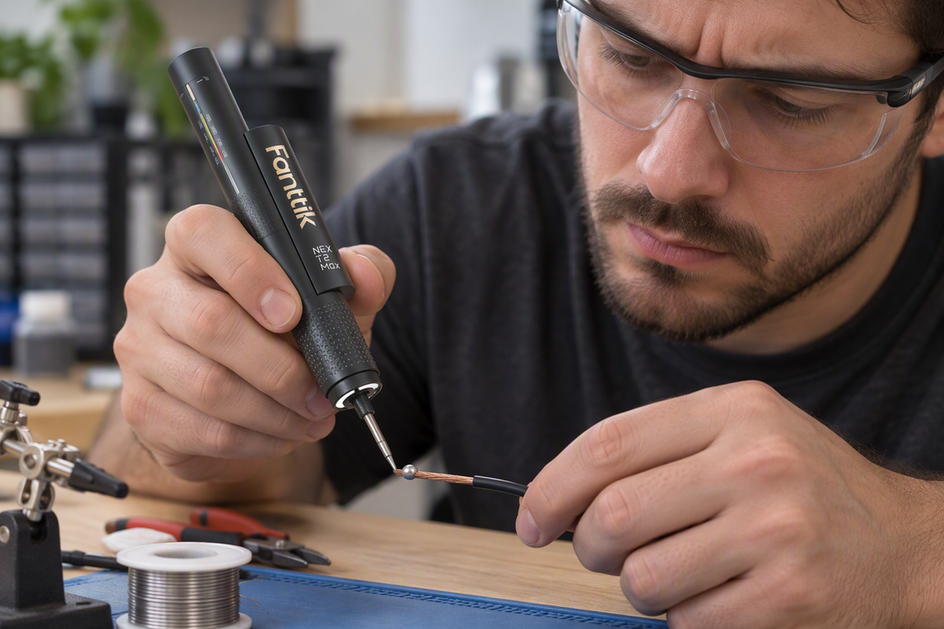
- Heat Management: Tools like the Fanttik T1 Max Soldering Iron Kit use specialized heat-resistant materials. Ensure that the hot tip never comes into contact with the handle's decorative finish, as this will cause permanent thermal scarring.
For more on managing precision components, see our guide on Protecting Internal Sensors During Precision Tool Care.
Building Trust Through Transparency
Ultimately, evaluating finish durability is about understanding the limits of the materials. A tool that looks like a "modern essential" should be able to survive the realities of a working garage. By looking at 3D metrology and standardized testing, we can move past marketing claims and focus on tangible performance.
As the EU General Product Safety Regulation (EU) 2023/988 emphasizes, product safety and traceability are paramount. Ensuring a tool's finish remains intact isn't just about beauty; it’s about preventing corrosion that could lead to structural failure or electrical shorts in cordless tools.
When you invest in a tool, you are investing in its ability to perform. By choosing gear that prioritizes surface metrology and following basic maintenance heuristics, you ensure that your kit remains as reliable as the day you bought it.
Disclaimer: This article is for informational purposes only. Always refer to the manufacturer's specific care instructions for your tools. Testing with harsh chemicals or abrasive materials may void your warranty.
Sources
- EU General Product Safety Regulation (EU) 2023/988
- ASTM D4060 - Standard Test Method for Abrasion Resistance
- MDPI - Application of Areal Topography Parameters in Surface Metrology
- VTT Research - New Optical Profilometer for 3D Surface Metrology
- ASTM G155 - Standard Practice for Operating Xenon Arc Light Apparatus
- The 2026 Modern Essential Gear Industry Report
Continue reading
 Professional Calibration: Why Factory Testing Matters
Covers sensor drift, thermal cycling effects, 5-point verification, and how calibration saves hundreds of wrist rotations per project.
Professional Calibration: Why Factory Testing Matters
Covers sensor drift, thermal cycling effects, 5-point verification, and how calibration saves hundreds of wrist rotations per project.
 Firmware in Tools: How Smart Logic Prevents Torque Damage
Tool firmware uses smart logic to manage motor curves and thermal limits, preventing damage to delicate materials faster...
Firmware in Tools: How Smart Logic Prevents Torque Damage
Tool firmware uses smart logic to manage motor curves and thermal limits, preventing damage to delicate materials faster...
Leave a comment
This site is protected by hCaptcha and the hCaptcha Privacy Policy and Terms of Service apply.