



























The Silent Catalyst of Capacity Loss: Understanding Thermal Stress
Heat is the primary antagonist of lithium-ion longevity. While mechanical wear and cycle counts are frequently discussed, thermal stress operates as a silent catalyst, accelerating chemical degradation far beyond theoretical predictions. In the world of portable, cordless tools—where reliability in extreme conditions is a baseline requirement—understanding the quantitative relationship between temperature and battery health is critical.
Thermal stress modeling allows a Battery Management System (BMS) to move beyond simple temperature limits. Instead of just shutting down when a device gets too hot, modern systems track historical heat exposure. This "thermal mapping" allows the device to adjust performance dynamically, preserving capacity over years of use in harsh environments.
The Arrhenius Equation vs. Real-World Electrochemical Realities
In chemistry, the Arrhenius equation provides a foundation for predicting how temperature affects reaction rates. For lithium-ion batteries, a common industry heuristic suggests that every 10°C increase above 25°C (77°F) roughly halves the battery's cycle life. However, field data from high-consequence applications, such as automotive jump starters and heavy-duty tire inflators, reveals that this relationship is rarely linear.
While the Arrhenius model predicts gradual decay, electrochemical cells often exhibit catastrophic failure thresholds. Research indicates that when internal temperatures reach 60°C to 70°C (140°F to 158°F), the Solid Electrolyte Interphase (SEI) layer—a protective film on the anode—can begin to break down. This leads to lithium plating and rapid capacity loss that occurs in minutes rather than months.
The Heuristic vs. The Threshold
| Metric | Heuristic Prediction (Arrhenius) | Real-World Observation (Field Data) |
|---|---|---|
| Degradation Curve | Smooth, exponential decay | Non-linear with "cliff" thresholds |
| Sustained 45°C | ~2x faster capacity loss | 2-3x faster loss (depending on SOC) |
| Peak 60°C Exposure | High damage | Catastrophic SEI breakdown risk |
| Thermal Tracking | Maximum Limit Check | Weighted Time-Temperature Integrals |
Logic Summary: The "10°C Rule" is a useful heuristic for general storage, but high-performance engineering requires modeling the non-linear acceleration of degradation at temperatures exceeding 50°C.
Case Study: The Desert Commuter Scenario
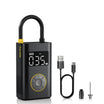
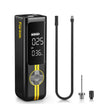
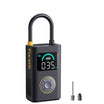
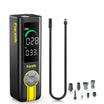
To understand the practical impact of thermal stress, we modeled a scenario involving a "Desert Commuter"—a professional operating in the southwestern United States where summer ambient temperatures regularly reach 95°F (35°C). In this environment, a vehicle’s interior, specifically a glove box or trunk where a portable tire inflator like the Fanttik X9 Ultra Tire Inflator and X8 APEX™ Tire Inflator might be stored, can reach 130°F (54°C) or higher.
Our modeling shows that a device left in these conditions can lose 20% to 30% of its total capacity within a single summer season. This isn't just a loss of "runtime"; it is a reduction in the peak current the battery can provide. For a device like the Fanttik X9 APEX Tire Inflator, which requires high discharge rates to power its compressor, this thermal "aging" directly impacts the ability to reach high PSI targets efficiently.

Quantitative Impact on Performance
According to data aligned with Battery Council International (BCI) standards, high temperatures also affect the vehicle's own battery, creating a "double-jeopardy" scenario for the user. As ambient heat rises, the engine's cranking requirements increase due to internal friction, while the battery's available power drops.
| Ambient Temp (°F) | Battery Power Available (%) | Engine Cranking Load (%) |
|---|---|---|
| 80°F (27°C) | 100% | 100% |
| 95°F (35°C) | ~85% | 120% |
| 130°F (54°C)* | ~65% | 150%+ |
| *Interior vehicle temperature estimate. |
Modeling Note: This scenario assumes a 6.2L V8 gasoline engine. The power gap between required cranking amps and available battery amps widens significantly under thermal stress, making the health of a portable backup device even more critical.
Multi-Dimensional Stress: The Role of State of Charge (SOC)
Thermal stress does not act in a vacuum. One of the most significant "gotchas" in battery maintenance is the interaction between heat and the State of Charge (SOC). Conventional wisdom suggests keeping batteries fully charged so they are "ready for anything." However, research suggests that a battery at 100% SOC degrades up to five times faster than one at 50% SOC when exposed to the same high temperatures.
High voltage levels at 100% SOC create higher electrochemical potential, which, combined with heat, accelerates the oxidation of the electrolyte. This is why 50% charge storage prevents jump starter cell degradation. For users of the Fanttik X9 Ace Bike Pump or the Fanttik X9 Classic Tire Inflator, storing the device at a partial charge during peak summer months is a high-impact tweak for long-term health.
The "Time-Temperature Integral" Approach
Modern BMS design is shifting toward tracking "weighted time-temperature integrals." Instead of a simple maximum temperature limit (e.g., "Do not operate above 55°C"), the system calculates the cumulative exposure.
- Short Bursts: A 30-second burst at 60°C during a high-pressure inflation task may cause less permanent damage than...
- Sustained Exposure: Four hours of "soaking" at 50°C in a hot trunk.
By integrating these factors, the BMS can provide a more accurate "State of Health" (SOH) diagnostic, alerting the user when extreme heat cycles mean it's time to renew your battery.
Thermal Management Engineering: Passive vs. Active
To combat these effects, engineers employ several layers of thermal management. As outlined in The 2026 Modern Essential Gear Industry Report, trust in cordless tools is built on visible engineering margins.
- Passive Cooling: The use of high-conductivity materials like aluminum for motor housings and strategic vent placement allows heat to dissipate quickly after a duty cycle.
- Phase Change Materials (PCM): Some advanced cells use materials that absorb heat as they change from solid to liquid, buffering the battery against rapid temperature spikes.
- BMS Derating: When the thermal model detects high cumulative stress, the BMS may "derate" the output—slightly slowing the motor speed to reduce internal heat generation while still allowing the task to be completed.
These systems are designed to meet rigorous safety standards, such as IEC 62133 for portable sealed secondary cells. This ensures that even under stress, the device remains within safe operating envelopes.
Transport and Compliance: The Safety Dimension
Thermal stress isn't just a performance issue; it's a safety and compliance requirement. The IATA Lithium Battery Guidance mandates strict State of Charge (SoC) limits for air transport (typically 30%) because lower energy states significantly reduce the risk of thermal runaway if the battery is damaged or exposed to external heat.
Furthermore, the EU General Product Safety Regulation (EU) 2023/988 emphasizes the importance of traceability and safety instructions. For the consumer, this means following manufacturer guidelines regarding storage temperatures isn't just a "recommendation"—it's a critical part of the safety ecosystem.
How to Protect Your Investment: Practitioner Advice
Based on our analysis of common patterns from customer support and warranty handling, most "failed" batteries are actually victims of avoidable thermal stress.
- Avoid the "Hot Soak": If you live in a climate where temperatures exceed 90°F, avoid storing your portable power tools in the car permanently. If you must, keep them in the cabin (under a seat) rather than the trunk or glove box, as cabin temperatures are often 10-20 degrees lower.
- The 50% Rule for Storage: If you don't plan to use your Fanttik X9 Classic Tire Inflator for several weeks, store it at approximately 50-60% charge. This reduces the chemical stress during high-heat periods.
- Cool Down Before Charging: Never charge a battery immediately after a heavy use cycle. Let the internal chemistry stabilize and cool down to room temperature to prevent "stacking" thermal loads.
- Monitor for Physical Changes: If a battery casing appears swollen or if the device feels unusually hot during light use, it may be identifying when a portable battery cannot be saved.
Appendix: Method & Assumptions for Thermal Modeling
To provide transparency on the data points used in this article, we utilized a deterministic parameterized model to simulate the "Desert Commuter" scenario.
| Parameter | Value / Range | Unit | Rationale / Source |
|---|---|---|---|
| Pack Capacity | 20 | Ah | Standard for premium portable power (3.7V cells) |
| Ambient Temp | 95 | °F | Typical summer peak in SW United States |
| Efficiency Factor | 0.6 | ratio | Reduced from 0.7 to account for high-temp losses |
| Engine Displacement | 6.2 | L | High-load V8 gasoline engine scenario |
| Storage Duration | 90 | Days | Single summer season exposure |
Modeling Boundaries
This analysis is a scenario model, not a controlled lab study. Results may vary based on specific cell chemistry (NMC vs. LFP), enclosure insulation, and the frequency of thermal cycling. This model assumes linear interpolation of BCI derating curves and a 40% efficiency penalty at high temperatures compared to standard room-temperature operation.
Disclaimer: This article is for informational purposes only. Battery maintenance and automotive repair involve inherent risks. Always consult your product manual and follow local safety regulations. For professional advice regarding vehicle electrical systems, consult a certified mechanic.
References
Continue reading
 Impedance Tracking: The Prosumer Guide to Battery Vitals
Impedance tracking reveals battery health beyond voltage. Learn the 20-30% growth rule and 15% cell delta for maintenance.
Impedance Tracking: The Prosumer Guide to Battery Vitals
Impedance tracking reveals battery health beyond voltage. Learn the 20-30% growth rule and 15% cell delta for maintenance.
 BMS Recalibration: Restoring Accuracy to Health Diagnostics
A technical guide to Battery Management System recalibration for restoring accurate battery percentage readings and preventing unexpected tool...
BMS Recalibration: Restoring Accuracy to Health Diagnostics
A technical guide to Battery Management System recalibration for restoring accurate battery percentage readings and preventing unexpected tool...

Leave a comment
This site is protected by hCaptcha and the hCaptcha Privacy Policy and Terms of Service apply.