









































The Invisible Deflation: Why Off-Season Storage is Critical for Trailer Tires
For many trailer owners—whether you are hauling a weekend utility load, a 30-foot RV, or a center-console boat—the end of the season usually signals a period of "set it and forget it." We park the trailer in the driveway or a storage lot, lock the hitch, and walk away until spring. However, our experience in automotive maintenance systems suggests that this period of inactivity is often more damaging to tire health than thousands of miles on the highway.
Tires are dynamic components. They are designed to be used. When they sit idle, they face a unique set of stressors: constant static load on a single point, oxygen permeation through the rubber casing, and the relentless contraction caused by plummeting temperatures. A tire that was perfectly inflated in October can easily lose 10-15% of its pressure by March (based on standard permeation rates and thermal dynamics). This loss isn't just a nuisance; it is a precursor to structural failure.
In this guide, we will move beyond generic maintenance advice. We will explore the physics of pressure loss, the "Max Cold Pressure" heuristic that experts use to safeguard their assets, and a methodical schedule to ensure your trailer is road-ready the moment the season turns. As noted in The 2026 Modern Essential Gear Industry Report, building trust in your equipment requires a foundation of engineering-led maintenance rather than reactive repairs.

The Physics of Pressure Loss: Permeation and Temperature
To manage tire pressure effectively, we must first understand why it disappears in the first place. There are two primary mechanisms at work: permeation and thermal contraction.
1. Oxygen Permeation
Tires are not airtight. Even without a puncture, air molecules slowly migrate through the microscopic pores of the rubber compound. In a typical trailer tire, this results in a steady loss of approximately 1 to 2 PSI per month (according to common industry observations in temperate climates). While this seems negligible, a six-month storage stint can result in a 12 PSI drop. If your tire started at a minimum recommended pressure of 50 PSI, it could be sitting at 38 PSI by spring—a level that risks sidewall damage under the trailer's weight.
2. The 10-Degree Rule
Temperature has a dramatic effect on internal pressure. According to the Ideal Gas Law, as the temperature of a gas decreases, its pressure decreases proportionally. A reliable heuristic used by technicians is the "1-for-10 Rule": for every 10°F drop in ambient temperature, tire pressure drops by approximately 1 PSI.
Logic Summary: If you inflate your tires to 80 PSI in a 70°F garage and then store the trailer in a 20°F outdoor environment, you will lose roughly 5 PSI purely from thermal contraction, independent of any permeation loss.
The "Max Cold Pressure" Heuristic for Storage
One of the most common mistakes we see trailer owners make is following the trailer manufacturer's placard during the off-season. While that placard is correct for towing comfort and load distribution during active use, it often leaves too little margin for storage.
For long-term storage, we recommend inflating your tires to the Maximum Cold Pressure listed on the tire sidewall, not the lower recommendation on the trailer's VIN plate.
Why Max PSI is Superior for Storage:
- Sidewall Rigidity: Higher pressure increases the stiffness of the sidewall. This is critical for resisting "flat-spotting," where the weight of the trailer causes the rubber to take a permanent set in its deformed state.
- Safety Buffer: By starting at the maximum rated pressure, you create a "cushion" that accounts for the inevitable 10-15% loss over the winter. Even after months of permeation, the tire is likely to remain above the minimum safe operating pressure.
- Compound Protection: Keeping the tire at its intended shape helps maintain the internal integrity of the steel belts and polyester plies, preventing "inner liner" fatigue.
Methodology Note (Heuristic Labeling): This "Max Cold Pressure" approach is a practical shop baseline intended for static storage only. It should not be interpreted as a mandated requirement from regulatory bodies like ISO. Always verify that your inflation equipment is calibrated and accurate, aligning with the precision standards outlined in NIST Handbook 44.
Structural Integrity: Preventing Permanent Flat-Spotting
Flat-spotting occurs when the weight of the trailer stays concentrated on a single patch of the tire for an extended period. In cold weather, the rubber compound becomes less pliable. If the tire sits in one position for 30 days or more, the internal structure can undergo permanent deformation.
The Myth of "Rolling"
Many owners believe that rolling the trailer forward or backward a few feet every month is sufficient. While this is better than nothing, it often just creates a second flat spot nearby. The rubber does not "recover" its shape instantly, especially in sub-freezing temperatures.
The Gold Standard: Axle Lifting
For storage exceeding three months, we recommend lifting the trailer's weight off the tires entirely.
- Use Jack Stands: Place high-capacity jack stands under the trailer frame or axles (consult your manual for safe lift points).
- Relieve the Load: Lower the trailer until the tires are either just touching the ground or completely suspended.
- Pressure Maintenance: Even when suspended, maintain the Max Cold Pressure to prevent the tire from drying out or losing its seat on the rim.
Environmental Factors: UV and Ozone Protection
Pressure loss isn't the only threat in storage. The environment itself attacks the chemical bonds of the tire.
Sidewall Weather-Checking
"Weather-checking" refers to the fine, spiderweb-like cracks that appear on the sidewall. This is caused by exposure to UV radiation and ozone. Once these cracks reach the structural cords, the tire is unsafe for highway use.
The Role of Tire Covers
While some marketing claims suggest that tire bags prevent pressure loss, our analysis of patent literature regarding pneumatic tires indicates their primary benefit is blocking UV light and ozone, not slowing air permeation.
- UV Protection: Covers are essential if the trailer is stored outdoors. UV rays accelerate the drying of the oils and waxes in the tire compound.
- Ozone Exposure: Store your trailer away from electric motors (like furnaces or shop compressors), which generate ozone—a gas that aggressively breaks down rubber.
Modeling Pressure Loss: A Scenario Analysis
To illustrate the impact of neglect, we modeled a typical storage scenario for a dual-axle boat trailer.
| Parameter | Value or Range | Unit | Rationale / Source Category |
|---|---|---|---|
| Initial Storage Pressure | 65 | PSI | Manufacturer Placard (Load Range D) |
| Storage Duration | 5 | Months | Typical Winter Window |
| Permeation Loss Rate | 1.5 | PSI/Month | Estimated range based on common practice |
| Temperature Drop | 40 | °F | Oct (60°F) to Jan (20°F) |
| Thermal Contraction Loss | 4 | PSI | 1 PSI per 10°F heuristic |
| Total Estimated Loss | ~11.5 | PSI | Model Output (Scenario Modeling) |
Analysis: In this scenario, the tire drops from 65 PSI to approximately 53.5 PSI. While 53 PSI might seem "okay," it represents a nearly 18% loss in pressure. Under the full weight of a boat, this under-inflation causes excessive sidewall flexing and heat buildup the moment you pull it out of storage, significantly increasing the risk of a blowout on the first spring trip. This highlights the importance of evaluating inflator stability for high-PSI trailer tires before you begin your seasonal prep.
The Off-Season Maintenance Schedule
To ensure safety and longevity, we recommend the following methodical audit.
Monthly: The Pressure Check
Do not wait for spring to check your tires. Perform a monthly check using a high-quality digital gauge.
- Action: Adjust pressure back to the Max Cold Pressure if it has dropped by more than 2 PSI.
- Logic: Regular inflation prevents the tire from sitting in an under-inflated state, which is when the most structural damage occurs.
Mid-Winter: The Visual Inspection
In January or February, perform a deep visual inspection.
- Check for Cracks: Look for fine lines in the tread grooves and on the sidewalls.
- Valve Stem Health: Wiggle the valve stems slightly to check for dry rot at the base.
- Pest Check: Ensure rodents haven't nested in the wheel wells or chewed on the rubber.
Pre-Launch: The "Wake-Up" Routine
Before your first trip of the season:
- Reset to Placard: If you inflated to Max Cold Pressure for storage, bleed the tires back down to the trailer manufacturer's recommended towing pressure (unless the trailer is at its maximum GVWR).
- Torque Lug Nuts: Steel and aluminum wheels can expand and contract differently in storage, potentially loosening lug nuts.
- Check the Spare: The spare tire is subject to the same permeation and aging as the active tires. Never leave home without checking it. For multi-car households, this level of logistical readiness is the key to a stress-free season.
Summary of Best Practices
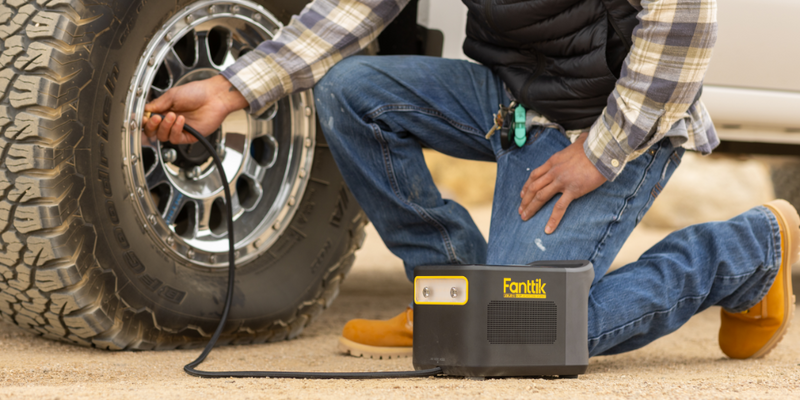
Maintaining trailer tires in the off-season is a matter of discipline rather than difficulty. By understanding that air loss is a constant, physical certainty, you can transition from a reactive owner to a proactive one.
- Always inflate to the maximum cold PSI listed on the sidewall before storage.
- Lift the trailer to remove the static load if storing for more than 90 days.
- Cover tires to block UV rays and ozone, even if stored under a carport.
- Maintain a monthly check schedule to counteract the 1-2 PSI lost to permeation.
By treating tire pressure as a critical system rather than a "check-it-later" task, you protect your investment and, more importantly, the safety of everyone on the road.
Disclaimer: This article is for informational purposes only and does not constitute professional mechanical or safety advice. Tire requirements can vary significantly based on load range, trailer type, and environmental conditions. Always consult your trailer’s owner manual and the tire manufacturer’s specific guidelines before performing maintenance. If you have concerns about the structural integrity of your tires, consult a certified tire professional.
Sources
- The 2026 Modern Essential Gear Industry Report: Engineering Trust in a Cordless World
- NIST Handbook 44: Specifications, Tolerances, and Other Technical Requirements for Weighing and Measuring Devices
- ISO Standards Catalogue: Rubber and Plastics
- Google Patents: Pneumatic Tire Air Permeation Analysis
- IATA Lithium Battery Guidance (for portable maintenance equipment)
Continue reading
 Weight Distribution Logic: Matching PSI to Trailer Load Facets
Covers load distribution formulas, thermal expansion effects, and precision tool standards for RV owners and professionals.
Weight Distribution Logic: Matching PSI to Trailer Load Facets
Covers load distribution formulas, thermal expansion effects, and precision tool standards for RV owners and professionals.
 Metal Valve Stem Upgrades: Ensuring Safety for High-PSI Loads
Covers material science, TPMS integration, and torque specs for reliable high-pressure tire systems in towing applications.
Metal Valve Stem Upgrades: Ensuring Safety for High-PSI Loads
Covers material science, TPMS integration, and torque specs for reliable high-pressure tire systems in towing applications.
Leave a comment
This site is protected by hCaptcha and the hCaptcha Privacy Policy and Terms of Service apply.