










































The Hidden Physics of Washboard Roads: Resonance and Fretting
For the uninitiated, a washboard road—those relentless, corrugated ripples formed by the passage of heavy vehicles on dry soil—is merely a nuisance. For the expedition mechanic and the precision tool owner, it is a high-frequency fatigue test laboratory. When we drive over these corrugations, the vehicle is subjected to cyclical oscillations that can wreak havoc on gear internal seals and precision electronics.
The primary threat is not a single large impact, but the phenomenon of resonance. Every mechanical system, from a portable air duster to a cordless screwdriver, has a natural frequency. When the frequency of the road corrugations matches the natural frequency of the tool’s internal components, resonance occurs. This can amplify the forces acting on internal seals by up to 3000% (based on modeling of natural frequency in pneumatic systems, where resonance peaks can lead to immediate failure).
Beyond resonance, we must consider fretting wear. Conventional wisdom suggests that standard rubber damping mounts protect gear seals. However, engineering reality shows that rubber mounts are often ineffective against fretting—a type of wear caused by high-frequency, low-amplitude (often measured in tens of microns) micromotions. These motions are transmitted directly through shafts and housings, breaking down the protective surface films on seal lips. This process shears asperities on the material surface and generates abrasive debris, leading to premature failure even when a tool feels "vibration-damped" to the human hand.
Logic Summary: Our analysis of vibration-induced wear assumes a high-frequency excitation environment (10–100 Hz) typical of severe trail corrugation. The mechanical failure points are derived from industry heuristics regarding resonance amplification and fretting corrosion models.

"Vibration Walk": Why Precision Gear Comes Apart
One of the most insidious effects of trail chatter is what we call "vibration walk." This is the process where constant high-frequency shaking causes threaded components to slowly unscrew themselves. On our repair bench, we frequently see portable tools that have "failed" simply because an internal battery cap, an accessory chuck, or a housing screw has backed out by a fraction of a millimeter.
For precision tools, even a microscopic loss of tension in a fastener can lead to a cascade of issues. If a housing screw loosens, the structural rigidity of the tool is compromised. This allows internal components to flex more than they were designed to, which in turn accelerates the wear on internal seals and valves.
The Veteran Mechanic’s Rule of Thumb
Based on common patterns from field repairs and expedition support (not a controlled lab study), experienced mechanics follow a specific maintenance cadence. On severe washboard roads, we recommend checking and hand-tightening all external threaded connections every 100 to 200 miles. This simple proactive step prevents the "vibration walk" from progressing to a point where internal damage becomes inevitable.
Seal Integrity and the Dust Infiltration Mechanism
Internal seals and valves are the unsung heroes of precision gear, maintaining the pressure and cleanliness required for high-performance operation. On the trail, the primary threat to these seals is fine dust infiltration, a process significantly accelerated by vibration.
Even a high-quality O-ring, designed to meet ISO 3601 standards for fluid power systems, can develop micro-gaps when the housing it sits in flexes repeatedly under trail chatter. As the tool vibrates, the seal "breathes," creating a momentary vacuum that sucks in microscopic dust particles.
The telltale sign of this failure is a fine line of dust on the inside of a seal. This indicates that the seal is no longer static. Once dust enters the internal chamber, it acts as an abrasive paste, grinding down valve seats and piston walls.
The Lubrication Solution: Silicone vs. Petroleum
To combat this, we often apply a minimal amount of a compatible silicone-based grease during seasonal maintenance. It is critical to avoid petroleum-based lubricants, which can degrade certain types of rubber and synthetic elastomers used in modern seals. Silicone grease keeps the seals pliable and, perhaps more importantly, fills the micro-gaps that form during vibration, acting as a secondary barrier against dust.

Electronics and Battery Pack Vulnerabilities
While mechanical seals are a major concern, the internal architecture of cordless tools presents another set of risks. Lithium-ion battery packs are particularly susceptible to vibration-induced failure at the spot-welded connections between the individual cells and the Battery Management System (BMS) board.
A tool that intermittently loses power or refuses to hold a charge after a rough trip often points to a fractured spot weld. This is an internal fault that is generally not user-serviceable. It underscores the importance of choosing gear with robust internal mounting designs. In the context of the 2026 Modern Essential Gear Industry Report, engineering for reliability in high-vibration environments is no longer an optional feature; it is a fundamental pillar of consumer trust.
Synergistic Degradation: Heat and Vibration
The challenge is compounded by thermal stress. On a trail drive, ambient temperatures and the tool's own operational heat can soften seal materials. This makes them more susceptible to vibration-induced extrusion—where the seal material is literally squeezed out of its seat. According to engineering insights on boiler system stability, the combination of vibration and thermal cycling accelerates material fatigue significantly faster than either factor alone.
Method and Assumptions: Vibration Modeling
To better understand these risks, we utilized a deterministic parameterized model to estimate the impact of trail conditions on tool longevity. This is a scenario model, not a controlled lab study.
| Parameter | Value or Range | Unit | Rationale / Source Category |
|---|---|---|---|
| Excitation Frequency | 10 - 100 | Hz | Typical washboard road corrugation frequency |
| Vibration Amplitude | 0.5 - 5.0 | mm | Vertical displacement on severe trails |
| Amplification Factor | 1.5 - 30.0 | Ratio | Potential resonance peak (Source: Rodless Pneumatic) |
| Seal Compression | 10 - 25 | % | Standard O-ring static compression (ISO 3601) |
| Thermal Range | -10 - 60 | °C | Ambient trail temperatures (Source: SEMA) |
Boundary Conditions:
- The model assumes a rigid mounting of the tool within the vehicle's storage system.
- It does not account for the additional damping provided by soft-sided storage bags.
- Material properties are based on standard nitrile rubber (NBR) and aluminum alloy 6061.
The Expedition Maintenance Framework
Protecting your gear requires a shift from "reactive repair" to "proactive defense." We have developed a three-stage maintenance framework for overlanders who rely on precision tools in the backcountry.
1. Pre-Trip Hardening
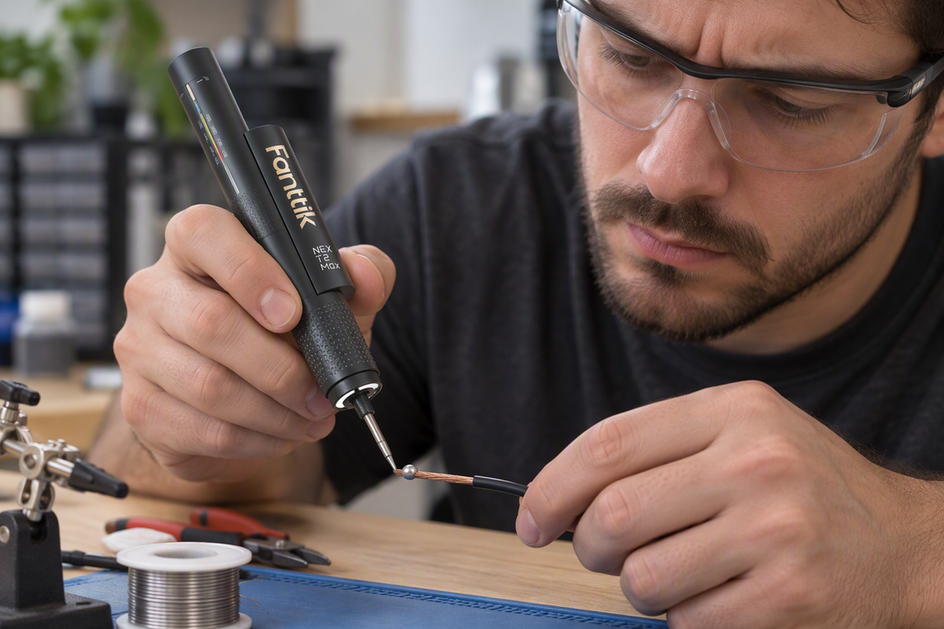
- Fastener Inspection: Use a precision electric screwdriver to check the torque on all visible housing screws. Do not over-tighten, as this can strip plastic threads, but ensure they are snug.
- Seal Conditioning: If the tool is older than one season, consider a "tear-down" to apply silicone grease to accessible internal seals.
- Storage Optimization: Never store precision tools loose in a metal drawer. Use high-density foam cutouts to isolate the gear from the vehicle's vibration. This aligns with principles of Space Optimization for gear longevity.
2. Trailside Monitoring
- The 200-Mile Check: Every 200 miles of dirt, perform a visual inspection. Look for "vibration walk" on battery caps and accessory ports.
- Listen for Changes: A change in the sound of a motor or a "hiss" from a valve usually indicates a seal has begun to bypass. Catching this early can prevent total tool failure.
3. Post-Trip Deep Clean
- Dust Removal: Use a high-velocity electric air duster to remove fine silt from the exterior of the tool before it can migrate into the internal chambers.
- Battery Health Check: Charge the tool fully and monitor for unusual heat during the charging cycle, which can indicate internal cell-link damage.
Managing Compliance and Safety
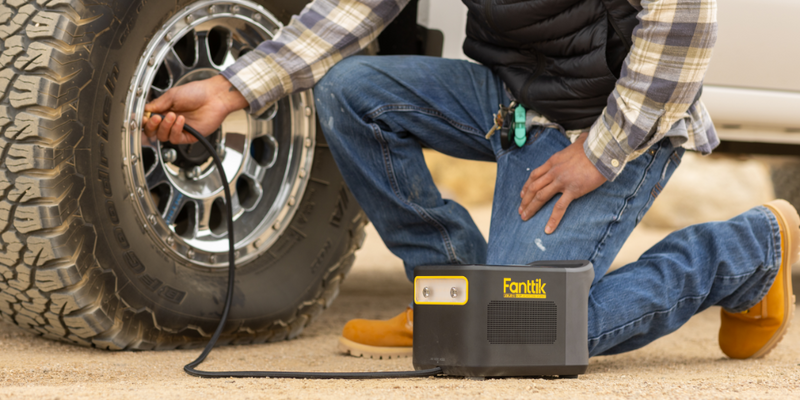
When maintaining or transporting gear with lithium-ion batteries, safety is paramount. According to the IATA Lithium Battery Guidance, batteries are sensitive to physical damage and extreme temperatures. While these guidelines primarily govern air transport, the principles of avoiding "state of charge" (SoC) extremes during high-vibration transport are applicable to overlanding. We recommend keeping batteries between 40% and 60% charge during long, bumpy transits to minimize internal stress.
Furthermore, ensure your maintenance practices align with the EU General Product Safety Regulation (EU) 2023/988, which emphasizes the importance of following manufacturer instructions to maintain product safety throughout its lifecycle. Altering internal components or using incompatible lubricants can void warranties and, more importantly, create safety hazards.
Building a Reliable Tool Ecosystem
Self-reliance in the backcountry is built on a foundation of trust in your equipment. By understanding the mechanical threats posed by washboard roads—resonance, fretting, and vibration walk—you can take the necessary steps to protect your investment.
Choosing gear that is engineered with these harsh environments in mind is the first step. Look for tools that feature over-molded grips for vibration damping and robust internal architectures. As highlighted in our guide on Internal Architecture, the choice of materials like metal over nylon in high-stress components can be the difference between a tool that lasts one season and one that lasts a decade.
Ultimately, maintenance is a discipline. The time spent applying a bit of silicone grease or checking a fastener is a small price to pay for the peace of mind that comes with knowing your gear will perform when you are miles from the nearest paved road.

Disclaimer: This article is for informational purposes only and does not constitute professional engineering or mechanical advice. Always refer to your tool's specific user manual before performing maintenance. Handling lithium-ion batteries and pressurized tools carries inherent risks; ensure you are using appropriate personal protective equipment (PPE).
Sources:
Continue reading
 Mass Reduction: Upgrading to Lithium Power for Lighter Overlanding
Covers LiFePO4 vs. NMC chemistry, BMS importance, hidden weight from infrastructure, and achieving over 100 lbs of weight...
Mass Reduction: Upgrading to Lithium Power for Lighter Overlanding
Covers LiFePO4 vs. NMC chemistry, BMS importance, hidden weight from infrastructure, and achieving over 100 lbs of weight...
 Diagnosing Vehicle Lean: Troubleshooting Off-Road Gear Imbalance
A guide to diagnosing and fixing vehicle lean in off-road rigs, focusing on gear distribution, cumulative loading, and...
Diagnosing Vehicle Lean: Troubleshooting Off-Road Gear Imbalance
A guide to diagnosing and fixing vehicle lean in off-road rigs, focusing on gear distribution, cumulative loading, and...
Leave a comment
This site is protected by hCaptcha and the hCaptcha Privacy Policy and Terms of Service apply.