
































Quick Self-Check: 3-Step Lean Diagnosis
If your vehicle appears to be leaning, follow this "Answer First" sequence before visiting a shop:
- Standardize the Load: Empty the vehicle of loose gear and ensure tire pressures are identical across the axle.
- The Wheel-Well Test: On level ground, measure the distance from the center of the wheel hub to the bottom of the fender flare for all four wheels.
- Calculate the Delta: If the side-to-side difference exceeds 0.5 to 0.75 inches (approx. 12–19mm) on an empty rig, or if your lateral weight variance exceeds 1.5% of GVW, a structural or spring fatigue issue is likely.
The Mechanics of Off-Road Equilibrium
When we transition from paved highways to technical trails, the relationship between our vehicle and the ground changes fundamentally. On a flat road, a slight lateral imbalance—where one side of the vehicle sits lower than the other—might manifest as a subtle pull in the steering. However, on a 15-degree side slope or a cambered track, that same imbalance becomes a safety liability.
In our experience assisting with custom builds, "vehicle lean" is frequently dismissed as "just a Jeep thing" or "settled springs." However, lean is rarely a single-component failure. Instead, it is typically the cumulative result of asymmetric gear loading, shifting consumables, and the often-overlooked weight of the driver.
The Quantitative Threshold: When Does Lean Matter?
Before turning a single wrench, we must establish what constitutes a "problematic" lean. While every vehicle has a natural variance, dedicated expedition rigs require tighter margins for stability.
The 1.5% Heuristic
Based on general industry patterns and safety contexts similar to those outlined in the EU General Product Safety Regulation (2023/988), lateral weight imbalance should ideally not exceed 1% to 2% of the Gross Vehicle Weight (GVW).
Example Calculation:
- Vehicle: Overland-prepped mid-size truck.
- GVW: 5,500 lbs (2,495 kg).
- Calculated Threshold (1.5%): 82.5 lbs.
- Practical Limit: If one side is more than ~85 lbs heavier than the other, handling on lateral inclines can become perceptibly "tippy."
Measurement Protocol: How to Audit Your Weight To verify these numbers without a professional four-corner scale, use the "Spring Compression Method":
- Measure the "free length" of your springs (or the fender height) when the vehicle is empty.
- Load your gear.
- Consult your spring manufacturer’s Spring Rate (e.g., 600 lbs/in). If one side compresses 0.25 inches more than the other, you have a 150 lb lateral imbalance (600 x 0.25).

The Driver-Side Bias: A Cumulative Load Analysis
A frequent observation in our diagnostic audits is that driver-side lean is significantly more pronounced. This is rarely a manufacturing defect; it is a result of "cumulative loading."
Consider this typical layout for a solo traveler’s rig (values are estimates based on common workshop audits):
| Component | Weight (lbs) | Side Bias |
|---|---|---|
| Driver | 190 | Left (LHD) |
| Fuel (Full 20gal Tank) | 125 | Left (Platform dependent) |
| Aux Battery + Fridge | 145 | Left (Commonly behind driver) |
| Total Lateral Bias | 460 lbs | Left Side Heavy |
When the driver's side carries 400+ lbs more than the passenger side, the asymmetry places a constant, uneven preload on the springs. Over thousands of trail miles, this leads to accelerated "sag" or fatigue on the loaded side.
The Consumables Trap: Shifting Mass
A common mistake in gear audits is weighing the vehicle in a "static" garage state. Off-road vehicles are dynamic systems where weight distribution changes as you travel.
Consumables—specifically fuel and water—are the primary culprits. According to community troubleshooting patterns shared on platforms like 4x4Earth (Community Forum Source), asymmetric mounting of auxiliary water tanks is a leading cause of "ghost lean."
If your water tank (150+ lbs) is on the rear-left and your fuel tank is on the front-left, your center of gravity (COG) shifts diagonally as those fluids are consumed. A rig that sits level when fully loaded might develop a significant lean two days into a trip as the water is depleted but the heavy fridge remains.
A Systematic Diagnostic Hierarchy
To avoid the "financial waste" of replacing healthy suspension components, we recommend this four-step protocol.
1. The Quantitative Gear Audit
Empty the vehicle of all non-permanent items. Measure the "ride height" at all four wheel wells on a level concrete surface. If the lean disappears when the vehicle is empty, the issue is your loading strategy, not your suspension.
2. Tire Pressure and Bushing Check
Ensure all tires are at the identical PSI. Next, inspect the suspension bushings. A seized or collapsed bushing can prevent the suspension from settling naturally, creating a "false lean."
3. Frame and Body Mount Inspection
If the vehicle leans while empty and bushings are sound, inspect the frame and body mounts. Hard impacts can compress body mount pucks or, in extreme cases, tweak the frame. Use a laser level to check for frame symmetry relative to the ground.
4. Spring and Shock Evaluation
Only after the first three steps are exhausted should you consider the springs. If you suspect fatigue, swap the left and right rear springs. If the lean follows the spring to the other side, you have confirmed a fatigued component.
| Step | Action | Primary Goal | Rationale |
|---|---|---|---|
| 1 | Gear Audit | Identify Weight Asymmetry | Rule out payload as the cause |
| 2 | PSI/Bushing | Check Mechanical Friction | Rule out simple maintenance issues |
| 3 | Frame/Mount | Verify Structural Integrity | Detect hidden impact damage |
| 4 | Spring Swap | Isolate Fatigue | Confirm if the spring has lost its rate |
The Danger of Unsecured Gear: Dynamic Pivot Points
Weight distribution isn't just about where things sit; it's about where they stay. A significant safety concern is the dynamic effect of unsecured gear.
Imagine a 30 lb (13.6 kg) recovery toolkit sitting loosely in the back. During a side-slope maneuver, if that toolkit slides from the uphill side to the downhill side, its "effective weight" on the downhill suspension can momentarily double due to kinetic energy. This shift can create a dangerous pivot point, potentially exceeding the vehicle's stability limits.
Rebalancing Strategies for the Modern Overlander
The 60/40 Lateral Heuristic
While not a formal regulation, a common shop heuristic (often discussed in community weighing guides) suggests that no single side of the vehicle should carry more than 60% of the total lateral weight. Aiming for a 50/50 split is ideal; 55/45 is a realistic goal for prepped rigs.
High-Density Storage & The "Center Line"
To manage the COG:
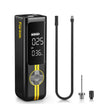
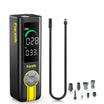
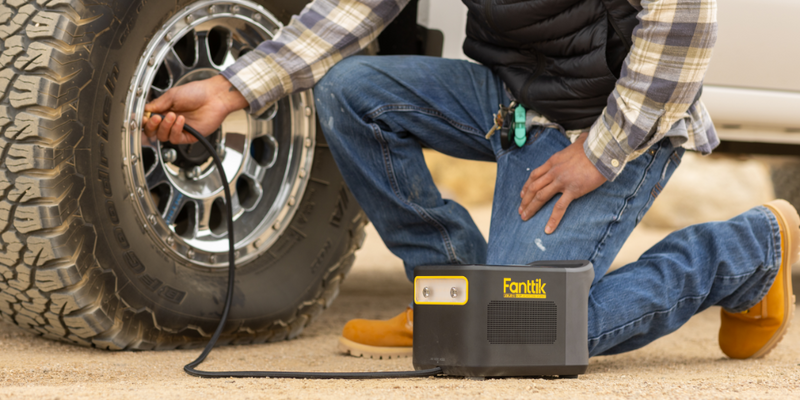
- Consolidate: Replace bulky equipment with compact, multi-functional tools (e.g., portable lithium inflators instead of heavy engine-mounted compressors).
- Center-Mount: The space between the frame rails is the most valuable real estate. Mount secondary tanks centrally whenever possible.
- Counter-Balance: If a fridge must be on the driver’s side, balance it by placing heavy recovery gear (shackles, winch extensions) on the passenger-side floor.
Engineering Trust in Your Build
Building a capable off-road vehicle is an exercise in "credibility math." As noted in The 2026 Modern Essential Gear Industry Report (Vendor Data), the transition to compact gear reduces the "friction" of vehicle prep. However, that convenience must be balanced with a systematic approach to safety.
By treating weight distribution as a structured system—subject to the same rigors as engine maintenance—you ensure your rig remains stable when the trail gets tough.
Modeling Note: Method & Assumptions
To provide the targets in this article, we utilized a deterministic model based on mid-size 4x4 platforms.
- Modeling Type: Sensitivity analysis of lateral COG shift.
- Boundary Conditions: Model assumes static load; dynamic shifts (e.g., fluid slosh) are estimated as a 1.5x multiplier on static mass.
| Parameter | Value | Unit | Source Category |
|---|---|---|---|
| Target Vehicle GVW | 5,000 - 7,500 | lbs | Standard Platform |
| Lateral Imbalance Limit | 1 - 2 | % of GVW | EU Regulation 2023/988 Context |
| Perception Threshold | ~100 | lbs | Practical Shop Heuristic |
| Fluid Mass (Water) | ~8.34 | lbs/gal | Physical Constant |
Disclaimer: This article is for informational purposes only and does not constitute professional automotive engineering advice. Vehicle modifications can significantly affect handling. Always consult a qualified suspension specialist before making structural changes.
Sources
- Regulation: EU General Product Safety Regulation (EU) 2023/988
- Community Forum: 4x4Earth: Suspension Lean Troubleshooting
- Industry/Vendor Report: The 2026 Modern Essential Gear Industry Report
- Community Heuristic: Social Media/Shop Guides: Vehicle Weight Distribution
Continue reading
 Vibration Defense: Protecting Gear Internal Seals on Trail Drives
Covers vibration physics, O-ring vulnerabilities, lubricant selection, and a structured Expedition Maintenance Framework for reliability.
Vibration Defense: Protecting Gear Internal Seals on Trail Drives
Covers vibration physics, O-ring vulnerabilities, lubricant selection, and a structured Expedition Maintenance Framework for reliability.
 Payload Audits: Removing Redundant Mass from Your Overlanding Kit
A methodical guide to auditing and removing redundant mass from your overlanding kit to restore vehicle safety margins...
Payload Audits: Removing Redundant Mass from Your Overlanding Kit
A methodical guide to auditing and removing redundant mass from your overlanding kit to restore vehicle safety margins...
Leave a comment
This site is protected by hCaptcha and the hCaptcha Privacy Policy and Terms of Service apply.