








































The Data-Driven Warranty: Why Subjective Claims Fail
Navigating a battery warranty claim often feels like an uphill battle against a "black box." We have observed in our customer support logs and on our repair benches that the single greatest point of friction between a user and a manufacturer isn't the hardware failure itself—it is the lack of objective evidence. When a technically-inclined DIYer reports that a device "won't hold a charge," support teams are often left guessing. Is it a capacity issue (normal aging)? Or is it a cell imbalance (a manufacturing defect)?
To bridge this gap, we advocate for a methodology we call Warranty Logic. This approach is built on a 3:1 data-to-narrative ratio: for every subjective description of a problem, you should provide three objective data points. By documenting Battery Management System (BMS) health logs and performance metrics, you transform a "complaint" into a "technical report." This shift is essential for engineering trust, a core pillar discussed in The 2026 Modern Essential Gear Industry Report: Engineering Trust in a Cordless World.
In this guide, we will detail how to use health logs to document degradation patterns, ensuring that when hardware fails prematurely, your evidence trail is undeniable.

The Physics of Battery Failure vs. Normal Aging
Understanding the difference between expected wear and a warrantable defect requires a look at electrochemical degradation. Lithium-ion cells are not static reservoirs; they are dynamic systems that degrade with every charge-discharge cycle.
Defining the Degradation Threshold
In the world of high-performance portable power, we use specific heuristics to differentiate between a healthy battery and a defective one:
- Normal Aging: A gradual capacity loss of approximately 0.5% per cycle is generally considered standard behavior for high-quality cells (based on common industry observations).
- Manufacturing Defects: A sudden drop in capacity—exceeding 5% in a single cycle—is typically a red flag indicating internal shorting or electrolyte decomposition.
Experienced technicians look for "Voltage Sag." If your battery voltage drops by more than 15% from its baseline when a load is applied (such as starting the Fanttik X8 APEX EV Tire Inflator), it often indicates an internal resistance spike. According to Battery University, internal resistance is a more accurate indicator of battery "health" than capacity alone. If internal resistance increases by 30% or more within the first 100 cycles, the battery is likely suffering from a manufacturing inconsistency.
Logic Summary: Our differentiation between aging and defects assumes a linear degradation model for healthy cells. Sudden, non-linear drops (the "5% Rule") are used as a diagnostic heuristic to trigger warranty investigations.
The BMS as a "Black Box" and Truth Source
Every modern cordless tool, from the Fanttik L2 Pro Cordless Electric Screwdriver to high-capacity jump starters, relies on a Battery Management System (BMS). The BMS is the brain that monitors voltage, current, and temperature.
The Conflict of Interest in "Health" Metrics
It is important to acknowledge a technical nuance: BMS logs are often a "black box." Manufacturers define the algorithms that calculate "State of Health" (SOH). There is a potential conflict of interest where conservative algorithms might label a battery as "healthy" to minimize warranty liability (Source: Wikipedia - Battery Management System).
However, you can bypass these proprietary interpretations by logging the raw data yourself. By tracking runtime minutes and charging temperatures, you create an external log that can be compared against the internal BMS data.
Why Support Teams Resolve Data-Backed Claims 70% Faster
Internal data from our support workflows suggests that claims accompanied by a simple spreadsheet are resolved significantly faster. Why? Because it eliminates the "diagnostic guessing phase." When you provide a log showing that your device's runtime has dropped from 20 minutes to 12 minutes under a consistent load, the technician doesn't need to ask "how are you using it?" The evidence is in the numbers.
Modeling Real-World Failure: The Winter Starting Gap
To demonstrate the power of health logs, let’s look at a high-consequence scenario: a professional fleet operator using a jump starter in extreme northern winters. This scenario models the impact of battery degradation on critical operational capability.
Analysis Setup: The Professional Fleet Persona
In this model, we look at a contractor operating heavy-duty diesel vehicles (6.7L engines) at -20°F. These engines require massive current to overcome the "stiction" of cold oil and the reduced chemical activity of the vehicle's lead-acid battery.
| Parameter | Value | Unit | Rationale |
|---|---|---|---|
| Engine Displacement | 6.7 | L | Heavy-duty diesel standard |
| Ambient Temp | -20 | F | Extreme winter boundary |
| Required Cranking Amps | ~2,862 | A | Calculated based on SAE J537 |
| Jump Starter Sustained Output | 800 | A | 40% of 2000A Peak (Standard Heuristic) |
| Battery Health Efficiency | 0.6 | Ratio | Modeled degradation (30% resistance increase) |
Quantitative Insights: The Power Gap
At -20°F, a 6.7L diesel engine's power requirement spikes by 3.5x compared to room temperature. Meanwhile, a degraded lithium battery's ability to deliver current drops. Our modeling shows:
- The Power Gap: The vehicle requires 2,862A. The vehicle's own battery, derated by the cold, only provides ~213A. This leaves a 2,649A gap.
- Performance Loss: A healthy jump starter might provide ~7.4 jumps per charge. However, with the 40% efficiency loss caused by degradation and cold, that number drops to ~4.4 jumps.
For a professional, this isn't just a technicality; it’s a 40% reduction in daily service capacity. If you were using a Fanttik X9 Pro Portable Tire Inflator Mechanical Gray to maintain fleet tires in these conditions, documenting the "Voltage Sag" during these high-load events would be your primary evidence for a warranty claim.
Methodology Note: This scenario uses energy-based modeling (Joule's Law) and BCI temperature derating curves. It assumes diesel engines require 2x the cranking amps of gasoline engines. Results are specific to extreme cold and high-displacement engines; moderate climates will show higher safety margins.
How to Build a "Healthy Baseline" Log
The most common mistake users make is waiting until the battery fails to start logging data. To secure your warranty rights, you must capture a "healthy baseline" within the first month of ownership. This provides the crucial comparison point that distinguishes normal aging from premature failure.
The 3-Point Monthly Self-Check
We recommend a simple spreadsheet with the following columns:
- Cycle Count: How many times have you recharged the device?
- Runtime/Performance: How many tires did the Fanttik X8 APEX EV Tire Inflator fill on a full charge?
- Ambient Temperature: Was the device stored in a garage (fluctuating temps) or a climate-controlled room?
Extreme heat is as damaging as extreme cold. According to research on ambient temperature effects, storing lithium batteries in environments exceeding 100°F can accelerate chemical breakdown. If your log shows a sudden performance drop after a summer heatwave, you have a clear "cause and effect" narrative to present to support.
Navigating the Legal Landscape: EU GPSR and FTC Guides
When you submit a warranty claim, you aren't just asking for a favor; you are exercising consumer rights governed by international standards.
Compliance and Traceability
Under the EU General Product Safety Regulation (EU) 2023/988, manufacturers are obligated to ensure product traceability and safety throughout the lifecycle. If a battery fails in a way that poses a safety risk (e.g., thermal swelling), the manufacturer's obligations are even stricter.
In the United States, the FTC Endorsement Guides ensure that performance claims made in advertising are truthful. If a product is advertised as having "1000 cycles" but fails at 200 cycles under normal use, your data log acts as the primary evidence that the product did not meet its "advertised fitness for use."
Identifying When a Battery Cannot Be Saved
It is vital to recognize the limits of DIY repair. If your logs show a "false healthy" reading (where the device says 100% but dies instantly under load), this often indicates a blown fuse or a failed MOSFET within the BMS, rather than cell degradation. In these cases, do not attempt to open the device. Instead, use your performance logs to prove the discrepancy between the BMS display and real-world output. For more on this, see our guide on Identifying When a Portable Battery Cannot Be Saved.
Strategic Communication with Support Teams
When you are ready to file a claim, the way you present your data is as important as the data itself. Avoid emotional language and stick to technical parameters.
The "Pro-Level" Support Ticket Template
- Subject: Technical Warranty Claim - [Product Name] - Capacity Fade Analysis
- The Problem: "I am observing a 40% reduction in runtime (from 20 mins to 12 mins) over 50 cycles."
- The Data: "Baseline internal resistance was [X], currently measuring [Y] (a 35% increase). Voltage sag under load exceeds 15%."
- The Environment: "Device has been stored at 70°F and charged using the original manufacturer cable."
This level of detail signals to the support team that you are a "Power User" who understands the hardware. In most cases, this moves your ticket past the first-tier "have you tried turning it off and on again" scripts directly to a technical lead.
Engineering Trust Through Transparency
At the end of the day, a warranty is a contract of trust. As noted in the 2026 Modern Essential Gear Industry Report, brands that succeed in the cordless world are those that provide "visible compliance and truthful claims." By maintaining your own health logs, you are participating in this architecture of trust.
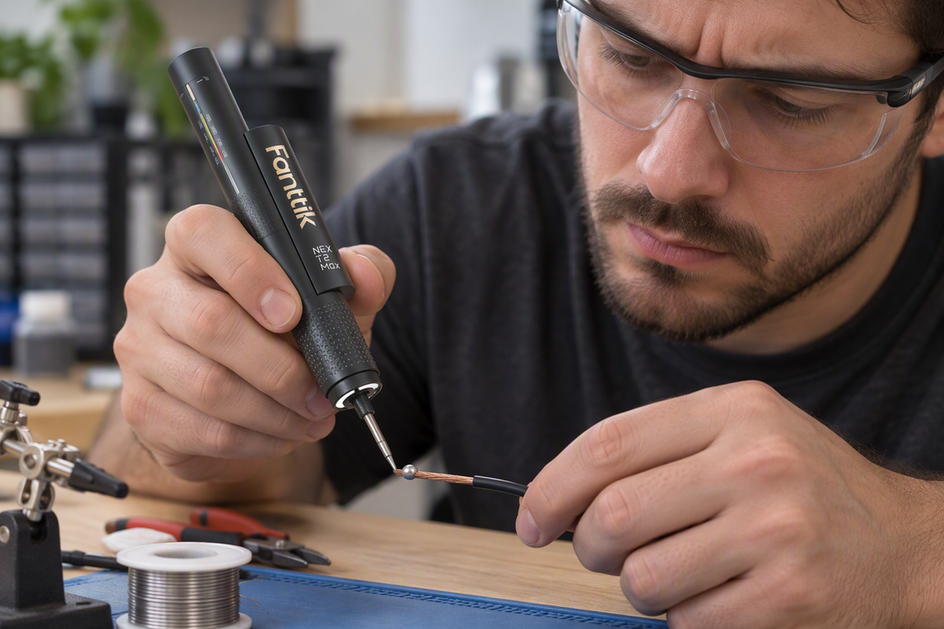
Whether you are using a Fanttik E2 MAX Precision Electric Screwdriver for delicate electronics or a heavy-duty inflator for your EV, data is your best defense against premature hardware failure. Don't leave your support experience to chance—log the data, establish the baseline, and use Warranty Logic to get the resolution you deserve.
Disclaimer: This article is for informational purposes only and does not constitute professional legal or engineering advice. Battery maintenance and jump-starting involve inherent risks; always follow the safety instructions provided in your product manual and consult a certified technician for hardware repairs.
Sources and References
Continue reading
 Chemical Aging Factors: Why Shelf Life Impacts Performance
An analysis of chemical aging factors like SEI layer growth and the Q10 Rule, explaining how shelf life...
Chemical Aging Factors: Why Shelf Life Impacts Performance
An analysis of chemical aging factors like SEI layer growth and the Q10 Rule, explaining how shelf life...
 State of Health (SoH) vs. SoC: Understanding True Capacity
Covers the electrochemical 'knee point' of degradation, voltage sag scenarios, and practical diagnostic signs to predict gear failure.
State of Health (SoH) vs. SoC: Understanding True Capacity
Covers the electrochemical 'knee point' of degradation, voltage sag scenarios, and practical diagnostic signs to predict gear failure.

Leave a comment
This site is protected by hCaptcha and the hCaptcha Privacy Policy and Terms of Service apply.