











































Year-Round Interior Care: Protecting Your Cabin Against Seasonal Damage
Your vehicle is likely one of the most significant investments you own. While we often focus on the gleaming exterior or the mechanical health under the hood, the cabin is where you actually spend your time. It is a sanctuary, a mobile office, and a family hub. However, it is also a closed environment subjected to extreme seasonal stressors—from corrosive winter salts to the relentless UV radiation of summer.
Quick Guide: Seasonal Maintenance Essentials
To maintain your cabin’s value and comfort, prioritize these four actions:
- The 24-Hour Rule: Wipe down salt and grime within a day of exposure to prevent permanent etching.
- UV Shielding: Apply a pH-balanced protectant every 6 months to prevent plastics from "outgassing" and cracking.
- Safe Screens: Use only distilled water and microfiber for touchscreens; avoid alcohol-based cleaners that strip protective coatings.
- Battery Safety: Remove lithium-ion tools (inflators, vacuums) when cabin temperatures are projected to exceed 100°F (38°C) to prevent cell degradation.
At its core, interior maintenance isn't just about aesthetics; it is a discipline of asset preservation. In our experience working with long-term vehicle owners, a significant portion of interior wear and tear can be mitigated with immediate, informed action. We see this pattern frequently in our support data: owners who treat maintenance as a proactive, year-round cycle rather than a reactive "spring cleaning" chore tend to see better material longevity and higher resale values.
This guide moves beyond generic cleaning tips. We will explore the technical mechanisms of material degradation and provide a structured framework for protecting your cabin against the specific threats posed by each season.

The Winter Siege: Neutralizing Salt and Grime
Winter is arguably the most aggressive season for a vehicle interior. The primary culprit is road salt (sodium chloride) and other de-icing agents like calcium chloride. While these chemicals keep roads safe, they can be damaging to vehicle cabins. When tracked in on boots, salt dissolves into the moisture of your carpets and, as it dries, it re-crystallizes. This process can cause "etching" on plastics and may lead to stubborn white staining on fabrics.
The 24-Hour Rule
Based on common patterns observed in detailing and customer support, a damp (not wet) microfiber wipe-down within 24 hours of salt exposure is one of the most effective strategies to prevent permanent damage. Waiting even a week allows the salt to bond more deeply with fibers or plastic pores.
- Carpets: Use a dedicated salt-neutralizing solution or a 1:1 mixture of white vinegar and water. The mild acidity of the vinegar helps break down alkaline salt crystals.
- Plastic Trim: Salt can strip moisture from plastic, leading to a chalky finish. A quick wipe with a pH-balanced cleaner helps prevent this desiccation.
Material Compatibility Note: Always perform a "spot test" on an inconspicuous area before applying any DIY solution like vinegar. Certain delicate leathers or specialty coatings may react poorly to acidic cleaners.
Managing Humidity and Odors
Wet boots and melting snow create a high-humidity environment which, when combined with the heater, can create a breeding ground for mold and mildew.
According to ASHRAE Standard 180-2018, regular maintenance of HVAC systems is foundational for preventing material issues from humidity cycling. In a vehicle, this includes ensuring your cabin air filter is clean and using the "Defrost" mode (which engages the A/C compressor to dehumidify the air) even when heating the cabin. For more on managing multiple vehicles, see our guide on Logistical Readiness for Multi-Car Households.
Summer Heat and the UV Threat
Modern vehicle interiors are a complex mix of polymers, synthetic leathers, and sensitive electronics. These materials are susceptible to UV-induced photo-degradation and thermal expansion.
The Cumulative Nature of UV Damage
UV damage is a cumulative process. Over time, rays can break the molecular bonds in plastics and upholstery, potentially leading to fading, cracking, and "outgassing"—the source of the oily film often found on the inside of windshields.
To combat this, we recommend applying a quality ceramic or hybrid spray sealant every 6 to 12 months. Unlike some silicone-based products that may attract heat, ceramic-based protectants provide a sacrificial layer that absorbs UV energy. This is particularly relevant for "vegan leather" (polyurethane or vinyl), which lacks natural oils and can become brittle under sustained high heat.
The "Shiny Patch" Pitfall
A common mistake is the use of aggressive all-purpose cleaners on modern matte finishes. Many new vehicles feature "soft-touch" plastics. High-pH cleaners can strip the factory top-coat, which may result in permanent shiny patches. Always opt for pH-balanced formulas. If you are unsure, performing a material test on an inconspicuous area is a recommended step for any detail-oriented owner.
| Material Type | Primary Summer Risk | Recommended Protection | Maintenance Frequency (Heuristic) |
|---|---|---|---|
| Vegan Leather | Cracking/Stiffening | pH-balanced conditioner | Every 3 months |
| Matte Plastics | Outgassing/Fading | UV-blocking sealant | Every 6 months |
| Touchscreens | Coating degradation | Microfiber + Distilled water | As needed |
| Fabric Seats | Color fading | Fabric guard spray | Annually |
| Rubber Seals | Drying/Tearing | Rubber protectant (non-silicone) | Bi-annually |
Note: Frequencies are practical rules of thumb and may vary based on local UV index and whether the vehicle is garaged.
Electronics and Touchscreen Hygiene
Modern cabins are increasingly dominated by large touchscreens treated with oleophobic (oil-repellent) and anti-glare coatings.
Safe Cleaning Protocols
The most common error in electronics care is the use of alcohol-based wipes or household glass cleaners. Ammonia and high-percentage isopropyl alcohol can strip the oleophobic coating, leaving the screen more susceptible to fingerprints and glare.
Recommended Steps:
- Dry Dust: Use a clean microfiber cloth to remove loose particles.
- Light Dampening: If smudges persist, use distilled water (optionally with a single drop of mild dish soap).
- Application: Apply liquid to the cloth first, never directly to the screen, to prevent seepage into the bezel.
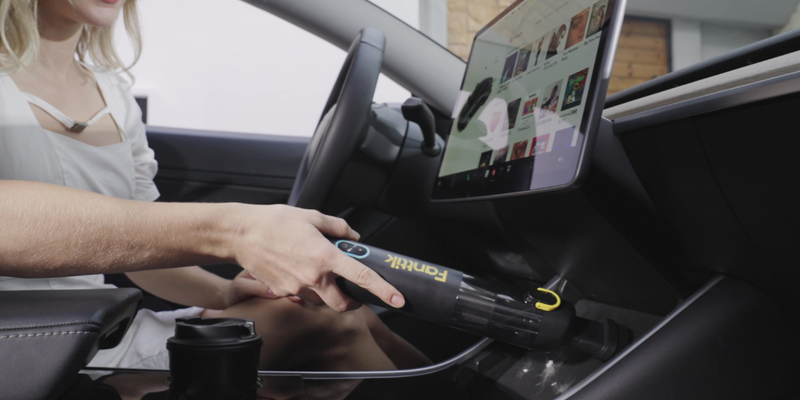
For deeper cleans, such as removing pollen from vents, a portable air duster or precision vacuum is often more effective than wiping. See our advice on Pollen Extraction and Dashboard Care for more details.

Safety and Logistics: Storing Tech in the Cabin
Many owners keep portable tools like tire inflators or jump starters in their vehicles. However, seasonal temperature swings—specifically summer heat—pose a risk to the lithium-ion batteries inside these devices.
The High-Temperature Threshold
On a 90°F (32°C) day, interior temperatures can reach 140°F (60°C) within an hour due to the greenhouse effect. Consistent exposure to these temperatures can shorten the lifespan of Li-ion cells and, in rare instances of battery defect or damage, increase the risk of thermal runaway.
Safe Storage Practices:
- Summer Removal: During heatwaves, remove portable electronics from the cabin. If they must stay, store them in the trunk or under a seat, away from direct sunlight.
- Thermal Buffering: Insulated storage cases can slow the rate at which a device reaches peak ambient temperature.
- Winter Charging: Lithium batteries should not be charged when they are below freezing (32°F/0°C), as this can cause permanent damage to the battery anode. See our guide on Frost-Proofing Tech.
Internal Modeling Note: The table below provides illustrative estimates of how extreme heat can impact battery health, based on our internal parameterized models for standard lithium-polymer cells.
| Parameter | Value/Range | Rationale |
|---|---|---|
| Ambient Temp | 90 - 100 °F | Typical summer day |
| Cabin Peak Temp | 135 - 150 °F | Greenhouse effect in glass-heavy cabins |
| Battery SoC | 40 - 60 % | Recommended state of charge for storage |
| Projected Cycle Life Impact | ~1 - 2 % | Estimated loss per extreme heat event (Internal Model) |
Note: These figures are estimates. Actual battery degradation depends on cell chemistry, age, and vehicle features like "Cabin Overheat Protection."
Building a Narrative of Trust
In the world of modern gear, reliability is the only currency that truly matters. As highlighted in The 2026 Modern Essential Gear Industry Report, trust is built through visible compliance and truthful claims. When you maintain your vehicle using these standards, you are performing a "Quarterly Readiness Audit" that helps ensure your mobility remains uninterrupted.
This commitment to excellence is mirrored in the regulatory landscape. For instance, the EU General Product Safety Regulation (EU) 2023/988 emphasizes product safety and traceability—principles that also apply to how you select and maintain the tools you use for your vehicle.
A Framework for Long-Term Preservation
Preserving your vehicle’s interior is a marathon. It requires shifting from seeing the cabin as a static space to seeing it as a dynamic environment. By implementing the 24-hour rule for salt, managing UV exposure, and respecting the thermal limits of your portable technology, you help ensure your vehicle remains a high-value asset.
Whether you are preparing for a seasonal road trip or conducting a post-dormancy audit, preventative maintenance today pays dividends in comfort and resale value tomorrow.
Disclaimer: This article is for informational purposes only and does not constitute professional automotive repair or safety advice. Always consult your vehicle's owner manual and follow manufacturer-specific guidelines for cleaning and material care. Handling lithium-ion batteries in extreme temperatures carries inherent risks; always prioritize safety and follow local regulations for battery storage and disposal.
Sources
Continue reading
 Road Trip Safety: A Guide for Family Preparedness
Learn the 'One-Hand Rule', BMS insights, and a hierarchy of meeting places to build a reliable safety system...
Road Trip Safety: A Guide for Family Preparedness
Learn the 'One-Hand Rule', BMS insights, and a hierarchy of meeting places to build a reliable safety system...
 Deep Cleaning Removable Car Mats and Liners with Pressure Systems
A guide to safely deep cleaning removable car mats and liners using pressure systems, covering PSI limits, chemical...
Deep Cleaning Removable Car Mats and Liners with Pressure Systems
A guide to safely deep cleaning removable car mats and liners using pressure systems, covering PSI limits, chemical...


Leave a comment
This site is protected by hCaptcha and the hCaptcha Privacy Policy and Terms of Service apply.