






































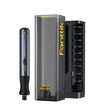



There's no universal extra-PSI amount for a loaded family road trip. Check your vehicle's driver-door edge or B-pillar placard first: if it lists a separate full-load pressure for your tire size, use that cold value. If it lists only one recommended pressure, don't add extra PSI just because the car feels packed.
How Much Extra PSI Does a Loaded Vehicle Need?
A heavily loaded vehicle needs whatever cold pressure your automaker documents for that load condition, not a fixed number added on top of your normal setting. Rules of thumb like adding 3 or 5 PSI ignore differences in tire size, axle rating, and how each automaker actually formats a full-load setting. Some vehicles publish two pressures on the placard, one for typical loads and one for near-maximum occupancy and cargo, while others publish only a single recommended pressure that already covers ordinary use.
If your placard shows a full-load row that matches your tire size, use that value cold, applied the way the label specifies, before you leave. If your placard lists only one pressure, that single number is still your target; don't add PSI on top of it because the trunk is full. Keep both of these figures separate from two other numbers you'll see nearby: the tire's sidewall maximum, which is a ceiling and not a driving target, and a portable inflator's maximum output, which describes the tool rather than your vehicle.
What Does the Door-Jamb Placard Tell You?
The placard on your driver's side door edge or doorjamb, sometimes called the B-pillar, lists your vehicle manufacturer's recommended cold tire pressure and the correct tire size for your vehicle, according to NHTSA's tire pressure guidance. If you can't find it there, your owner's manual carries the same numbers.
Read the label by matching two things. First, confirm the tire size printed on your tires matches the size shown on the placard; a tire swap can change which row applies to you. Second, note that pressure is listed per axle, since front and rear values often differ on trucks, vans, and SUVs. Some placards add a second line for a fully loaded vehicle, listing a higher pressure for that specific tire size and load condition. Treat that full-load line as valid only when it matches your tires and your actual trip load; a car with just one extra passenger should usually stay on the normal-load line. For general cold-check habits between trips, our tire pressure maintenance basics guide covers routine upkeep beyond a single road trip.

How to Set Tire Pressure Before a Fully Loaded Road Trip
Set every tire's pressure while it's cold, meaning the vehicle hasn't been driven for at least three hours, and work through the placard, the gauge, and a final check in that order. Follow these steps before you pack the car and pull out of the driveway.
- Find your target pressure on the driver-door placard or owner's manual, matching your tire size and, if listed, your load condition.
- Confirm which row applies: full load only if you're carrying passengers and cargo close to the vehicle's rated capacity, otherwise the normal-load row.
- Check each tire cold with a reliable gauge, ideally before the car has moved that morning.
- Add or release air until each tire matches the pressure listed for its axle, not the number on the tire's sidewall.
- Inspect tread, sidewalls, and valve stems for cracks, bulges, or slow leaks while the tires are already exposed.
- Recheck all four tires, plus the spare, once loading is finished and just before you leave.
When Should You Stop and Get Vehicle-Specific Help?
Stop before adjusting anything further if your vehicle's total payload already exceeds its rated capacity, since higher tire pressure cannot compensate for carrying too much weight. NHTSA's road-trip tire checklist recommends resolving several conditions like these before a long trip rather than guessing at a pressure.
Get vehicle-specific help instead of estimating when any of the following apply:
- The placard is missing, unreadable, or doesn't match your current tire size.
- A tire shows visible damage, uneven wear, or won't hold pressure between checks.
- You're unsure which axle a listed pressure number applies to.
- Your vehicle is loaded at or beyond its GVWR or stated payload rating.
For a broader pre-trip check on tools, gauges, and battery-powered gear, our family road-trip prep checklist walks through readiness steps beyond tire pressure alone.
Can a Portable Tire Inflator Set the Correct PSI?
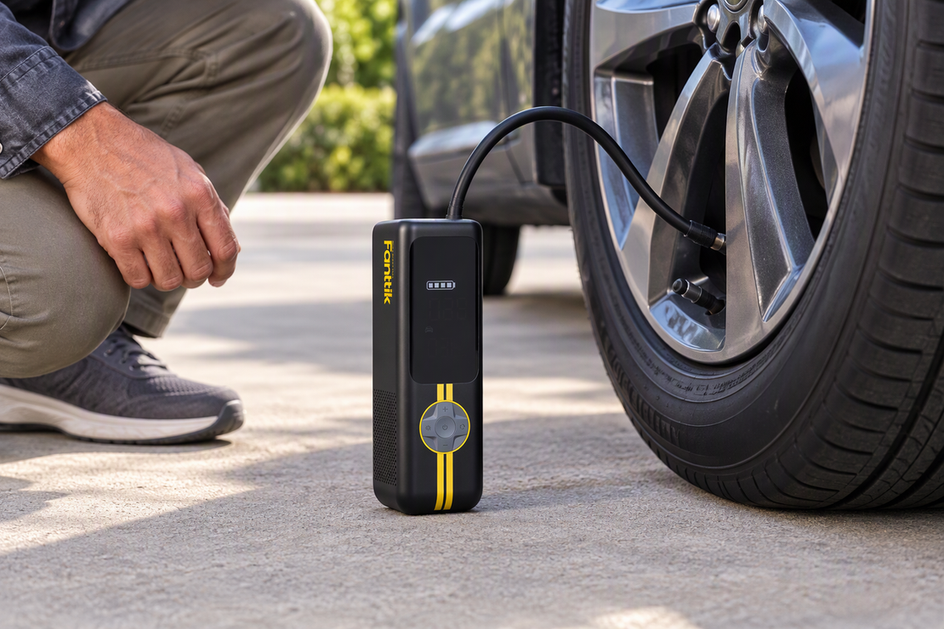
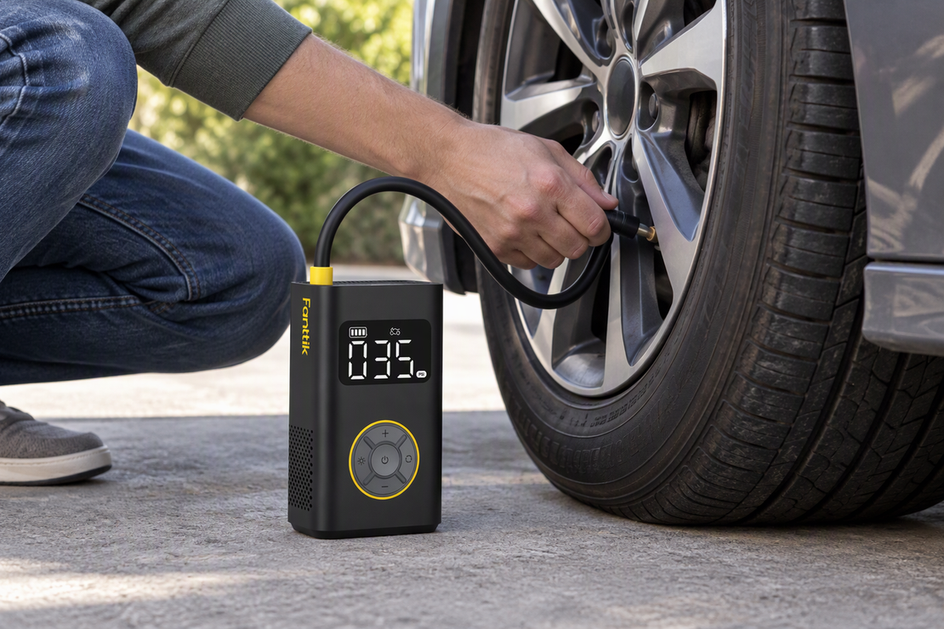
A portable tire inflator can help you reach the pressure your placard specifies, but it doesn't decide what that number should be. You still need the vehicle-specific target from the placard or manual before you turn the inflator on.
Our X8 APEX pressure controls let you dial in a specific target from 3 to 150 PSI, and the unit stops automatically once it reaches that setting, with the reading shown on its display. Fanttik states an accuracy figure of about ±1 PSI for this gauge as a manufacturer specification, not an independently verified test result. Set your target from the placard first, then use a portable tire inflator to reach it, rather than treating the tool's maximum PSI or auto-stop setting as a substitute for your vehicle's recommended pressure. Once all tires reach the placard number cold, stow the inflator and a trusted mechanical gauge in your cargo area for quick checks along the route.

FAQs
How should you adjust tire pressure if the placard has no full-load row?
Stick to the single cold pressure specified on the placard for your current tire size and axle. That vehicle-specific setting is engineered to handle ordinary passenger and cargo weights safely, so never add arbitrary PSI without manufacturer documentation. If the placard is unreadable or tire sizes differ from stock, consult your vehicle owner's manual before inflating.
Can I set the pressure after driving to a gas station?
A reading taken right after driving is a warm reading, not your cold target, because heat raises pressure inside the tire. Park for at least three hours, or check pressure before you start driving that day, to get an accurate cold number. If you must add air while warm, recheck once the tires cool and follow your manufacturer's documented procedure rather than estimating a correction.
Does adding extra PSI allow the vehicle to carry more total weight?
No, raising tire pressure does not increase your vehicle's gross vehicle weight rating (GVWR) or maximum payload capacity. Overloading past manufacturer weight limits stresses axles, suspension components, and brakes regardless of tire PSI. Always keep total passenger and cargo weight within the payload limit stated on your driver's door placard.
Continue reading
 How to Pressure Wash Mountain Bikes and Dirt Bikes Without Blowing Out Sealed Bearings
A step-by-step wash routine that keeps mud removal effective while steering water away from bike bearings, pivots, hubs,...
How to Pressure Wash Mountain Bikes and Dirt Bikes Without Blowing Out Sealed Bearings
A step-by-step wash routine that keeps mud removal effective while steering water away from bike bearings, pivots, hubs,...

Leave a comment
This site is protected by hCaptcha and the hCaptcha Privacy Policy and Terms of Service apply.