































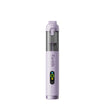









USB-C Power Delivery (PD) fast charging matters most when your tool explicitly documents a higher-power input and you need it back in service quickly between roadside uses. A tool built only for 5V charging won't charge any faster just because you plug it into a 65W or 100W charger. USB Power Delivery offers more flexible power delivery than legacy USB, but that flexibility only shows up when both ends of the cable request and accept it.
Prioritize PD when the tool's spec sheet lists a matching PD profile and a shorter recharge window changes your readiness before a trip or after an emergency stop. Stick with a simple 5V charger when the tool's documentation caps it at 5V, or when your available adapter or power bank can't supply the profile the tool actually needs.
Key Takeaways
- PD only helps a tool that explicitly documents a matching higher-power charging input.
- A 65W or 100W rating is a ceiling for the source, not a guaranteed charge rate for every connected tool.
- Charging input (how the tool recharges) and USB-C output (what the tool can power) are separate specs.
- A cable rated below the current a setup needs can bottleneck the chain even when the charger and tool both support higher power.
- Check the tool's input spec, the source's port profile, and the cable rating together before you rely on a faster-charging setup at the roadside.
Why USB-C PD Matters in a Road Kit
PD earns priority only when your tool explicitly accepts a higher input and faster recovery changes your readiness between stops. A physical USB-C connector alone does not guarantee protocol negotiation or higher wattage. For emergency road gear, compare your tool's documented input needs directly against what your power source can deliver.
Readers assembling or refreshing an emergency kit should treat the 5V path as the default unless the tool's own spec sheet calls for something more. Upgrading the charger changes nothing if the tool itself was never built to use the extra power.
5V Charging vs USB-C PD: What Changes?
A non-PD connection stays at whatever fixed level the port advertises, while PD lets the charger and the tool negotiate a higher level together. The difference matters because a road-kit charger's headline wattage only applies if that negotiation actually happens.
What 5V-Only Charging Provides
A non-PD USB-C connection tops out at whatever voltage and current the port advertises without any negotiation. In the TI technical primer, a Type-C connection without PD is capped at 5V and 3A, or 15W. That's the ceiling described in that cited architecture, not a rule for every USB-C product on the market. If your inflator or jump starter's charging spec lists only 5V, this is the level it charges at no matter which charger you use.

What PD Negotiation Adds
PD changes the conversation between the charger (the source) and the tool (the sink). The source advertises the voltage and current levels it can supply, and the tool requests the highest level it actually needs and supports. TI's primer cites USB PD 3.0 as capable of up to 20V at 5A, or 100W, within that negotiated system. Even with PD available, the result still can't exceed whatever the weakest link in the chain, tool, charger, cable, or port, supports.
| Charging path | Supported behavior | Road-kit implication |
|---|---|---|
| 5V legacy (non-PD) | Fixed at up to 5V/3A (15W) | Fine only if the tool documents 5V-only charging |
| USB-C PD | Negotiated up to 20V/5A (100W) in PD 3.0 | Faster recharge only if tool, charger, and cable all match the profile |
The table shows the ceiling each path can offer. Whether your specific tool actually reaches that ceiling depends on its own documented input limit, which is the next thing to check.
What Do 65W and 100W Mean for a Tool?
A 65W or 100W rating describes what a charger, port, or tool can supply or accept at most, not what any two connected devices automatically use together. Reading the number correctly starts with asking which role it describes: charging input, or USB-C output.
Read Input and Output as Separate Ratings
- Charging input is the number that matters when you're recharging the tool itself. Compare it to your charger or adapter's actual output.
- USB-C output is what the tool can supply to another device, such as a phone, when the tool is acting as a power source.
- A single tool can have different input and output limits, and whichever number is lower in the actual chain sets the real result.
Why 100W Does Not Mean 100W to Every Tool
A 100W-rated charger offers a ceiling that a compatible device can draw up to; it doesn't force that amount onto whatever gets plugged in. Earlier PD implementations were capped at 100W before PD 3.1 expanded that ceiling to 240W with a suitable cable and equipment. If the tool you're charging documents a lower maximum input, that tool's own limit stays the bottleneck no matter how high the charger is rated. Checking the tool's spec sheet first keeps you from expecting a recharge speed the tool was never built to reach.
When Does PD Improve a Tire Inflator or Jump Starter?
PD improves recovery time only for a tool that documents a matching PD input, and the benefit shows up between uses rather than during inflation or a jump-start itself. Two current Fanttik road-kit products show how differently that input limit can land depending on the tool.
Tire Inflator Scenario
If you're comparing a cordless tire inflator with battery and charger included, PD helps recharge it only if the exact inflator accepts the higher input. Our X9 APEX tire inflator documents a 27W maximum charging input, so plugging it into a 65W or 100W source doesn't turn it into a faster-charging device. That 27W figure is a charging-input spec, separate from the inflator's 150 PSI maximum pressure or how many tires it can fill per charge. If you're deciding whether a higher-wattage charger is worth buying for an inflator, check its documented input first, not the charger's headline number.
Jump Starter Scenario
A jump starter is a better candidate for PD to matter, but only when the model documents it. Our T8 APEX jump starter lists 65W USB-C PD input and output, so a compatible 65W PD source is directly relevant to how quickly it recovers after a jump-start. That 65W figure describes recharge input and device-charging output; it says nothing on its own about the jump starter's peak amperage or how many jump-starts it can deliver per charge. Treat this as one manufacturer-documented example, not a rule that every jump starter on the market shares the same input ceiling.
How to Match the Tool, Charger, Cable, and Source
Matching a charging setup means checking four parts as one chain instead of trusting a single wattage number printed on a box. Miss one link, and the rest of the chain can't make up for it.
Check the Four Parts of the Chain
- Tool input – Find the tool's documented charging input voltage, current, or PD profile in its manual or spec sheet.
- Source output – Check what the vehicle adapter or power bank's port actually outputs, especially if it has multiple ports sharing power.
- Cable rating – Per Renesas cable engineering guidance, drawing more than 3A requires a 100W (5A) or EPR-compatible cable with e-Marker identification; without one, the system can be limited to about 60W even when the charger is rated higher.
- Instructions – Follow the tool's and charger's own documentation rather than assuming compatibility from the USB-C connector shape alone.
Stop at an Unverified Link
A USB-C connector by itself doesn't confirm PD support, and a charger rated 100W can't push power through a tool, port, or cable that supports less. If any label in that chain is missing, or the tool's manual doesn't confirm its PD profile, don't rely on that setup for a critical recharge before a trip. Confirm the missing piece against the manufacturer's documentation first.
When Is PD Not the Deciding Factor?
PD stops being the deciding factor in a handful of clear cases, and recognizing them saves you from buying a bigger charger that won't change anything.

PD Is Not Decisive When
PD isn't worth prioritizing if the tool's documentation lists 5V-only charging; a higher-wattage source won't change its recharge speed. It also isn't decisive if your available vehicle adapter or power bank can't supply the profile the tool needs, since a nominally higher-wattage tool won't benefit until the source is upgraded too. If the tool's own input limit already sits below what your current charger provides, a bigger charger adds nothing. And if your kit sits mostly unused between trips, a shorter recovery window may not change how you actually use it.
Use This Final Pack Check
Before packing the kit, read the tool's charging input spec, then match it against the single port you'll actually use on your adapter or power bank. Confirm the cable meets the current rating that combination needs. If all three agree, the setup passes and PD is worth prioritizing when faster recovery matters to your schedule. If one piece is unconfirmed, treat the setup as a conditional pass and check the manufacturer's documentation before relying on it at the roadside.
FAQs
Can one USB-C PD charger serve both a tire inflator and a jump starter?
It can, provided the charger and cable supply the negotiated voltage and current required by each tool's input profile. For instance, our X9 APEX inflator accepts up to 27W while the T8 APEX jump starter accepts up to 65W PD. A shared 65W source must provide the specific intermediate voltage and current profiles matching each device rather than relying solely on total printed wattage.
What if a tool lists USB-C but does not state a PD profile?
Never assume PD support solely from a USB-C port design or a high-wattage power bank. When product labeling or documentation omits an explicit PD profile or operating voltage/current range, treat it as an unverified 5V input. Check the official manufacturer specifications before investing in a high-wattage charger expecting faster recovery.
Why does a 65W multi-port car charger slow down when two tools are plugged in?
Many multi-port vehicle adapters split available wattage across active outputs rather than supplying maximum power simultaneously. A port rated at 65W during single-port operation may drop to 45W or lower when an additional accessory is connected, falling below what a high-input emergency tool needs to charge at its maximum negotiated rate.
Leave a comment
This site is protected by hCaptcha and the hCaptcha Privacy Policy and Terms of Service apply.