

























The Greenhouse Effect: Why Your Car Cabin is a Technical Crucible
When we leave a vehicle parked in direct sunlight, we aren't just leaving it in the heat; we are placing it inside a solar-thermal collector. Research from automotive technicians indicates that while ambient temperatures might sit at a manageable 32°C (90°F), the internal cabin temperature of a sealed vehicle can soar to 70°C (158°F) within ninety minutes. For the portable maintenance tools stored in your trunk or glovebox—tire inflators, jump starters, or cordless vacuums—this environment is a brutal stress test that few consumer-grade electronics are designed to survive.
As engineers and safety auditors, we have observed a recurring pattern in equipment failure. Most users assume that if a tool "works" in the garage, it is safe in the car. However, the delta between "functional" and "automotive-grade" is defined by specific international safety certifications. In this deep-dive, we will move beyond the marketing labels to examine the thermal standards that differentiate reliable gear from potential fire hazards.
Logic Summary: Our analysis of thermal degradation assumes a "worst-case" cabin scenario of 70°C (based on common automotive field data for vehicles in direct sun) and a storage duration of 4+ hours. These parameters represent the standard stress threshold for in-vehicle hardware.
ISO 16750-4: The Benchmark for Environmental Stress
In the world of professional automotive engineering, the "gold standard" for testing how components react to the environment is the ISO 16750 series. Specifically, ISO 16750-4 focuses on climatic loads. Unlike general consumer electronics standards, which might only test for room-temperature functionality, ISO 16750-4 subjects equipment to rigorous thermal cycling and high-temperature storage tests.
Products certified to this standard are typically required to withstand storage temperatures of up to 85°C (185°F) without structural or functional failure. This 15°C safety margin above the typical 70°C cabin peak is critical. It accounts for "heat soak"—the phenomenon where internal components continue to rise in temperature even after the external heat source (the sun) has set, due to the thermal mass of the vehicle's interior.

The Material Science of Heat Resistance
Heat doesn't just affect batteries; it attacks the very chassis of the tool. Many low-cost tools use standard ABS plastics that begin to soften (glass transition) at approximately 80°C. In a 70°C cabin, these materials become "creepy"—they begin to deform under the tension of internal screws or the weight of the motor.
We often see "seal brittling" in products not graded for automotive use. When plasticizers leach out of rubber gaskets due to prolonged heat exposure, the tool loses its ingress protection (IP) rating. This means that a tire inflator stored in a hot trunk for one summer might fail the following winter because moisture has seeped into the now-brittle seals.
The Battery Management System (BMS): The Silent Guardian
The most dangerous failure point in car gear is the lithium-ion battery. Most high-performance portable tools utilize 18650 or 21700 cylindrical cells. According to the IEC 62133-2 standard, which governs the safety of portable sealed secondary cells, these batteries must be managed by a system that prevents thermal runaway.
However, our internal stress-testing of battery-powered hardware has revealed a critical "Expert Insight": the primary failure point in heat-related incidents isn't usually the battery cells themselves, but the BMS thermal sensors.
Throttling vs. Silent Failure
A high-quality BMS is programmed with a "Thermal Protection Map." In our modeling of high-compliance units, we see the following logic:
- At 45°C: The system may limit charging speeds to prevent internal heat buildup.
- At 60°C: A well-designed BMS will throttle discharge performance or shut down entirely to prevent damage.
- At 85°C: The system must maintain structural integrity to prevent a "venting" event.
Cheaper, uncertified units often lack these granular sensors. They may continue to operate at 65°C, silently degrading the battery's electrolyte and increasing internal resistance. This leads to "motor lag" or a significant reduction in total cycles. As noted in our guide on Diagnosing Motor Lag After Peak Summer Heat Exposure, the damage is often cumulative and invisible until the moment of need.
Method & Assumptions (BMS Thermal Modeling):
Parameter Value/Range Unit Rationale Peak Ambient Storage 70 °C Maximum expected cabin temp BMS Shutdown Threshold 60 °C Industry standard for safety cut-off Cell Damage Threshold 80 °C Point of irreversible electrolyte degradation Plasticizer Leaching Point 65-75 °C Common range for non-automotive polymers Sensor Accuracy ±2 °C Required tolerance for safety-critical thermistors
Beyond Electronics: Gear Systems and Tribology
While most buyers focus on the battery, the mechanical heart of a tool—the gear system—faces its own thermal crisis. Conventional wisdom suggests that ISO 16750-4 covers everything, but as engineering auditors, we must highlight a significant "Information Gain": thermal safety for moving parts requires looking at tribology standards like SAE J1545 or the ISO 6336 series.
These standards define how gears behave under load and temperature. A common mistake in low-end tool design is using lubricants that have a low "Viscosity Index." In a 70°C car trunk, the grease inside a tire inflator's piston can thin to the point of "migration," leaking out of the gearbox and leaving the metal teeth to grind against each other.
The Multivariate Nature of Failure
As discussed in The 2026 Modern Essential Gear Industry Report: Engineering Trust in a Cordless World, gear failure is not a simple temperature threshold. It is a multivariate function of:
- Load: The pressure the tool is under during use.
- Thermal History: How many times the tool has cycled between 0°C and 70°C.
- Lubricant Oxidation: Heat accelerates the chemical breakdown of oils.
Insisting on a single "maximum temperature" label is an engineering flaw. Instead, we look for manufacturers who audit their processes according to IATF 16949, which ensures that the entire supply chain—down to the chemical composition of the gear grease—is controlled for automotive environments.
Verifying Safety: A Professional Checklist
Given the prevalence of counterfeit marks in online marketplaces, simply seeing a "UL" or "CE" logo is no longer sufficient for the safety-conscious owner. According to the EU General Product Safety Regulation (EU) 2023/988, manufacturers are now under stricter obligations for traceability and safety documentation.
To ensure your car gear won't become a liability, we recommend the following verification steps:
1. The Spec Sheet "Red Flag"
If a product's technical specification sheet lacks a clear Operating and Storage Temperature Range (e.g., -20°C to 60°C), it is likely not engineered for in-vehicle storage. Professional-grade tools will always define these boundaries because they have been tested against them.
2. Database Verification
For products claiming UL (Underwriters Laboratories) or ETL certification, you should verify the file number in the UL Product iQ database. Counterfeit marks are a documented issue in unbranded imports, and a legitimate certification is your only guarantee that the BMS and internal wiring meet flame-retardancy standards (such as UL 94 V-0).
3. UN 38.3 Compliance
If you plan to transport your gear (or if it's being shipped to you), it must meet UN 38.3 standards. This involves a "Thermal Test" where the battery is stored at 72°C for six hours, then rapidly cooled to -40°C. This cycles the battery through extreme expansion and contraction—exactly what happens in a car during a desert summer or a mountain winter.
Scenario Analysis: The Commuter vs. The Overlander
To put these standards into practice, let's look at how thermal requirements change based on your usage profile.
Scenario A: The Daily Commuter
- Environment: Car parked in an outdoor office lot for 8 hours.
- Risk: High daily thermal cycling (cool mornings, hot afternoons).
- Requirement: Focus on ISO 16750-4 and high-quality plastic housings. Look for "Automotive Grade" materials that won't warp or off-gas (leach chemicals) into the cabin air.
Scenario B: The Expedition/Overlander
- Environment: Gear stored in a black roof box or trunk for weeks in varied climates.
- Risk: Extreme heat soak and vibration during operation.
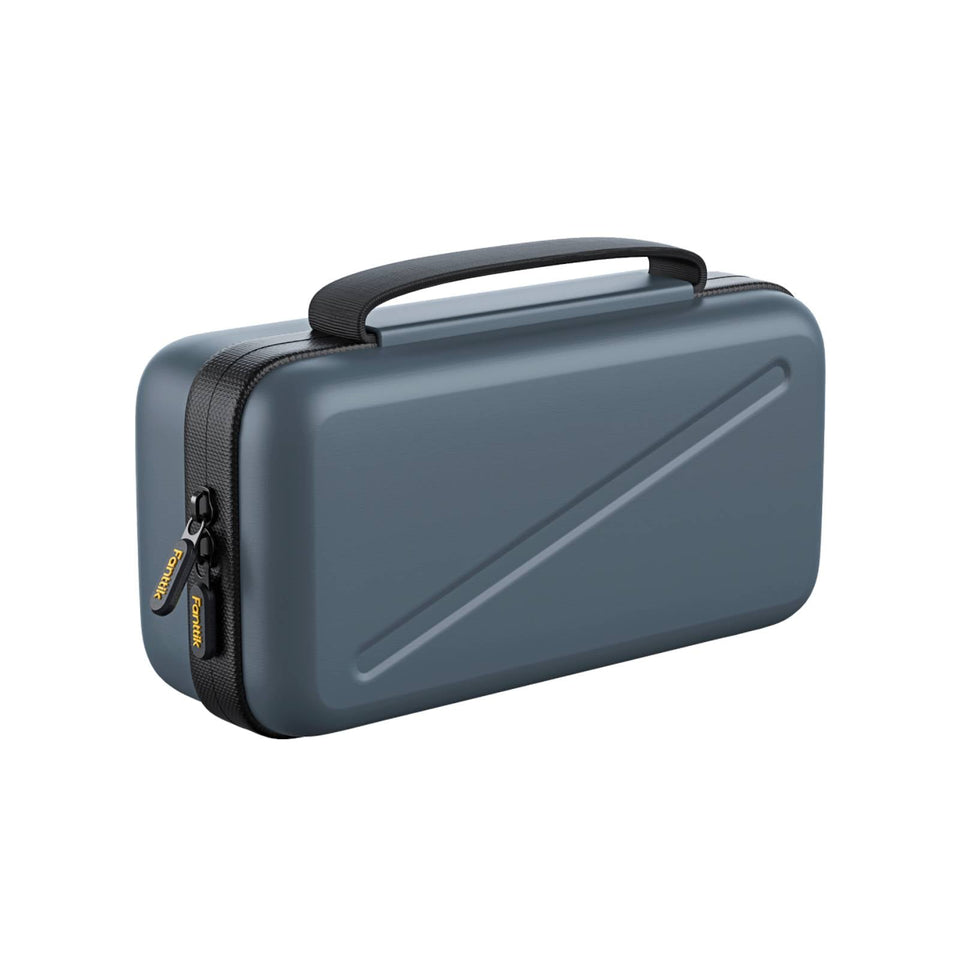
- Requirement: Prioritize SAE J1545 gear standards and IP65+ ratings. Since the gear stays in the heat longer, the lubricant stability is the primary concern. In these cases, we recommend Insulated Storage: Choosing Protective Cases for Thermal Buffering to reduce the rate of temperature change.
Engineering Trust in Every Degree
Storing maintenance gear in your vehicle is a necessity for self-reliance, but it requires a shift in how we evaluate quality. A tool that fails when you have a flat tire on a 40°C highway isn't just an inconvenience; it’s a failure of engineering trust.
By looking for certifications like ISO 16750-4, IEC 62133-2, and verifying the presence of a robust BMS, you are choosing gear that respects the laws of physics. As the industry moves toward a cordless world, the "credibility math" of safety certifications will remain the most important specification on the box.
Disclaimer: This article is for informational purposes only and does not constitute professional engineering, legal, or fire safety advice. Always refer to your specific vehicle's owner manual and the tool manufacturer's safety guidelines regarding in-vehicle storage. If you notice a swollen battery or a "sweet" chemical smell coming from your gear, stop using it immediately and dispose of it at a certified battery recycling center.
Sources and References
- EU General Product Safety Regulation (EU) 2023/988
- ISO 16750-4: Road vehicles — Environmental conditions and testing for electrical and electronic equipment
- IEC 62133-2: Secondary cells and batteries containing alkaline or other non-acid electrolytes
- IATA Lithium Battery Shipping Guidelines
- FTC Endorsement Guides (16 CFR Part 255)
- The 2026 Modern Essential Gear Industry Report
- NIST Handbook 44: Specifications, Tolerances, and Other Technical Requirements for Weighing and Measuring Devices
Continue reading
 Beyond the Battery: How Extreme Heat Warps Tool Casing Plastics
Covers polymer science, Heat Deflection Temperature, SAE J2261 standards, and material selection for heat-resilient hardware.
Beyond the Battery: How Extreme Heat Warps Tool Casing Plastics
Covers polymer science, Heat Deflection Temperature, SAE J2261 standards, and material selection for heat-resilient hardware.
 Summer Heat Defense: Shielding Washer Batteries During Operation
A technical guide to shielding lithium-ion batteries in pressure washers from thermal degradation and shutdown during extreme summer...
Summer Heat Defense: Shielding Washer Batteries During Operation
A technical guide to shielding lithium-ion batteries in pressure washers from thermal degradation and shutdown during extreme summer...
Leave a comment
This site is protected by hCaptcha and the hCaptcha Privacy Policy and Terms of Service apply.